
How to Remove Tomato Sauce Stains from Clothes Without Setting Them In

Tomato sauce stains are frustrating because they often combine pigment, acidity, and sometimes oil. That combination can cling to fabric quickly, especially if you rub it in or apply heat too soon. The good news: most fresh stains can be reduced or removed if you act carefully and use the right sequence.
Quick Decision Tree: Fresh, Dried, Greasy, Delicate, or White
- Fresh stain: scrape, rinse with cold water, pre-treat, then wash.
- Dried or set-in stain: pre-treat first, then either soak or repeat spot treatment before washing again.
- Greasy stain: use dish soap or another grease-cutting pre-treatment before washing.
- Delicate fabric: check the care label first, test a hidden area, and avoid scrubbing.
- White fabric: follow the label and consider oxygen bleach if the garment is bleach-safe.
Quick Answer: What to Do First
If the stain is fresh, do this immediately:
- Gently scrape off excess sauce with a spoon or the edge of a dull knife. Do not rub.
- Rinse from the back of the stain with cold water. This helps push the sauce out of the fibers instead of deeper into them.
- Pre-treat the area with liquid laundry detergent, dish soap, or a stain remover.
- Let it sit briefly, then rinse or wash according to the care label.
- Check the stain before drying or ironing. If any trace remains, repeat the treatment.
That last step matters more than people think. A dryer can make a remaining stain much harder to remove, and ironing can do the same.
Why Tomato Sauce Stains Are Hard to Remove
Tomato sauce is not just one stain. It is usually a mix of:
- Red pigment, which can tint fibers
- Acid, which helps the stain cling
- Oil or grease, especially in pasta sauce, pizza sauce, or restaurant dishes
That mix is why a quick rinse sometimes removes only part of the stain. The pigment can remain after the visible sauce is gone, and the oil can leave a faint shadow even if the red color fades.
Heat can make removal harder if the stain is still present, so cold water is the safer first step. The Cleaning Institute’s tomato sauce stain guide recommends removing excess sauce first and then running cold water through the back of the stain as quickly as possible.
Before You Start: Check the Fabric and the Care Label
Before using any cleaner, check the garment’s care label. This tells you whether the item is washable, whether it can handle bleach, and whether it needs delicate handling.
Use this simple decision rule:
- Cotton, denim, and many synthetics: usually washable and easier to treat
- Wool, silk, and other delicates: treat gently and avoid aggressive scrubbing
- White fabrics: may tolerate stronger whitening options if the label allows it
- Colored fabrics: need more caution with bleach and strong spot treatments
If the care label says dry clean only, do not assume a home method is safe. Spotting a delicate item with the wrong cleaner can spread the stain or damage the fabric finish.
For general stain care across different garments, this guide pairs well with how to remove stains from clothes. If the garment is white, this white-clothing stain guide is also relevant.
Step-by-Step: How to Remove a Fresh Tomato Sauce Stain
Fresh stains are easier because the sauce has not had much time to settle into the fibers.
1) Remove excess sauce carefully
Lift off any solid bits with a spoon or dull knife. The goal is to remove surface sauce without pushing it deeper. Blotting with a clean paper towel can help absorb what is left on top.
Do not scrub. Rubbing spreads the stain and can rough up the fabric surface.
2) Rinse with cold water from the back
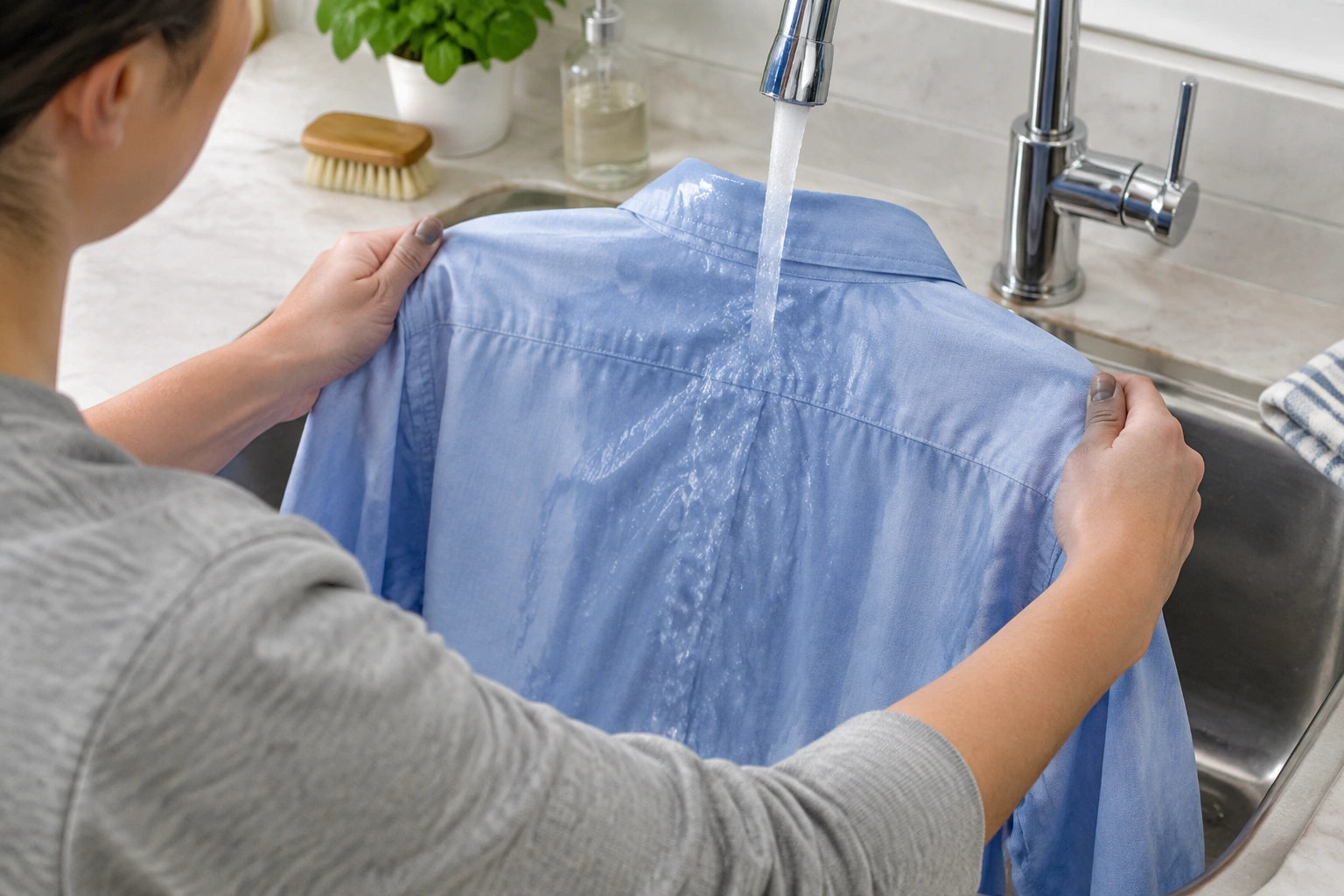
Turn the garment inside out if possible and run cold water through the back of the stain. This gives you a better chance of flushing the pigment out of the fibers.
Avoid hot water at this stage. As noted in the Gentleman’s Gazette stain guide, hot water can set tomato sauce into the fabric.
3) Apply a pre-treatment
For washable clothing, use one of these:
- Liquid laundry detergent
- Dish soap
- A commercial stain remover
Work the product gently into the stain with your fingers or a soft cloth. Let it sit briefly before rinsing or washing. If the sauce seems oily, dish soap is a reasonable option to try first.
4) Wash according to the care label
Wash the item according to the care label. If the label allows a warm wash, that may help after pre-treatment, but do not use hotter water than the fabric can safely handle.
5) Inspect before drying or ironing
Air dry or check the garment while it is still wet. If the stain remains, repeat the process. Do not put the item in the dryer or iron it until the stain is gone.
Best Cleaning Products to Use: Dish Soap, Laundry Detergent, or Stain Remover
Each product has a slightly different strength.
| Product | Best for | Trade-off |
|---|---|---|
| Dish soap | Greasy tomato sauces, oily splashes | Good for grease, but not always the strongest on pigment alone |
| Liquid laundry detergent | Most washable fabrics and fresh stains | Convenient and balanced, but may need repeat treatment on older stains |
| Commercial stain remover | Stubborn or set-in stains | Often strongest for targeted treatment, but test first on delicate or colored fabrics |
A practical rule:
- If the sauce looks oily, reach for dish soap first.
- If the stain is mostly red pigment, liquid laundry detergent or a stain remover is usually better.
- If the stain is stubborn, a commercial stain remover may save time.
For many people, the best approach is not choosing one product forever. It is matching the cleaner to the stain. A greasy marinara splash on jeans and a plain tomato smear on a cotton T-shirt do not respond exactly the same way.
How to Remove a Dried or Set-In Tomato Sauce Stain
Dried stains need more patience. The sauce has already had time to bond with the fibers, so a quick rinse may not be enough.
Option 1: Repeat spot treatment
This is the simplest path if the stain is not too large:
- Scrape off any remaining residue.
- Rinse the back of the stain with cold water.
- Apply liquid detergent, dish soap, or stain remover directly to the spot.
- Let it sit longer than you would for a fresh stain.
- Gently work the cleaner in again if needed.
- Wash the garment.
- Check the stain before drying or ironing.
- Repeat the spot treatment if the mark is still visible.
Option 2: Soak first, then wash
For larger or more stubborn stains, soaking can help loosen the residue before washing:
- Fill a sink or basin with cool water.
- Add the cleaner you are using, following the product label if needed.
- Submerge the stained area and let it soak.
- Remove the item and gently rub the spot only if the fabric is durable.
- Wash according to the care label.
- Inspect before drying or ironing.
- Soak again if the stain is still there.
If the stain is stubborn, a soak can be more effective than repeated quick rinses alone. Use the method the fabric can handle best.
Vinegar can be useful, but treat it as a spot aid
One published tomato-stain method suggests mixing equal parts white vinegar and water, applying it to the stain, and letting it sit for 10 to 15 minutes before rinsing. That method appears in a Red Gold tomato stain guide.
Use vinegar cautiously on delicate fabrics and always test a hidden area first. It is a spot-treatment option, not a universal fix.
What to Do If the Sauce Was Greasy
Tomato sauce often includes oil. If the red color fades but a shadow remains, grease may be the reason.
In that case, dish soap is a useful option to try because it can help lift oily residue. Apply it directly to the stain, work it in gently, and rinse with cool water before washing.
A common mistake is treating only the red color and ignoring the oil. That can leave a faint ring even after the garment has been washed.
Fabric-Specific Guidance: Cotton, Polyester, Wool, Silk, and Other Delicates
Cotton and denim
These are usually the easiest. They can handle pre-treatment, rinsing, and normal washing more easily than delicate fabrics. If the stain is fresh, cold water and detergent often do most of the work.
Polyester and other synthetics
Synthetic fabrics often release stains fairly well, but they can hold onto oily residue. Dish soap or detergent is often a better first choice than plain water alone.
Wool and silk
Treat these gently. Avoid scrubbing, avoid hot water, and avoid strong bleach unless the care label specifically allows it. Spot-test any cleaner on an inconspicuous area first. If the garment is valuable or the stain is large, professional cleaning may be safer.
White fabrics
White items give you more whitening options, but only if the label allows them. Oxygen bleach is often a practical option for washable whites and some colorfast fabrics. Chlorine bleach is stronger, but it is also more limited and can damage or discolor fabrics if used incorrectly.
If you want a broader reference for white garments, see how to remove stains from white clothes.
Using Bleach Safely on White Clothes
Bleach is not the first move for most tomato stains. It is a later option, and only when the care label permits it.
Oxygen bleach
Oxygen bleach is a good option for many washable white garments and some colorfast fabrics when the label allows it. It is less aggressive than chlorine bleach and is often better for repeated use.
Avoid oxygen bleach on fabrics or trims that the care label says should not be bleached, and be cautious with items that have special finishes, decorative details, or nonwashable trim.
Chlorine bleach
Chlorine bleach can be effective on some white fabrics, but it is much riskier. It should not be used on wool, silk, or most colored garments unless the care label specifically says it is safe. It can also damage elastic, decorative trim, and some synthetic blends.
A practical rule:
- Use oxygen bleach first for washable whites or colors if the label allows it.
- Use chlorine bleach only for bleach-safe whites and only when the care instructions permit it.
If the stain remains after detergent or oxygen bleach treatment on a white garment, repeat the safe wash process once more before moving to stronger bleach. If the item is not bleach-safe, skip bleach entirely and continue with detergent-based treatment instead.
Wash, Inspect, and Repeat Before Drying
This is the decision point that saves shirts.
After washing, inspect the stain while the fabric is still damp. If you can still see a red or orange mark, do not dry it. Repeat the treatment.
A good habit is to air dry stained items until you are sure the mark is gone. That gives you one more chance to treat it without locking it in.
Common Mistakes That Make Tomato Sauce Stains Worse
These are the errors that cause most failed stain removals:
- Rubbing the stain
- Using hot water too soon
- Skipping the pre-treatment step
- Putting the garment in the dryer before checking the stain
- Using chlorine bleach on the wrong fabric
- Treating delicates like cotton
- Ignoring the grease in the sauce
If the first attempt does not fully work, that does not mean the garment is ruined. It usually means the stain needs a second, more targeted pass.
When to Replace or Consult a Professional
Consider professional help if:
- The garment is dry clean only
- The fabric is silk, wool, or another delicate material
- The stain is large, old, or has already been heat-set
- The item is valuable, structured, or difficult to replace
For travelers and commuters, that last point matters. A work shirt, uniform piece, or favorite travel layer may be worth a cleaner’s attention if home treatment is risky.
FAQs
Should I use cold or warm water on a tomato sauce stain?
Use cold water first. Hot water can make the stain harder to remove before you have a chance to treat it.
Is dish soap better than laundry detergent?
Dish soap is often a reasonable choice when the sauce is greasy. Laundry detergent is a strong all-purpose option for most washable fabrics. For stubborn stains, a commercial stain remover may work better than either.
Can I use vinegar on tomato sauce stains?
Yes, vinegar is sometimes used as a spot-treatment aid. A published method suggests equal parts white vinegar and water, left on the stain for 10 to 15 minutes. Test first on delicate or colored fabric.
Can I use bleach on white clothes?
Sometimes, but only if the care label allows it. Oxygen bleach is often a practical starting point. Chlorine bleach is stronger but more limited and riskier.
What if the stain is still visible after washing?
Do not dry or iron it. Repeat pre-treatment and wash again. Drying or ironing can make the remaining stain much harder to remove.
Is it safe to put the garment in the dryer before the stain is gone?
No. That is one of the most common ways to make a tomato sauce stain harder to remove.
How do I treat a delicate fabric like silk or wool?
Use minimal moisture, avoid scrubbing, and test any cleaner on a hidden area first. If the item is valuable or the stain is large, professional cleaning is the safer route.
What if the sauce had oil in it?
Use dish soap or another grease-cutting pre-treatment before washing. The oil can remain even after the red color fades.
Can I use a stain remover on colored clothes?
Often yes, but test it first on an inconspicuous area. Colorfastness varies, and some products are too strong for certain dyes.
Is a set-in stain impossible to remove?
No, but it usually takes more than one round of treatment. Soaking, repeat pre-treatment, and careful washing often improve the result.