
How to Remove Stains from Clothes Without Damaging the Fabric

Stains are easier to remove when you treat them as a cleanup problem, not a guesswork problem. The fastest safe response is usually simple: check the care label, blot or scrape off excess, keep the item out of the dryer, and choose a treatment based on the stain type and fabric.
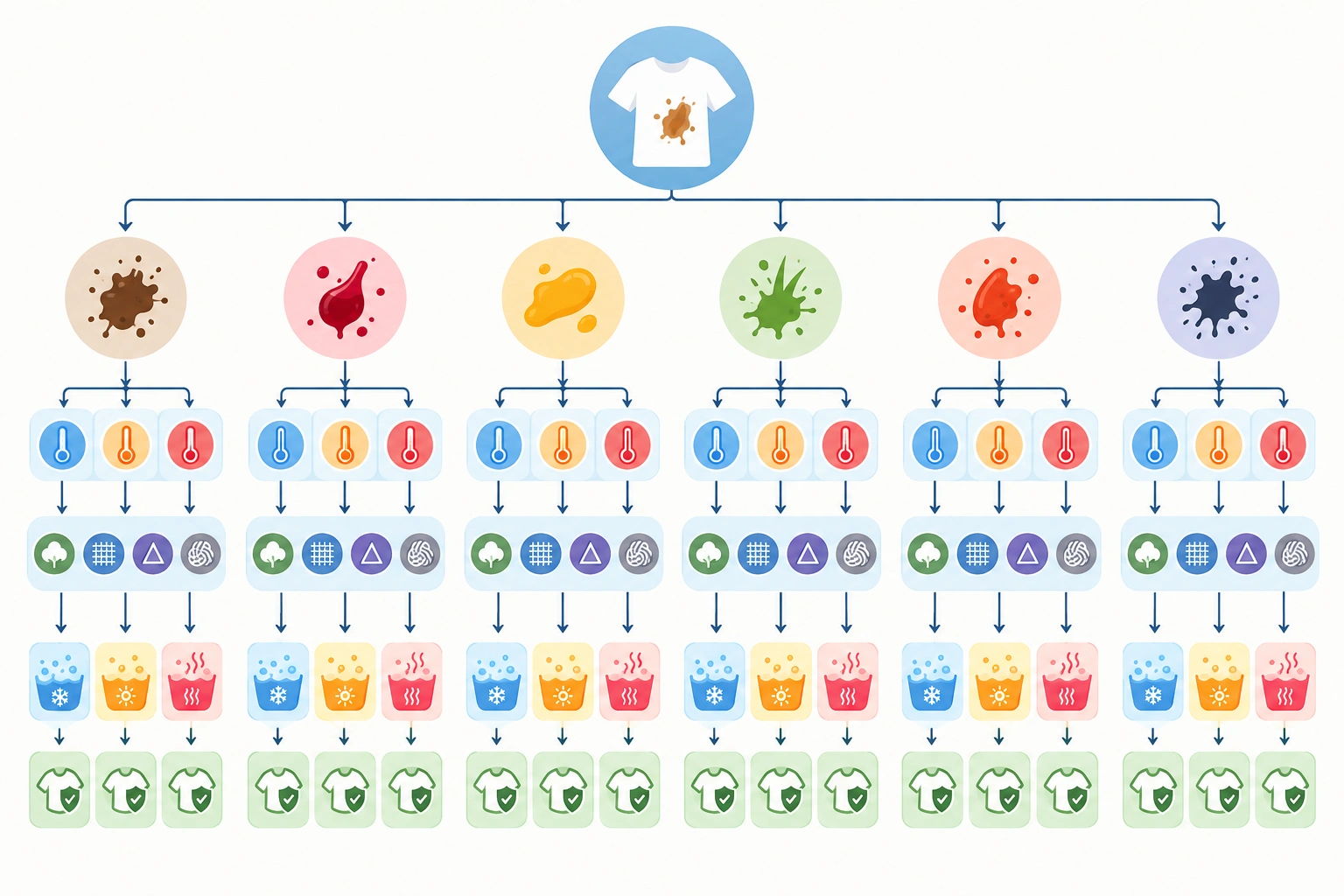
That sequence matters because heat, rubbing, and the wrong chemical can make a stain harder to remove. The American Cleaning Institute’s stain guide and Tide both emphasize acting quickly and avoiding the dryer until the stain is gone. Tide also recommends cold water first if you are unsure about the stain type, with warm water reserved for greasy stains.
For travelers, commuters, students, and frequent flyers, that means one practical rule: if you cannot fully treat the stain yet, at least stop it from setting. Blot it, rinse it if appropriate, and air-dry only after you know the mark is gone.
First, identify the stain and the fabric
The best stain treatment depends on two things:
- What caused the stain
- What the fabric can tolerate
A quick decision framework helps:
- Grease or oil: salad dressing, butter, makeup, sunscreen, food grease
- Beverages: coffee, tea, soda, juice, wine
- Protein-based stains: blood, sweat, body fluids, dairy, egg
- Dye or pigment stains: ink, marker, some sauces, makeup, lipstick
- Unknown stain: treat gently first and test before using stronger products
Then check the fabric:
- White, sturdy cotton or polyester: usually handles more options
- Colored clothing: needs color-safe treatment and a spot test
- Delicates: silk, wool, lace, rayon, and some blends need a lighter touch
The Museum Conservation Institute notes that stain removal can be hazardous to both the fabric and the person doing it, so caution is part of the process, not an extra step.
If the garment is valuable, delicate, or labeled “dry clean only,” test first and use the mildest effective method.
Cold water vs. hot water: which one to use
Water temperature changes how a stain behaves.
Use cold water when:
- The stain is blood, sweat, or another protein-based stain
- You do not know what the stain is
- You want to prevent a fresh stain from setting
Tide advises soaking in cold water as soon as possible to help prevent stains from setting, and says cold water is usually best when you are not sure about the stain type.
Use warm water when:
- The stain is greasy or oily
- The fabric label allows it
- You are washing a sturdy washable item
That trade-off matters. Cold water is the safer default, but grease often responds better when the cleaning product can loosen the oil. If you choose the wrong temperature, you may not ruin the garment, but you can make the stain more stubborn.
Avoid hot water for:
- Blood
- Sweat
- Egg
- Milk
- Unknown stains
Heat can help some cleaning tasks, but it can also lock certain stains into the fibers. If you are unsure, stay with cold water until you identify the stain.
How to remove common stains from clothes step by step
Grease and oil stains
Grease needs something that can break up oil before washing.
What to do
1. Blot excess oil with a paper towel or clean cloth.
2. Apply a small amount of dish soap or laundry detergent directly to the stain.
3. Gently work it into the fabric with your fingers.
4. Let it sit briefly.
5. Rinse with warm water if the fabric allows, then wash.
Dish soap is useful here because it is designed to cut grease. Laundry detergent can also work, especially on washable everyday fabrics. For a greasy stain on a cotton shirt or jeans, this is often enough to make the stain manageable before the wash.
Avoid: rubbing hard. That can drive oil deeper into the fibers and spread the stain.
Coffee and tea stains
These are water-based stains, and they are often easier to remove when treated quickly. The Museum Conservation Institute notes that water-based stains such as coffee and tea can be removed if the fabric condition is good.
What to do
1. Blot the liquid immediately.
2. Rinse from the back of the stain with cold water if possible.
3. Apply a little laundry detergent or an enzyme stain remover.
4. Let it sit, then wash.
If the stain is on a white shirt or table-friendly cotton, an oxygen bleach soak may help later if the label allows it. For colored clothing, check colorfastness first.
Wine stains
Wine is best treated as a race against time.
What to do
1. Blot, don’t rub.
2. Rinse with cold water.
3. Apply laundry detergent or a stain remover.
4. Wash as soon as practical.
If the stain has already dried, pretreating becomes more important. The American Cleaning Institute notes that older stains may respond to pretreating or soaking in a product containing enzymes before laundering.
A common mistake is trying to “fix” wine with heat or a random scrub. That usually makes the stain more visible, not less.
Ink stains
Ink is one of the more stubborn categories because it is a dye or pigment stain, not just a spill.
What to do
1. Place a clean cloth under the stain.
2. Dab carefully with a stain remover or laundry detergent.
3. Move the cloth underneath as ink transfers.
4. Rinse and wash if the fabric allows.
Work from the outside of the stain inward to avoid spreading it. If the item is delicate or the ink is permanent marker, stop early rather than over-treating the fabric.
Blood stains
Blood is a protein-based stain, so temperature matters.
What to do
1. Rinse immediately with cold water.
2. Gently rub the stained area together or use a mild detergent.
3. Soak in cold water if needed.
4. Wash in cold water.
Never use hot water first on blood. It can set the stain and make it harder to remove. If the stain remains after washing, repeat the cold-water treatment before drying.
Sweat stains
Sweat often leaves yellowing in the underarm area, especially on white shirts.
What to do
1. Pre-treat with enzyme detergent or a stain remover.
2. Let it sit.
3. Wash according to the care label.
For delicate fabric, Maytag recommends mixing a mild detergent with cold water and squeezing the mixture through the stain rather than scrubbing aggressively. That gentler approach is useful for shirts, blouses, and other items that do not tolerate rough treatment.
Makeup stains
Makeup stains vary. Foundation and sunscreen are often oily, while some powders behave more like pigment stains.
What to do
1. Lift off any excess with a dull edge or cloth.
2. Use a little dish soap for oily residue.
3. For pigment-heavy stains, use detergent or a stain remover.
4. Test first on colored or delicate fabric.
Lipstick often needs a grease-focused approach first, then a wash. Foundation on a collar may need a second round if the first treatment only lightens it.
Best stain removers and household products to use
Different products solve different problems.
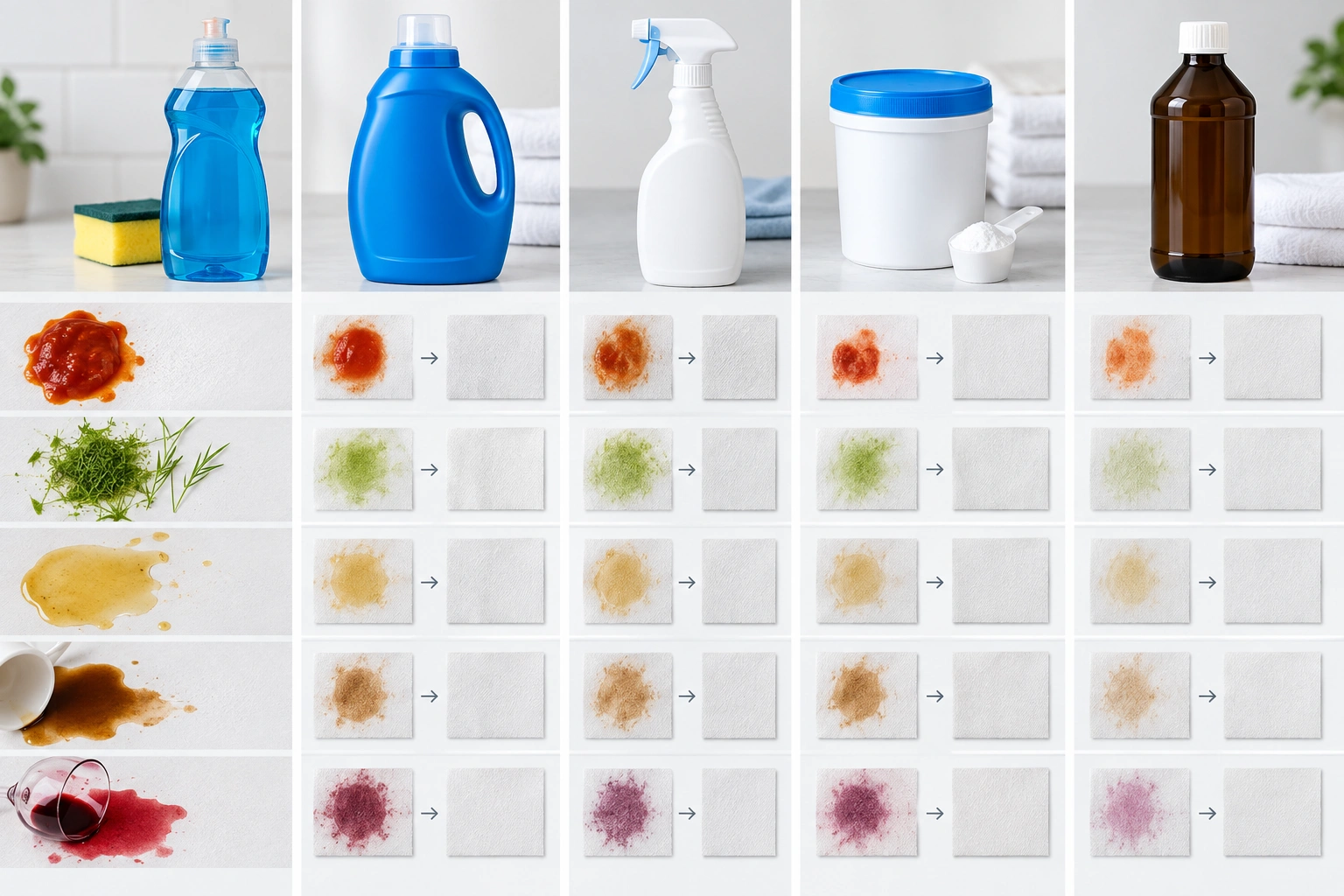
Dish soap
Best for: grease, oil, makeup
Trade-off: very handy, but not ideal for every stain type
Dish soap is the simplest grease remover in a pinch. It is not a universal stain solution, but for food oil or makeup, it often performs well enough to get the garment into the wash cleanly.
Laundry detergent
Best for: everyday stains, pretreating, washing after spot treatment
Trade-off: less targeted than a dedicated stain remover, but more versatile
Maytag recommends enzyme detergent for many stains. Enzymes help break down biological stains and food residue, which is why detergent is often the most practical first-line option.
Enzyme stain remover
Best for: blood, sweat, food, older stains
Trade-off: may need dwell time before washing
The American Cleaning Institute notes that older stains may respond to pretreating or soaking in a product containing enzymes. That makes enzyme-based products a strong choice when the stain has already dried.
Oxygen bleach
Best for: many washable whites and color-safe items
Trade-off: usually gentler than chlorine bleach, but often slower
Oxygen bleach is generally the safer bleach option for many washable garments because it is usually color-safe when the product label says it is. It can help with stubborn stains on whites and some colors, but it still needs the right fabric and label directions.
Chlorine bleach
Best for: some whites only, if the care label explicitly allows it
Trade-off: much harsher than oxygen bleach
Chlorine bleach is not the same as oxygen bleach. It is stronger and more likely to damage colors, weaken fibers, and ruin delicate fabrics. Avoid chlorine bleach on colored clothing, silk, wool, lace, rayon, and anything labeled dry clean only unless a care label specifically says it is safe. When in doubt, skip it.
Hydrogen peroxide
Best for: some whites and certain stains
Trade-off: can lighten some colors
Hydrogen peroxide can be useful, but it is not harmless on colored clothing. Test it first on an inconspicuous spot and avoid assuming it is color-safe.
White vinegar and baking soda
Best for: occasional household use, odor-related cleanup, mild stain help
Trade-off: useful as optional helpers, but not primary stain removers
These are popular because they are easy to find. They may help loosen residue, reduce odor, or support a cleaning routine, but they are not the main stain remover for most clothing stains. Use them as backup helpers when the stain type and fabric make sense, not as a catch-all fix.
How to treat whites, colored clothes, and delicate fabrics safely
Fabric safety matters as much as stain removal.
Whites
White cotton and other bleach-safe fabrics give you the most options. You can usually use detergent, enzyme products, and, if the label allows, oxygen bleach. Still, do not jump straight to chlorine bleach unless the care label clearly permits it.
Colored clothes
Colored fabric needs a colorfastness check before stronger stain removers. Wirecutter recommends testing stain remover on a hidden seam, waiting five minutes, rinsing, and letting it air-dry to check for fading or color change. That small test is worth doing on shirts, dresses, and anything you do not want to lighten.
Delicate fabrics
Silk, wool, rayon, and similar fabrics usually need gentler handling:
– Use cold water unless the care label says otherwise
– Avoid aggressive scrubbing
– Prefer mild detergent over harsh spot treatments
– Blot or squeeze instead of rubbing
If the fabric is delicate and the stain is minor, gentler repeated treatment is usually safer than one aggressive attempt. For silk and wool, it is often better to dab with diluted mild detergent and a clean cloth than to soak heavily or use strong bleach.
Pre-treating, soaking, and washing stained clothes correctly
A practical sequence usually works better than random product layering.
A simple order that makes sense
- Remove excess stain
- Pre-treat with the right product
- Let it sit for the recommended dwell time
- Rinse or soak if needed
- Wash according to the care label
- Check before drying
Maytag’s guidance includes applying enzyme detergent and letting it sit, or using mild detergent with cold water for delicate fabric. The ACI also notes that older stains may respond to pretreating or soaking with enzymes before laundering.
How long should it sit?
Use the product label when available. If you are using a general stain remover, a short test period is safer than leaving it on indefinitely, especially on color-sensitive fabric. Wirecutter’s five-minute hidden-seam test is a useful model for checking safety before full treatment.
Should you repeat treatment?
Yes, if the stain is lighter but still visible. Repeating a safe treatment is often better than escalating too quickly. If the stain remains after washing, the ACI says you can rewash using a bleach safe for fabric, if appropriate.
How to remove old or set-in stains
Old stains are not hopeless, but they are less forgiving.
The main difference is that the stain has had time to bond with the fibers. That means:
– Pretreating matters more
– Soaking can help
– You may need multiple rounds
– Over-scrubbing becomes a real risk
A good step-by-step method for set-in stains is:
- Soak first if the stain type allows it. Use cold water for blood, sweat, or unknown stains; use a stain-specific soak for grease or food if the product label allows.
- Spot-treat the stain after soaking. Apply the right product directly to the mark and let it sit for the label-recommended time.
- Wash normally. Use the safest water temperature for the stain and fabric.
- Check before drying. If the stain is still faintly visible, do not put it in the dryer yet.
- Repeat or rewash if needed. A second round is often better than heat-setting the stain.
For example, a dried coffee stain on a cotton shirt may respond to enzyme detergent plus a soak. A dried grease stain may need dish soap before washing. A dried blood stain should still be treated with cold water, not hot.
If the stain does not change after two careful attempts, stop before you damage the fabric.
Common stain-removal mistakes that make stains worse
The most common errors are simple, but costly:
- Rubbing instead of blotting: spreads the stain and roughs up fibers
- Using the wrong water temperature: especially hot water on blood or unknown stains
- Putting the item in the dryer too soon: heat can set the stain and make removal much harder
- Skipping a spot test: risky on colored or delicate clothing
- Mixing products carelessly: never combine cleaners unless the label says it is safe
- Using too much force: aggressive scrubbing can fade or distort fabric
A useful rule: if the stain is getting smaller but the fabric is getting worse, stop and switch to a gentler method.
Emergency stain removal while traveling or away from home
When you are in a hotel room, airport lounge, classroom, or office bathroom, the goal is containment first.
A minimal travel fix
- Blot with paper towels or napkins
- Rinse with cool water if available
- If you have no laundry detergent, use a little hand soap on the spot and rinse lightly
- Keep the item away from heat until you can wash it properly
If you only have plain water, that is still useful. Wet a napkin or cloth, blot the stain, and keep lifting out as much as you can. If you have hand soap, use a tiny amount on a damp napkin or your fingertips, work it into the stain gently, then rinse with water if possible. Even a basic improvised cleanup is better than letting the stain sit untouched.
A stain pen is especially useful for commuters and frequent flyers because it gives you a quick pretreat until you can do a full wash later.
For travelers who also want to protect the bag carrying those clothes, these guides may help: how to remove stains from luggage and how to protect a backpack from rain.
When to replace or consult a professional
Some stains are likely to stay visible, especially if they are old, heat-set, or on a fragile fabric. Professional help is worth considering when:
- The item is expensive or sentimental
- The fabric is silk, wool, leather, or another delicate material
- The stain has already been through the dryer
- The label says dry clean only
- The stain remover starts changing the color or texture of the fabric
A stain is probably becoming permanent if it has already been heat-set, has not changed after careful repeat treatment, or appears to have damaged the fabric itself. If the mark is still shrinking with each round, it is usually still salvageable. If it is not improving and the garment is still wearable, it may be better to stop than to damage it further.
The goal is not to win every stain battle at any cost. It is to keep the clothing usable.
Quick reference: what to use by stain type
| Stain type | Best first move | Water temperature | Useful product |
|---|---|---|---|
| Grease/oil | Blot, then pretreat | Warm if fabric allows | Dish soap or detergent |
| Coffee/tea | Rinse and pretreat | Cold | Detergent or enzyme remover |
| Wine | Blot and rinse quickly | Cold | Detergent or stain remover |
| Ink | Dab carefully from behind | Cold | Stain remover or detergent |
| Blood | Rinse immediately | Cold | Mild detergent or enzyme remover |
| Sweat | Pretreat underarms | Cold | Enzyme detergent |
| Makeup | Lift excess, then treat residue | Usually cold | Dish soap or detergent |
FAQs
What is the fastest way to remove a fresh stain from clothes?
Blot or scrape off excess, rinse if the stain type allows it, and keep the item out of the dryer. Then pretreat based on whether it is grease, protein, or dye-based.
Should I use cold water or hot water?
Cold water is the safer default, especially for unknown stains and protein stains like blood. Warm water can help grease.
Can I use dish soap on clothes?
Yes, especially for grease, oil, and makeup stains. It is not the best choice for every stain, but it is very useful for oily residue.
Does vinegar remove stains?
It may help in some cases, but it is not a universal stain remover. Match the product to the stain type instead of relying on vinegar for everything.
Is hydrogen peroxide safe on colored clothes?
Not always. Test it on a hidden area first because it may lighten some fabrics.
Why should I not put stained clothes in the dryer?
Heat can set the stain and make removal much harder.
What should I do if the stain is old?
Pretreat or soak with an enzyme-based product if the fabric allows it, then wash. If it remains, repeat carefully rather than scrubbing aggressively.
What if I’m traveling and have almost nothing with me?
Blot with paper towels or napkins, use plain water if you have it, and apply a little hand soap if available. Then wash properly later.
How do I know if a stain remover is safe?
Test it on a hidden seam first, wait, rinse, and let it air-dry to check for fading or texture change.
When should I stop trying at home?
Stop if the fabric starts to fade, distort, or weaken, or if the item is delicate, valuable, or dry clean only.