
How to Remove Stains from White Clothes Without Damaging the Fabric

White clothes show stains fast, but they also reward the right treatment. The safest approach is to match the stain, fabric, and water temperature before you wash. In most cases, that means blotting first, rinsing with the right water temperature, pre-treating with detergent or a stain remover, and not putting the garment in the dryer until the stain is gone.
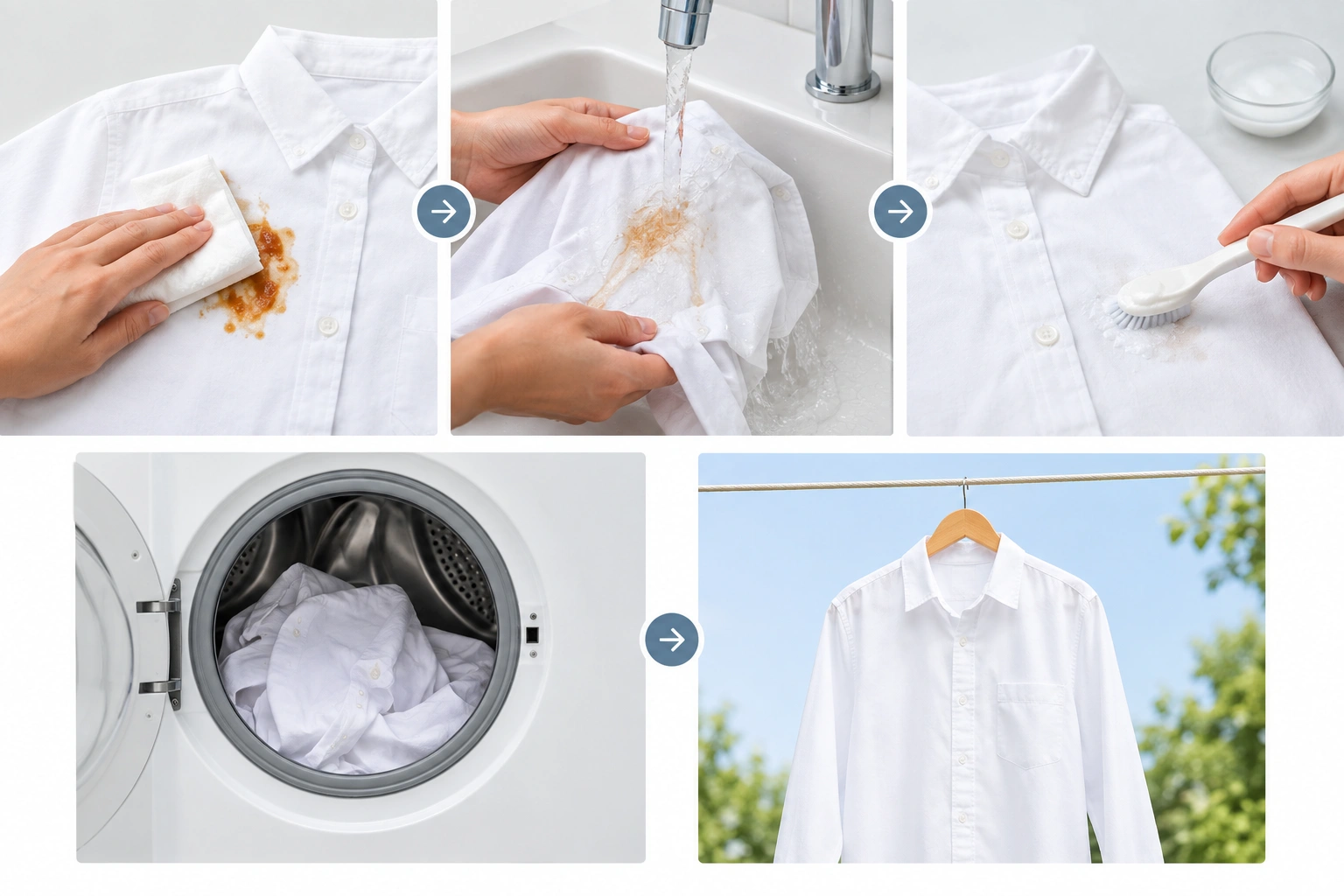
If you remember only one rule, make it this: heat can set a stain. A faint mark that survives a dryer cycle can become much harder to remove later. That is why stain removal is a process, not a single wash.
For travelers, commuters, students, and anyone who lives in white shirts, uniforms, socks, or undershirts, the goal is not just to clean the fabric once. It is to avoid yellowing, gray dullness, and fabric damage that shortens the life of the garment. If you also care for gear that gets exposed to dirt and spills, you may find related cleaning guides on stain removal from luggage and protecting a backpack from rain.
Quick stain reference:
– Sweat: rinse first, then use detergent or a perspiration-safe pre-treatment
– Oil: blot, then apply liquid detergent or a degreasing stain remover
– Coffee: rinse from the back with cold water, then pre-treat
– Wine: blot immediately, then flush with cold water and pre-treat
– Makeup: lift excess first, then treat with detergent or stain remover
– Food: scrape off solids carefully, then rinse and pre-treat
Quick Answer: The Safest Way to Remove Stains from White Clothes
If the stain is fresh, blot excess material, rinse from the back of the fabric if possible, and treat it before washing. Use cold water when you do not know the stain type; use warm water for greasy stains. Wash with a detergent or stain remover that fits the fabric, then air-dry and check the result before using heat.
For white cotton and other sturdy fabrics, enzyme-based detergents, oxygen bleach, and stain removers are common first-line tools. For old or set-in stains, pretreating before washing matters more than simply running the item through another cycle.
Identify the Stain and Check the Fabric First
Not every stain behaves the same way. Protein stains like blood and sweat respond differently from oily stains like makeup or salad dressing. Tannin stains, such as coffee and wine, often need quick rinsing and detergent-based treatment. Dirt and grass usually need a combination of pre-treatment and mechanical washing action.
Fabric matters just as much. White cotton is usually more forgiving than silk, wool, lace, or blends with special finishes. White synthetic blends and embellished garments can react differently from white cotton, so the care label should override general advice. Always check the care label before using bleach, hot water, or aggressive scrubbing. A white shirt that looks sturdy may still have trim, stitching, or fibers that react badly to strong chemicals.
A useful decision rule is simple:
- Unknown stain: start with cold water and a gentle detergent
- Greasy stain: use warm water and a degreasing pre-treatment
- Protein stain: use cool or cold water first
- Delicate fabric: use the mildest method that can still lift the stain
If you are unsure, test the product on a hidden seam first. That small step can prevent fading, texture changes, or a larger stain halo.
What to Do Immediately Before Washing
The first few minutes matter. Fresh stains are easier to lift because they have not bonded deeply into the fibers. Blot, do not rub. Rubbing spreads the stain and can push it deeper into the weave.
For many stains, flush the back of the fabric with cool water so the stain moves out of the fibers instead of through the front. If the stain is oily, a small amount of liquid detergent or stain remover can help break the surface tension before washing.
A practical pre-treatment routine looks like this:
- Blot excess liquid or carefully lift off solids with a clean cloth or paper towel, without pushing them deeper into the fabric.
- Rinse with the correct water temperature for the stain.
- Apply detergent, stain remover, or another suitable pre-treatment.
- Let it sit for the product’s recommended time.
- Wash according to the care label.
- Air-dry and inspect before using heat.
For delicate white fabrics, keep the treatment gentle. A soft cloth, fingertip pressure, or a soft brush is usually enough. Harsh scrubbing can fuzz the surface and make the fabric look older even if the stain lifts.
Which Water Temperature to Use for Different Stains
Water temperature is not just a comfort choice. It affects how stains bond to fabric and how cleaning agents work.
Cold water is the safest default when you do not know what caused the stain. It helps prevent many stains from setting and is often the best first step for blood, dairy, and other protein-based spots.
Warm water is often better for greasy stains because it helps loosen oils. Tide’s stain-removal guidance notes that if you are not sure about the stain type, cold water is usually best, but greasy stains generally call for warm water.
Hot water can help with some sturdy white cotton items, especially when paired with a product designed for whites. But hot water is not a universal fix. It can set certain stains and may damage delicate fibers or shrink fabric.
A simple rule:
– Choose cold when unsure
– Choose warm for grease
– Use hot only if the care label allows it and the stain type supports it
Best Stain-Removal Methods for White Clothes
Different products solve different problems. The best method is the one that matches the stain and the fabric, not the one with the strongest label.
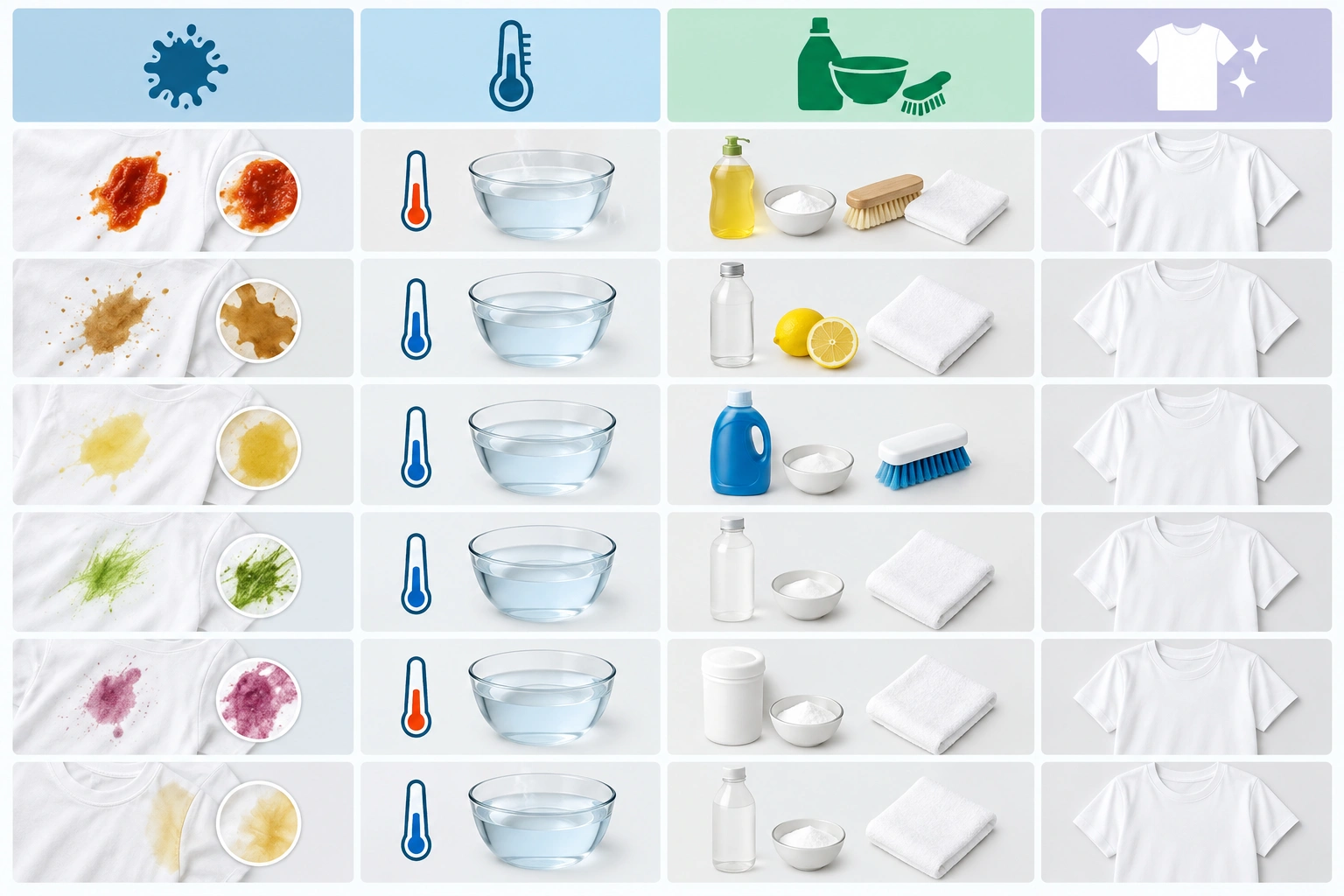
Best first choice for most fresh stains: laundry detergent
Detergent is the baseline. It works well as a pre-treatment for many everyday stains, especially when applied directly before washing. Enzyme-based detergents are especially useful because they help break down stain components. For food, coffee, makeup, and many mixed stains, this is usually the first thing to try.
Best for greasy or oily stains: stain remover or liquid detergent
Commercial stain removers are convenient when you need a direct, targeted treatment. They are often a good choice for oil, makeup, salad dressing, and other grease-heavy stains on sturdy white garments. Liquid detergent can also work well because it helps cut through oils. Always check the label for fabric compatibility.
Best for whitening and many white fabrics: oxygen bleach
Oxygen bleach is often the safer whitening option for many white fabrics. It can help lift stains without the same harshness associated with chlorine bleach. It is especially useful when you want a whitening boost but do not want to risk fabric damage as much. For white cotton and other washable sturdy fabrics, it is often a strong next step when detergent alone is not enough.
Best for yellowing or residue on whites: hydrogen peroxide
Hydrogen peroxide is often used for whitening and stain lifting on white fabrics. It can be helpful on yellowing, makeup residue, and some organic stains. It is still wise to test it first on delicate or structured garments.
Best for odor or perspiration-related buildup: white vinegar
White vinegar is commonly used for odor and some stain situations, especially perspiration-related discoloration. The American Cleaning Institute notes that for perspiration stains, white vinegar may be used on old stains, followed by rinsing. Do not mix vinegar with chlorine bleach.
Best for stubborn white cotton stains: oxygen bleach soak
For white cotton, an oxygen bleach soak can be a practical option when a stain has already survived one wash. Whirlpool notes that oxygen bleach is another option for treating stains on white and colored fabrics, and Maytag recommends it for white cotton when dealing with dark stains. It is generally a stronger everyday choice than baking soda, while still being less risky than chlorine bleach for many fabrics.
Best for a gentle spot-treatment paste: baking soda
Baking soda can be used as a paste or added to a wash load of whites. The David Suzuki Foundation notes that baking soda can be added to a load of whites, and that tougher stains may benefit from an overnight soak in hot water and baking soda. It also suggests a paste of baking soda and water for spot treatment.
How to Treat Common Stains on White Clothes
Food stains
For sauces, soup, and general meal stains, scrape off solids first, then rinse with cold water. Apply detergent or stain remover and wash in the warmest water the care tag allows. Tomato-based stains often need a quick response because pigments can cling to fibers.
Sweat stains
Sweat stains are often a mix of salt, body oils, and deodorant residue. The American Cleaning Institute notes that ammonia may be used on fresh perspiration stains and white vinegar on old ones, followed by rinsing. For stubborn discoloration, an enzyme product or oxygen bleach in the hottest water safe for the fabric may help.
Deodorant stains
Deodorant buildup often appears as white chalky marks or yellow patches under the arms. Treat it as a residue problem, not just a dirt problem. A detergent pre-treatment or a baking soda paste can help loosen the buildup before washing.
Oil stains
Oil needs a degreasing approach. Blot first, then use liquid detergent or a stain remover that can cut through grease. Warm water is usually more helpful than cold water here, as long as the care label permits it.
Coffee stains
Coffee is a tannin stain, so speed matters. Rinse promptly from the back of the fabric with cold water, then apply detergent or stain remover. If the stain is old, repeat treatment before drying rather than assuming one wash will be enough.
Wine stains
Wine stains often respond best to immediate blotting and cold-water flushing. After that, use detergent or an oxygen-bleach soak for white cotton if the care label allows it. A set-in wine stain may need more than one cycle of treatment.
Makeup stains
Foundation, lipstick, and mascara usually contain oils, waxes, or pigments. Treat them gently but directly. A small amount of detergent or stain remover on the stain itself is usually more effective than soaking the whole garment immediately.
Oxygen Bleach vs. Chlorine Bleach: What’s Safe for White Clothes?
This is one of the most important decisions in white-clothing care.
Oxygen bleach is generally the safer default for many white fabrics. It can help lift stains without the same harshness associated with chlorine bleach. It is especially useful when you want a whitening boost but do not want to risk fabric damage as much.
Chlorine bleach is stronger and can be appropriate for sturdy white fabrics, especially white cotton, if the care tag allows it. Whirlpool notes that for sturdy fabrics and especially tough stains, chlorine bleach can be considered if the garment care tag allows it. Maytag also notes that oxygen or chlorine bleach can be added for white cotton to help with dark stains.
Use chlorine bleach carefully:
– only when the care label allows it
– never on delicate fibers that can be damaged
– never mixed with vinegar, ammonia, or other cleaners
If the item is a white shirt with structure, elastic, trim, or blended fibers, oxygen bleach is usually the more conservative choice. For a plain white cotton towel or T-shirt with a stubborn stain, chlorine bleach may be acceptable if the label permits it.
How to Remove Old or Set-In Stains
Old stains need more patience and more targeted treatment. Maytag recommends pretreating old or set-in stains with detergent or a special pretreating product before washing. That is the right mindset: do not treat an old stain like a fresh spill.
A good approach is:
– pre-treat the stain directly
– soak if the fabric allows it
– wash in the warmest safe water
– air-dry and inspect
– repeat if needed
Soaking helps because it gives the cleaner time to work into the fibers. For white cotton, oxygen bleach soaks are often the most practical option. If the stain changes only a little after the first wash, repeat the soak-and-wash cycle before reaching for a harsher product. Stop escalating treatment if the fabric starts to thin, fade, fuzz, or lose shape, because stronger chemicals can cause more damage than the stain itself.
What to Do If a Stain Leaves a Gray or Yellow Shadow After Washing
If the stain is mostly gone but leaves a faint gray or yellow shadow, do not dry it yet. That shadow often means residue is still in the fibers, and dryer heat can make it harder to remove later.
Try the same stain-specific treatment again, or switch to a better match for the residue:
– Yellow shadow: try oxygen bleach, hydrogen peroxide, or a perspiration-focused treatment if the stain came from sweat or deodorant
– Gray shadow: try detergent, oxygen bleach, or a second soak if the mark looks like leftover soil or detergent buildup
Air-dry and inspect again before using heat. If the shadow remains after repeated gentle treatment, it may be permanent or may require professional cleaning rather than stronger home chemicals.
Special Care for Delicate White Fabrics
Silk, wool, lace, and fine synthetics need a lighter touch. These fabrics can react badly to hot water, bleach, and strong scrubbing. Even if the stain is visible, the wrong treatment can leave the garment looking worse than the stain did.
For delicate whites:
– use cold water unless the care tag says otherwise
– choose a mild detergent or a fabric-safe stain remover
– test on a hidden area first
– avoid chlorine bleach unless the label clearly allows it
– press or blot instead of rubbing
If a delicate item is expensive or sentimental, the safest move may be to stop at gentle pre-treatment and consult a professional cleaner. That is especially true if the stain is large, old, or located in a visible area like the front of a blouse.
What to Do If the Stain Is Still Visible After Washing
Do not dry it yet. Dryer heat can make the stain harder to remove later. Tide explicitly advises not putting clothes in the dryer until the stain is completely removed.
If the stain remains:
1. Inspect it while the garment is air-drying.
2. Reapply the same treatment or switch to a better-matched one.
3. Wash again using the warmest water safe for the fabric.
4. Check again before any heat drying.
This is the point where many people give up too early. A faint mark after washing does not always mean the stain is permanent. It may simply need a second treatment with a better match for the stain type.
Common Mistakes That Make White Clothes Look Worse
The biggest mistakes are usually avoidable:
- Drying too soon: sets the stain
- Using the wrong water temperature: can lock in some stains
- Scrubbing too hard: damages fibers and can make the area look worn
- Using chlorine bleach on the wrong fabric: can weaken or discolor it
- Mixing cleaners: especially bleach with vinegar or ammonia
- Treating every stain the same way: oil, sweat, wine, and makeup need different approaches
- Skipping the care label: the label is the fabric’s limit, not a suggestion
If you are unsure, choose the gentler method first and repeat it. That is slower, but it usually protects the garment better.
When to Replace or Consult a Professional
If a white garment is badly scorched, structurally damaged, or made from a delicate fabric that has already reacted to cleaning, further home treatment may do more harm than good. The American Cleaning Institute notes that badly scorched fabrics may be damaged beyond repair.
A professional cleaner is worth considering when:
– the garment is expensive or sentimental
– the fabric is silk, wool, or heavily detailed
– the stain is large, old, or repeated in the same area
– previous treatments caused yellowing or texture changes
FAQ: Stain Removal for White Clothes
What is the fastest way to remove a fresh stain from white clothes?
Blot, rinse with the right water temperature, pre-treat with detergent or stain remover, and wash as soon as you can. Do not dry it until the stain is gone.
Can I use bleach on white clothes?
Sometimes. Oxygen bleach is the safer default for many whites. Chlorine bleach can work on sturdy white cotton if the care tag allows it, but it should not be used on fabrics that cannot handle it.
Should I use hot water or cold water?
Cold water is the safest choice when you are unsure. Warm water is often better for grease. Hot water is only appropriate when the care label and stain type support it.
How do I get old stains out of white clothes?
Pretreat first, then soak if the fabric allows it, then wash in the warmest safe water. Old stains often need more than one round of treatment.
Why did the stain get worse after washing?
It may have been heat-set in the dryer, treated with the wrong water temperature, or not fully removed before washing. Re-treat it and avoid heat until it is gone.
Is vinegar safe for white clothes?
White vinegar can help in some cases, especially with old perspiration stains, but it is not a universal cleaner. Do not mix it with chlorine bleach.
Should I air-dry or machine-dry after stain treatment?
Air-dry first. That makes it easier to see whether the stain is still there and avoids setting it with heat.
What if the stain is still visible after the first wash?
Treat it again before drying. Repeat treatment is often more effective than using a harsher product immediately.