
How to Remove Stains from Coloured Clothes Without Fading or Bleeding

Coloured clothes are less forgiving than whites. Treat them well, and they stay bright. Treat them badly, and you can turn a small spill into a faded patch, a dye-bleed problem, or a stain that never quite leaves.
The safest approach is not complicated, but it does require a little discipline: identify the stain, check the care label, test for colourfastness, and choose the mildest treatment that matches the fabric and stain type. That order matters. It keeps you from making things worse while still giving the stain a real chance to lift.
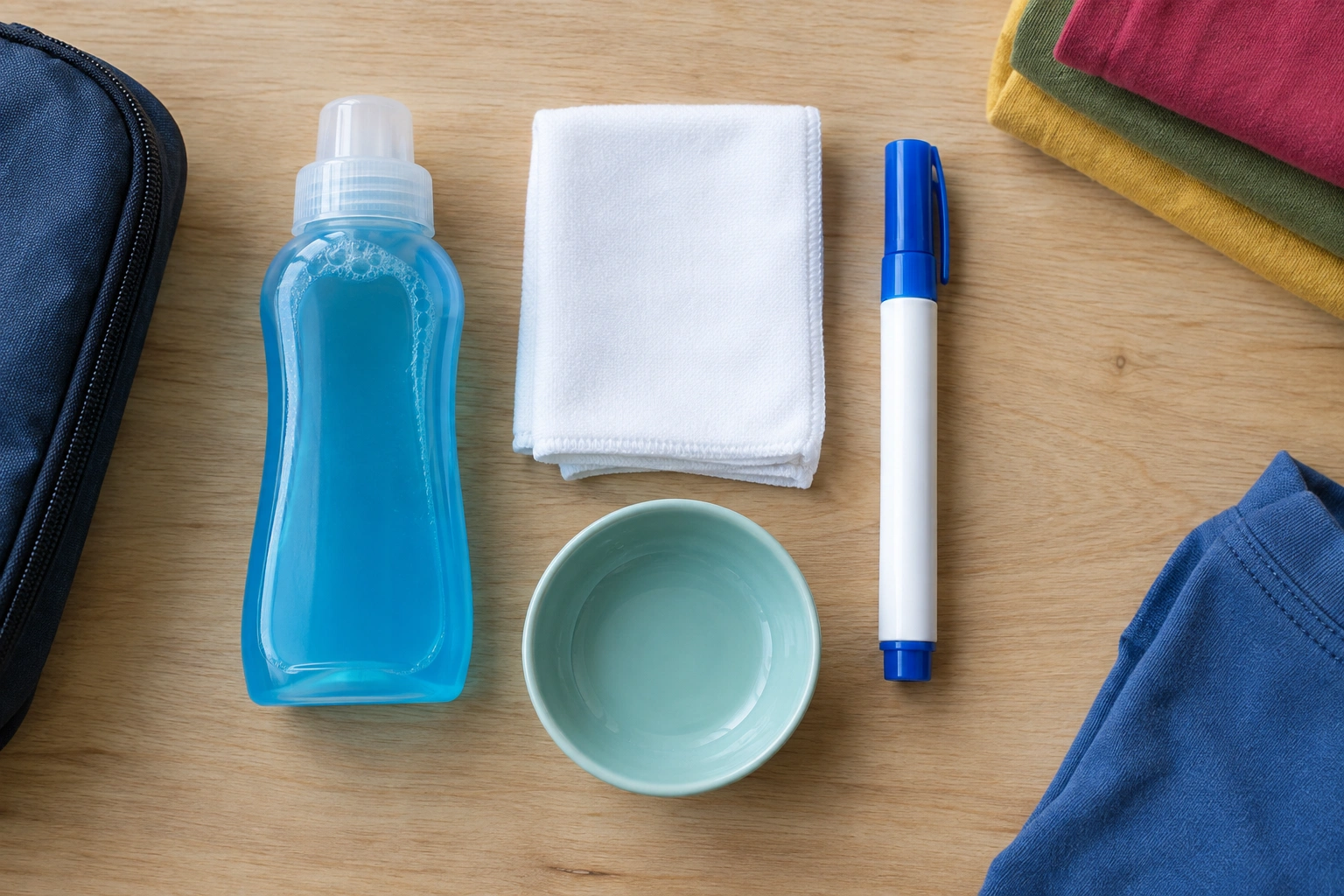
If you travel, commute, or deal with kids’ laundry, this is the practical version I’d use myself: fast action, cold water first in most cases, gentle pre-treatment, and no heat until the stain is truly gone.
What You Need Before You Start
You do not need a shelf full of specialty products. A small, sensible kit is enough for most coloured garments:
- Liquid laundry detergent, ideally one that handles everyday stains well
- An enzyme detergent or enzyme-based pretreat for food, sweat, and many organic stains
- A colour-safe stain remover
- Mild dish soap for greasy spots
- White vinegar or baking soda for limited, cautious use on some stains
- Oxygen bleach, only if the care label and colour test allow it
- A clean white cloth or paper towel
- A soft toothbrush or clean fingertip for gentle work
- A bowl or sink for soaking
- Cool or cold water
Simple decision guide
Use the gentlest product that fits the stain:
- Food, drink, sweat, blood, egg, or other organic stains: start with liquid detergent or an enzyme pretreat.
- Grease, oil, makeup, deodorant buildup, or lipstick: start with dish soap or a stain remover made for oily stains.
- Mud or dirt: let it dry first, brush off what you can, then use detergent.
- Grass: use detergent or an enzyme stain remover.
- Dye transfer or stubborn set-in stains: use a colour-safe stain remover first; if the fabric allows it, oxygen bleach may help.
- Mineral or residue-type marks: vinegar can help in limited cases, but only after a spot test.
- Odour or light residue on washable cottons and similar fabrics: baking soda can be a cautious helper, not a universal fix.
Before touching the stain, check two things:
- The care label — if the label says dry clean only, or if the garment is silk, wool, rayon, viscose, or another delicate blend, treat it more cautiously.
- Colourfastness — if the dye is unstable, even a safe-looking cleaner can pull colour out.
A quick spot test saves a lot of regret. Test your chosen product on an inconspicuous seam or hem, let it sit for about five minutes, rinse, and let it air-dry before using it on the garment.
First: Check the Care Label and Test for Colourfastness
The care label tells you what the fabric can tolerate. That is more useful than guessing based on appearance.
Use this decision rule
- Machine-washable and colourfast: you can usually try a normal stain treatment with cold water and a mild pretreat.
- Colourfast unknown: spot test first.
- Delicate or dry-clean-only: use the gentlest possible spot treatment, or stop and use a professional cleaner.
To spot test, apply a tiny amount of your chosen cleaner to a hidden area such as an inside seam or hem. Wait five minutes, rinse, and let it dry. If the fabric fades, darkens, or transfers colour to the cloth, stop there. That garment needs a milder approach.
This matters because chlorine bleach is not safe for all fabrics and may remove colour from some coloured items. It is also a poor choice for many delicate fibres.
Identify the Stain Type Before You Treat It
Different stains behave differently. The cleaner that works on grease may do little for ink. The method that helps with sweat may be wrong for makeup.
Here’s the simplest way to think about it:
- Food and drink stains like coffee, tea, juice, tomato sauce, and wine often respond well to cold water, detergent, and enzyme pretreats.
- Grease and oil stains usually need dish soap or a detergent designed to cut oils.
- Protein-based stains such as sweat, blood, egg, or milk often do well with enzyme detergent and cold water.
- Ink and dye-like stains can be stubborn and may need repeated gentle treatment.
- Makeup stains vary, but oil-based makeup usually needs a degreasing approach first.
- Mud and grass are usually best handled by drying, brushing, then washing with detergent or enzyme pretreat.
The stain type matters because the wrong method can set the stain or spread it. For example, hot water is often a bad first move on unknown stains, while cold water is usually the safer default if you are not sure what caused the mark.
Safest Step-by-Step Method for Removing Stains from Coloured Clothes
This is the method I’d use for most washable coloured clothes.
1) Remove excess without rubbing hard
Scrape off solids with a dull edge if needed. Then blot with a clean cloth or paper towel. Do not grind the stain into the fibres.
2) Flush from the back with cold water
Turn the fabric inside out if possible and rinse the stain from the back.
3) Apply a small amount of pretreat
Use an enzyme pretreat or liquid detergent for most everyday stains. Let it sit for a few minutes according to the product directions. For delicate fabrics, use a milder detergent mixed with cold water and gently squeeze it through the stain instead of scrubbing.
4) Work it in gently
Use your fingers or a soft brush. The goal is to loosen the stain, not abrade the cloth.
5) Rinse and inspect in good light
Check the stain under bright, natural light if possible. If it is still visible, repeat the pretreat once more before washing.
6) Wash, then air-dry before you celebrate
Wash the garment according to the care label. Do not machine-dry yet. Heat can lock in what is left of the stain, so air-dry first and inspect again before using the dryer.
If the stain remains, repeat the pretreat-and-wash cycle rather than jumping straight to a harsher chemical.
Which Treatment to Use for Different Stain Types
Here’s a practical comparison to help you decide quickly.
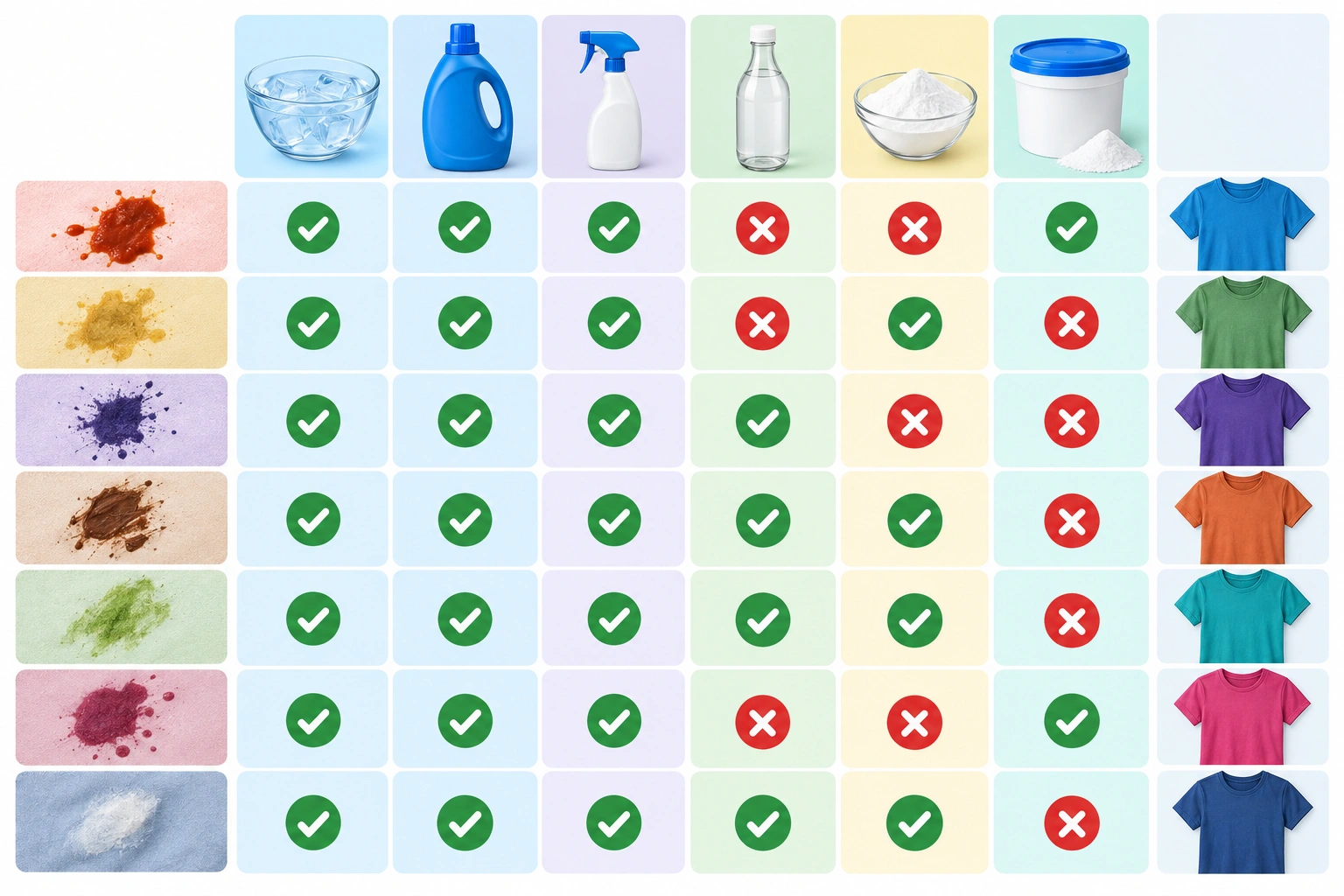
| Stain type | Best first choice | Water temp | Notes for coloured clothes |
|---|---|---|---|
| Coffee, tea, juice | Enzyme detergent or liquid detergent | Cold | Treat quickly; repeat if needed |
| Grease, oil, makeup | Dish soap or detergent | Cool to warm | Warm water can help greasy stains, but test first |
| Sweat | Enzyme detergent | Cold | Good for collars, underarms, and sportswear |
| Tomato sauce | Enzyme pretreat, then detergent | Cold | Rinse from the back first |
| Ink | Colour-safe stain remover | Cold | Spot test carefully; may need multiple rounds |
| Mud | Dry first, brush off, then detergent | Cold | Do not rub wet mud deeper into the fabric |
| Grass | Enzyme detergent or stain remover | Cold | May need repeat treatment |
| Blood | Cold water and enzyme detergent | Cold | Treat promptly; avoid hot water |
| Dye transfer | Separate item and treat promptly | Cold | Use a colour-safe stain remover first; oxygen bleach may help on suitable fabrics |
| Set-in stains on bleach-safe cottons | Oxygen bleach | Cool to warm, if label allows | Use only if the garment is colour-safe and the label permits soaking |
| Colour transfer on bleach-safe whites or specific bleach-safe fabrics | Chlorine bleach only if the label allows it | Follow label | Not for most coloured garments; avoid on silk, wool, and many delicate fabrics |
The distinction that matters most is this: chlorine bleach only when the fabric allows it, oxygen bleach when colour safety is the priority. If the fabric is not clearly bleach-safe, do not guess.
Cold Water vs Warm Water: What to Use and When
Cold water is the safest first move for coloured clothes because it lowers the risk of dye bleeding and helps prevent many stains from setting.
That said, greasy stains are the main exception. Cold water is usually best if you are unsure of the stain type, but greasy stains may call for cool or warm water if the care label allows it. So the decision rule is simple:
- Unknown stain or bright coloured fabric: cold water first
- Greasy stain: consider cool to warm water if the care label allows it
- Delicate fabric: stay cold unless the label says otherwise
I would not use hot water as a default on coloured clothes. Hot water can set some stains and can increase the chance of colour loss.
How to Avoid Color Bleeding and Fabric Damage
A few habits protect both the stain and the garment.
Work gently, not aggressively
Hard rubbing spreads the stain and can fuzz the fabric. Blot, press, and lift instead.
Treat from the outside inward
This keeps the stain from widening.
Use one product at a time
Mixing cleaners is a bad idea unless a specific product label says it is safe. You also want to know which treatment actually worked.
Avoid chlorine bleach unless the label allows it
This is the big one. Chlorine bleach can strip colour from some garments and damage others. It is also harsh on silk and wool, which can be badly harmed by it.
Keep heat out of the process
No dryer, no hot iron, no hot rinse until the stain is gone.
For outdoor or travel gear made from mixed materials, it helps to follow the same caution you’d use for clothing. Material-specific care beats one-size-fits-all treatment.
Fresh Stains vs Set-In Stains
Fresh stains are easier because the stain has not bonded deeply with the fibres yet. If you can get to it quickly, cold water and a mild pretreat often do the job.
Set-in stains need patience. They usually respond better to repeated gentle treatment than to one aggressive scrub. That is especially true for coloured clothes, where overworking the fabric can cause fading before the stain is even gone.
What changes with older stains
- Soak a little longer, if the care label allows it
- Repeat the pretreat cycle
- Use a stronger but still colour-safe product, such as oxygen bleach for suitable fabrics
- Stop if the colour begins to bleed
If a stain has already been through the dryer, expect a harder fight. Heat is the reason many “mystery stains” become permanent.
Travel-Friendly and On-the-Go Quick Fixes
When you are away from home, the goal is damage control.
In a hotel, office, school, or airport
- Blot immediately with water or a damp napkin
- Rinse from the back if you can access a sink
- Use a tiny amount of liquid hand soap or laundry detergent if available
- Blot again with clean paper towel
- Air-dry until you can wash properly
For commuters and parents, I like to keep a small stain kit in a backpack or tote: a travel-size stain remover pen, a few folded white tissues, and a sealed stain wipe. It is not glamorous, but it keeps a coffee spill from becoming a permanent souvenir.
If you are traveling with clothes in packed bags, a stain is often worse by the time you unpack. A quick rinse and blot in the first few minutes is usually better than waiting until laundry day.
Common Mistakes to Avoid
These are the errors that create the most damage:
- Using chlorine bleach on coloured fabric without checking the label
- Rubbing the stain hard
- Using hot water too soon
- Putting the garment in the dryer before the stain is gone
- Skipping the colourfastness test
- Treating every stain the same way
- Over-soaking delicate or unstable fabrics
One more common problem: overconfidence in home remedies. Vinegar and baking soda can be useful in some situations, but they are not universal fixes. Use them as cautious tools, not magic solutions.
Troubleshooting: What to Do If the Stain Is Still There
If the stain is still visible after one treatment, do not dry the item. Drying is what often turns “almost gone” into “permanent.”
Try this next
- Repeat the same gentle treatment once more.
- If the stain is oily, switch to a grease-cutting approach.
- If it is a dye-transfer stain and the fabric is safe for it, consider oxygen bleach or, on bleach-safe fabrics only, chlorine bleach as directed by the product and care label.
- If the fabric shows colour loss, stop and use a gentler method.
If the stain still will not budge after a couple of careful rounds, or if the fabric starts to bleed colour, it is time to stop DIY treatment.
When to Stop and Get Help
Seek professional help if the garment is:
– Silk, wool, rayon, viscose, or otherwise delicate
– Dry-clean-only
– Deeply coloured and visibly bleeding during testing
– Valuable, vintage, or irreplaceable
– Still stained after repeated gentle treatment
– Stained with something unknown and potentially reactive
When the fabric is delicate, the risk is not just the stain. It is colour loss, texture damage, and shape distortion.
Mixed-Fiber and Delicate Coloured Fabrics
Mixed-fiber garments need extra caution because one part of the fabric may tolerate treatment while another part does not.
Stop DIY treatment early if the garment contains:
– Silk, wool, rayon, viscose, or acetate
– Decorative trim, print, or bonded layers that may react differently
– A dry-clean-only label
– Loose dye, visible fading, or colour transfer during spot testing
For these fabrics:
– Avoid soaking unless the care label clearly allows it
– Avoid scrubbing, especially on textured or brushed surfaces
– Avoid oxygen bleach unless the label and spot test both support it
– Blot, spot test, and use the smallest possible amount of cleaner
– When in doubt, use a professional cleaner
Real-World Examples
Coffee on a commuter shirt
Blot the spill, rinse from the back with cold water, apply enzyme detergent, and let it sit for a few minutes. Rinse again, then wash. If a faint mark remains, repeat the pretreat once more before drying. Air-dry first so you can inspect it in good light.
Grease from lunch on a student T-shirt
Blot off excess, apply a small amount of dish soap directly to the spot, and gently work it in with your fingers. Let it sit briefly, then rinse with cool water and wash. If the stain is still visible, repeat the dish soap step before washing again.
Tomato sauce on a child’s school top
Scrape off solids, flush with cold water, then pretreat with detergent. Let it sit for a few minutes, rinse, and wash. Tomato stains often need a second round if they have started to dry, so check the fabric before drying.
Sweat marks on a coloured polo
Use enzyme detergent and cold water. Apply the pretreat to the underarm area, wait a few minutes, gently work it in, then wash. If the stain is still there, repeat once more before drying.
Ink on a coloured blouse
Spot test first. Apply a colour-safe stain remover sparingly, let it sit for the product-recommended time, then blot and rinse. If the stain lightens, repeat carefully. If the colour starts to shift, stop and use a professional cleaner.
Wine on a coloured dress
Blot immediately, rinse from the back with cold water, and pretreat with detergent or a colour-safe stain remover. Let it sit briefly, then rinse and wash. If the stain has set, repeat treatment rather than drying it between attempts.
For stain-specific help, these guides may help too: how to remove sweat stains from clothes, how to remove deodorant stains from clothes, and how to remove tomato sauce stains from clothes.
FAQs
Can I use bleach on coloured clothes?
Sometimes, but only if the care label and fabric allow it. Chlorine bleach can remove colour from some coloured items. Oxygen bleach is generally the safer option for non-colourfast fabrics, but it still needs a spot test.
What is the safest first step for a fresh stain?
Blot the excess, then flush from the back with cold water. That is the safest default when you do not yet know the stain type.
Should I treat the stain before or after washing?
Before washing. Pre-treatment gives the cleaner time to loosen the stain so the wash can finish the job.
How do I test whether a coloured garment is colourfast?
Apply a small amount of the cleaner to an inside seam, wait five minutes, rinse, and air-dry. If the colour changes or transfers, do not use that product on the garment.
Is cold water always best?
Cold water is usually the safest first choice for coloured clothes. Greasy stains are the main case where warm water may help, if the care label allows it.
What if the stain does not come out the first time?
Repeat a gentle treatment and do not dry the item. If the fabric starts to fade or the stain still will not budge, switch methods or use a professional cleaner.
Is vinegar or baking soda safe on coloured clothes?
Sometimes, but not always. They can help in limited situations, yet they are not universal stain removers. Spot test first and use them cautiously.
Final Takeaway
The safest way to remove stains from coloured clothes is to match the method to the stain, protect the dye with cold water and spot testing, and avoid heat until the job is done. That combination prevents a lot of avoidable damage and gives you the best chance of saving the garment.