
How to Remove Stains from Kids’ Clothes Without Ruining the Fabric

Kids’ clothes take a beating: yogurt at breakfast, mud after recess, grass on the knees, marker on the cuff, and the occasional mystery stain that shows up after a long day. The fastest way to save the garment is usually simple: treat the stain before it dries, use cold water first, and keep the item out of the dryer until you’re sure the stain is gone.
That default approach works because heat tends to lock many stains into fibers. If you remember only one rule, make it this one: treat first, wash second, dry last.
Quick Overview: The Fastest Way to Remove Kids’ Clothes Stains
For most everyday stains, this is the safest, parent-friendly routine:
- Blot or lift off excess mess. Don’t rub it deeper into the fabric.
- Rinse from the back with cold water if the care label allows it.
- Apply a small amount of liquid laundry detergent or dish soap to the stain.
- Gently work it in with your finger or a soft toothbrush.
- Let it sit briefly before washing. A short wait is often enough for fresh stains.
- Wash in the warmest water safe for the fabric.
- Check the stain before drying. If any mark remains, repeat the treatment.
For older stains, pretreating or soaking with a product containing enzymes can help before laundering. That’s often the best next move when the stain has already dried or gone through a wash cycle once. You can also see the same general stain-first logic reflected in Consumer Reports’ kids’ stain guide and the American Cleaning Institute stain-removal guide.
What You’ll Need Before You Start
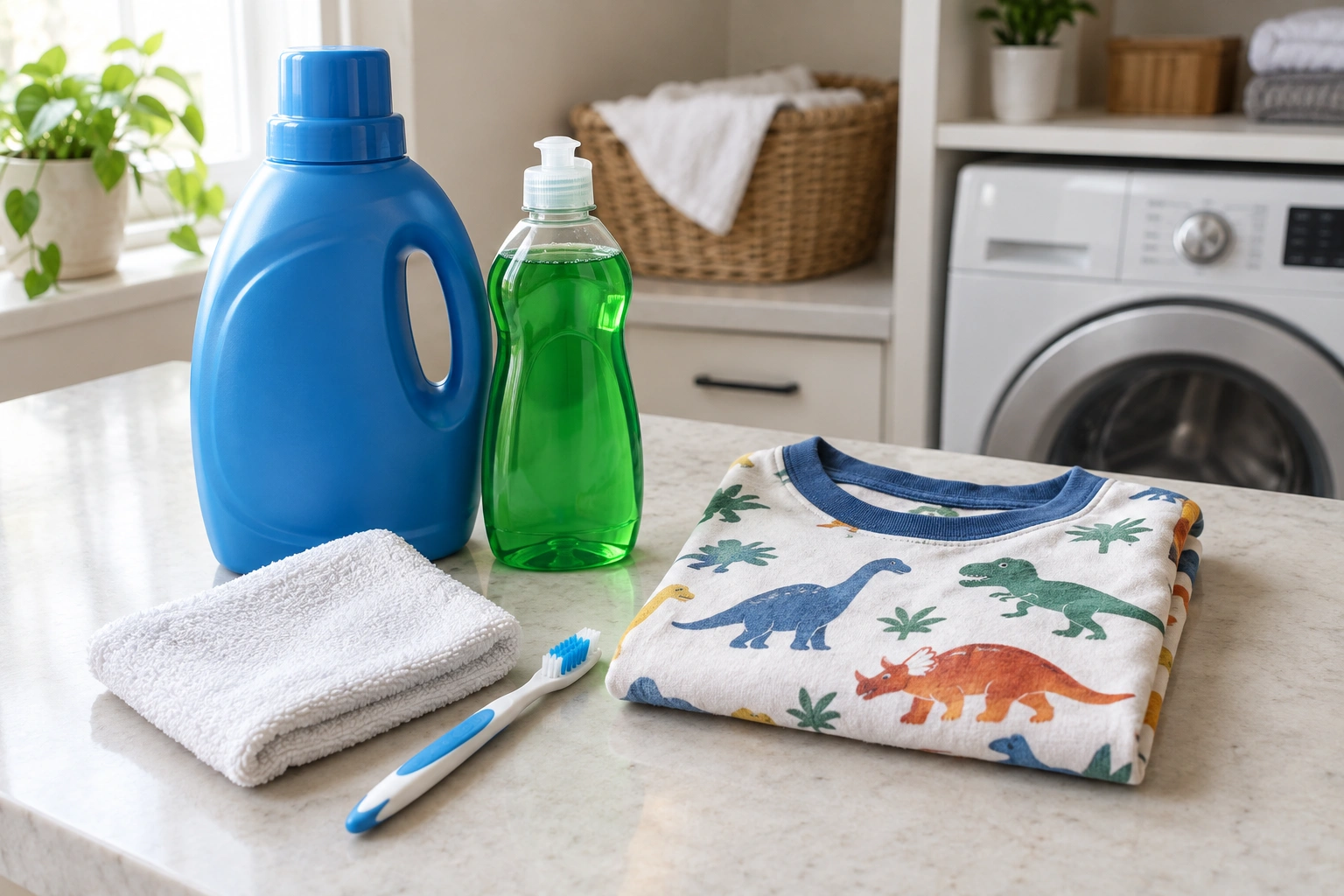
You usually don’t need a big cleaning kit. A few basics cover most kid messes:
- Liquid laundry detergent
- Dish soap
- Cold water
- Clean white cloths or paper towels
- Soft toothbrush or soft laundry brush
- Enzyme stain remover
- Oxygen bleach for color-safe soaking, if the care label allows it
A practical note on trade-offs: dish soap is great for greasy or oily stains because it cuts through residue well and is gentle on many fabrics. Commercial enzyme stain removers usually do better on food, milk, saliva, and other protein-based messes, especially if the stain has started to set. If you only keep one specialty product around, enzyme stain remover is often the more versatile choice for children’s clothing.
Which Product Should I Use?
If you want the shortest possible decision guide, use this:
- Dish soap: best first choice for grease, oil, butter, pizza, and other oily food stains.
- Enzyme stain remover: best for food, milk, formula, saliva, blood, grass, and many older kids’ stains.
- Oxygen bleach: useful for soaking whites and many color-safe fabrics when the care label allows it.
- White vinegar: sometimes helpful for light odors or mild residue, but not usually the best first choice for common kids’ stains.
- Baking soda: sometimes useful as a mild deodorizer or gentle paste, but it is usually less effective than detergent or an enzyme remover for actual stain removal.
Simple rule: start with dish soap for grease, enzyme remover for most food/protein stains, and oxygen bleach for soaking when you need a color-safe boost. Save vinegar and baking soda for narrower uses.
Check the Fabric and Stain Type First
Before you scrub anything, take 30 seconds to identify two things:
- What made the stain?
- What fabric are you treating?
That decision saves a lot of clothing.
Common stain types and what they usually need
| Stain type | Best first move | Water temperature | Notes |
|---|---|---|---|
| Food, formula, milk, yogurt | Detergent or enzyme stain remover | Cold | Enzymes help with protein and food residue |
| Mud | Let dry, then brush off, then rinse | Cold | Rinsing wet mud can spread it |
| Grass | Pretreat with detergent or enzyme remover | Cold | Often needs repeat treatment |
| Marker, pen, crayon | Blot or lift excess, then spot-treat carefully | Cold | Test first; different inks and waxes behave differently |
| Blood | Rinse immediately | Cold | Heat can set it |
| Grease, butter, pizza oil | Dish soap | Cold or lukewarm if label allows | Avoid hot water early |
Fabric type matters too
- White cotton or sturdy whites: usually tolerate stronger treatment better, but still check the care label.
- Colored clothes: safer with color-safe products and more caution around bleach.
- Delicates: use less scrubbing, less soaking, and gentler products.
- Synthetic fabrics: polyester blends and athletic wear can hold stains, but they can also react badly to high heat or harsh chemicals.
If you’re unsure, test the cleaner on an inside seam or hidden hem first. That quick colorfastness check is worth the extra minute.
Step-by-Step: How to Remove Fresh Stains from Kids’ Clothes
1) Lift off the excess
Use a spoon, dull knife, or clean cloth to remove as much of the mess as possible. For mud, let it dry first and brush it off before rinsing. For wet food, blot from the outside of the stain inward so you don’t spread it.
2) Rinse with cold water
Hold the stained area under cold running water from the back of the fabric. This pushes residue out instead of deeper into the fibers. Cold water is usually the safest first choice for kids’ clothes because it helps prevent many stains from setting.
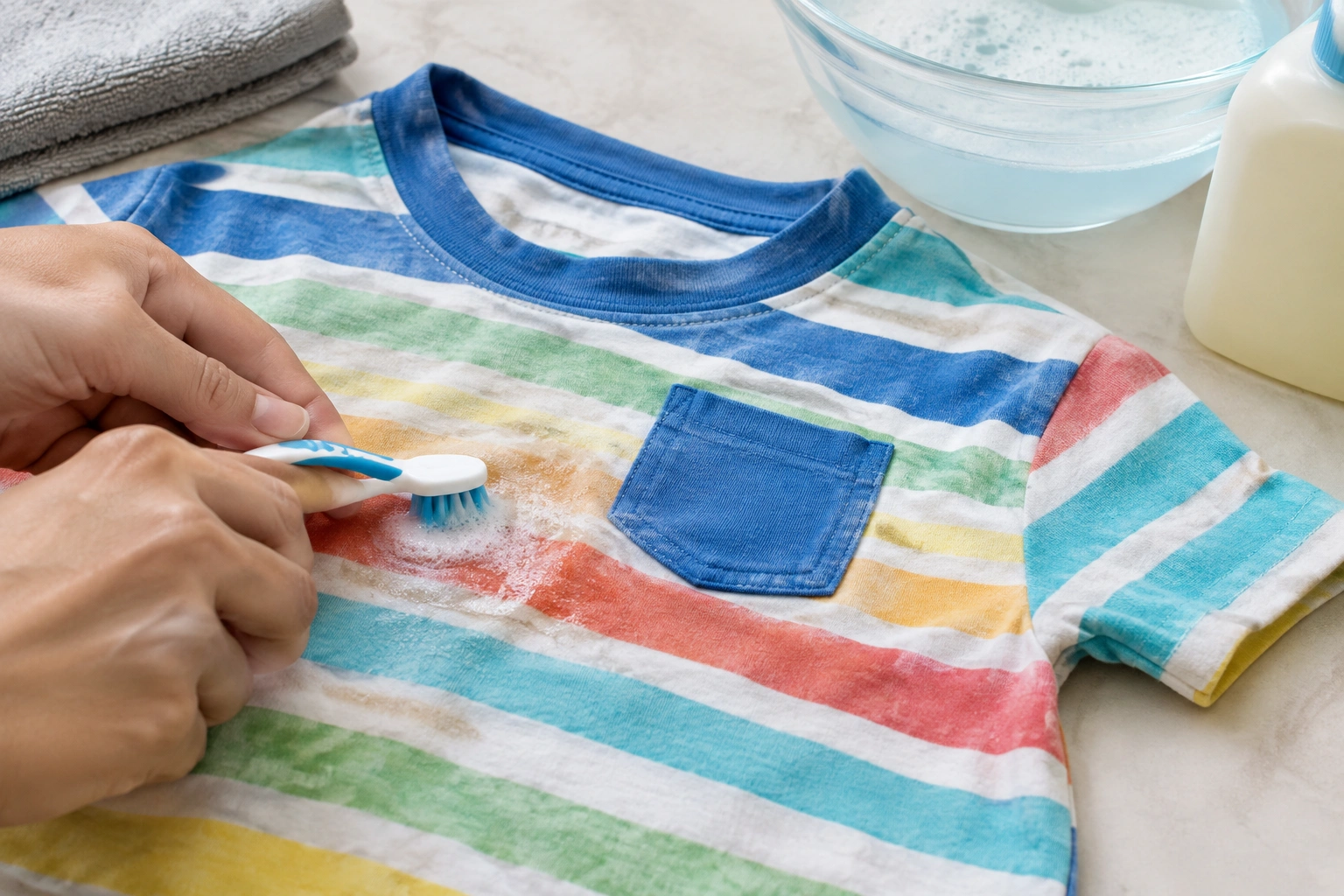
3) Pre-treat the spot
Apply a small amount of liquid laundry detergent or dish soap directly to the stain. Rub it in gently with your finger or a soft toothbrush.
If the stain is protein-based or old, an enzyme stain remover is often the better pre-treatment. That’s especially true for milk, formula, yogurt, and many food stains.
4) Soak if needed
If the stain is still visible, soak the garment in cold water. A common practical starting point is about 1 hour, though stubborn stains may need longer if the care label allows it. That soak gives the cleaner time to loosen residue without aggressive scrubbing.
5) Wash according to the care label
Use the warmest water safe for the fabric. For many kids’ clothes, that’s cold or warm, not hot. Hot water can help some oily stains, but it can also make protein stains worse if used too soon.
6) Inspect before drying
This is the step that saves clothes. Check the stained area in good light before the garment goes in the dryer. If you can still see a shadow or mark, repeat the treatment. Dryer heat can make the stain much harder to remove later.
Best Stain-Removal Methods by Stain Type
Food stains
For yogurt, applesauce, oatmeal, and similar messes, rinse cold first, then use detergent or an enzyme stain remover. Food stains often respond well to a short soak before washing.
White vs. colored: whites can usually handle oxygen bleach soaking if the label allows it; colors are safer with enzyme remover or color-safe oxygen bleach.
Mud stains
Let the mud dry completely, then brush off the loose dirt. Rinse the remaining mark with cold water and pretreat with detergent. If you wet muddy fabric too early, you usually just create a larger brown smear.
White vs. colored: both can usually use the same first steps, but colored clothes should avoid harsh bleach unless the label clearly allows it.
Grass stains
Grass is one of the more stubborn kid stains because it often contains pigment and plant residue. Pretreat with detergent or an enzyme product, then soak and wash. If the stain remains, repeat before drying.
White vs. colored: whites may tolerate oxygen bleach soaking better; colored clothes usually do better with enzyme remover and repeat treatment.
Marker, pen, and crayon stains
These are common school and art stains, but they do not all behave the same.
- Marker or pen: blot carefully first so you do not spread the stain. Spot-treat with detergent or an enzyme remover and test the fabric first.
- Crayon: scrape off any waxy buildup if possible, then use dish soap or detergent to cut the oily residue. If the stain is still visible, a color-safe soak may help.
White vs. colored: whites give you more flexibility, but colored clothes need a gentler approach and a careful test spot. Do not assume one method works for all markers or crayons.
Blood stains
Use cold water immediately. Blood is a protein stain, so heat is the enemy. If the stain is older, an enzyme cleaner can help before washing. If any trace remains after washing, don’t dry it yet.
White vs. colored: the same cold-water-first rule applies to both, but colored fabrics need extra care if you consider any bleach product.
Grease stains
Dish soap is usually the first thing to try because it helps break up oily residue. Work it in gently, let it sit, then wash. If the fabric is white and sturdy, a second treatment may help more than a harsh scrub.
White vs. colored: whites can sometimes handle a stronger follow-up treatment, while colors are safer with repeat dish soap or enzyme cleaner rather than harsher bleach.
For stain-specific home tactics, it can also help to cross-check broader laundry advice when you’re dealing with performance fabrics or layered materials.
White Clothes vs. Colored Clothes: What Changes
White clothes give you more room to use stronger treatments, but that doesn’t mean every strong cleaner is safe. Colored clothes need more restraint because fading is a real risk.
For white clothes
- Oxygen bleach is often a useful option for soaking if the label allows it.
- Hydrogen peroxide may help on some stains, but test first and avoid using it casually on delicate fabrics.
- Chlorine bleach can be stronger, but it’s also harsher and less forgiving. Use only when the care label says it’s safe.
For colored clothes
- Stick with detergent, dish soap, enzyme stain removers, or oxygen bleach labeled safe for colors.
- Test any stronger product on a hidden area.
- Avoid assuming a “stain remover” is automatically color-safe.
A simple rule: if you care more about preserving the color than chasing a perfect white finish, choose the gentler option first.
How to Treat Delicate and Synthetic Fabrics Safely
Delicate fabrics and synthetics need a lighter hand. Think less scrubbing, shorter soak times, and more label-checking.
Use these guardrails:
- Stick to cold water unless the care label says otherwise.
- Dab instead of scrub when possible.
- Avoid twisting or wringing the garment.
- Test cleaners on an inside seam.
- Skip chlorine bleach unless the label clearly allows it.
Synthetic athletic wear can hold onto body oils, food, and mud, but it can also get damaged by heat. If a stain is still visible, don’t “finish” the garment in the dryer just to save time. That shortcut often means the stain becomes permanent.
What to Do About Old, Dried, or Already-Washed Stains
Older stains usually need more patience, not more force.
A good recovery plan looks like this:
- Pretreat with an enzyme stain remover if the stain is food, milk, or bodily-fluid related.
- Soak in cold water for about an hour or longer, depending on the stain and fabric.
- Wash again.
- Inspect before drying.
- Repeat if needed.
If the garment already went through the dryer, don’t assume it’s hopeless. The stain may still lighten with repeat pretreatment and soaking, but you may need two or more rounds. The key is to avoid high heat until the stain is truly gone.
Common Mistakes That Make Stains Harder to Remove
These are the mistakes that turn a manageable stain into a permanent one:
- Putting the item in the dryer too soon
- Using hot water on protein stains like blood, milk, or yogurt
- Scrubbing hard enough to damage fibers
- Mixing cleaners without checking labels
- Skipping the colorfastness test
- Treating every stain the same way
The biggest one is heat. If you remember nothing else, remember that a stain can look “mostly gone” and still set permanently once dried.
Troubleshooting: When the Stain Still Won’t Come Out
If the stain remains after one wash, don’t immediately reach for a harsher chemical.
Use this decision path:
- If it’s a fresh stain that’s fading: repeat the same treatment once more.
- If it’s a protein or food stain: switch to an enzyme stain remover.
- If it’s a greasy stain: reapply dish soap and let it sit longer.
- If it’s on a color-sensitive fabric: stop before using stronger bleach.
- If the fabric is delicate: reduce scrubbing before increasing chemical strength.
- If the stain is marker or crayon: test a hidden area first and treat the exact stain type rather than using a one-size-fits-all method.
If a stain is still visible after repeated treatment, it may be time to accept some fading rather than risk damaging the garment. That’s especially true for delicate, synthetic, or brightly colored clothing.
Practical Examples: Real-Life Stain Scenarios
Yogurt on a cotton T-shirt
Rinse cold, pretreat with detergent or enzyme remover, let it sit briefly, then wash. If the stain is still there, soak before washing again.
Grass on a soccer uniform
Pretreat with enzyme remover, soak in cold water, then wash. Check before drying. Grass often needs a second round.
Mud on pants
Let it dry, brush off the dirt, rinse cold, then treat with detergent. Washing muddy pants before the dirt is removed usually spreads the stain.
Ink on a school shirt
Blot carefully, test a hidden area, and spot-treat gently. Don’t rub aggressively or soak the whole shirt unless the fabric can handle it.
Blood on an undershirt
Rinse immediately in cold water, pretreat if needed, and wash. Keep it out of the dryer until the stain is fully gone.
Crayon on a sweatshirt
Scrape off any waxy residue first, then use dish soap or detergent to break up the oily part of the stain. Wash and check before drying.
Marker on a uniform sleeve
Blot first, test a hidden area, and spot-treat carefully. Some markers respond to detergent or enzyme remover, but others may need repeat treatment and patience.
FAQs
Is dish soap or stain remover better for kids’ clothes?
Dish soap is a strong first choice for greasy stains and is usually gentle. A commercial enzyme stain remover is often better for food, milk, formula, and other protein-based stains. If you only try one method first, match it to the stain type.
What is the fastest way to remove a kids’ clothes stain?
For most stains, the fastest safe method is to rinse cold, apply dish soap or detergent, let it sit briefly, wash, and check before drying. If the stain is food-based or older, enzyme stain remover is often the better fast option.
Should I use cold, warm, or hot water?
Cold water is the safest default for many kids’ stains, especially blood, milk, yogurt, and other protein-based messes. Warm water can help some detergent-based washes, but hot water too early can set certain stains.
How long should I soak a stain?
A practical starting point is about 1 hour in cold water. For stubborn stains, longer soaking may help if the fabric care label allows it. Delicates usually need shorter, gentler treatment.
Can I use vinegar or baking soda?
Sometimes, yes. White vinegar can help with some light stains and odors, while baking soda may help with freshness and mild lifting. They’re not magic fixes for every stain, though, and they’re usually less targeted than detergent or an enzyme remover.
What if the stain already went through the dryer?
Treat it again. Soak, pretreat, and wash before drying a second time. You may need repeat cycles, but avoid stronger chemicals on delicate or colored fabrics unless the label allows them.
Are oxygen bleach and chlorine bleach the same?
No. Oxygen bleach is generally the safer choice for many colored fabrics, while chlorine bleach is harsher and more limited in where it can be used. Always check the care label before using either.
How do I know if a cleaner is safe for the fabric?
Test it on a hidden seam or inside hem first. If the color changes, the fabric pills, or the texture looks damaged, stop and choose a gentler method.
Treating kids’ clothing stains is mostly about timing, restraint, and matching the cleaner to the mess. Move fast, keep heat off the garment until the stain is gone, and use the gentlest method that still fits the stain. If a stain survives one round, repeat carefully before drying again.