
How to Remove Stains from Linen Shirts Without Damaging the Fabric

Linen is forgiving in some ways and fussy in others. It can handle some heat in the right context, but it also shows water marks, can crease easily, and will punish rough treatment with faded spots or a distorted weave. When a stain lands on a linen shirt, the goal is not to attack it hard. The goal is to match the stain, the fabric, and the care label so you remove the mark without creating a bigger one.
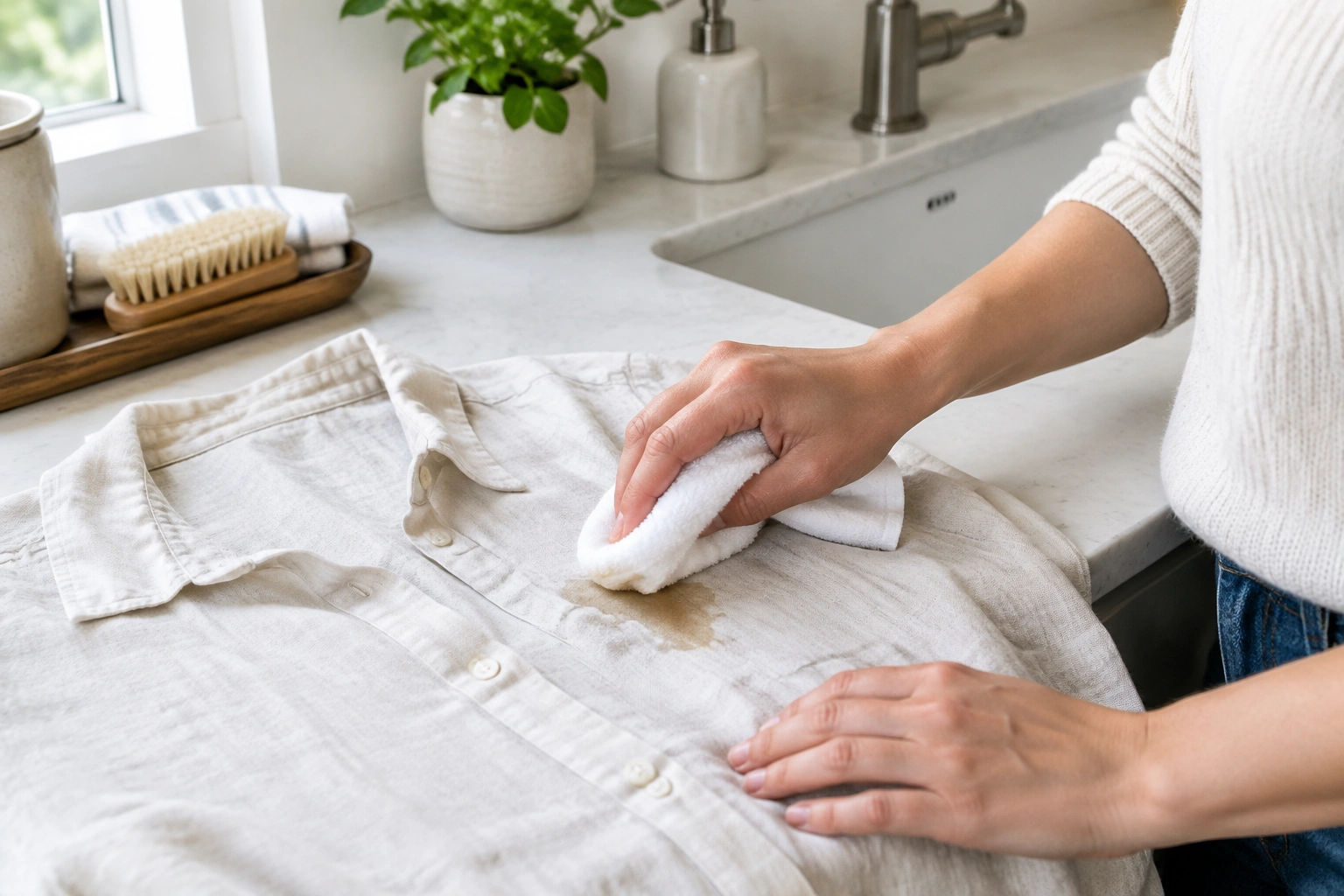
If you only remember one rule, make it this: treat the stain before you dry the shirt. Heat is what turns a manageable stain into a stubborn one, especially with oil, protein-based spills, and dye transfer. That’s why Wirecutter recommends air-drying after treatment so you can actually see whether the mark is gone before any heat can lock it in.
Quick decision tree
- Identify the stain type: food, oil, sweat, makeup, ink, dye transfer, or unknown.
- Check the care label: machine washable, hand wash only, or dry-clean only.
- Decide whether it is fresh or set in: fresh stains usually need less aggressive treatment.
- Choose the least aggressive method that fits:
- Spot treat for small or localized stains
- Hand wash for delicate, dyed, or lightly stained linen
- Machine wash if the care label allows it and the stain has been pre-treated
- Professional cleaning for dry-clean-only shirts, unknown stains, or stains that do not improve
What You Need to Know Before Treating Linen Stains
Before you touch the stain, check three things: the care label, the stain type, and whether the stain is fresh or set in.
Read the care label first
The care label decides how aggressive you can be. Some linen shirts are machine washable, some need hand washing, and some are dry-clean only. That instruction overrides any general advice.
Identify the stain category
Different stains behave differently:
- Food and drink stains often respond well to detergent and cool or lukewarm water.
- Oil-based stains need a cleaner that can break down grease.
- Sweat stains usually need pre-treatment, and sometimes an enzyme cleaner helps.
- Makeup stains often need spot treatment because they can spread if rubbed.
- Ink stains are the most unpredictable and may need repeated treatment or professional cleaning.
Fresh versus set-in stains
Fresh stains are easier because they haven’t bonded deeply with the fibers yet. Set-in stains usually need more than one round of treatment. The trade-off is simple: a fresh stain can often be handled with gentle blotting and a wash, while an older stain may need soaking or repeated spot treatment, which increases the risk of fading on dyed linen.
If the shirt is white, you have a little more flexibility. If it’s colored or garment-dyed, be more conservative and test first on a hidden seam. Wirecutter’s colorfastness check is practical: test a tiny amount of stain remover on a hidden seam, wait five minutes, rinse, and let it air-dry to see whether the fabric changes.
Tools and Materials for Safe Stain Removal
Keep the process simple. You do not need a shelf full of products.
- Clean white cloths or paper towels
- Mild liquid detergent
- Cold water
- Lukewarm water
- Soft toothbrush or small cleaning brush
- Enzyme-based cleaner for protein or body stains
- Oxygen bleach for washable white or colorfast linen, if the label allows it
- A basin or sink for soaking
- A towel for blotting
- Optional: a stain remover made for laundry, if it’s safe for the fabric
Avoid chlorine bleach unless the care label explicitly allows it. Linen can be weakened or discolored by harsh chemicals, especially on dyed shirts. A gentle cleaner is usually the better trade-off: slower, but much less likely to damage the fabric.
How to Remove Stains from Linen Shirts Step by Step
1) Blot, don’t rub
If the stain is still wet, press a clean cloth or paper towel onto it to lift as much as possible. Rubbing drives the spill deeper into the weave and can rough up linen fibers. If it’s a food spill, lift the excess first with the edge of a spoon or a dull knife before blotting.
2) Rinse from the back of the stain
Hold the stained area under cold running water from the reverse side of the fabric. This helps push residue out of the fibers instead of through them. For many fresh stains, this step alone removes a surprising amount.
3) Pre-treat with the right cleaner
Put a small amount of mild detergent or stain remover directly on the stain. Work it in gently with your fingers or a soft brush. Don’t scrub hard. Linen can handle washing, but it does not like abrasion.
For oil, makeup, or sunscreen, a grease-fighting laundry detergent or stain remover usually works better than plain water. For sweat or body stains, an enzyme cleaner can help because those stains often include proteins and body oils.
4) Let the treatment sit briefly
Give the cleaner time to work, but don’t let it dry on the fabric. A short wait is usually enough for fresh stains. For tougher stains, a longer soak may help if the care label allows it.
5) Wash according to the label
If the shirt is machine washable, wash it in the temperature recommended by the care label. If you’re hand washing, use cold or lukewarm water and a mild detergent. Cold water is the safer default when you’re unsure, especially for unknown stains or dyed linen.
6) Check the stain before drying
This is the step people skip and regret. Look at the shirt while it is still wet, then again after air-drying. Wet fabric can hide leftover discoloration, so a stain may seem gone when it is not. Wirecutter recommends air-drying the garment for exactly that reason.
7) Repeat if needed, then dry
If the stain is still visible, repeat the treatment before using any heat. Once the stain is gone, air-dry the shirt first. Tumble drying too soon can set what’s left.
Best Methods for Common Linen Shirt Stains
Here’s the quickest way to match the stain to the method.
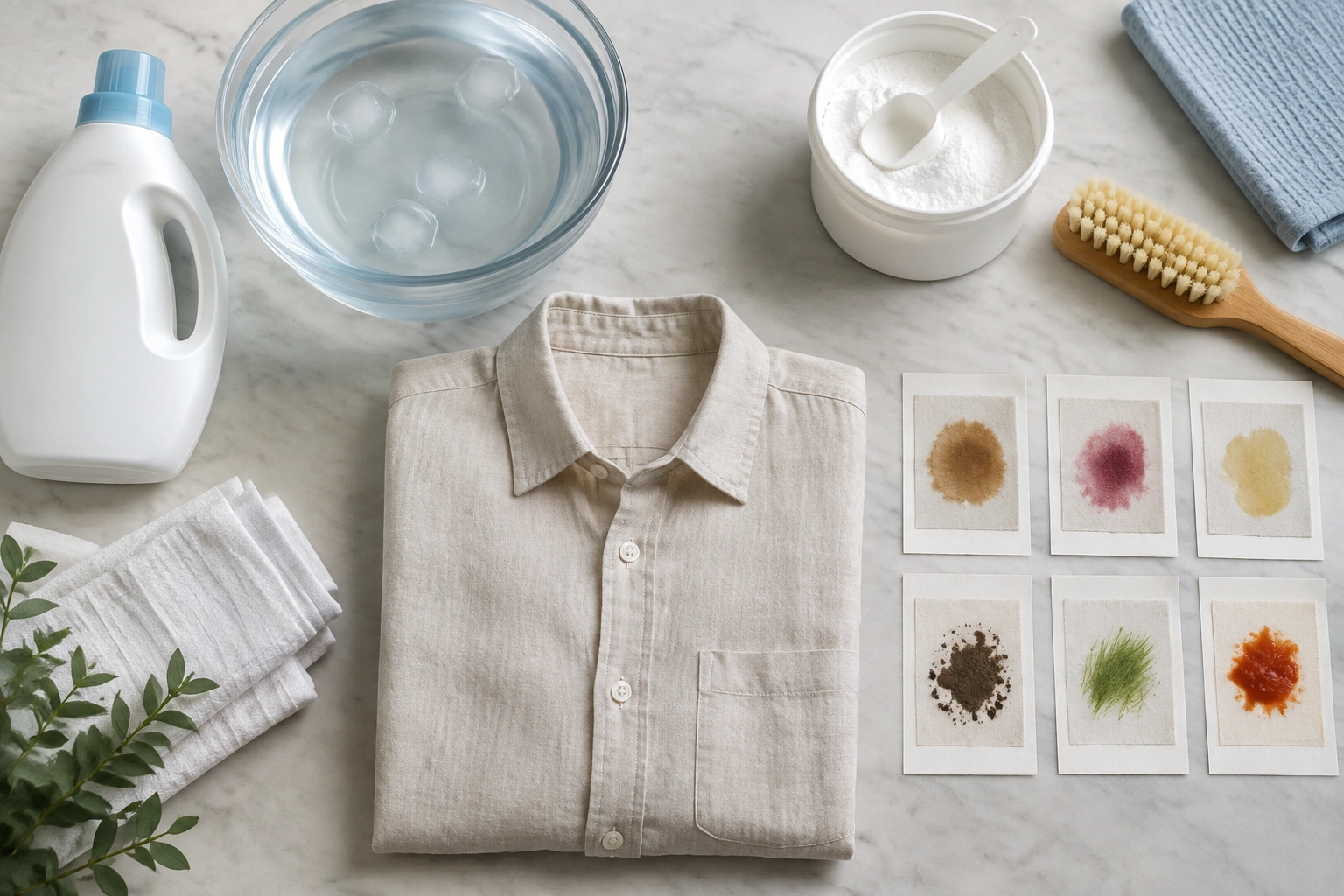
| Stain type | Best first move | Water temperature | Wash method | Notes |
|---|---|---|---|---|
| Coffee, tea, juice | Blot, rinse from back, mild detergent | Cold to lukewarm | Hand or machine wash if label allows | Treat quickly before it dries |
| Oil, salad dressing, sunscreen | Pre-treat with liquid detergent or stain remover | Cold | Spot treat, then wash | Water alone won’t lift grease |
| Sweat or body marks | Enzyme cleaner, then wash | Cool to lukewarm | Hand or machine wash | Repeat if discoloration remains |
| Makeup | Spot treat gently, then wash | Cold | Spot treat first | Test on a hidden seam if dyed |
| Ink | Spot treat carefully, repeat if needed | Cold | Spot treat only at first | Can spread if rubbed |
| Dye transfer | Treat promptly, then launder again if needed | Cold | Wash, then repeat if dye remains | Dye transfer often needs repeated laundering |
Food and drink stains
For coffee, tea, juice, tomato sauce, or syrup, speed matters. The American Cleaning Institute notes that maple syrup or corn syrup stains should be removed as soon as possible, which fits the general rule for sticky food stains: don’t let them dry into the fibers. If the spill is from something like tomato sauce or ketchup, treat it like a food stain first and avoid hot water until the stain is out. You can also use our guides on tomato sauce stains and ketchup stains on a white shirt for more targeted steps.
For fresh food stains, rinse from the back, then use a small amount of mild detergent. For set-in food stains, pre-treat first and let the cleaner sit briefly before washing. If the stain is still visible after washing, repeat the treatment before drying.
Oil-based stains
Oil needs detergent, not just rinsing. A small amount of liquid detergent worked into the stain is usually the best first move. If the stain is large or greasy, spot treat before washing. For a deeper breakdown of grease removal, see our guide to oil stains from shirts.
For fresh oil stains, blot first and apply detergent directly to the spot. For set-in oil stains, reapply a grease-fighting detergent or stain remover and let it sit a bit longer before washing. If the stain has already been heat-dried, it may need several rounds or professional cleaning.
Sweat stains
Sweat marks can be tricky because they are not just “dirty fabric.” They often include body oils and residue from deodorant. An enzyme cleaner or gentle stain remover before washing usually works better than repeated cold-water rinses alone. If the shirt is white linen, a cautious oxygen bleach soak may help if the care label allows it.
For fresh sweat stains, pre-treat and wash soon after wear. For set-in underarm discoloration, repeat the pre-treatment and wash again before drying. If the area is already yellowed or textured, stop before you damage the fabric finish.
Makeup stains
Foundation and lipstick often contain oils and pigments, so they can smear if you rub them. Lift the excess first, then spot treat. On dyed linen, test the cleaner on a hidden area before you commit.
For fresh makeup stains, blot gently and use a mild detergent or makeup-safe stain remover. For set-in makeup, use a small amount of detergent and work from the outside of the stain inward so you do not spread pigment. If the stain is heavy or waxy, a second treatment may be needed before washing.
Ink stains
Ink is where patience matters. Blot what you can, then spot treat lightly. If the stain spreads or fades unevenly, stop scrubbing and reassess. Ink on linen sometimes needs professional help, especially on expensive or dry-clean-only shirts.
For fresh ink, keep the area from spreading by using minimal liquid and blotting with a clean cloth. For set-in ink, repeated home treatment may only partially help. If the stain does not improve after one careful attempt, it is usually better to stop than to enlarge the mark.
What Not to Do When Cleaning Linen
A few shortcuts create bigger problems than the stain itself.
Don’t use chlorine bleach casually
Chlorine bleach can weaken linen fibers and strip color. Unless the care label explicitly allows it, skip it. Oxygen bleach is the gentler choice for white or colorfast linen, but even that should be label-approved.
Don’t scrub aggressively
Linen is strong, but repeated hard scrubbing can distort the weave and leave a rough patch. Use pressure, not friction.
Don’t use hot water too early
Hot water can help with some washable stains after treatment, but it can also set protein, dye, and oil stains if used at the wrong time. Cold water is the safer starting point.
Don’t tumble dry before the stain is gone
Heat from the dryer can lock in residue. Air-dry first, inspect, then decide whether another round of treatment is needed.
Don’t mix random products
Vinegar and baking soda are not universal stain fixes for linen. They can leave residue, change the feel of the fabric, or simply do nothing for the stain you’re trying to remove. Use them only if a specific stain situation calls for them, and test first on a hidden seam if the shirt is dyed or delicate.
How to Handle Set-In, Delicate, or Dry-Clean-Only Linen
Set-in stains need a slower, more cautious approach.
For older stains
If the stain has already dried, start with a pre-soak if the care label allows it. Then wash, inspect, and repeat before drying. The American Cleaning Institute notes that dye transfer stains may need repeated laundering if dye remains, which is a useful rule for stubborn discoloration in general.
For white linen
White linen gives you more room to use oxygen bleach, and some linen care guides also mention a 3% hydrogen peroxide and water mixture for white linen only. Treat that as a cautious option, not a universal fix. Test first, and never assume it’s safe for colored fabric.
For colored or delicate linen
Use the mildest method that could reasonably work. That usually means spot treatment, a short wash, and air drying. If the shirt is expensive, dark-dyed, or visibly fragile, a small mistake can leave a pale patch that’s harder to live with than the original stain.
For dry-clean-only shirts
If the label says dry clean only, don’t improvise with soaking or stain removers unless the manufacturer specifically allows it. Professional cleaning is the safer choice for those shirts, especially with ink, dye transfer, or unknown stains.
If the first treatment fails
If the stain is still there after one careful attempt, repeat the same method once if the fabric looks unchanged and the stain has clearly lightened. If that does not work, switch to a cleaner that matches the stain type better: detergent for food, grease-fighting stain remover for oil, enzyme cleaner for sweat or body stains, or oxygen bleach for washable white or colorfast linen if the label allows it.
Stop home treatment if the fabric starts to fade, feel rough, or show water marks. At that point, more scrubbing is more likely to damage the shirt than save it.
When Dry Cleaning Is Better
This is the point where a professional cleaner makes more sense than another home attempt. Seek help if:
- the shirt is dry-clean only
- the stain is ink, dye transfer, or an unknown chemical
- the linen is delicate, sheer, or expensive
- the stain has already been heat-set
- repeated treatment is causing fading or texture changes
Quick FAQs
Can I use vinegar on linen shirts?
Sometimes, but cautiously. Vinegar can be useful in some cleaning situations, but it is not a universal stain remover. Test it first on a hidden seam, especially on dyed linen.
Is baking soda safe for linen?
It can be, but only as a gentle helper and only if the garment’s care label doesn’t conflict with it. It’s better for light deodorizing or mild residue than for tough stains.
Should I use hot or cold water?
Cold is the safest starting point for unknown stains and many delicate or dyed linen shirts. Use lukewarm water only when the stain type and care label support it.
Is oxygen bleach better than chlorine bleach?
For linen, yes, in most cases. Oxygen bleach is generally the gentler option for washable white or colorfast linen. Chlorine bleach is much riskier for fiber damage and color loss.
Can I machine wash a stained linen shirt?
If the care label allows it, yes. Pre-treat first, then wash according to the label. Hand washing is the safer choice for delicate shirts.
What if the stain is still there after one wash?
Repeat the treatment before drying. If the stain does not improve, switch methods based on the stain type or move to professional cleaning.
The best linen stain removal is usually not dramatic. It’s careful, patient, and matched to the stain in front of you. That’s what saves the shirt.