
How to Remove Ketchup Stains from a White Shirt Without Setting the Stain

A ketchup spill on a white shirt looks worse than it usually is. The problem is not just the red color; tomato-based sauces contain pigments and acids that can cling to fibers, especially once heat is involved. The safest approach is to remove the excess, treat the spot with a mild cleaner, and avoid the dryer until the stain is truly gone.
If you’re dealing with a fresh spill, the job is usually straightforward. If the stain has dried, the process takes more patience, but the same basic rules apply: no rubbing, no hot water at the start, and no heat until you’ve checked the fabric in good light.
What to Do First After Ketchup Hits a White Shirt
Act quickly, but do not panic. The first minute matters because ketchup that sits on fabric has more time to bind to the fibers.
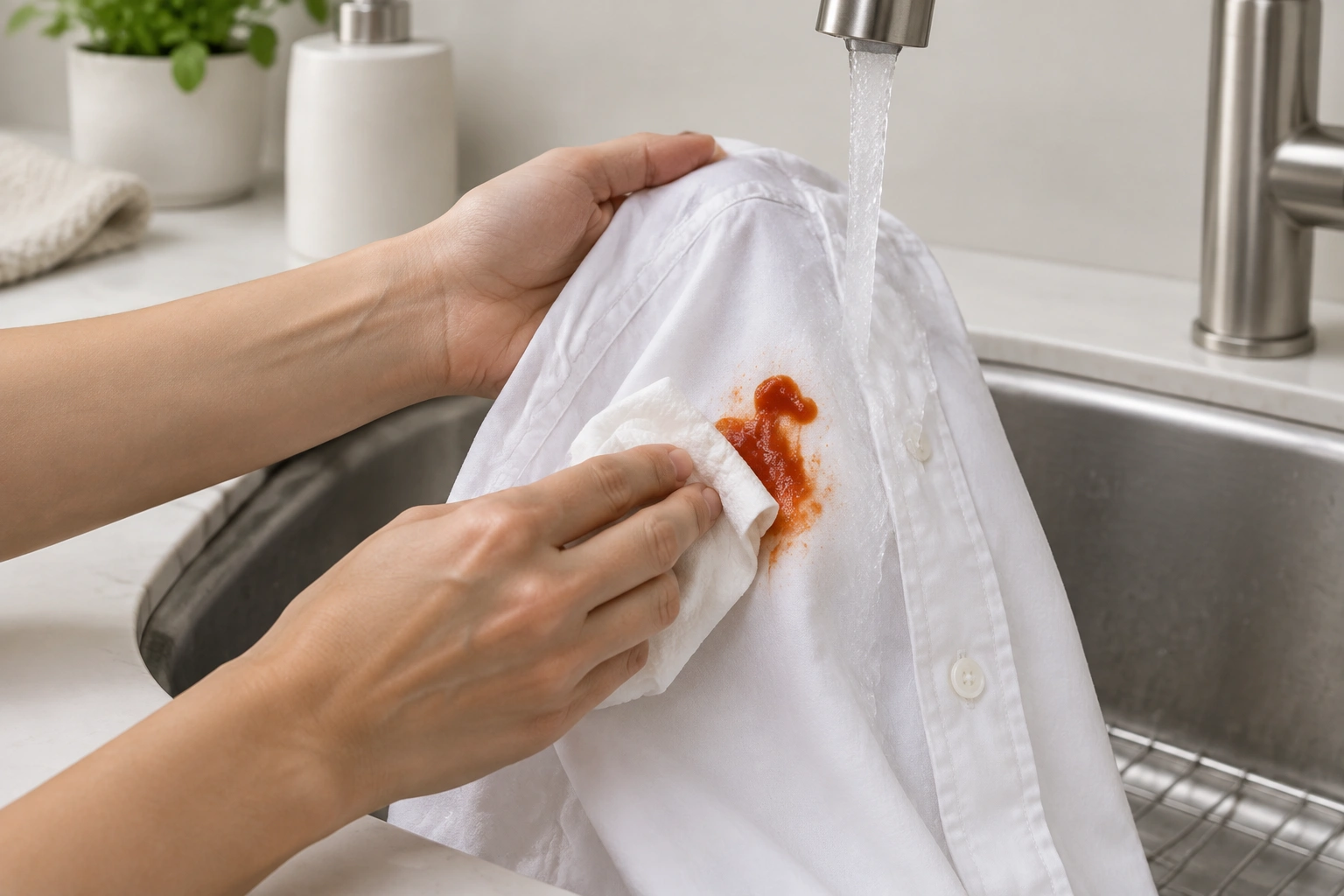
- Lift off any excess ketchup. Use the edge of a spoon, a dull knife, or a dry paper towel to remove what is sitting on top of the fabric. Work gently so you do not push the sauce deeper into the weave.
- Blot, don’t rub. Press with a clean white cloth or paper towel. Rubbing spreads the stain and can fray delicate fibers.
- Rinse from the back with cold water. Turn the shirt inside out and run cold water through the back of the stain. That helps push the ketchup out of the fibers instead of driving it further in.
- Treat before washing normally. General stain-removal guidance for fresh ketchup stains recommends using a clean white towel and applying stain treatment right away, which matches the basic rule: pre-treat first, then wash.
If you only remember one thing, remember this: do not put the shirt in the dryer or under heat until the stain is gone. Heat can make the stain much harder to remove.
Fresh vs. Dried Ketchup Stains: Choose the Right Approach
The right method depends on how long the stain has been there.
Fresh stain
A fresh stain is still moist and red. These usually respond well to cold water and a simple pre-treatment such as dish soap or liquid laundry detergent.
Dried stain
A dried stain has already had time to attach to the fibers. It often looks darker, duller, or slightly pink after the first rinse. These stains usually need soaking and repeat treatment.
Heat-set stain
If the shirt was washed and dried with the stain still visible, the stain may be heat-set. That does not always make it permanent, but it does mean you should expect more than one treatment cycle.
A useful decision rule:
- Fresh and wet: rinse, pre-treat, wash.
- Dried but not washed: pre-treat, soak, wash.
- Already dried in the dryer: soak, re-treat, wash again, then inspect before drying.
Step-by-Step Method for a Fresh Ketchup Stain
For a fresh ketchup stain on a washable white shirt, a gentle pre-treatment is usually enough.
1) Remove excess sauce
Scrape off the top layer carefully. The less ketchup left on the fabric, the less work the cleaner has to do.
2) Rinse with cold water
Run cold water through the back of the stain for several seconds. Cold water is the safer choice at this stage because hot water can help set tomato-based stains.
3) Apply dish soap or liquid laundry detergent
Use a small amount of either one directly on the stain and work it in lightly with your fingers. Dish soap helps break up greasy components in food stains. Liquid laundry detergent is often a bit stronger for clothing because it is designed for fabric.
If you are choosing between them:
- Dish soap is useful when you need a quick household option.
- Liquid laundry detergent is usually better when the stain is larger or has already started to dry.
- Commercial stain remover can be worth using if the shirt is important or the stain is stubborn.
General stain guidance for fresh ketchup stains supports applying a stain treatment promptly, then washing.
4) Let the treatment sit briefly
Follow the product label if you are using a commercial stain remover. For dish soap or detergent, a short sit time is usually enough before washing, but do not leave the shirt soaking in a cleaner that is not meant for long contact.
5) Wash in the machine with cold or cool water
Use the shirt’s care label as the final authority. For many washable whites, cold or cool water is the safest wash setting for the stain-removal stage.
6) Check before drying
Inspect the spot in bright natural light. If you still see pink, orange, or yellow shading, repeat the pre-treatment rather than using the dryer.
How to Treat a Dried or Set-In Ketchup Stain
Dried ketchup needs more patience, but the logic is the same: loosen the stain, lift it, and avoid heat until it is gone.
Soak first
For a dried stain on a washable shirt, soak the affected area in cold water for about 15 to 30 minutes to rehydrate the residue. That makes the stain easier for detergent or stain remover to break down.
Re-treat the spot
After soaking, apply liquid laundry detergent or a stain remover directly to the stain. Work it in gently with your fingers or a soft cloth.
Wash, then inspect
Run the shirt through a normal wash cycle appropriate for the fabric. Once the cycle ends, check the stain before drying.
Repeat if needed
A faint shadow after the first wash is common with dried ketchup. That does not mean the shirt is ruined. It usually means the stain needs another round of soaking and re-treatment before you wash again.
If the stain has already been through heat, repeat treatment may still help, but expect slower progress.
Dish Soap, Laundry Detergent, or Stain Remover: Which Works Best?
Each option has a different role. This comparison helps you choose quickly.
| Method | Best for | Strength | Fabric safety | Trade-off |
|---|---|---|---|---|
| Dish soap | Fresh stains, quick household fix | Moderate | Usually safe on washable whites | May need repeat treatment for dried stains |
| Liquid laundry detergent | Fresh or partially dried stains | Moderate to strong | Usually safe if the care label allows | Can take a little longer to work in |
| Commercial stain remover | Stubborn or set-in stains | Stronger targeted treatment | Depends on product instructions | Costs more and must match the care label |
| Oxygen bleach | Follow-up whitening support for washable whites | Strong whitening support | Often safer than chlorine bleach for many fabrics | Requires soaking time and fabric compatibility |
A practical way to decide:
– If the spill is fresh, begin with dish soap or liquid detergent.
– If the stain is dried, move to detergent or a stain remover.
– If the shirt is still faintly discolored after washing, use oxygen bleach if the fabric label allows it.
Apartment Therapy notes a 1:1 mix of distilled white vinegar and water for ketchup stains, followed by laundering. That can be a reasonable household option for some washable whites, but as with any home remedy, test cautiously on delicate or uncertain fabrics.
Fabric-Safe Guidance for Cotton, Polyester, and Delicate White Shirts
The care label matters more than the stain itself. A white shirt can be cotton, polyester, a blend, or a delicate fabric such as silk or rayon. Those fabrics do not all tolerate the same treatment.
Cotton
Cotton is usually the easiest to treat. It can handle blotting, rinsing, detergent pre-treatment, and many oxygen bleach soaks if the label allows them.
Polyester
Polyester often releases stains well, but ketchup can cling in the weave if it dries. Polyester shirts may need repeat treatment, especially if the stain has been heat-set.
Delicate fabrics
For silk, wool, rayon, lace, or embellished white shirts, avoid aggressive rubbing and avoid any cleaner not approved by the care label. Test on a hidden seam first if the shirt is important. If the garment is labeled dry-clean only, do not improvise with stronger home methods.
A simple rule:
– Cotton and many polyester shirts: standard stain removal is usually reasonable.
– Delicates or special finishes: use the mildest method first and stop if the fabric changes texture, color, or sheen.
For broader stain-care guidance on whites, see this white-clothing stain removal guide and general clothing stain removal steps.
When to Use Oxygen Bleach on a White Shirt
Oxygen bleach is often the next step when detergent alone does not fully remove the stain. It is commonly used as a follow-up for washable white fabrics because it can help lift lingering discoloration without the harsher bleaching action of chlorine bleach.
Use it when:
– the shirt is washable and the care label allows bleach alternatives,
– the stain is faint but still visible after washing,
– or the shirt looks clean in normal room light but shows a pink or yellow shadow in daylight.
Use caution when:
– the shirt contains delicate fibers,
– the label warns against bleach,
– or the garment has trims, prints, or embellishments.
Follow the product label for mixing and soak time. Do not guess at ratios if the package gives exact instructions. And do not mix oxygen bleach with other cleaners unless the label clearly says it is safe.
How to Tell the Stain Is Gone Before You Wash and Dry
A stain can look gone in one kind of light and still show up in another. That is why the inspection step matters.
Check the shirt:
– in bright natural light,
– after the fabric has dried completely,
– and from different angles.
Look for:
– pink tint,
– orange residue,
– yellow shadow,
– or a slightly glossy patch where the stain used to be.
If you see any of those, treat again. The dryer should wait.
This is the point where many people accidentally lock in a stain. The shirt may look acceptable while damp, then reveal a faint mark after drying. If you are not sure the stain is fully gone, air-dry the shirt instead of using the dryer so you can inspect it safely and treat it again if needed.
What Not to Do: Heat, Rubbing, and Other Common Mistakes
A few missteps make ketchup stains harder to remove than they need to be.
Do not rub hard
Rubbing pushes the stain into the fibers and can rough up the fabric surface.
Do not use hot water first
Hot water can help set tomato stains, especially if the stain is still fresh.
Do not dry the shirt early
A dryer can make a weak stain much more stubborn. Always inspect first.
Do not mix cleaners casually
Some combinations are unnecessary or unsafe. If a product label does not explicitly allow a mix, keep the cleaners separate.
Do not assume “less red” means clean
Ketchup often leaves a faint yellow or pink trace after the first wash. That trace still counts as remaining stain.
For travelers or commuters, this matters because a shirt packed while still damp or partially stained can be much harder to recover later. If you are cleaning clothing while on the road, the same logic applies: treat early, air-dry if you are uncertain, and avoid heat until you are sure the stain is gone.
Quick Troubleshooting for Stains That Still Show After Washing
If the stain remains after the first wash, use this simple decision path:
If the stain is faint
Re-treat with detergent or stain remover, then wash again before drying.
If the stain is still clearly visible
Soak the area in cold water, apply a stronger pre-treatment, and wash again.
If the shirt is white and washable but still shows a shadow
Try an oxygen bleach soak if the care label allows it.
If the shirt was already dried once
Repeat treatment, but expect multiple cycles. Heat-set stains often need patience more than force.
A useful rule of thumb: do not move to the dryer until the stain has disappeared in bright light on a fully dry shirt. If you are unsure, air-dry first and inspect again before using heat.
When to Replace or Consult a Professional
Most ketchup stains on white shirts can be handled at home. Still, consider professional cleaning or replacement if:
- the shirt is dry-clean only,
- the fabric is delicate or structured,
- the stain is on an expensive or sentimental garment,
- or repeated home treatment has changed the fabric’s color or texture.
If the shirt is part of your travel wardrobe or workwear rotation, it may be worth professional help sooner rather than later. A small stain is easier to solve than a shirt that has been overtreated.
FAQ
Should I blot or scrape ketchup off first?
Both, in that order. Gently scrape off excess ketchup first, then blot the remaining stain with a clean cloth or paper towel. Avoid rubbing.
Is cold water better than hot water for ketchup stains?
Yes, at the stain-removal stage. Cold water is safer first because hot water can set tomato stains. Heat should wait until the stain is gone.
Can I use vinegar on a white shirt?
Apartment Therapy recommends a 1:1 mix of distilled white vinegar and water for ketchup stains, followed by laundering. That said, test carefully on delicate fabrics and follow the care label.
Is dish soap enough for a fresh stain?
Often, yes. Dish soap can work well on fresh stains, especially if you rinse with cold water first and wash promptly afterward.
What if the stain is still pink after washing?
Treat it again before drying. A faint pink shadow usually means some residue remains.
Can I put the shirt in the dryer if the stain looks lighter?
No. Wait until the shirt is fully dry and inspected in good light. If any discoloration remains, repeat treatment first.
Does oxygen bleach work better than chlorine bleach?
For many washable white shirts, oxygen bleach is the safer whitening follow-up option. Chlorine bleach can be harsher and is not appropriate for all fabrics. Always check the care label.
How many times can I repeat treatment?
There is no fixed number. Repeat gentle treatment as needed, but stop if the fabric begins to look worn, thin, or discolored.
What if the shirt is polyester?
Polyester is usually washable and can be treated similarly to cotton, but dried ketchup may cling more stubbornly. Use the care label and be prepared for repeat treatment.
Can I use the same process on a delicate white blouse?
Use a gentler version. Blot, rinse, and test any cleaner on a hidden area first. If the fabric is dry-clean only, do not use home stain removers without professional guidance.