
How to Remove Soy Sauce Stains from Clothes Without Setting the Stain

Soy sauce stains are frustrating because they spread fast and darken fabric quickly. The safest approach is simple: blot first, rinse with cold water from the back of the stain, then pre-treat before washing. Avoid rubbing and avoid heat until the stain is completely gone. Heat can lock the discoloration into the fibers and make it much harder to remove later.
If you need the shortest workable version, use this:
- Lift off excess soy sauce with a clean cloth or paper towel.
- Turn the garment inside out and rinse the back of the stain with cold running water.
- Apply a small amount of liquid laundry detergent or dish soap to the spot.
- Let it sit briefly, then wash according to the care label.
- Check the stain before drying. If you can still see it, treat it again.
For a quick reference, this table shows the safest choice by situation.
| Situation | Best first move | Next step | Main caution |
|---|---|---|---|
| Fresh stain on cotton or polyester | Blot and rinse with cold water | Pretreat with detergent or dish soap | Do not rub |
| Dried or set-in stain | Rehydrate with cold water | Use stain remover or enzyme cleaner | May need repeat treatment |
| White clothing | Pretreat, then use oxygen bleach if fabric allows | Wash and inspect before drying | Avoid chlorine bleach unless label allows it |
| Colored clothing | Use color-safe detergent or stain remover | Wash in the temperature allowed by the care label | Test for fading if the fabric is sensitive |
| Silk, wool, or rayon | Blot gently and use minimal moisture | Follow care label or dry clean | Avoid aggressive scrubbing |
How to remove stains from clothes can help if you want a broader stain-removal reference after this guide.
What to Do Right Away After a Soy Sauce Spill
The first minute matters more than most people think. Soy sauce contains dark pigments and salts that can migrate into fibers quickly, especially on cotton, linen, and other absorbent fabrics. The goal is to stop the stain from spreading before you try to clean it.
Use a clean paper towel, napkin, or cloth to blot up as much as you can. Press and lift. Do not wipe side to side. Wiping pushes the liquid deeper into the weave and can enlarge the stain.
Next, rinse the stain from the back of the fabric with cold running water. That direction matters because it helps push the soy sauce out of the fibers instead of through the visible front. Persil recommends turning the garment inside out and rinsing the back of the affected area with cold water, and their stain-removal guidance also says to dab, not rub, the spill Persil soy sauce stain guide.
If you are away from home, even a quick cold-water rinse in a restroom sink is better than waiting until later. A commuter with a lunch spill on a work shirt, for example, can often improve the outcome simply by blotting and rinsing before the stain dries.
Choose the Right Approach Based on Fabric and Stain Age
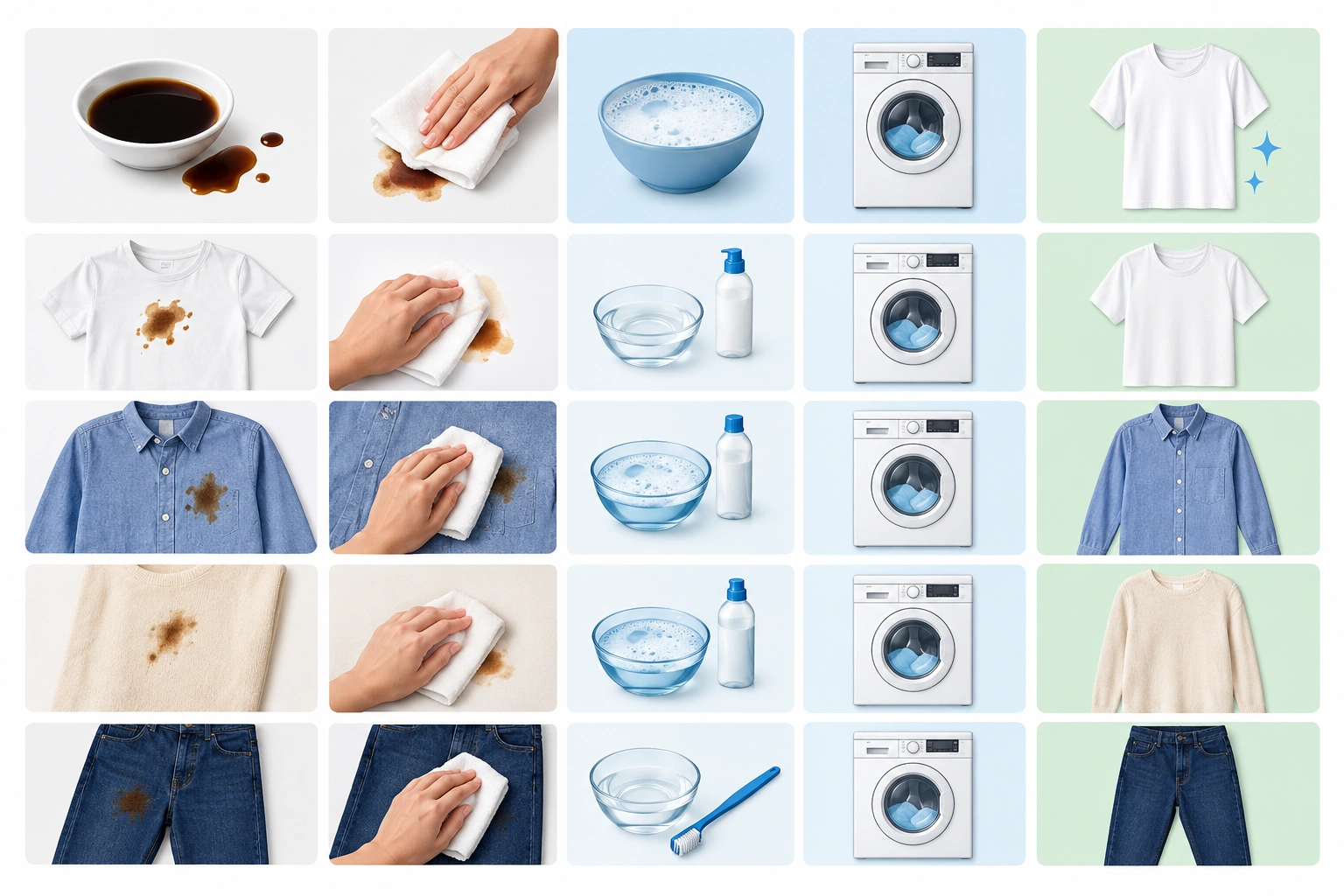
Before you reach for a cleaner, decide two things: how old the stain is and what the garment is made of. Those two factors determine whether a simple detergent pretreat is enough or whether you need a more careful approach.
Fresh stain vs. dried stain
A fresh soy sauce stain is usually easier because the pigment has not fully bonded to the fibers yet. Laundry With Olivia recommends acting within minutes for best results on fresh stains, which matches how most food stains behave: the sooner you interrupt them, the less likely they are to linger Laundry With Olivia soy sauce stain guide.
A dried or set-in stain needs more work. You usually have to rehydrate it first, then pretreat, then wash. If the garment already went through the dryer, expect to repeat the process more than once.
White clothes vs. colored clothes
White clothing gives you more whitening options, but only if the fabric is bleach-safe. Oxygen bleach is often the safer whitening route for washable whites because it can help lift discoloration without the same risk profile as chlorine bleach.
Colored clothing needs a color-safe method. That usually means liquid detergent, dish soap, or a color-safe stain remover. If the fabric is not colorfast, even a strong pretreatment can cause fading, so testing on an inside seam is worth the extra minute.
Durable fabrics vs. delicates
Cotton and polyester can usually handle a more direct pretreatment and a normal wash cycle if the care label allows it. Silk, wool, and rayon are different. They can distort, shrink, or lose finish if you scrub them hard or soak them too aggressively. For those fabrics, the stain-removal method should stay gentle, and dry cleaning may be the safer choice.
How to Treat a Fresh Soy Sauce Stain
For a fresh stain on a washable garment, this is the most reliable home method.
1) Remove excess liquid
Blot the area with a clean cloth or paper towel. Keep lifting until the cloth picks up little or no more sauce.
2) Rinse from the back with cold water
Hold the stained area under cold running water with the back side facing the stream. This helps flush the stain out rather than deeper into the cloth.
3) Apply a small amount of detergent or dish soap
Use liquid laundry detergent or a mild dish soap. You only need enough to lightly cover the stain. More product is not automatically better; too much soap can be harder to rinse out and may leave residue.
Gently work the soap into the stain with your fingers or a soft brush if the fabric is sturdy. Avoid aggressive scrubbing.
4) Let it sit briefly
A short dwell time gives the detergent a chance to break down the oily and salty components of the stain. For a fresh stain, a brief pretreat is usually enough before laundering.
5) Wash according to the care label
Wash the garment according to the care label. In many cases, cold or cool water is the safest starting point for soy sauce stains, especially on delicate or color-sensitive fabrics. If the label allows warmer water and the fabric is sturdy, you can use that later in the wash, but do not start hot.
6) Inspect before drying
If the stain is gone, you can dry the garment. If you can still see any trace of it, treat it again first.
How to Remove a Dried or Set-In Soy Sauce Stain
Old stains need patience more than force. The mistake people make here is scrubbing harder when what they actually need is more time and a better pretreatment.
Rehydrate the stain first
Soak the stained area in cold water or run cold water through it from the back. This loosens dried residue so the cleaner can reach it.
Pretreat with a stain remover or enzyme cleaner
For food stains, an enzyme-based stain remover is often a strong option because enzymes are designed to break down organic residue. If you use a commercial spray, follow the label directions closely. OxiClean’s soy sauce stain instructions, for example, say to spray directly onto the spot until saturated and let it stand for up to 10 minutes depending on severity OxiClean soy sauce stain guide.
That dwell time is useful because it gives the product time to work without forcing you to scrub the fabric more than necessary.
Wash, then reassess
After pretreating, wash the garment as the care label allows. If the stain is still visible but lighter, do not dry it. Repeat the pretreat-and-wash cycle.
That repeat step matters. A faint stain is not a finished stain. Once heat enters the picture, the remaining discoloration may become much harder to remove later.
How to Remove Soy Sauce Stains from White Clothes
White garments give you the most options, but they also show leftover discoloration more clearly.
For washable white cotton or polyester, a detergent pretreat is usually the first move. If the stain lingers, oxygen bleach can help brighten the fabric further. Use it only if the care label and fabric type allow it.
A practical rule: if the item is white but delicate, do not jump straight to the strongest whitening product. A white silk blouse, for example, needs a gentler approach than a white cotton T-shirt.
If you are unsure whether the fabric can handle whitening treatment, test a small hidden area first. That extra check is especially useful on off-white garments, where color shifts can be subtle but noticeable.
How to remove stains from white clothes is a helpful companion guide if you are dealing with a white shirt, blouse, or uniform piece.
How to Remove Soy Sauce Stains from Colored Clothes
Colored fabric needs a little more restraint. The goal is to remove the stain without pulling dye out of the garment.
Use a color-safe liquid detergent or a stain remover labeled for colored fabrics. Cold water is usually the safer starting point because it lowers the chance of dye bleed. If the care label allows warmer water later in the wash, that can help with cleaning, but do not start hot.
If the stain is on a bright or dark garment, test the pretreatment on an inside seam first. That is especially important for items that already look slightly faded or have a worn finish.
Avoid chlorine bleach on colored clothes unless the label specifically says it is safe. Even then, bleach can be too harsh for many dyed fabrics.
Fabric-Specific Care: Cotton, Polyester, Wool, Silk, and Rayon
Cotton
Cotton is absorbent, so soy sauce can sink in quickly. The upside is that cotton usually tolerates blotting, cold rinsing, and detergent pretreatment well. It is one of the easiest fabrics to treat at home.
Polyester
Polyester tends to release stains more easily than cotton, but oily residue can still cling to it. A liquid detergent pretreat usually works well. Wash according to the label and avoid heat until the stain is fully gone.
Wool
Wool needs a gentler hand. Avoid hot water, harsh rubbing, and strong soaking unless the care instructions clearly permit it. If the garment is valuable or the stain is large, dry cleaning may be the safer route.
Silk
Silk is delicate and can spot or lose sheen if treated roughly. Blot carefully, use minimal moisture, and follow the care label exactly. If the garment is labeled dry clean only, do not improvise with aggressive home methods.
Rayon
Rayon can weaken when wet and may distort if handled too roughly. Use a light touch and avoid wringing or scrubbing. If the stain is stubborn, professional cleaning is often the lower-risk option.
Home Remedies vs. Commercial Stain Removers
There is no single best product for every soy sauce stain. The right choice depends on how much stain is left, the fabric, and how much risk you can tolerate.
Dish soap
Dish soap is useful because soy sauce often contains both water-based and slightly oily components. It is a good first-line option for fresh stains and a reasonable backup for lightly set stains. Use only a small amount so it rinses cleanly.
Laundry detergent
Liquid laundry detergent is often the most practical all-around choice. It is designed for fabric and works well as a pretreat before washing. For many washable garments, this is the simplest and safest default.
White vinegar
Vinegar is sometimes suggested for food stains, but it is not automatically the best answer for soy sauce. It may help in some cases, but it is not a universal stain remover and can be risky on delicate or color-sensitive fabrics. If you use it at all, test first and keep expectations modest.
Baking soda
Baking soda can help as a mild deodorizing or paste-style aid, but it is not usually the strongest choice for soy sauce pigment. It is better as a supporting step than as the main stain remover. It may be most useful if a faint odor remains after washing, rather than as the primary stain treatment.
Enzyme cleaners and oxygen bleach
These are the stronger options for stubborn food stains on washable garments. Enzyme cleaners are especially useful when the stain has dried. Oxygen bleach can be helpful on whites and some colorfast fabrics. Both require care-label awareness and proper use.
How to Wash the Garment After Pretreating
Once the stain has been treated, wash the item using the garment’s care instructions. Hand washing gives you more control for delicate items, while machine washing is convenient for sturdy fabrics.
If the item is sturdy and the label allows it, machine wash it with the appropriate detergent. If the fabric is delicate or the stain is small and localized, hand washing can reduce wear and let you inspect the area more closely.
Do not add heat just because the stain looks lighter. That is the point where many people accidentally lock in a stain that was close to coming out.
If you are traveling and need to pack the item before it is fully clean, air-dry it first and inspect it later. That is safer than stuffing it away damp and hoping the stain disappears on its own.
If a soy sauce smell lingers after washing, wash the garment again with detergent and let it air out completely before storing it. A remaining odor can mean residue is still in the fibers, even if the stain looks faint.
Check the Stain Before Drying
This is the most important decision point in the whole process.
If any discoloration remains, do not use a dryer, iron, or other heat source. Heat can make the remaining stain much more difficult to remove. Even a stain that looks “almost gone” can become permanent after drying.
A good habit is to inspect the garment in bright natural light or near a strong indoor light before it goes anywhere near the dryer. If you can still see a shadow, re-treat it.
What to Do If the Stain Is Still Visible After Washing
If the stain is still there after one wash, treat it as a partial success, not a failure. The fabric is telling you the stain has loosened, but not fully released.
Here is the next move:
- Re-wet the stained area with cold water.
- Apply detergent, stain remover, or an enzyme cleaner again.
- Let it sit for the product’s recommended time.
- Wash again.
- Air-dry and inspect before using heat.
For older stains, this cycle may need to happen more than once. That is normal. Repeating a safe treatment is better than escalating to harsh scrubbing or a strong bleach that could damage the garment.
If the stain only remains as a faint shadow after treatment, stop and reassess the fabric type before trying anything stronger. Sometimes the remaining mark is not residue but dye change in the fibers, which may not respond to more cleaning.
When to Replace or Consult a Professional
Some garments are not worth risking with home stain removal. If the item is labeled dry clean only, made from silk or wool, or has trim, lining, or prints that could be damaged by water, professional cleaning is the safer choice.
That is also true if the stain is large, old, or has already been heat-set. A cleaner can sometimes use methods that are not practical or safe at home.
For everyday clothes, though, soy sauce stains are often manageable if you act quickly, use cold water first, and wait to dry the item until you are sure the stain is gone.