
How to Remove Chocolate Stains from Clothes Without Setting Them In

Chocolate stains are usually a mix of sugar, fat, and cocoa solids. That combination is why they can look simple but behave stubbornly if you treat them the wrong way. The safest approach is to remove the excess first, use cold water, then pretreat and wash before any heat touches the fabric.
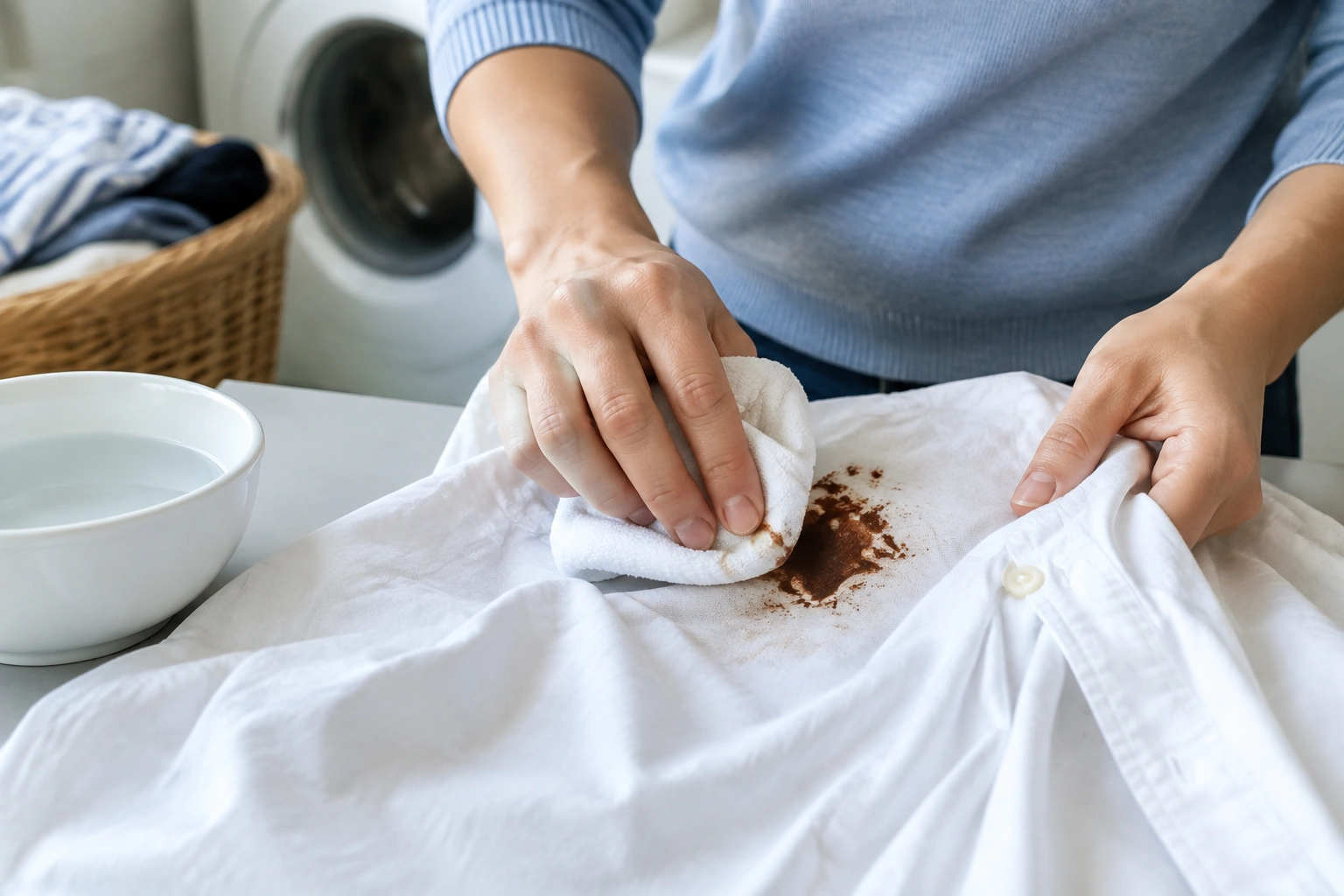
If you need the short version: scrape off the solid chocolate, blot with cold water, apply liquid laundry detergent or dish soap, rinse thoroughly, then wash according to the care label. If the stain is still visible, repeat the pretreatment before drying.
Fresh, dried, and heat-set chocolate stains: which method to use
Not every chocolate stain needs the same approach.
- Fresh stains: act quickly. Scrape, blot with cold water, pretreat, then wash.
- Dried stains: start with cold water, then pretreat and, if needed, soak before washing.
- Heat-set stains: these are the hardest. If the item has already been dried with the stain still visible, repeat gentle pretreatment only if the fabric is washable and not delicate. If the stain remains after a careful repeat attempt, consider professional cleaning.
The key difference is heat. Fresh stains are easiest to lift, dried stains usually need more time and patience, and heat-set stains may not respond well to home treatment.
What to do first when chocolate gets on clothes
The first few minutes matter more than people expect. Chocolate softens quickly, then spreads into the fibers if you rub it or flush it with hot water. That makes a fresh stain harder to lift later.
Use this order:
- Remove any solid chocolate sitting on the fabric.
- Blot the area with a clean white cloth or paper towel.
- Rinse with cold water from the back of the stain if possible.
- Pretreat with detergent, dish soap, or a stain remover that is safe for the fabric.
- Wash only after the stain has been treated.
That sequence matches guidance from cleaning and detergent sources, including Tide’s chocolate stain instructions and the Cleaning Institute’s chocolate stain guide.
Why cold water matters
Cold water helps keep chocolate from setting deeper into the fabric. Hot water can make the stain more stubborn because it can encourage oils and pigments to bind more tightly to the fibers. That is why cold water is the safest starting point for both fresh and dried chocolate stains.
If you are tempted to use hot water because it feels stronger, skip it at the beginning. Heat is better saved for the wash cycle only after the stain is already gone.
How to remove excess chocolate without spreading the stain
A spoon, dull knife, or the edge of a credit card works well for lifting off the solid part. The goal is to remove what is sitting on top without pressing it in.
Use a gentle scraping motion. Do not drag the chocolate across the fabric. Once the surface layer is gone, blot the remaining mark with a clean cloth or paper towel. Blotting lifts residue; rubbing pushes it deeper and can widen the stain.
If the chocolate has melted into the fabric, place a paper towel under the stain and blot from the top. That helps absorb loosened residue instead of spreading it through the other side of the garment.
Should you use cold water, detergent, dish soap, or stain remover?
Each option has a different job.
| Cleaning option | Best use | Trade-off |
|---|---|---|
| Cold water | First rinse for fresh or dried stains | Safe, but usually not enough by itself |
| Liquid laundry detergent | General pretreatment for most washable fabrics | Stronger than water, but should still be rinsed before washing |
| Dish soap | Helpful when the chocolate is greasy or melted | Can work well on spot treatment, but rinse thoroughly |
| Prewash stain remover | Stubborn or older stains on washable fabrics | More targeted, but check the care label first |
| Oxygen bleach soak | White or colorfast washable items with set-in stains | Useful for many fabrics, but not for all delicates and not for items whose care labels prohibit bleaching |
The Consumer Cleaning Institute recommends pretreating chocolate stains with prewash stain remover, liquid laundry detergent, a paste of powder detergent or laundry additive and water, or bar soap before laundering. Tide also recommends cold water and a clean cloth or paper towel first, while other guides such as Santa Barbara Chocolate’s stain advice and Venchi’s fabric guide support cold-water rinsing followed by detergent.
Dish soap is often useful because chocolate contains fat. Laundry detergent is usually the better all-purpose choice for the full wash because it is designed for fabric cleaning, not just spot treatment. Stain remover can be more convenient for older stains, but it is worth checking the label if the garment is delicate, brightly colored, or not colorfast.
Before using oxygen bleach or any stain remover, check the garment’s care label and test colorfastness if the item is not an all-white, bleach-safe fabric. Some whites are still too delicate for bleach-based products, and wool, silk, and trims can be damaged by treatments that are fine on cotton.
Step-by-step: removing a fresh chocolate stain
If the stain is fresh, this is the most reliable home method for washable clothing.
1) Scrape off the excess
Use a spoon or dull edge to lift away the visible chocolate. Avoid pressing downward.
2) Rinse with cold water
Hold the back of the stained area under cold running water if the fabric allows it. If not, use a damp cloth and blot from the back side.
3) Apply a small amount of detergent or dish soap
Work a little liquid laundry detergent or dish soap into the stain with your fingers or a soft toothbrush. Use gentle pressure, not scrubbing.
4) Let it sit briefly, then rinse thoroughly
The stain treatment needs time to loosen the residue, but it also needs to be rinsed out before laundering. Rinsing matters because leftover soap or loosened chocolate can spread in the wash.
5) Wash according to the care label
Use the warmest water the care label allows for that garment, but only after the stain has been pretreated and rinsed. If the label says cold wash only, follow that.
6) Check before drying
If the stain is still visible, repeat the pretreatment and wash again, keeping the treatment gentle on delicate fabrics. Do not put the item in the dryer yet.
That final check is critical. Dryer heat can make a faint leftover stain much harder to remove later.
How to treat dried or set-in chocolate stains
A dried chocolate stain usually needs more patience than a fresh one. The method is still similar, but soaking becomes more useful.
For washable fabrics, pretreat the stain first, then soak if the care label allows it. OxiClean’s chocolate stain guide recommends soaking chocolate-stained clothes in a solution of water and OxiClean White Revive Laundry Whitener & Stain Remover for 6 hours, then washing as normal with detergent. That is a useful model for stubborn stains on fabrics that can handle an oxygen-bleach product.
Here is the practical decision rule:
- Fresh stain: spot treat and wash.
- Dried stain: pretreat, then soak or repeat treatment.
- Old stain that survived one wash: pretreat again before drying, then wash again.
- Heat-set stain: expect more than one round, and stop if the fabric is delicate or the care label limits washing or soaking.
If the item is valuable or delicate, avoid aggressive scrubbing. Repeated gentle treatments are usually safer than one hard attempt.
How to remove chocolate stains from white clothes
White clothing often shows chocolate more clearly, but that does not mean bleach is the first step.
For washable white fabrics, begin with the same cold-water and detergent process. If the stain remains, an oxygen bleach soak can be a stronger next step on fabrics that allow it. The benefit is that oxygen bleach can help lift stains without the same color-loss risk that comes with chlorine bleach.
That said, white does not automatically mean bleach-safe. A white silk blouse and a white cotton T-shirt need very different treatment. Always check the care label first, and avoid oxygen bleach if the label says not to bleach or if the fabric is too delicate for soaking.
If the item is cotton or another durable washable fabric, white clothing often tolerates repeat pretreatment better than delicate garments. If the stain is still visible after washing, treat it again before putting it in the dryer.
For a broader guide on white fabrics, see how to remove stains from white clothes.
How to remove chocolate stains from colored clothes
Colored clothing needs a slightly more cautious approach because the stain remover can fade the dye if it is too strong or left on too long.
Use cold water, then a small amount of liquid laundry detergent or dish soap. If you use a prewash stain remover, test it on an inside seam or hidden area first if the garment is bright, dark, or not colorfast.
The main trade-off here is speed versus safety. A stronger product may work faster on the stain, but it also raises the risk of color change. For everyday colored cotton or polyester, detergent is often the safest first pretreatment. Save stronger products for stubborn spots and only when the care label supports them.
Fabric-specific advice for cotton, polyester, wool, and silk
Different fabrics hold chocolate differently, and the cleaning method should match the fiber.
Cotton
Cotton is usually the easiest to treat because it is durable and washable. Scrape, rinse with cold water, pretreat with detergent, then wash. If the stain is old, a soak may help before washing.
Polyester
Polyester is also usually washable, but chocolate can cling to synthetic fibers and oily residue can linger. Dish soap can be useful as a spot treatment before the wash because it helps break down grease. Keep the treatment gentle so you do not distort the fabric finish.
Wool
Wool needs more caution. Avoid aggressive rubbing, hot water, and harsh stain treatment. Blot gently, use cold water, and check the care label carefully before soaking or using any stain remover. Do not use oxygen bleach or general stain removers unless the label specifically says they are safe for wool. If the garment is expensive, structured, or the stain does not lift with one gentle attempt, stop home treatment and choose professional cleaning.
Silk
Silk is the most delicate fabric in this group. Do not scrub it. Blot lightly, and only use a cleaner if the care label clearly allows it. Test first in a hidden spot, and do not soak silk unless the label says soaking is safe. Avoid oxygen bleach, strong stain removers, and anything that could leave water marks or damage the fibers. For silk, professional cleaning is often the safer choice, especially for valuable items.
If you are unsure whether the item can handle a stain remover, stop and check the label. That is more reliable than guessing based on the stain alone.
What to do if the stain is still visible after washing
If the stain remains, do not dry the garment yet. Drying can lock the residue in place.
Instead, repeat the pretreatment. For many garments, a second round of liquid detergent or dish soap is enough to improve the result. For set-in stains on washable cotton or colorfast items, a longer soak with an oxygen bleach product may help if the care label allows it.
A useful rule: if you can still see the stain after washing, treat it as unfinished. Rewash only after pretreating again. That is especially important if the fabric has not yet gone through the dryer.
If the stain is still there after careful repeat treatment, or if the garment is delicate, dry-clean-only, or hard to wash safely, consider professional cleaning.
When to air-dry instead of using the dryer
Air-dry the garment until you are sure the stain is gone. That is the safest choice after any chocolate stain treatment.
Why this matters: dryer heat can make leftover chocolate harder to remove later. Even a faint shadow can become more permanent after heat exposure. Air-drying gives you one more chance to inspect the fabric in daylight before committing to machine drying.
If the stain is gone after air-drying, then the garment can usually go into the dryer or be ironed according to the care label. If any mark remains, keep it out of the dryer and treat it again.
Common mistakes that make chocolate stains harder to remove
The biggest errors are simple:
- Rubbing instead of blotting: spreads the stain.
- Using hot water too early: can set the stain.
- Drying before checking: can lock in residue.
- Skipping the scrape-off step: leaves extra chocolate in the fibers.
- Treating delicates like cotton: can damage wool, silk, or trim.
- Assuming one wash is enough: older stains often need a repeat treatment.
These mistakes matter because chocolate is not just a color stain. The fat component can cling, and the cocoa solids can lodge in the weave. Once heat and friction make that combination settle, removal gets harder.
When to replace or consult a professional
If the garment is dry-clean-only, made of silk or fine wool, decorated with beading or special finishes, or simply too valuable to risk, professional cleaning is the safer path. The same applies if you have already treated the stain carefully and it is still visible after repeated attempts.
That is less about giving up and more about protecting the fabric. Some clothing is worth preserving even if home stain removal is possible in theory.
Quick decision guide
Use this simple rule set:
- Fresh stain on washable cotton or polyester: cold rinse, detergent or dish soap, wash, air-dry until clear.
- Dried stain on washable clothing: pretreat, soak if needed, wash again, do not dry early.
- White washable fabric: same process, with oxygen bleach only if the care label allows it and the item is bleach-safe.
- Colored fabric: use color-safe pretreatment first; test stronger products carefully.
- Wool, silk, or delicate garment: gentle blotting and label check only; consider professional cleaning.
If you want a broader laundry reference, the main stain removal guide for clothes covers other common spots using the same decision logic.
FAQs
Can I use vinegar on chocolate stains?
Vinegar is not a first-choice treatment for chocolate. Cold water, detergent, dish soap, or a stain remover is usually a better starting point.
Is dish soap better than laundry detergent?
Not always. Dish soap can help with the greasy part of chocolate, but laundry detergent is usually better for the full wash. Many people use dish soap for spot treatment and detergent for laundering.
Can I remove chocolate stains from white clothes without bleach?
Yes, often you can. Cold water, detergent, and repeat treatment may be enough. Oxygen bleach can be a next step for some washable whites if the care label allows it, but bleach is not required in every case.
What if the stain has already been washed and dried?
Treat it again before drying further. Dried or heat-set stains often need more than one round of pretreatment and washing.
Should I use hot water if the stain is old?
Not at first. Cold water is the safer starting point because heat can make the stain harder to remove. Use only the water temperature the care label allows after pretreatment.
Can I scrub chocolate out with a toothbrush?
A soft toothbrush can help work in detergent gently, but heavy scrubbing is a mistake. Use light pressure so you do not damage the fibers or spread the stain.
What if the clothing is wool or silk?
Treat those fabrics carefully. Blot gently, avoid aggressive rubbing, and check the care label before using any stain remover. For valuable items, professional cleaning is often the safer option.
How do I know when it is safe to dry?
Only after the stain is completely gone. If you can still see a shadow, air-dry the item and treat it again.
If you handle chocolate stains in the right order, most washable clothes can be saved without much trouble. The key is simple: remove the excess, use cold water, pretreat before washing, and keep heat away until the stain is truly gone.