
How to Remove Stains from Denim Without Fading or Damaging It

Denim can handle a lot, but stains are where people often make things worse without meaning to. The safest approach is usually simple: identify the stain, use the mildest cleaner that fits the job, and keep heat out of the process until the stain is gone. That matters whether you are dealing with commuter coffee, school-lunch sauce, playground mud, or an old mystery mark on your favorite jeans.
The biggest mistake is treating denim like any other cotton fabric. Denim dye, especially on darker washes, can be more vulnerable to fading and color transfer than people expect. If you rush to hot water or toss the jeans in the dryer too early, you can lock in the stain and permanently change the color around it.
What You Need Before You Start
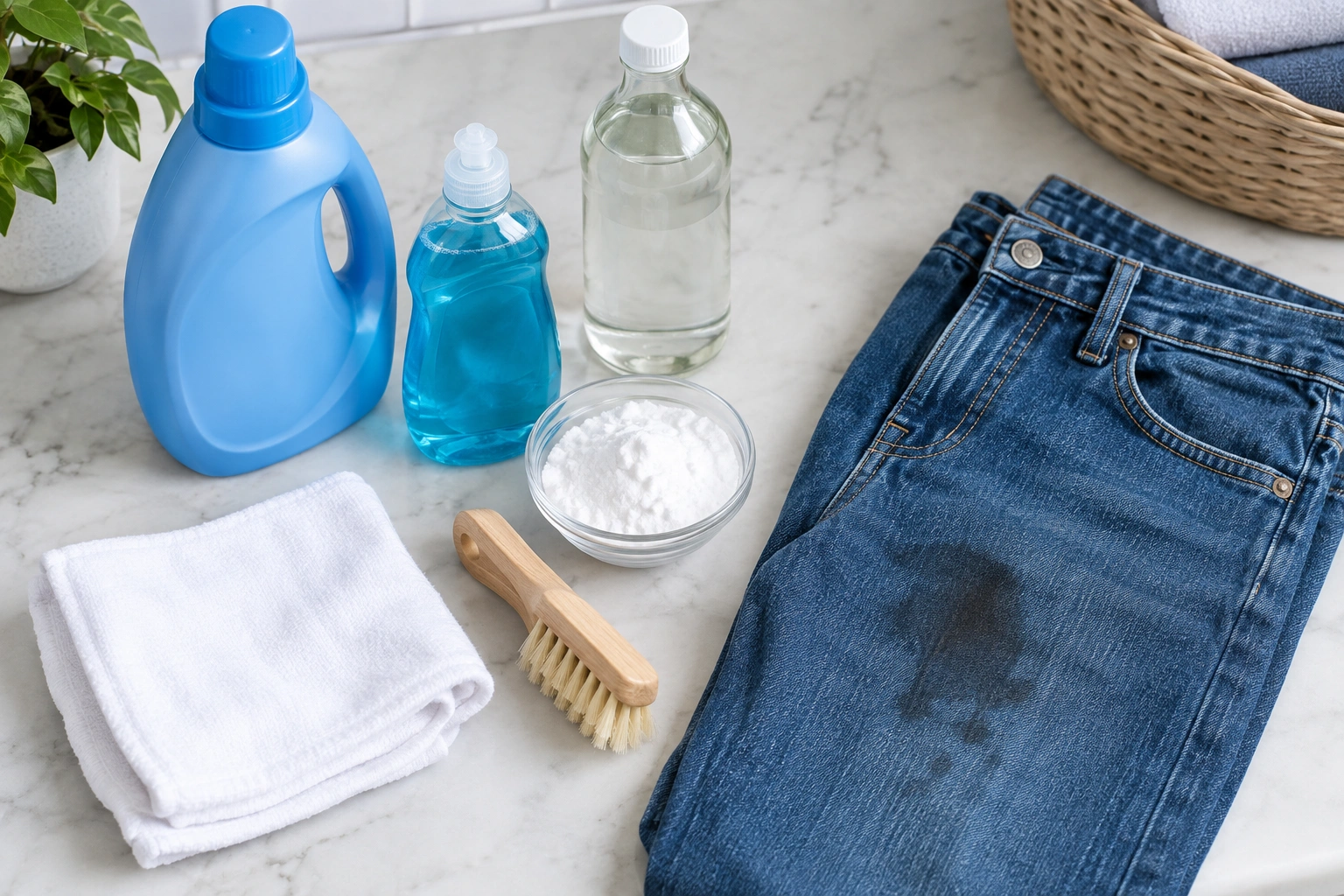
Gather a small stain kit before you touch the denim. You do not need a shelf full of products, just a few basics that cover most everyday messes:
- Liquid laundry detergent
- A mild dish soap
- White vinegar
- Baking soda
- An enzyme cleaner or stain remover labeled for laundry
- A clean white cloth or paper towel
- A soft toothbrush or small cleaning brush
- Cold water
- A basin or sink for soaking
A white cloth is better than a colored towel because dye from the towel can transfer to damp denim, especially on light-wash fabric. Keep the care label nearby too. If the label says dry clean only or gives a special wash instruction, follow that first.
Before using any cleaner, spot-test it on an inside seam, hem, or pocket lining. That step takes only a moment and can save a dark pair of jeans from a visible faded patch. For dark indigo denim, this is especially important because a cleaner that looks mild can still lighten the fabric.
Identify the Stain Type and Denim Color
Before cleaning, decide what you are actually dealing with. That choice controls everything else.
| Stain type | Safer first treatment | Water temperature | Notes for light-wash denim | Notes for dark-wash denim |
|---|---|---|---|---|
| Grease or oil | Dish soap or stain remover | Cold | Usually forgiving, but still blot first | Higher fading risk; spot-test cleaners |
| Ink | Rubbing alcohol or stain remover, if fabric allows | Cold | May need repeat treatment | Test carefully; color loss can show fast |
| Food sauces | Detergent or enzyme cleaner | Cold | Pre-treat before washing | Avoid scrubbing hard on dyed areas |
| Mud or dirt | Let dry, then brush off; pre-soak in cold water with liquid detergent | Cold | Good chance of success with soaking | Color transfer risk if rubbed aggressively |
| Coffee or tea | Liquid detergent or stain remover | Cold | Treat quickly to avoid setting | Keep treatment gentle and short |
| Blood | Cold water and enzyme cleaner or detergent | Cold only | Never use hot water first | Extra caution with rubbing and drying |
This table is not about making stain removal complicated. It is about not using the wrong method on the wrong stain. Grease needs help breaking down oil. Mud should be dried and lifted, not smeared deeper. Blood is a protein stain and can set with heat, so cold water is the safer choice. For dirt and clay, a cold-water presoak with liquid detergent is a solid default for denim too.
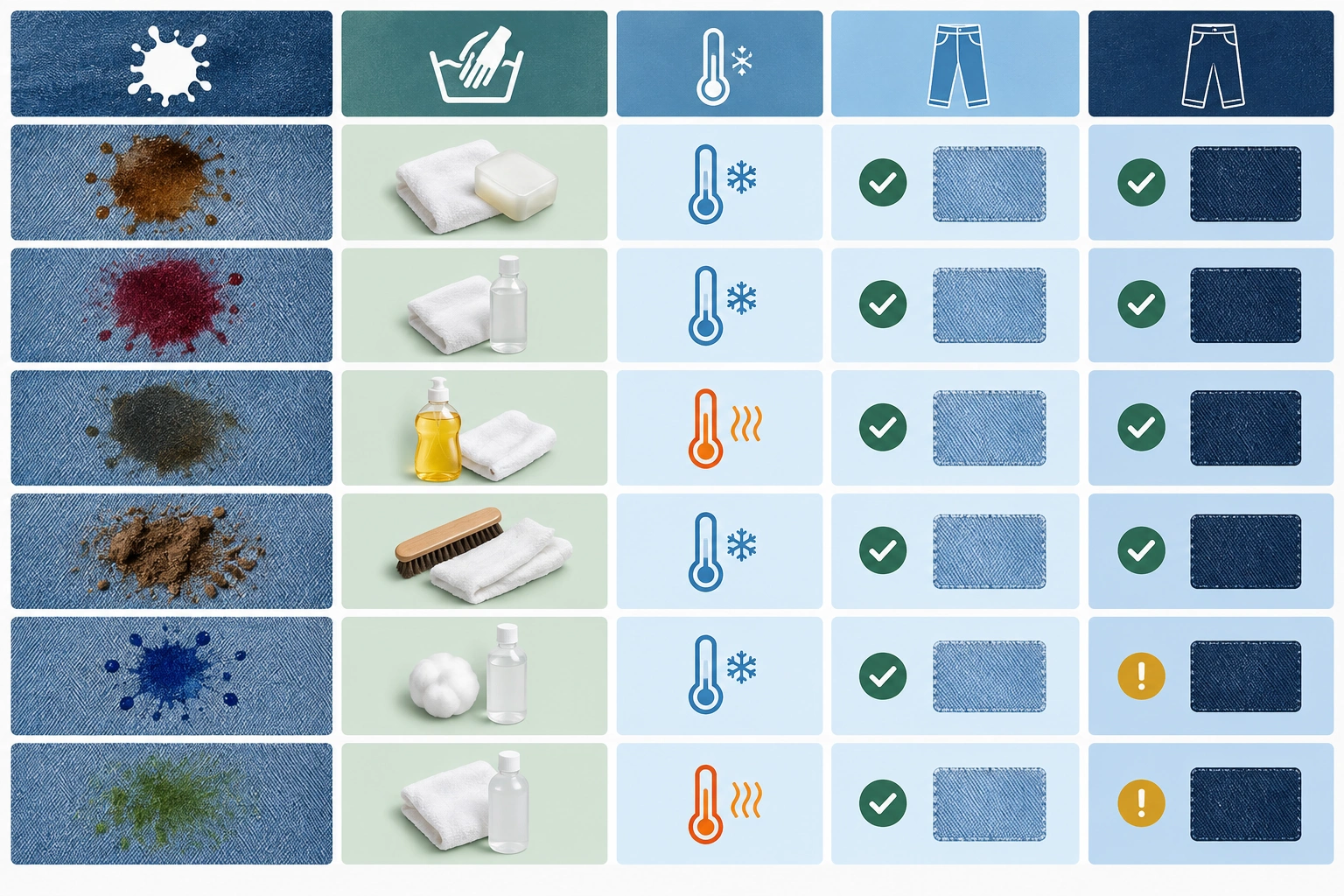
Light-wash denim is generally more forgiving if a cleaner slightly lightens the area, because the contrast is less obvious. Dark-wash denim is the opposite: even a successful stain treatment can leave a pale patch if the cleaner is too strong or left on too long. That is why dark denim deserves a slower, more cautious approach.
First Aid for Fresh Stains on Denim
Fresh stains are the easiest to remove if you act before they dry. The goal is to pull out excess material without pushing it deeper into the fibers.
- Blot, do not rub. Use a clean cloth or paper towel and press gently from the outside of the stain inward. Rubbing spreads the stain and can rough up the denim weave.
- Remove solids first. If the stain is mud, sauce, or food, lift off what you can with the edge of a spoon or a dull knife before adding water.
- Rinse from the back of the fabric. Cold water from the back side helps push the stain out rather than through the front.
- Keep heat away. No hot water, no dryer, no iron until the stain is gone.
If you are traveling or commuting and only have a sink, even a quick cold-water rinse buys you time.
How to Treat Common Denim Stains Step by Step
Grease and Oil
Grease is one of the most common denim stains from takeout, snacks, and car maintenance.
- Lay the denim flat and blot away any excess oil.
- Apply a small amount of dish soap directly to the stain.
- Gently work it in with your fingers or a soft brush.
- Let it sit briefly, then rinse with cold water.
- If the stain remains, apply liquid laundry detergent or a stain remover and wash according to the care label.
Dish soap is useful here because it is designed to break down oily residue. That makes it a better first move than plain water. For a more stubborn grease mark, an enzyme cleaner or laundry stain remover can help, but only after a spot test on dark denim. If the stain is old or the denim is dark, avoid aggressive scrubbing, which can wear the fibers and make fading more noticeable.
Ink
Ink is less predictable than grease. Some pen inks lift well; others are stubborn or partially permanent.
- Place a clean cloth under the stained area.
- Dab the stain with a small amount of rubbing alcohol on a cotton swab or cloth, if the fabric passes a spot test.
- Blot as the ink transfers to the cloth beneath.
- Rinse with cold water.
- Wash with detergent after the stain has faded.
Do not scrub ink aggressively. That usually spreads it. On dark denim, confirm colorfastness first because alcohol or stain removers can lift dye along with the ink. Results also depend on the ink formulation and the denim finish, so a ballpoint mark may behave very differently from gel, felt-tip, or liquid ink. Some inks can be difficult or impossible to remove completely, especially if they have already set.
Food Sauces and General Meal Stains
Sauces, ketchup, and mixed food stains often combine oil, pigment, and starch.
- Scrape off excess food.
- Rinse from the back with cold water.
- Apply liquid detergent or an enzyme cleaner to the stain.
- Let it sit for a short period, then rinse.
- Wash normally if the stain has lifted.
If the stain includes tomato-based sauce, treat it like a mix of pigment and oil. For related cleanup steps on food spills, our guides on tomato sauce stains and chocolate stains show the same principle: remove excess first, then use a targeted pre-treatment.
Mud and Dirt
Mud looks bad, but it is often easier than grease once it dries.
- Let the mud dry completely.
- Brush off as much as possible.
- Presoak the denim in cold water with liquid detergent.
- Gently rub the stained area between your fingers or with a soft brush.
- Wash according to the care label.
This is one place where patience pays off. Wet mud smears into the weave and becomes harder to remove. A cold-water presoak with liquid detergent is usually the safest first approach for denim because it reduces the chance of setting the stain or fading the fabric.
Coffee and Tea
Coffee behaves a lot like a light food stain, but it can leave a brown shadow if left alone.
- Rinse the stain with cold water as soon as possible.
- Apply liquid detergent or a stain remover.
- Gently work it in.
- Rinse again and inspect before washing.
- Repeat once if needed before drying.
If the stain is on dark denim, check the area in natural light before deciding it is gone. Artificial light can hide a faint brown edge that becomes obvious after drying.
Blood
Blood is a protein stain, which means heat is your enemy.
- Rinse immediately with cold water.
- If needed, soak briefly in cold water.
- Apply an enzyme cleaner or detergent.
- Gently rub the spot and rinse again.
- Wash only after the stain has visibly lifted.
Never use warm or hot water on blood at any stage of treatment. Heat can set the stain into denim and make it much harder to remove. On dark denim, avoid harsh scrubbing as well, since the combination of rubbing and repeated rinsing can lead to visible fading around the stain.
How to Handle Old or Set-In Stains
Old stains need a slower, repeated approach. The fabric has already had time to absorb the residue, so one round rarely solves it.
Use this decision tree:
- Start with stain type.
- Grease or oil: Treat with dish soap first, then detergent or a laundry stain remover.
- Ink: Spot-test first, then use rubbing alcohol or a stain remover only if the denim holds its color.
- Blood: Use cold water and an enzyme cleaner or detergent only.
- Food or coffee: Use detergent or an enzyme cleaner, then rinse and inspect.
- Treat once and inspect.
- If the stain is clearly fading, repeat the same gentle treatment once more.
- If nothing changes after one or two careful rounds, stop and reassess.
- Repeat only while the fabric is responding.
- Repeat treatment if the stain is lighter, but not gone.
- Stop if the area starts to fade, look rough, or feel weakened.
- Choose the next step.
- If the stain is still visible but the denim looks sound, wash according to the care label after pre-treatment.
- If the stain remains after washing, repeat spot treatment only if the fabric still looks safe to handle.
- If the stain is old, large, or unchanged after repeated gentle treatment, move to professional cleaning.
That “repeat if improving” rule is important. A stain that is clearly lightening is still worth another pass. A stain that is not changing after repeated gentle treatment may need a stronger product or professional help.
Commercial stain removers can be more targeted than home remedies, especially for mixed stains. Home options such as dish soap, vinegar, and baking soda are useful, but they are not universal fixes. Vinegar can help with some residue and odor, while baking soda can assist with mild lifting or deodorizing, but neither is a universal stain remover. For denim, a careful detergent treatment is usually safer than mixing random ingredients that can leave residue behind.
If the denim is dark and the stain is old, be extra cautious with anything acidic or abrasive. Color loss around the stain can become more noticeable than the stain itself.
Washing Denim After Stain Treatment
Once the stain has loosened, wash the denim to remove cleaner residue and any remaining particles.
Use the garment’s care label as your guide for temperature and cycle. If the item is machine washable, a normal or gentle cycle is often enough, but the label should have the final say.
A few practical rules help:
- Wash the treated denim separately if the stain was greasy or heavily pigmented.
- Check the stain before loading the machine if possible.
- Do not overload the washer, because crowded denim does not rinse well.
- Avoid adding bleach unless the care label specifically allows it and the denim is meant to tolerate it.
Bleach is where many people overreach. Do not use chlorine bleach on denim unless the care label specifically allows it and you are willing to accept color loss. Even then, the result may be uneven. If a label mentions bleach at all, it usually refers to oxygen bleach or a color-safe alternative, and even that should be spot-tested first on dark denim.
How to Dry Denim Without Setting the Stain
Air drying is the safest final step after stain treatment. Heat is useful for finishing laundry, but only after you are sure the stain is gone.
Hang the denim or lay it flat in a well-ventilated area. Once dry, check the spot in daylight. If any stain remains, repeat treatment before machine drying. That extra check matters because a dryer can make a faint stain much harder to remove later.
If the jeans are clean and fully dry, you can decide whether to tumble dry based on the care label. For stain removal, though, air drying is the better default until you know the spot is gone.
Common Mistakes to Avoid
A lot of denim damage happens in the first five minutes.
- Using hot water too soon. This can set blood, food, and some protein stains.
- Rubbing hard. That spreads the stain and wears the fabric.
- Skipping the spot test. Dark denim can fade in a patch even from a mild cleaner.
- Drying before checking. Heat can lock in what should have been a second treatment.
- Treating every stain the same. Grease, ink, mud, and blood need different approaches.
- Using too much cleaner. Excess product can leave residue and make the area attract dirt again.
The safest mindset is “gentle, targeted, repeat if needed.” That is almost always better for denim than one aggressive attempt.
When Home Treatment Is Not Enough
Sometimes the best move is to stop before you make the stain or the fading worse.
Consider professional cleaning if:
- The denim is dry clean only.
- The stain covers a large area.
- The fabric is very dark and already showing color loss.
- The stain is old, set-in, and unchanged after repeated gentle treatment.
- The item has special finishes, coatings, or decorative details that may react badly to cleaners.
If you are unsure, a professional cleaner or dry cleaner who handles garment care regularly is often the safer choice for expensive or sentimental denim. That is especially true for dark jeans where a small patch of fading can be more noticeable than the original stain.
Practical Examples by Stain Type
A commuter spills coffee on dark jeans before work. The best move is a cold-water rinse, then liquid detergent or a stain remover, followed by air drying only after inspection. The main risk here is not the coffee itself; it is drying too soon and leaving a brown shadow.
A parent finds dried mud on light-wash denim after a park trip. Let the mud dry, brush it off, then presoak in cold water with liquid detergent. Light denim is more forgiving, but smearing wet mud deeper into the weave can still make the stain harder to remove.
A student gets ink on jeans from a leaking pen. Treat it with care and test any alcohol-based cleaner first. Some inks lift well, but others are stubborn enough that repeated gentle blotting is the best you can do.
A traveler drops greasy food on black jeans. Dish soap is usually the first tool to reach for, but only after a spot test. Dark denim shows fading quickly, so the cleaner matters as much as the stain.
When to Stop DIY and Get Help
If the stain is not improving after one or two careful rounds, stop before the fabric starts to wear. If the denim is dark, delicate, expensive, or already faded around the stain, a professional cleaner or dry cleaner is the safer next step. That is usually better than pushing harder with stronger products and risking a permanent color change.
The best denim stain removal is usually not dramatic. It is careful. Choose the right cleaner for the stain, keep water cold until you know otherwise, and let the fabric tell you whether another round is worth it. That approach protects the color, the texture, and the life of the jeans.