
How to Remove Stains from a 100% Silk Garment Without Ruining It

Silk can be forgiving if you treat it quickly and gently. It can also punish the wrong move fast: hot water, rubbing, bleach, and over-wetting can leave a permanent mark or a dull patch. If you are standing over a fresh spill, the goal is not to “clean hard.” The goal is to lift the stain with the least disturbance to the fiber.
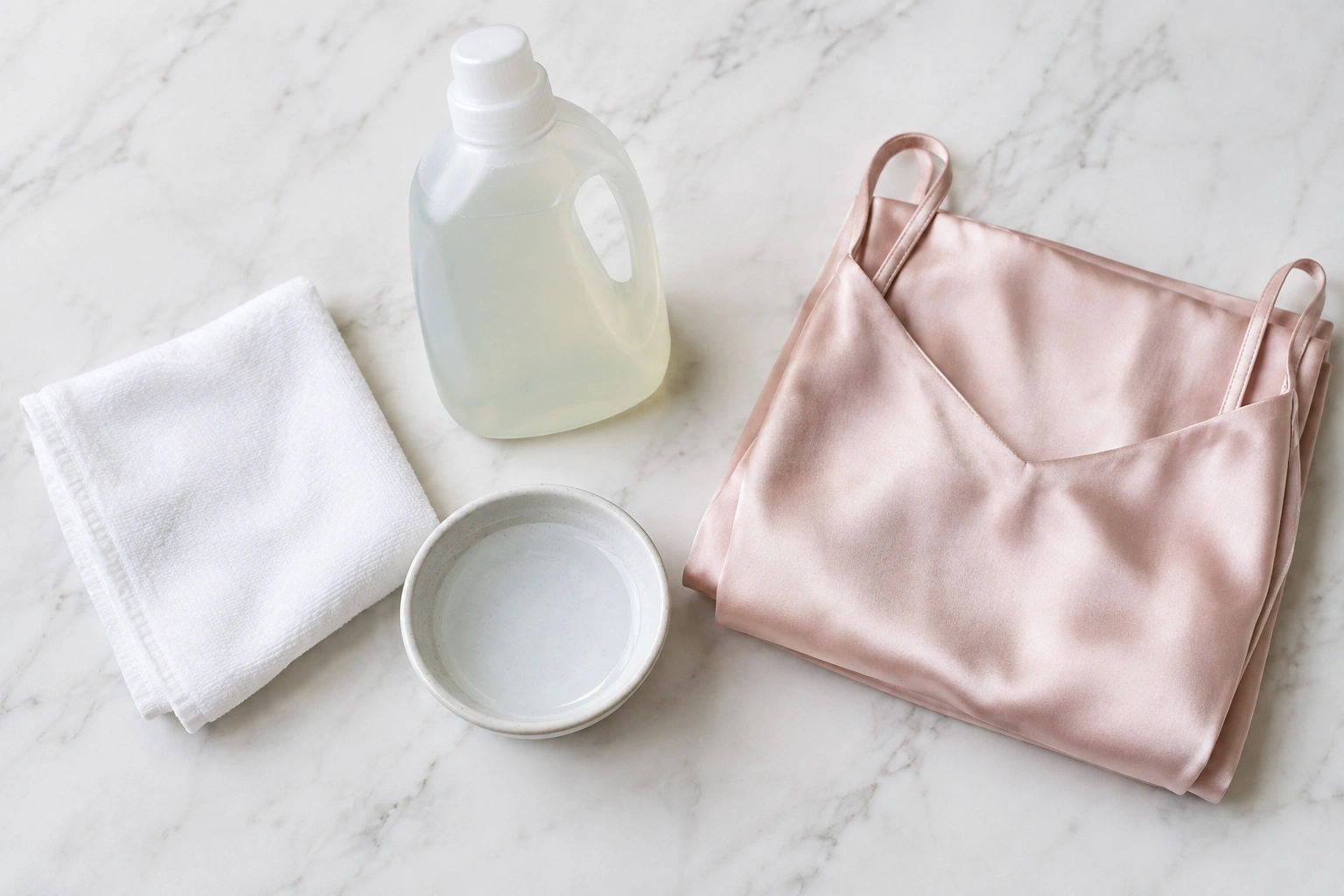
Can You Remove a Stain From 100% Silk at Home?
Yes, sometimes. The fastest way to decide is this:
- Identify the stain type if you can: oil, water-based, makeup, ink, sweat, or unknown.
- Check the care label. If it says dry clean only, do not continue at home unless you are only blotting a fresh spill and the label or a silk-care source explicitly allows a gentle spot treatment.
- Spot-test first on an inside seam or hem with the exact cleaner you plan to use.
- Choose home treatment only if the stain is fresh, small, and the spot test shows no dye loss, ring mark, or texture change.
- Go to a dry cleaner immediately if the stain is old, large, unknown, printed, heavily dyed, or the silk is dry-clean-only and you cannot confirm a safe home method.
If the spot test causes color transfer, fading, dullness, or a rough patch, stop. That is the clearest sign not to continue at home.
Here is the simplest decision rule:
- Try at home if the stain is fresh, localized, and you know what caused it.
- Use extra caution if the silk is dyed, printed, or you are not sure it is colorfast.
- Stop and go professional if the stain is set in, spreads when dabbed, or the garment is valuable or delicate.
That approach matches what care sources recommend: check whether the silk is colorfast and hand-washable before you touch it, and avoid harsh chemicals that can damage protein fibers like silk. The Persil silk care guide and the MCI stain-removal guidance both reinforce that silk needs gentle handling.
What to Do Immediately After a Spill on Silk
The first minute matters more than the first product you reach for.
First 60 seconds: emergency sequence
- Stop the stain from spreading. Lay the garment flat on a clean, dry surface.
- Blot immediately with a clean white cloth or paper towel. Press lightly.
- Do not rub. Rubbing can push the stain deeper and disturb the sheen.
- Remove any solids first. Lift food, makeup, or thick residue with the edge of a clean cloth or a dull spoon before adding liquid.
- Keep heat away. No hot water, hair dryer, radiator, or steaming.
- Decide whether the spill is oil-based or water-based before you add moisture.
If the spill is oil-based
Oil, grease, lipstick, foundation, salad dressing, and some food spills usually need a dry first step. Blot the surface, then, if the care label does not forbid it and the silk is colorfast, use a small amount of absorbent powder on the spot before any water-based cleaner. Brush it away gently after it has had time to draw out grease, then reassess.
If the spill is water-based
Coffee, tea, juice, wine, and many food spills usually respond better to cold water and a silk-safe cleaner. Dab from the outside of the stain inward with a barely damp cloth. Keep the area small so you do not create a water mark.
If you are traveling, a hotel towel, a white handkerchief, or even plain tissue can buy you time until you can treat the stain properly.
Before You Start: Check the Care Label and Gather Safe Supplies
Before any spot treatment, read the garment tag. If the label says dry clean only, treat that as your first warning, not a suggestion. If it allows hand washing, you still need to test for colorfastness.
Gather these items:
- Clean white cloths or plain paper towels
- A small bowl or sink
- Cold water or lukewarm water only if the care label allows it
- Mild detergent or a silk-safe cleaner
- Cotton swabs for tiny spots
- A dry towel for pressing out moisture
- A hidden area for spot testing, such as an inside seam
Avoid colored cloths. Dye transfer is a real risk on damp silk, especially with light-colored garments. Avoid strong spot removers unless the product label specifically says it is safe for silk.
How to Spot-Test Silk Without Damaging the Fabric
A spot test is not optional when the garment is dyed or you are using a new cleaner. Silk can show color loss or texture change where you least want it.
Use this method:
- Choose an inconspicuous area, such as an inside seam or hem.
- Put a tiny amount of the cleaning solution on a white cloth, not directly on the silk.
- Dab the hidden area lightly.
- Wait and check for any color transfer, fading, or roughness.
- If the area looks unchanged, proceed with the visible stain cautiously.
If the cloth picks up dye, or the fabric looks lighter or duller, stop. That garment may need professional cleaning. A care-label check and a hidden-area test are the best way to avoid turning one stain into a bigger repair problem.
Choose the Right Method Based on the Stain Type
Silk stains are not all the same, so the treatment should not be one-size-fits-all. Oil behaves differently from coffee, and makeup is not the same as ink.
| Stain type | Best first move | What to avoid | When to stop DIY |
|---|---|---|---|
| Oil or grease | Blot, then use a dry absorbent powder first | Hot water, rubbing, soaking too long | If the stain darkens or spreads |
| Food or drink | Blot with cold water on a cloth, then mild detergent if needed | Scrubbing, warm water, bleach | If color lifts or the stain sets |
| Makeup | Lift residue gently, then spot clean lightly | Smearing with water too early | If the stain is heavy or oily |
| Sweat or deodorant | Mild detergent or a very gentle diluted solution | Strong alkali cleaners and bleach | If the area becomes textured or faded |
| Ink | Minimal dabbing only; consider professional cleaning early | Rubbing, soaking, alcohol unless a product specifically says silk-safe | Almost always if the mark is large or dark |
| Unknown stain | Spot test first, then use the gentlest method only | Guessing with harsh cleaners | If you cannot identify it quickly |
For oil or grease, a silk-care source recommends a dry absorbent powder such as talc, baking soda, or cornstarch. For water-based stains, gentle soap or diluted detergent is usually the safer starting point. For deodorant marks, some care sources suggest a diluted white vinegar solution, but only after testing and only if the garment label does not warn against it. See Rinse’s silk stain advice and Taras Artoria’s silk stain guide.
Step-by-Step: How to Treat Fresh Stains on Silk
This is the safest general process for a fresh, known stain on 100% silk.
- Blot the stain first. Use a clean white cloth or paper towel. Press lightly; do not scrub.
- Work from the outside in. Dab the outer edge of the stain first so it does not spread.
- Apply a tiny amount of silk-safe cleaner. Put it on the cloth, not directly on the garment, unless the product instructions say otherwise.
- Use only enough liquid to dampen the stain area. The cloth should be barely damp, not wet.
- Dab, then pause. Let the cleaner do the work. Silk does not respond well to aggressive agitation.
- Lift moisture with a dry towel. Press gently to pull out liquid.
- Repeat only if the stain is improving. If nothing changes after a couple of gentle passes, stop and reassess.

For oil stains, you can use a dry absorbent powder before any damp cleaning. One silk-care guide recommends leaving absorbent powder on the stain to help draw out grease, and Tide Cleaners notes talcum powder may be left on an oil stain overnight before washing according to the care label. That can be a useful trade-off: slower, but often gentler on the fabric. See Tide Cleaners’ silk stain guidance.
A practical rule: if the stain is getting lighter and the silk still feels smooth, continue. If the area starts to look ringed, dull, or patchy, stop immediately.
How to Dry Silk After Spot Treatment
Drying is where many good stain-removal attempts go wrong. Silk should not be twisted, wrung, or blasted with heat.
Use this approach:
- Press out excess moisture with a clean towel.
- Lay the item flat on a dry towel, or hang it carefully if the garment shape allows it.
- Keep it away from direct sunlight and heat sources.
- Let it air-dry completely before wearing or storing.
Tide’s silk-care guidance says to absorb excess water with a towel without rubbing or agitating the garment, then hang it to dry away from direct sunlight. That matters because heat can set a stain and sunlight can fade dye unevenly.
Common Mistakes That Can Permanently Damage Silk
These are the errors I see most often when silk goes wrong:
- Rubbing the stain. This can push the stain deeper and dull the surface.
- Using hot water. Heat can set some stains and stress the fiber.
- Skipping the spot test. A cleaner that seems mild can still pull dye.
- Using bleach, ammonia, or strong alcohol. Rinse warns these can strip color or damage silk, and MCI notes bleach can dissolve silk protein fibers.
- Over-wetting the fabric. Too much liquid can leave water marks and change the texture.
- Treating an unknown stain with a guess. Unknown stains are the ones most likely to spread or react badly.
If you remember only one rule, make it this: silk rewards patience, not force.
Troubleshooting: What to Do If the Stain Won’t Come Out
If the stain is still visible after gentle treatment, do not escalate quickly.
Try this sequence:
- Let the garment dry fully first.
- Re-check whether the stain is actually still there, or whether you are seeing a water mark or ring from the cleaning itself.
- If you suspect a water mark, lightly dampen the edge of the mark with cold water and a clean cloth so the damp area blends outward evenly, then blot dry. Do not soak the whole section.
- If the original stain remains, repeat only the gentlest safe step once more.
- Stop if the fabric starts to look uneven, shiny, rough, or if the color changes.
If the stain is set in, a ring appears, or the mark is changing but not disappearing, the risk of over-treating starts to outweigh the benefit. At that point, a professional cleaner is usually the better choice.
When to Take a Silk Garment to a Professional Dry Cleaner
Take the garment out of DIY mode if any of these are true:
- The care label says dry clean only and you have not confirmed a silk-safe home method
- The stain is old or already set
- You do not know what caused the stain
- The silk is dark, heavily dyed, embroidered, printed, or very expensive
- The stain is large, oily, or ink-based
- Your spot test showed dye loss, dye transfer, ring marks, or texture change
- The area looks dull, rough, or water-marked after one gentle attempt
Do not continue at home if the fabric bleeds color, the cleaner causes a visible ring, or the texture changes after the first test or treatment. Those are signs that the silk is reacting badly, and more home treatment can make the damage worse.
Professional cleaning is not just for “hard” stains. It is also the safer route when the garment matters enough that a mistake would be costly. If you are deciding between a quick home attempt and preserving the piece, preservation usually wins.
For related silk care, you may also find our guides on how to remove stains from silk and how to remove stains from silk shirts useful. If you are comparing delicate fabrics, our guide on how to remove stains from satin can help you avoid using the wrong method on a similar-looking material.
Practical Examples for Common Silk Stain Emergencies
Coffee on a silk blouse
Blot immediately with a white cloth. If the label allows home care, dab with cold water and a tiny amount of mild detergent on a cloth. Do not soak the whole blouse unless the care instructions allow it.
Makeup on a silk scarf
Lift away any thick residue first. If it is foundation or lipstick, treat it like a mixed stain: start with gentle blotting and minimal moisture. Oily makeup often responds better to a dry absorbent step before any liquid cleaner.
Oil on a silk shirt
Blot the surface, then use a dry absorbent powder if the care label does not forbid it. Let it sit long enough to draw out grease, then brush away gently and reassess before adding any moisture.
Sweat or deodorant on dyed silk
Use the mildest possible cleaner first and test carefully. Some care sources suggest a diluted white vinegar solution for deodorant marks, but only after a spot test. If the dye is fragile, stop quickly if the area lightens.
Ink on silk
Ink is the one I would most often send to a professional cleaner, especially on dyed silk. If the mark is tiny, test cautiously, but do not keep dabbing if the stain starts to spread.
Final Rule of Thumb
If the stain is fresh, known, and small, a careful home treatment can work. If it is set in, unknown, ink-based, or the silk is particularly valuable, stop before you make the problem bigger. On silk, the best stain removal is the one that protects the garment while still giving the stain a fair chance to lift.