
How to Remove Stains from Silk Without Damaging the Fabric

Silk is one of those fabrics that rewards a careful hand. Treat a stain the wrong way and you can leave a dull patch, spread the mark, or set it deeper into the fibers. Treat it gently and quickly, and many fresh stains can be improved at home.
Before you start, use this quick decision guide:
- Fresh stain, minutes old: blot immediately and try the gentlest silk-safe method first.
- Set-in stain, hours or days old: be more cautious; silk is more likely to ring, fade, or hold onto residue.
- Known stain: match the method to the stain type, such as oil, makeup, sweat, food, or ink.
- Unknown stain: start with blotting only. If you cannot identify it, stop sooner and consider dry cleaning.
If the item is labeled dry clean only, very valuable, heavily dyed, embellished, or already showing color loss, a professional cleaner is usually the safer route. If the stain is fresh, small, and you can test a hidden area first, home treatment may be worth trying.
Can You Remove a Silk Stain at Home?
Use this quick filter before you touch the stain:
- Try at home if the stain is fresh, small, and clearly from something mild like coffee, makeup, or a little food residue.
- Be cautious if the stain is set-in, large, or you do not know what caused it.
- Stop and dry clean if the silk is vintage, structured, heavily dyed, embellished, or the label says dry clean only.
The reason for this cautious approach is simple: silk fibers and dyes can react differently depending on the finish. A method that looks harmless on one scarf may leave a ring on another.
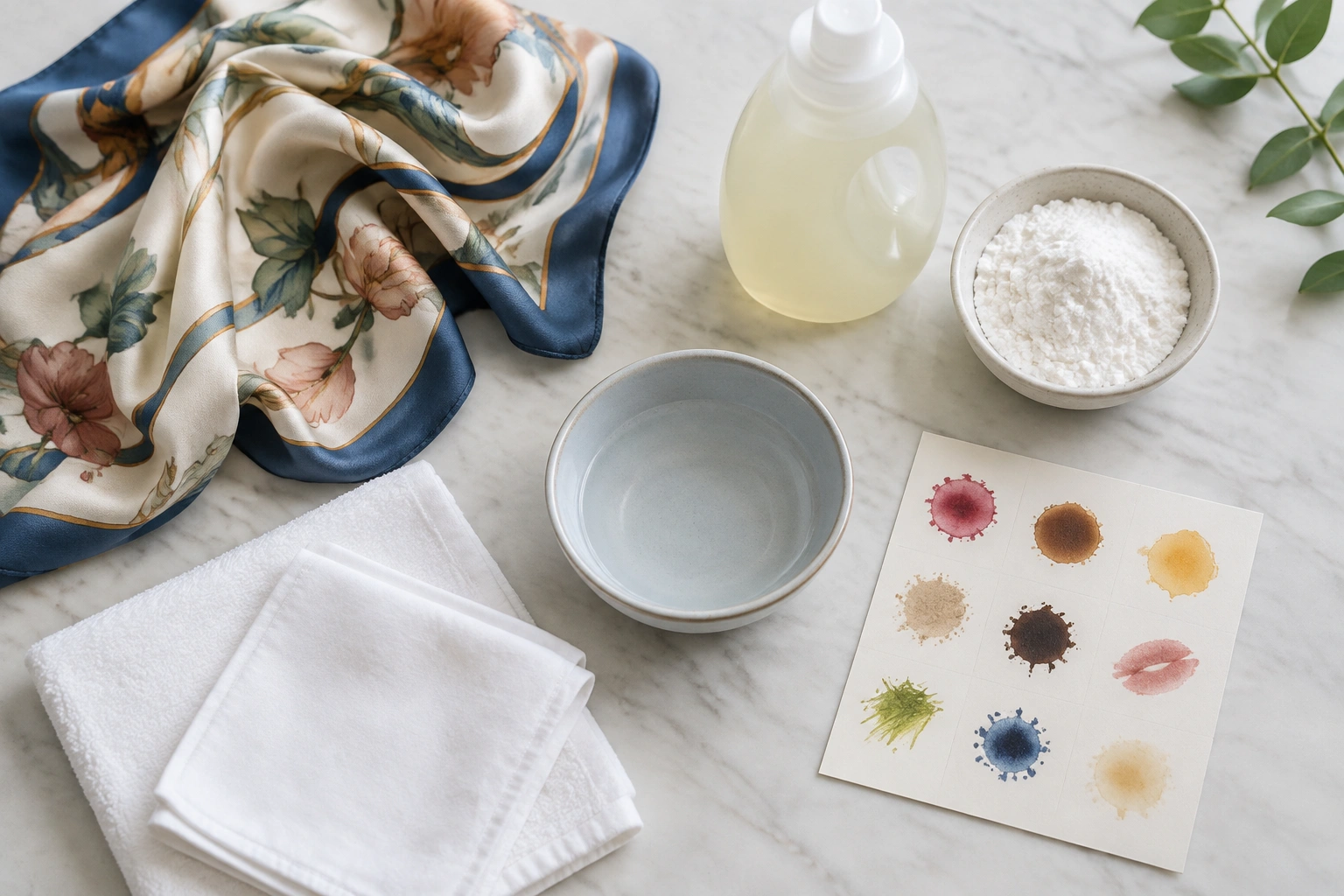
What You’ll Need Before You Start
Gather everything first so you do not chase supplies while the stain sits.
- Clean white cloths or plain paper towels
- Cold or lukewarm water
- Mild detergent made for delicate fabrics
- Optional, stain-dependent: white vinegar or lemon juice, only after a spot test and only for stains where a mild acidic dab may be appropriate
- Cornstarch or talcum powder for oil-based stains
- A clean bowl or small sink
- A dry towel
Use white cloths if possible. Colored cloths can transfer dye when they get damp. Keep the water cool; hot water can stress silk and may make some stains harder to lift.
What Not to Use on Silk
Silk is not the place for aggressive stain removal. Avoid:
- Bleach
- Harsh stain removers
- Ammonia
- Alcohol
- Commercial spot removers unless the product is clearly silk-safe and spot-tested
- Hot water
- Hard scrubbing or twisting
- Abrasive brushes or rough sponges
Rubbing is especially risky. It can spread the stain and roughen the surface threads. A clean cloth and light blotting are safer because they lift residue without grinding it deeper.
Identify the Stain Type First
Before you apply anything, decide what kind of stain you’re dealing with. That choice matters more than most people think.
| Stain type | Common examples | Safest first move |
|---|---|---|
| Water-based | Coffee, tea, juice, some food spills | Blot with a dry cloth, then dab with cool water |
| Oil-based | Salad dressing, skin oil, lotion, makeup, grease | Absorb with powder first, then treat gently |
| Protein-based | Sweat, some food residues, milk-based spills | Blot and use a mild detergent solution |
| Pigment/ink | Pen marks, some makeup, dyes | Test carefully; stop quickly if it spreads |
If you’re unsure, assume the stain is delicate and begin with the least aggressive option. That approach is slower, but it lowers the risk of making the mark permanent.
How to Spot-Test a Cleaner on Silk
Always test in an unseen area first, such as an inside seam or hem.
- Mix the cleaner you plan to use.
- Dampen a cotton swab or corner of a white cloth.
- Apply it lightly to the hidden area.
- Wait a few minutes.
- Let the test area dry fully.
- Check for color transfer, fading, texture change, or a water ring.
If the fabric darkens, the dye bleeds, or the texture feels rougher after drying, stop and do not use that cleaner on the visible stain. This one step can save an expensive blouse or scarf from permanent damage.
Step-by-Step: Remove a Fresh Stain from Silk
For a fresh stain, this is the safest general method.
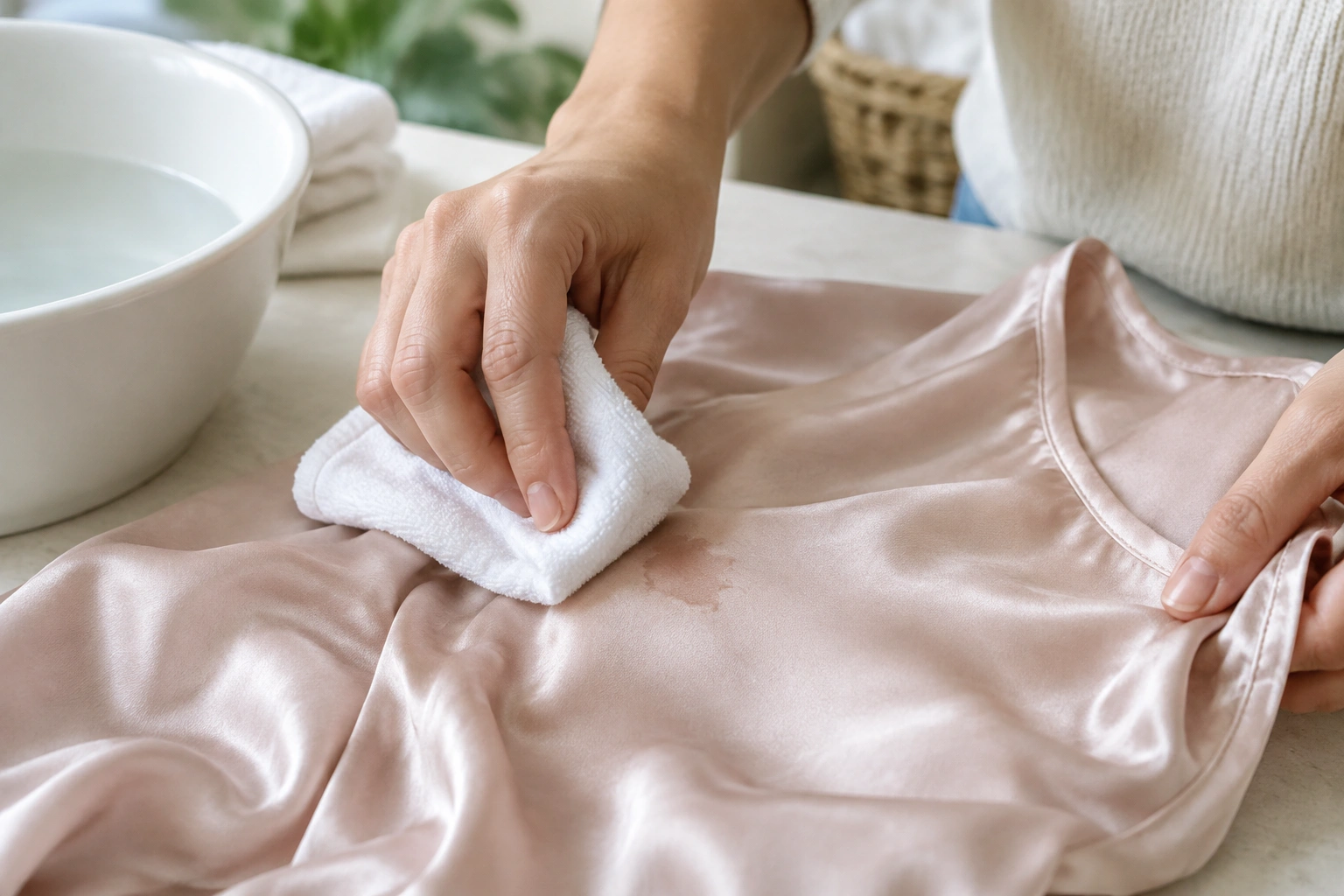
- Blot immediately. Press a clean white cloth or paper towel onto the stain to absorb as much as possible. Do not rub.
- Work from the outside in. If you add moisture, dab around the edges first so the stain does not spread.
- Use cool water sparingly. Lightly dampen the cloth, then blot again. Silk does better with minimal moisture than with soaking.
- If needed, add a gentle cleaner. A mild detergent solution may help, depending on the stain and the spot test.
- Blot again with a clean section of cloth. Keep lifting residue instead of scrubbing it.
- Stop once the stain stops transferring. Overworking silk can cause a dull patch even if the stain is improving.
How to Treat Oil, Makeup, Sweat, Food, and Ink Stains
Different stains need different first moves. Here’s the practical version.
Oil and grease stains
For oil, lotion, salad dressing, or makeup with a greasy base, sprinkle a small amount of cornstarch or talcum powder over the stain and let it sit long enough to absorb the residue. Then brush or shake off the powder gently.
If the mark is still there, follow with a mild detergent solution and blot lightly. Do not flood the area. Too much liquid can spread oil farther into the silk.
If the stain is old, dark, or has already been heat-dried, stop after one gentle attempt and consider a cleaner.
Makeup stains
Foundation, lipstick, and mascara often behave like a mix of oil and pigment. Start by blotting away any excess. If the stain is oily, use the powder method first. Then dab with a mild detergent solution on a white cloth.
If the makeup contains strong color, test carefully. Pigments can leave a shadow even after the oily part is gone.
Stop if the color starts to spread or if the silk begins to look dull in the treated area.
Sweat and body oil
Sweat marks on silk collars or underarms often need a gentle detergent solution. Dab lightly, then blot with a clean damp cloth to remove residue. If the stain is light, one pass may be enough.
If the mark is set-in, yellowed, or still visible after a gentle pass, stop and consider professional cleaning. Repeated wetting can leave a ring, especially on dyed silk.
Food stains
For food spills, remove any solids first with the edge of a spoon or a dry cloth. Then blot with cool water and, if needed, a mild detergent solution. Sauces and sugary drinks can be stubborn, so the key is to lift, not grind.
If the food stain is protein-based, such as egg or dairy, keep the water cool and stop if the stain begins to set or smear. If it is a colored sauce and the dye starts transferring, do not keep scrubbing.
Ink stains
Ink is the one I treat most cautiously. Some inks spread fast on silk and can permanently distort the fabric. If the mark is fresh, blot the surface gently and avoid soaking.
Do not rub, do not use alcohol, and do not keep adding liquid if the ink starts to feather outward. That is the point where home treatment should stop. A dry cleaner is usually the better next step.
How to Dry Silk After Stain Treatment
Dry silk the right way or you can undo the work you just did.
- Press the damp area between clean towels to absorb moisture.
- Do not wring or twist the fabric.
- Hang or lay it flat to air-dry away from direct sunlight.
- Keep it away from heat sources like radiators or dryers.
That matters because heat can set lingering stain residue and weaken the fabric’s finish.
What to Do If the Stain Is Still There
If the stain is still visible after one gentle attempt, you have two choices:
- Try one more mild pass if the stain is light, the fabric looked unaffected during the spot test, and the mark has clearly improved.
- Stop and dry clean if the stain is unchanged, the color looks thinner, or the fabric has started to look textured or shiny.
A second attempt should be smaller and gentler than the first. If you use more pressure or stronger cleaner each time, you’re no longer “trying again”; you’re increasing the chance of damage.
If the stain does not improve after that second careful pass, wait until the silk is fully dry before deciding what to do next. If it still looks set-in, send it to a dry cleaner rather than pushing harder at home.
When to See a Dry Cleaner
For silk, the better professional is usually a dry cleaner.
Take the item to a dry cleaner if:
- The stain is set-in
- The silk is vintage or expensive
- The item is labeled dry clean only
- The silk is dark, brightly dyed, or embellished
- You already tried gentle blotting and the mark is still there
- The stain is ink, dye, sweat that has yellowed, or something unknown
If the silk item is a scarf, blouse, tie, pillowcase, or accessory you want to preserve, a dry cleaner can often make a better judgment call than repeated home attempts.
Common Mistakes to Avoid
These are the errors that cause the most trouble:
- Rubbing instead of blotting
- Using hot water
- Skipping the spot test
- Soaking the fabric
- Using bleach or strong stain removers
- Drying with heat before the stain is gone
- Treating every stain the same way
The biggest mistake is usually impatience. Silk rewards slow, controlled handling.
Practical Examples of Silk Stain Removal
Coffee on a silk blouse
A commuter spills coffee on a silk blouse before work. The best move is to blot immediately with a white cloth, dab with cool water, then use a tiny amount of mild detergent if the stain remains. If the blouse starts to look dull or the stain spreads, stop and dry clean it.
Oil on a silk scarf
A lunch spill leaves a small oil mark on a silk scarf. Sprinkle cornstarch or talcum powder on the spot first, let it absorb the residue, then brush it away gently. If a shadow remains, use a mild detergent solution with light blotting.
Makeup transfer on silk
A makeup brush or foundation mark on a silk pillowcase or tie usually needs a cautious combination of blotting and mild detergent. If the stain is strongly pigmented, test first and avoid repeated scrubbing. A little patience is better than a damaged sheen.
Troubleshooting: If the Stain Spreads, Fades Unevenly, or Leaves a Ring
A few things can happen after treatment, and each one tells you something.
- If the stain spreads: too much liquid or rubbing likely pushed it outward. Stop and let the fabric dry before deciding on the next step.
- If the area fades unevenly: the cleaner may have affected the dye. Do not keep applying the same product.
- If a ring appears: the fabric may have dried with residue at the edge. A professional cleaner is usually the safer next move.
The rule here is simple: if the silk looks worse after a gentle attempt, do not escalate at home. Silk rarely improves under force.
FAQ
Is water safe on silk?
Yes, but use it sparingly and keep it cool or lukewarm. Too much water can spread the stain or leave a ring, so blotting is safer than soaking.
Should silk be soaked to remove a stain?
No. Soaking is usually too risky for silk because it can spread the stain, weaken the finish, or leave a water mark. Spot treatment and blotting are safer.
Is vinegar safe on silk?
A diluted vinegar mixture can be used only after a spot test and only for appropriate stains. It is not a universal silk cleaner, and it should not be used on every stain.
Can lemon juice be used on silk?
Only with caution, after a spot test, and only for stains where a mild acidic dab is appropriate. Avoid it if the silk is dark, brightly dyed, or already showing color loss.
Can I use detergent or soap on silk?
A mild detergent made for delicate fabrics is usually the safer choice. Harsh soaps and strong stain removers are more likely to damage silk or alter its finish.
Should I use cold water or warm water?
Cold or lukewarm water is generally safer. Hot water can stress silk and may set certain stains.
When should I stop and use a dry cleaner?
Stop if the stain is set-in, large, unknown, or still visible after one or two gentle attempts. Also stop if the fabric changes texture, color, or sheen during spot testing.
Does blotting really work better than rubbing?
On silk, yes. Blotting lifts residue while rubbing can spread the stain and damage the surface threads.
How should I handle a stain I can’t identify?
Treat it as delicate and use the least aggressive method first. If you can’t tell whether it’s oil, pigment, or something water-based, a dry cleaner is often the safest option.