
How to Remove Oil Stains from Jeans Without Ruining the Denim

Oil on jeans is annoying because it behaves differently from dirt or mud. It sinks into the fibers, spreads if you rub it, and can become much harder to lift once heat touches it. The good news: if you treat it quickly and follow a simple sequence, most fresh stains can be improved a lot at home.
This guide walks you through the practical version of the fix: what to do in the first few minutes, which household products are worth using, how to wash denim safely, and what to try if the stain has already set. I’ll keep it hands-on and realistic, the way I’d explain it to someone at a sink with a stained pair of jeans and no time to waste.
What You’ll Need Before You Start
Gather everything before you begin so you don’t pause halfway through treatment.
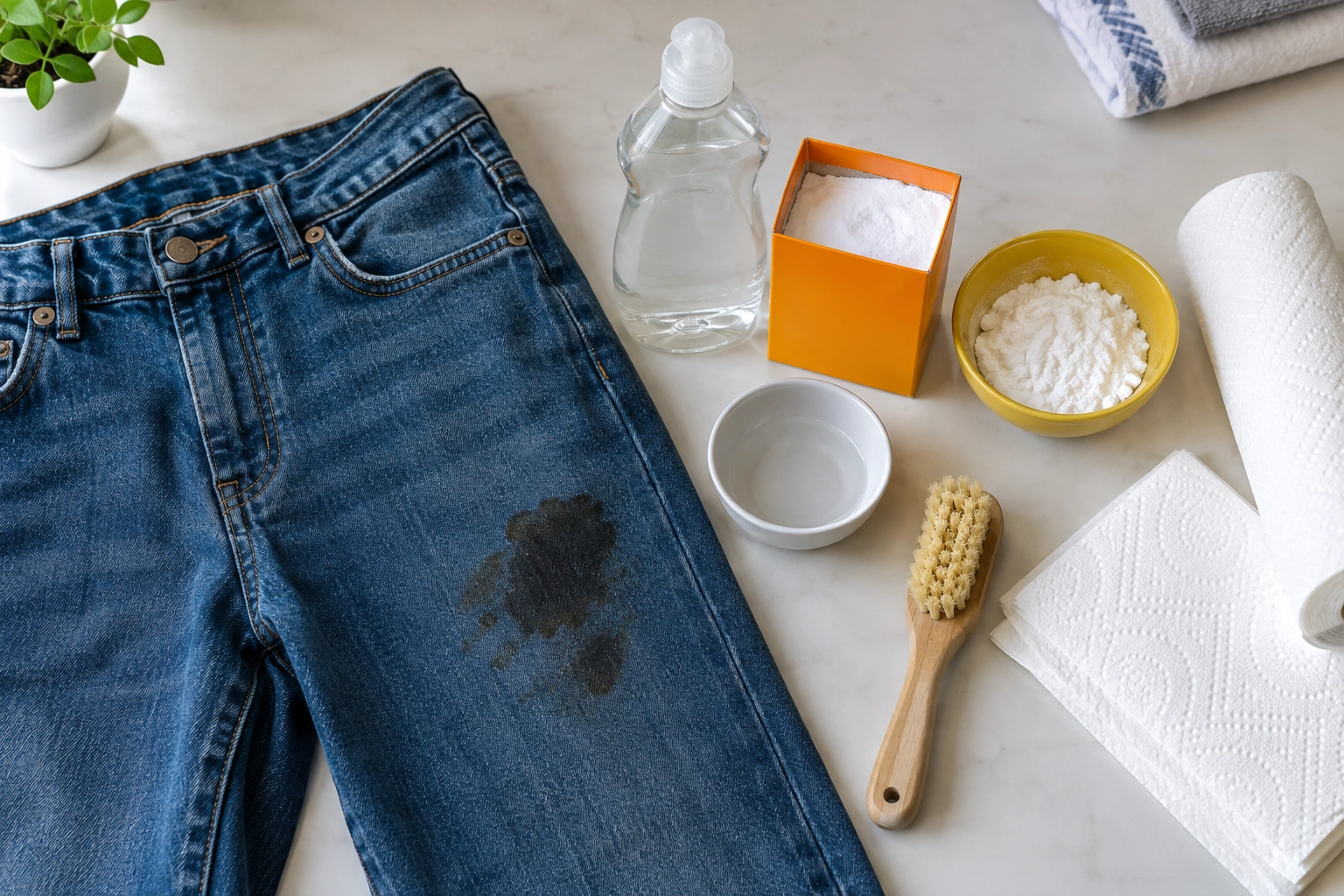
You’ll want:
- A clean paper towel or dry cloth
- Clear dish soap
- Liquid laundry detergent
- Baking soda or cornstarch
- A soft toothbrush or small brush
- Cold water
- A washing machine
- An air-drying spot
If you have a commercial stain remover on hand, that can be useful for stubborn spots later. Just check the care label first, especially on dark or color-sensitive denim.
First 5 Minutes: The Emergency Sequence
If oil just got on your jeans, follow this order:
- Blot the area gently. Use a paper towel or clean cloth and press from the outside in.
- Apply an absorbent powder. Cover the stain with baking soda or cornstarch.
- Brush off the powder after it sits. Give it 15 to 30 minutes, then remove it gently.
- Pretreat with dish soap. Work a small amount into the spot.
- Wash only after those steps. Don’t skip straight to the machine.
That blotting-then-powder step matters because it helps keep the oil from spreading before you wash. Keep heat away during these first minutes, including hot water and the dryer.
How to Tell Whether the Oil Stain Is Fresh or Set In
Use this quick rule:
- Fresh stain: still shiny, still wet, or only a few hours old
- Set-in stain: dry, dull, or already washed and dried once
Fresh stains usually respond better because the oil hasn’t fully bonded with the denim. Set-in stains are tougher because the grease has had time to settle deeper into the weave.
If the jeans have already gone through a dryer cycle, treat the stain as set in. Heat tends to lock oil into fabric, which is why the drying step matters so much later.
What to Do Immediately After Oil Gets on Jeans
The first job is containment, not cleaning.
- Blot the area gently. Use a paper towel or clean cloth and press from the outside in.
- Do not rub. Rubbing spreads oil through more of the denim.
- Apply an absorbent powder. Baking soda or cornstarch can help pull up surface oil before washing.
- Brush off the powder after it sits. Let it sit for about 15 to 30 minutes, then remove it gently.
- Pretreat with dish soap. Work a small amount into the stain.
- Keep heat away. Don’t use hot water yet and don’t toss the jeans in the dryer.
That blotting step sounds small, but it matters. A fresh grease spot that stays tight and localized is usually easier to manage than one that gets smeared across a larger patch of denim.
Step-by-Step: How to Remove a Fresh Oil Stain from Jeans
This is the method I’d use first for most fresh spots.
1) Blot the stain
Press with a dry paper towel or cloth to remove as much surface oil as possible.
2) Cover the spot with an absorbent powder
Sprinkle baking soda or cornstarch over the stain and let it sit for about 15 to 30 minutes. These powders help pull excess oil out of the fabric surface. If the stain is large or particularly greasy, you can leave the powder on a bit longer before brushing it off.
3) Brush off the powder
Use a soft brush or shake the jeans gently to remove the powder. Don’t scrub hard.
4) Pretreat with dish soap
Apply a small amount of clear dish soap directly to the stain and work it in gently with your fingers or a soft brush. Dish soap is useful here because it’s designed to break down grease.
This is one of the most commonly recommended home steps for denim oil stains, and it lines up with Tide’s guidance for oil stains: check the care label, pretreat with a clear dish soap, then wash with liquid detergent.
5) Rinse the treated area
Use cold water to rinse out the dish soap and loosened oil. Cold water is the right choice for this rinse and pretreatment step.
6) Wash the jeans
Run the jeans through the washing machine with your regular liquid laundry detergent. If the care label allows it, use warm water for the wash. Whirlpool notes that warm water, when permitted by the care label, can help with oil or grease stains. Still, the label comes first, and cooler water may be the safer choice for some denim.
7) Check before drying
Look at the stain while the jeans are still damp. If it’s still visible, repeat the treatment. If it’s gone or nearly gone, air dry the jeans.
Should You Use Dish Soap, Laundry Detergent, Baking Soda, or Cornstarch?
Each product has a different job. Here’s the practical comparison.
| Product | Best use | Speed | Trade-off |
|---|---|---|---|
| Dish soap | Breaking down fresh grease | Fast | Needs rinsing and a follow-up wash |
| Laundry detergent | Main wash after pretreating | Moderate | Usually works better as a second step than a first step |
| Baking soda | Absorbing fresh oil | Fast for surface oil | Not usually enough alone for heavy stains |
| Cornstarch | Absorbing fresh oil | Fast for surface oil | Similar to baking soda; better as a first-pass helper |
| Stain remover | Stubborn or set-in spots | Moderate to fast | Can be harsher on some dyes or finishes |
Dish soap vs. laundry detergent
Dish soap is usually the better first move because it’s built to cut grease. Laundry detergent is often better as the wash-step follow-up. In practice, they work well together: dish soap first, detergent second.
Baking soda vs. cornstarch
Both are absorbent powders, so the goal is similar: pull oil out of the weave before washing. If you have one, use it. If you have both, either is fine for the first pass. I’d treat them as helpers, not full solutions for a heavy stain.
When to use a stain remover
If the spot is old, dark, or still visible after a wash, a commercial stain remover can be the next step. Test it on an inside seam or hidden area first, especially on black or dyed jeans.
For a broader look at stain handling on clothing, our guide to how to remove oil stains from shirts follows a similar logic, but denim usually needs a little more patience because of its thicker weave.
How to Wash Jeans After Pre-Treating the Stain
Once the stain has been treated, wash the jeans as you normally would, but keep these points in mind:
- Follow the care label first
- Use liquid detergent
- Use cold water for rinsing and pretreatment
- Use warm water for the wash only if the care label allows it
- Avoid overloading the machine
If the label permits warm water, that can help with grease. If the jeans are dark, stretch-finished, or especially color-sensitive, a gentler wash may be safer for the fabric’s appearance. The stain may need another round, but fading is harder to undo than a second wash.
If you’re dealing with the kind of spill that happened during a meal, our guides on tomato sauce stains and soy sauce stains show a similar “pretreat, wash, inspect” rhythm, though those stains behave differently from grease.
Why You Should Not Put Stained Jeans in the Dryer Yet
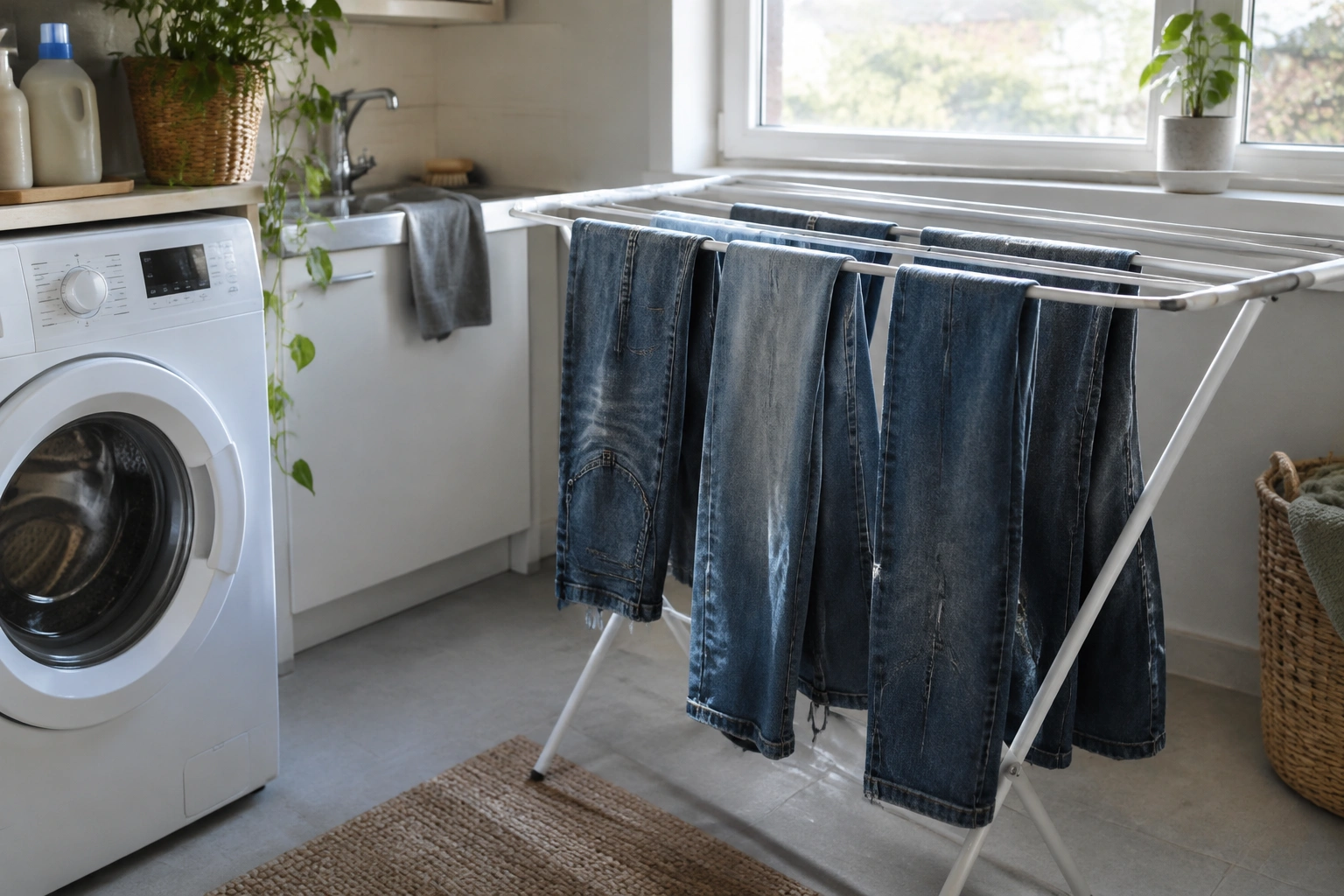
Heat can make an oil stain much harder to remove. That includes the dryer and, in some cases, overly hot wash water before the stain has been lifted.
Air drying gives you a checkpoint. You can inspect the jeans and decide whether the stain needs another round. If you machine dry too early, you may seal in the mark and make later treatment less effective.
How to Treat Old or Set-In Grease Stains on Jeans
If the stain has already dried or survived a wash, shift to a more patient approach.
1) Pretreat again
Apply clear dish soap directly to the stain and work it in gently. Let it sit longer than you would for a fresh stain.
2) Add an absorbent step if needed
Use baking soda or cornstarch before the soap if the stain still feels oily to the touch. This can help pull up some of the surface residue first.
3) Wash and inspect
Wash the jeans again according to the care label. Check the stain while damp.
4) Repeat a limited number of times
If the stain is lighter but still visible, repeat the same process once or twice more before switching products. If it’s improving, keep going with the same method rather than changing products every time.
5) Use a stronger stain remover if needed
If several rounds don’t move the stain much, try a commercial stain remover and test it first on a hidden spot. That’s especially important on dark jeans, where aggressive treatment can change the look of the fabric even if the stain fades.
How to Safely Treat Dark, Black, or Colored Jeans
Dark denim deserves a lighter touch.
Use these precautions:
- Test any stain remover on an inside seam first
- Avoid aggressive scrubbing
- Use just enough product to cover the stain
- Check for fading before drying
Black jeans often show treatment marks if the fabric is rubbed too hard or soaked too aggressively. A gentle, repeated approach is usually safer than trying to force the stain out in one pass.
If the jeans are expensive, heavily dyed, or have a special finish, treat the stain more conservatively and be ready to repeat the process rather than increase the pressure.
Common Mistakes That Make Oil Stains Harder to Remove
These are the mistakes that usually turn a manageable stain into a stubborn one:
- Rubbing instead of blotting
- Skipping pretreatment
- Using the dryer too early
- Assuming one wash will fix an old grease mark
- Using harsh scrubbing on dark denim
- Ignoring the stain after washing instead of checking it damp
The biggest one is heat. If the stain isn’t gone, don’t dry the jeans yet. That single choice often decides whether the stain disappears on the next round or stays for good.
Troubleshooting: What to Do If the Stain Is Still Visible After Washing
If the stain is still there, don’t panic and don’t dry the jeans.
Use this decision path:
- Faint stain, still damp: repeat the same dish soap + wash cycle
- Still greasy to the touch: add an absorbent powder step before pretreating again
- Older or darker stain: switch to a stain remover after testing it on a hidden area
- Stain survived a dryer cycle: expect more than one treatment round and more patience
A stubborn spot often needs a couple of passes, especially if it’s old grease or something thick like salad dressing or mechanical oil. If the mark is improving, keep going with the same method rather than changing products every time.
Practical Examples of Removing Oil Stains from Jeans
Fast-food grease on commuter jeans
Blot immediately, add baking soda or cornstarch, then pretreat with dish soap before washing. This is usually the easiest type of stain if you catch it quickly.
Cooking oil during dinner prep
If the spill is fresh, the powder step helps absorb the excess first. Then wash with liquid detergent and air dry until you know the stain is gone.
Bike chain grease on student jeans
Treat it as a heavier grease stain. Blot carefully, pretreat, wash, and repeat if needed. Chain grease often behaves more like a set-in stain than a simple food spill.
A stain that was accidentally dried once
Treat it like a set-in stain. Use dish soap, allow more dwell time, wash, inspect, and repeat. If it remains after several rounds, move to a stronger stain remover and test first.
When to Seek Professional Cleaning Help
If the fabric is delicate or expensive, the stain covers a large area, or the dye is already lifting, professional cleaning may be the safer next step. That’s also worth considering for special-occasion jeans or pairs you don’t want to risk with repeated home treatment.
For everyday jeans, though, most oil stains are worth a careful at-home attempt before you give up.
FAQs
Can I use hot water to remove oil from jeans?
Use the warmest water allowed by the care label for the wash, not automatically the hottest water available. Use cold water for rinsing and pretreatment. The label matters because denim can shrink or fade if treated too aggressively.
Can I put oil-stained jeans in the dryer?
Not until the stain is gone. Dryer heat can set the oil and make it harder to remove later.
Is dish soap better than laundry detergent for grease?
For pretreating, yes, dish soap is usually the better first step because it’s designed to cut grease. Laundry detergent is still important for the wash cycle.
Will baking soda or cornstarch remove the stain by themselves?
They can help absorb fresh oil, but they usually work best as part of a larger process that includes dish soap and washing.
How many times should I repeat the treatment?
Repeat once or twice more if the stain is improving. If it still isn’t moving after that, switch to a stain remover or consider professional cleaning help.
Is this safe for black jeans?
Usually yes, but test any stronger stain remover on a hidden area first and avoid heavy scrubbing that could fade the dye.
What if the stain is still visible after air drying?
Treat it again before using the dryer. Air drying is your checkpoint, not the finish line.
Does this work on old grease stains?
Often, yes, but old stains usually need more than one round and more patience than fresh stains.
Can I use this method on stretch jeans?
Yes, but follow the care label closely and avoid harsh scrubbing so the fabric keeps its shape.
If you want, I can also turn this into a shorter “quick fix” version or a matching internal-link cluster plan for other stain-removal guides on Queryoro.