
How to Remove Ink Stains from Jeans Without Ruining the Denim

Ink on jeans is one of those stains that can turn up at the worst possible time: a pen leaks in a pocket, a marker cap pops off in a backpack, or a notebook explodes in transit. The good news is that denim usually gives you enough structure to work with, as long as you treat the stain the right way and avoid setting it deeper.
The basic rule is simple: act fast, blot instead of rubbing, and keep heat out of the process until the stain is gone. If you want a practical, low-risk approach, this guide walks you through what to use, what to avoid, and how to decide whether a stain is still worth tackling at home.
What You Need Before You Start
Gather everything first so you are not scrambling while the ink spreads.
You’ll want:
– Clean paper towels or a white cloth
– A clean towel to place under the stain
– Rubbing alcohol (isopropyl alcohol)
– Cotton balls or cotton pads
– A soft-bristled toothbrush
– Liquid laundry detergent
– Dish soap
– A stain remover
– Cold water
– A sink or basin
A few safety checks matter before you touch the stain. Check the jeans’ care label first, especially for dark-wash, coated, or stretch jeans. If the jeans are expensive, heavily dyed, or blended with elastane, test any cleaner on an inside seam first.
If you also want a broader stain-removal routine for other laundry mishaps, this guide to tomato sauce stains follows the same “pretreat before heat” logic.
Identify the Ink and the Jeans First
Before choosing a method, figure out two things: what kind of ink you’re dealing with and how long it has been there.
Fresh vs. dried ink
Fresh ink is usually easier to lift because it has not fully bonded with the fibers yet. If the stain is still wet, start with blotting and then move to a pretreatment. If the stain is dry, or has already been washed, you can still treat it—but expect to repeat the process.
Quick decision tree
- Fresh ballpoint or gel ink: Start with rubbing alcohol.
- If the stain is still visible after blotting and rinsing, follow with liquid laundry detergent or a stain remover before washing.
- Dried ballpoint or gel ink: Start with rubbing alcohol or clear alcohol-based hand sanitizer gel.
- If the stain lightens but does not disappear after 1 to 3 careful rounds, switch to liquid laundry detergent or a stain remover.
- Permanent marker: Start with rubbing alcohol or alcohol-based hand sanitizer gel.
- If it barely moves after a few rounds, try liquid laundry detergent or a stain remover next.
- If the mark is large, old, or heat-set, stop after repeated failures and consider a professional cleaner.
Ballpoint, gel, or permanent marker
- Ballpoint ink is often oil-based, which is why alcohol-based pretreatment usually works better than plain water.
- Gel ink can be more stubborn and may need more than one round of pretreatment.
- Permanent marker is the hardest of the three and often needs repeated treatment or a stronger stain remover.
That difference matters because the cleaner you start with should match the stain, not just the fabric. For many pen stains, alcohol is the most practical first move. For older stains, liquid laundry detergent or dish soap can help break up what the alcohol loosens.
Light-wash, dark-wash, and stretch denim
Dark denim can hide a faint shadow, but it can also show fading if you overdo the cleaner. Light-wash jeans are less likely to show dye loss, but they make leftover ink easier to see. Stretch jeans need a gentler hand because aggressive scrubbing can distort the fabric.
A useful decision rule: if the jeans are dark, coated, expensive, or stretchy, test first and use less solvent. If they are everyday cotton jeans, you have a little more room to work.
For travelers and commuters, this is the same kind of practical sorting you’d use when deciding whether a garment can survive a fast wash cycle or needs gentler handling. If you’re packing clothes around a busy schedule, TSA’s travel guidance is a useful reminder to keep leak-prone items sealed and separated before they stain your clothes in the first place.
Fastest Safe Method for Fresh Ink Stains
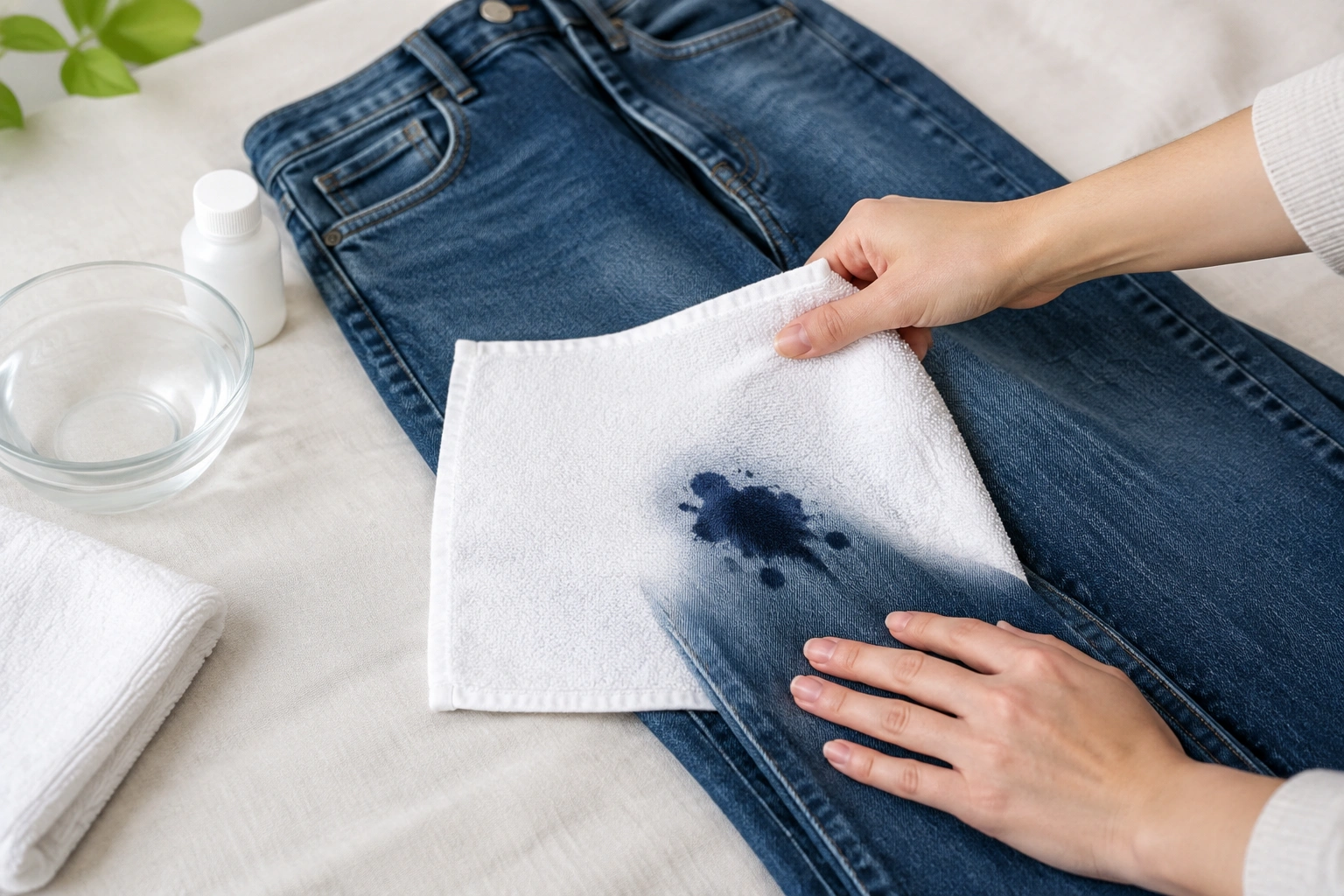
For a fresh ink stain on jeans, the safest household method is usually rubbing alcohol plus blotting.
1) Put a clean towel under the stain
Slide a clean towel or folded paper towels inside the jeans under the stained area. This keeps the ink from transferring to the back layer of denim.
2) Blot away excess ink
Use a clean white paper towel or cloth to lift off as much surface ink as possible. Do not rub. Rubbing pushes ink deeper into the fibers and spreads the stain outward.
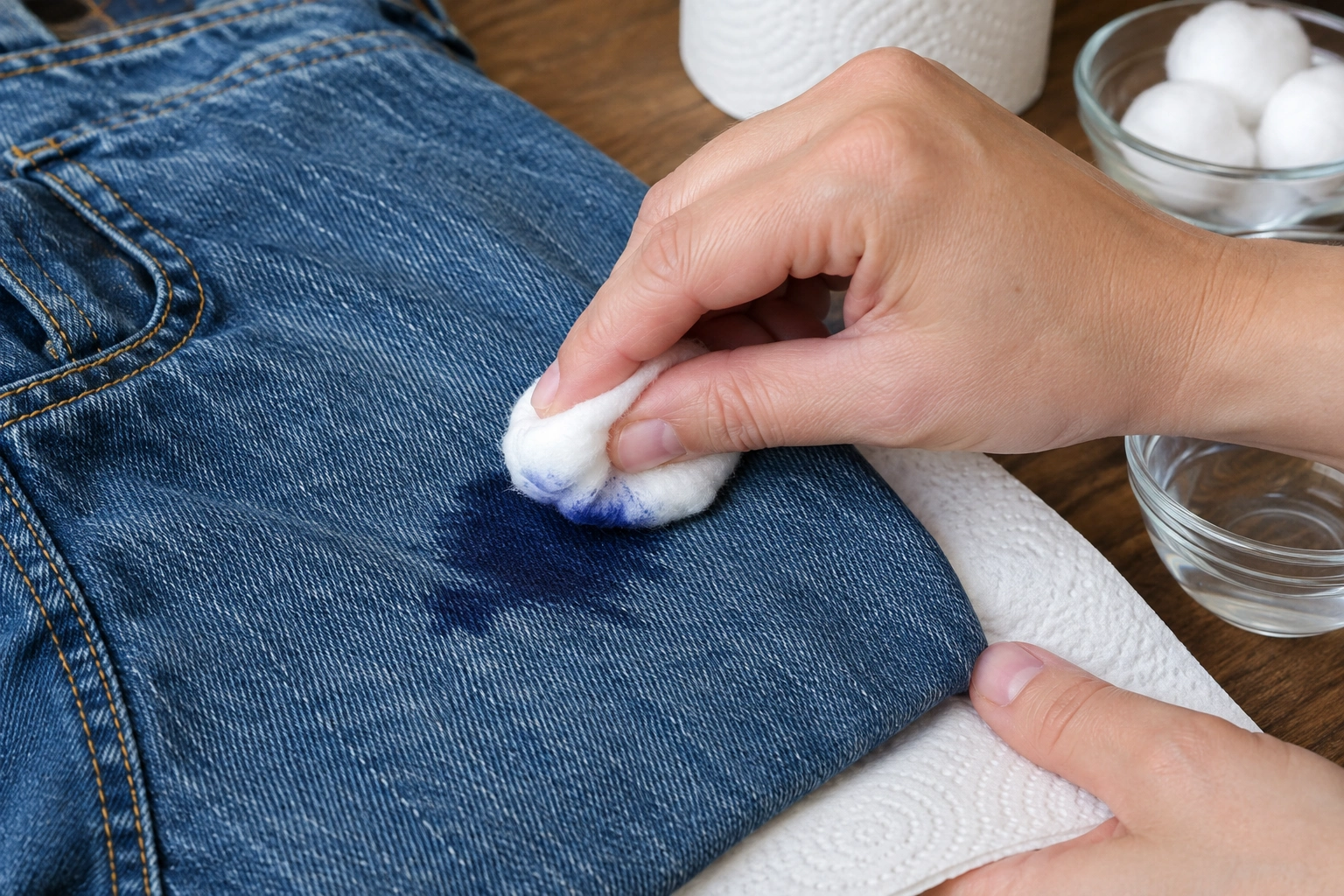
3) Apply a small amount of rubbing alcohol
Dampen a cotton ball or clean cloth with rubbing alcohol and dab it onto the stain. Use just enough to wet the area lightly. You want the stain loosened, not flooded.
4) Blot from the outside in
Work gently from the edge of the stain toward the center. That keeps the ink from blooming outward. If you have a soft toothbrush, you can use very light brushing after the alcohol has started to loosen the stain, but don’t scrub hard.
5) Keep switching to clean paper
As the ink transfers, replace the paper towel or cotton ball. If you keep using the same saturated spot, you’ll just move the ink around.
6) Rinse in cold water
Once the stain has faded a lot or disappeared, rinse the jeans in cold water. Cold water is the safer rinse here because heat can lock in what’s left.
7) Wash normally in cold water
Wash the jeans in the machine on a cold cycle after pretreating. Use your regular detergent. If the stain is still visible after washing, stop there and treat again before drying.
A quick note on hairspray: alcohol-containing hairspray can help with some ink stains, but rubbing alcohol is usually the more predictable choice.
How to Treat Dried or Set-In Ink Stains
If the stain has dried, already been washed, or sat overnight in a hamper, use a more deliberate sequence.
1) Start with alcohol again
Place the towel under the stain, then apply rubbing alcohol or clear alcohol-based hand sanitizer gel. Let it sit for a short time, then blot.
2) Repeat the alcohol treatment 1 to 3 times
If the stain is clearly lightening, keep going with the same method. Repeating alcohol is the best next step when the ink is fading but still visible.
3) Switch to liquid laundry detergent or dish soap
If the stain stops improving after a few rounds, move to a small amount of liquid laundry detergent or dish soap. Work it into the stain gently with your fingers or a soft toothbrush, then let it sit briefly before rinsing.
Use liquid laundry detergent when the ink has already loosened but still leaves a shadow. Use dish soap when the stain looks oily or greasy, or when you want a milder household option for a small remaining mark.
4) Try a stain remover if needed
If detergent or dish soap does not finish the job, use a color-safe stain remover and wash again in cold water.
5) Stop after repeated failures
If the stain is still dark after several careful attempts, or if the denim starts to fade or look rough, stop DIY treatment. At that point, a professional cleaner is the safer option.
How to Wash the Jeans After Pretreating
Pretreating is only half the job. Washing and drying correctly is what keeps a faint stain from becoming permanent.
Wash in cold water
After pretreatment, wash the jeans in cold water. Cold is the safer default because it reduces the chance of setting what remains.
Check the stain before drying
Do not put the jeans in the dryer until the stain is gone or nearly gone. Heat can lock in leftover ink, and once that happens, the stain becomes much harder to remove.
Air-dry first if you’re unsure
If you can still see any shadow at all, air-dry the jeans instead of machine-drying them. Once they’re dry, inspect the stain in daylight. If it’s still there, treat again before the next wash.
If you want the stain-removal version of “measure twice, cut once,” this is it: wash cold, inspect, then dry only when you’re satisfied.
What to Do If the Stain Is Still Visible
Some ink stains fade but don’t disappear on the first pass. That does not mean the jeans are ruined.
1) If the stain is lighter but still there, repeat the same treatment
Repeat the alcohol treatment if the stain is still getting lighter. Ink often releases in layers, so the first round may only loosen the surface.
2) If the stain stops improving, switch products
After 1 to 3 careful alcohol treatments, move to liquid laundry detergent, dish soap, or a stain remover. Use one product at a time and rinse between attempts.
3) If the stain is still dark after several attempts, stop
If the stain remains dark, or if the denim starts to fade, stop before you damage the fabric. On dark-wash jeans, a successful stain treatment should remove the ink without leaving a bleached patch.
4) If the stain was heat-dried, consider a professional cleaner
Heat-set ink is the most frustrating case. You can still try repeated pretreatment, but if the stain is large, old, or in a visible area, the odds of a perfect home fix go down.
Common Mistakes That Make Ink Stains Worse
A few missteps can turn a manageable stain into a permanent one.
Rubbing hard
This spreads the ink and pushes it deeper into the denim.
Using hot water too soon
Heat can set the stain before you’ve had a chance to remove it.
Skipping the towel underneath
Without a barrier, ink can transfer to the back of the jeans.
Overusing cleaner
Too much solvent can create a ring mark or fade the dye.
Drying before the stain is gone
Once heat hits the fabric, your options narrow fast.
Using bleach on jeans
Bleach can damage denim dye and leave a patch that looks worse than the original stain. Avoid it unless the care label clearly allows it and you’re willing to accept the risk.
Mixing products
Do one method at a time. Mixing cleaners can create unpredictable results and doesn’t usually improve ink removal.
When to Use a Professional Cleaner
Consider a professional garment cleaner or dry cleaner if:
– The stain is large or very dark
– The jeans are expensive, coated, or heavily dyed
– The fabric is stretch denim and already looks stressed
– The stain has been washed and dried several times
– You’ve already faded the area with alcohol and don’t want to risk more damage
– The jeans are a favorite pair and the stain is in a visible area
That last point matters. A faint ink mark is frustrating, but a faded patch on the thigh or knee is often harder to live with than the stain itself. If the jeans are a favorite pair, stopping early can be the smarter move.
FAQs
Does rubbing alcohol really remove ink from jeans?
Yes, it is one of the most commonly recommended first-line methods for ink on jeans. Use a small amount, blot gently, and rinse cold afterward.
Can I use hairspray instead of rubbing alcohol?
Sometimes. Alcohol-containing hairspray may help, but rubbing alcohol is usually the more predictable choice.
Should I use dish soap or liquid laundry detergent?
Use them after alcohol if the stain is still faintly visible, or sooner if the mark looks oily or has already been loosened. Apply a small amount, work it in gently, then rinse and wash cold.
Should I wash the jeans after pretreating?
Yes. Rinse cold first, then wash in cold water. Just don’t dry them until the stain is gone.
What if the stain was already dried in the dryer?
Treat it anyway, but expect to repeat the process. Heat-set stains are tougher, and some may not come out completely at home.
Can I use bleach?
Not as a first choice. Bleach can damage denim color and leave a visible patch.
If you’re building a practical stain-care routine for everyday clothing, the main takeaway here is the same: treat the stain first, then wash cold, then dry only when you’re sure it’s gone.