
Can You Put a Backpack in the Washing Machine? A Practical Guide to Doing It Safely

A backpack can often go in the washing machine — but only if the bag is built for it. That means a simple fabric pack, usually nylon, polyester, or canvas, with no rigid frame, leather trim, electronics, or delicate waterproof finish that the manufacturer says should stay out of the washer.
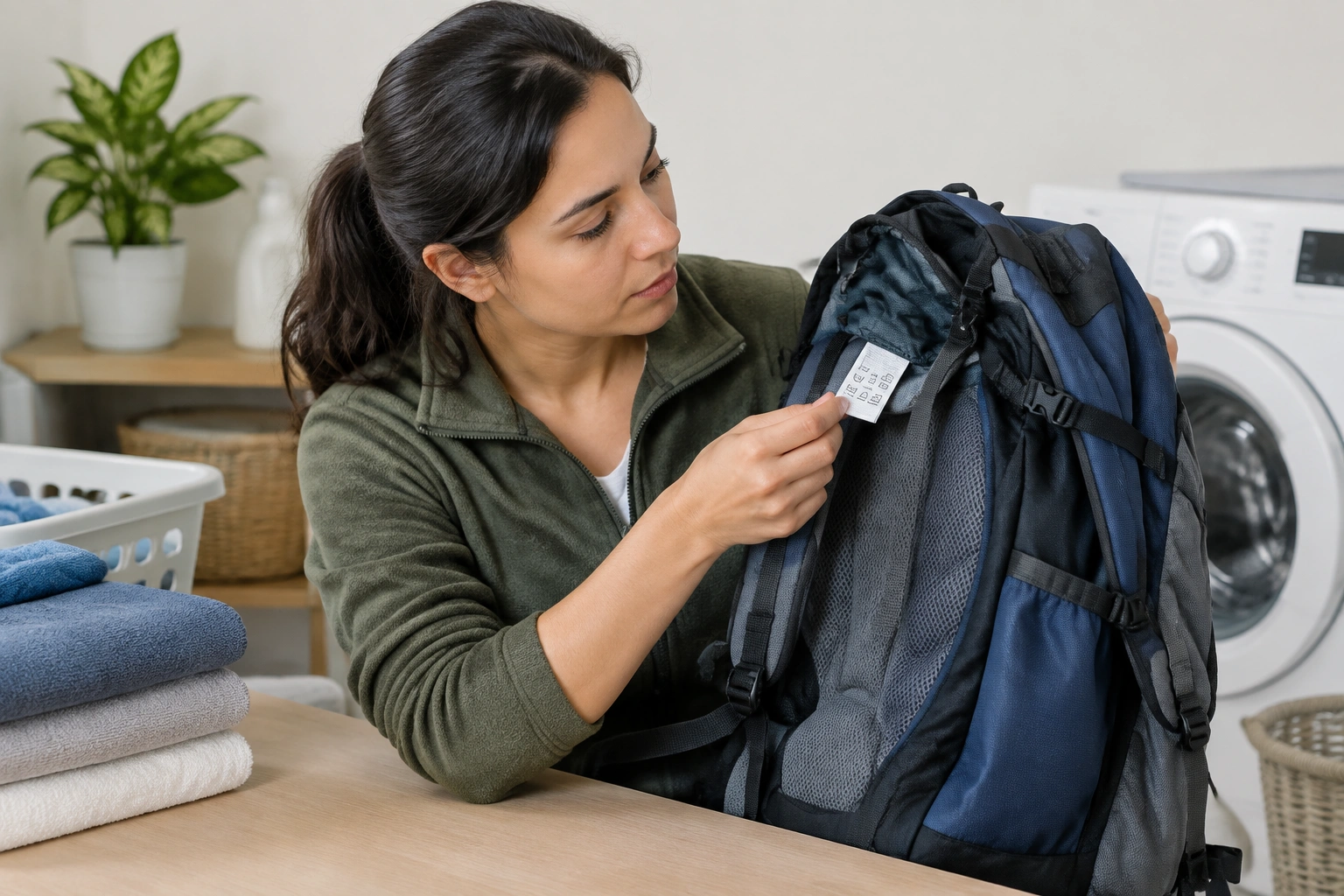
If the care label says machine wash is okay, you can usually clean the bag that way with less effort than hand-washing. If the label is missing, or the pack has structured support, coated fabric, or mixed materials, the safer move is usually spot-cleaning or hand-washing. That’s the decision that protects the bag’s seams, padding, and shape.
For a broader cleaning routine, see our guide on how to clean a backpack and our step-by-step backpack washing guide.
Can You Put a Backpack in the Washing Machine?
Yes, sometimes. The real question is not “Can it fit?” but “Can the materials and construction handle the wash?”
A basic school backpack made from nylon, polyester, or canvas is often machine washable if the care label allows it. As a general rule, soft-sided packs with simple construction are the best candidates. Packs with frames, heavy coatings, bonded panels, leather trim, or built-in electronics should usually stay out of the washer.
That’s why the label wins. If the manufacturer says machine washable, follow that instruction before any general advice. If the label is gone, treat the bag conservatively and inspect it like a repair job: what is the shell made of, what’s inside the pack, and what parts could be damaged by water or agitation?
A quick decision rule
If the backpack is mostly soft fabric and has no rigid frame, no leather accents, and no special coating that seems fragile, machine washing is usually worth considering.
If it has any of these, stop and choose a gentler method:
– internal frame sheet or metal frame
– leather trim or suede panels
– heavy waterproof coating
– glued padding that could warp
– built-in electronics or charging ports
– decorative patches, prints, or trims that may peel
Check the Care Label and Backpack Materials First
The care label tells you what the maker designed the pack to survive. That matters because two backpacks can look similar but behave very differently in a washer.
If the care label is missing: a quick inspection checklist
When there’s no label, use this short checklist before deciding on machine wash vs. hand-wash:
- Shell: Is it soft fabric like nylon, polyester, or canvas?
- Lining: Is the inside plain fabric, or does it have a fragile coating or bonded layer?
- Padding: Are the straps, back panel, or laptop sleeve heavily padded or molded?
- Trims and hardware: Does it have leather, suede, reflective film, glued patches, or delicate zipper pulls?
- Structure: Is there a frame sheet, stiff insert, or molded base?
- Finish: Does the bag look water-resistant, coated, or seam-sealed?
If most answers point to soft, simple construction, a gentle machine wash may be reasonable. If you see structure, coating, or mixed materials, hand-washing or spot-cleaning is the safer call.
Materials that are usually more machine-wash friendly
These are the common fabrics that often tolerate gentle washing better:
– nylon
– polyester
– canvas
That does not mean every nylon or canvas backpack is automatically safe. A coated nylon hiking pack is a different animal from a plain school bag. The shell may be washable, but the coating, seams, or padding may not appreciate a full spin cycle.
Materials and features that usually need caution
These are the details that often push a backpack out of the machine-wash category:
– leather or faux-leather trim
– suede accents
– waterproof coatings or seam sealing
– stiff foam panels
– structured frames or frame sheets
– reflective films, printed graphics, or bonded patches
– insulated linings
– specialty bags with electronics or charging systems
A useful way to think about it: fabric can be washable while the build is not. The shell may survive, but the structure or finish may not.
When Machine Washing Is Not a Good Idea
If the backpack is expensive, heavily structured, or built for outdoor performance, hand-washing usually gives you more control and less risk.
That’s especially true for:
– hiking packs with frames or suspension systems
– commuter packs with waterproof coatings
– leather-trimmed backpacks
– bags with glued foam or molded panels
– any pack with a care label that says “spot clean only” or “do not machine wash”
The trade-off is simple. Machine washing is faster and more thorough for a dirty school bag. Hand-washing is slower, but it lets you clean around fragile parts instead of forcing the whole bag through agitation.
If the bag only has a few dirty spots, spot-cleaning is often the smartest choice. A full wash is better when the whole interior smells, the straps are grimy, or crumbs and sweat have built up across the bag.
A good stop condition
If you cannot confidently answer “yes” to all three questions below, don’t machine wash it:
1. Is the care label or manufacturer okay with it?
2. Is the backpack mostly soft fabric?
3. Can you remove or protect any fragile parts?
If any answer is “no” or “not sure,” switch to hand-washing.
What You’ll Need Before Washing
Gather everything first so you are not handling a wet backpack with dirty hands halfway through the process.
You’ll want:
– mild detergent
– soft brush or clean cloth
– laundry bag or large pillowcase
– old towel
– sink or tub for pre-cleaning
– a dry space for air-drying
A laundry bag or pillowcase is not mandatory for every backpack, but it helps reduce abrasion. It also keeps loose straps and buckles from slamming around the drum and catching on the washer interior. That protection matters more for backpacks with long webbing straps, dangling zipper pulls, or plastic buckles.
Prepare the Backpack for Washing
This prep step does more for the final result than people expect. Dirt left in pockets turns into sludge. Coins can damage the washer. Food crumbs can cling to seams. And open zippers can snag fabric.
1. Empty every pocket
Check the main compartment, front pocket, side pockets, hidden sleeves, and laptop compartment. Turn the bag upside down and shake out loose debris.
2. Remove detachable parts
Take off anything that can come off safely:
– removable frame sheet
– key clips
– pencil cases
– patches that are meant to be removed
– detachable straps or accessory pouches
If a part is built in or difficult to remove, do not force it. Forcing a frame or support panel can bend the pack before the wash even starts.
3. Brush off dry dirt first
Mud, dust, and sand should be removed before the wash. Dry grit can grind into fabric during agitation. A soft brush works well here, especially around seams, corners, and the bottom panel.
4. Close zippers and fasten buckles
Zip the main compartments and secure any buckles or straps. This keeps straps from tangling and reduces the chance of hardware hitting the drum hard.
5. Pre-treat stains, odor, or mildew
Spot-treat obvious stains before washing:
– food spills
– sweat marks
– ink smudges
– mud
– oily residue around straps
Use a small amount of mild detergent and a damp cloth or soft brush. Don’t scrub aggressively; that can rough up the fabric surface and spread the stain deeper.
For odor or light mildew, let the bag air out first and wipe the affected areas with a mild soap solution before washing. If you see active mold growth, skip the machine wash and hand-wash or spot-clean first, because washing alone may spread spores and leave the problem in the padding.
How to Wash a Backpack in the Washing Machine
If the care label allows machine washing, use the gentlest setup that will still clean the bag.
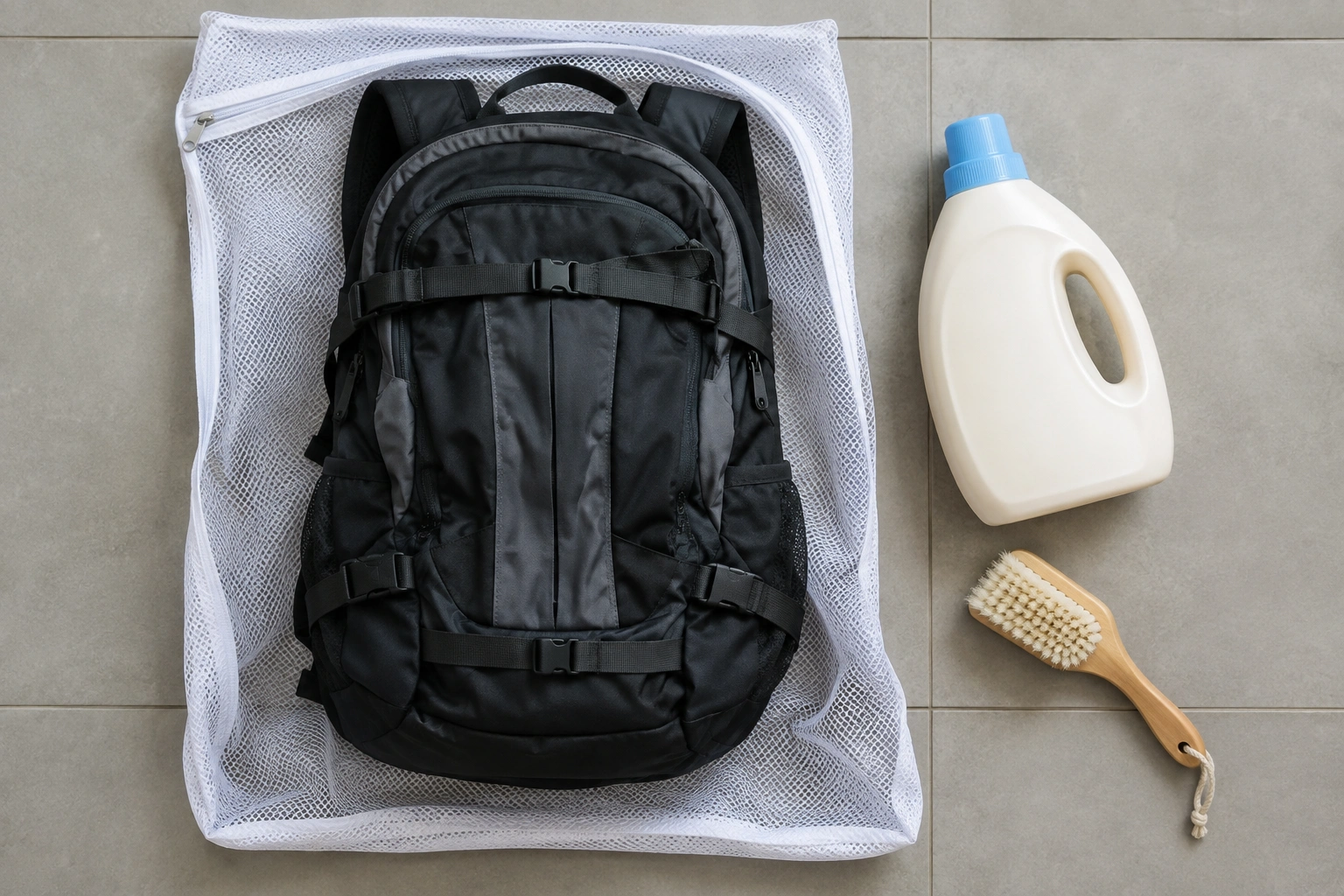
1. Put the backpack in a laundry bag or pillowcase
This is especially useful if the pack has straps, buckles, or a lot of hardware. It adds a layer of protection for the bag and the washer.
2. Wash it alone or with very light items
Do not pack the drum with heavy laundry. The backpack needs room to move gently, not slam around with towels or jeans. Bulky items increase abrasion and can wear on seams, zippers, and coatings.
3. Choose a gentle cycle
A gentle or delicate cycle is the safer choice because it reduces agitation. Heavy-duty cycles are rougher on seams, padding, and coatings.
4. Use cold water unless the label says otherwise
Cold water is the safer default. Thule notes that hot water can strain nylon and reduce durability, so unless the manufacturer says warm water is acceptable, cold is the conservative choice.
5. Use the smallest effective amount of mild detergent
Use just enough mild detergent to clean the bag. More soap is not better here, and excess detergent can leave residue in the fabric and padding. Skip bleach, strong stain removers, and fabric softener. Those products can break down finishes, affect coatings, or leave residue in the fabric and padding.
6. Do not overload the washer
If the bag is bulky, it still needs space. A cramped drum increases friction and can stress seams and zippers. If the pack seems too large for a normal load, that’s a sign hand-washing may be safer.
7. Remove it promptly after the cycle ends
Don’t leave the backpack sitting in the washer. Wet fabric left folded in a drum can develop odor quickly, especially in padded sections.
How to Dry a Backpack Without Damaging It
Air drying is the safest option for most backpacks. Do not machine dry a backpack unless the care label specifically says it is safe to do so. Whirlpool specifically warns against putting a backpack or bookbag in the dryer because heat can damage the fabric and hardware like zipper pulls.
The safest drying method
- Gently press out excess water with an old towel.
- Open every pocket and unzip the main compartments.
- Hang the backpack in a well-ventilated area.
- Let air move through both the inside and outside.
- Rotate it occasionally so the padding dries evenly.
If the bag has thick padding, expect it to take longer than a thin school bag. Heavily padded packs can take a full day or longer to dry fully, especially in the straps, back panel, and laptop sleeve. The goal is complete drying, not just dry-feeling fabric. Damp foam and seams can hold moisture long after the outer shell looks fine.
Why heat is risky
Heat can:
– warp foam padding
– shrink fabric
– weaken glue
– damage waterproof coatings
– deform zipper pulls and plastic hardware
A backpack that feels dry on the outside but stays damp inside can also grow mildew. That’s why opening all compartments matters.
Common Mistakes to Avoid
These are the errors I see most often when a backpack comes back damaged after cleaning:
- washing without checking the care label
- using hot water on a coated or structured pack
- adding bleach or fabric softener
- leaving coins, pens, or crumbs in pockets
- washing a backpack with a rigid frame
- drying it in a machine
- putting it away before it is fully dry
- scrubbing waterproof coatings too hard
- ignoring loose stitching before the wash
One small tear can become a larger seam failure once the bag is agitated. If you already see fraying or a weak zipper tape, clean around it carefully instead of putting the pack through a full cycle.
Troubleshooting Backpack Cleaning Problems
The backpack still smells after washing
That usually means moisture or odor is trapped in padding, seams, or the lining. Let it dry longer with all compartments open. If the smell remains, the issue may be inside the foam or in a spot you missed during pre-cleaning.
The bag feels damp inside
Padded areas dry slower than the outer shell. Press a towel into the compartment to pull out moisture, then continue air-drying with the zippers open.
Stains are still visible
Some stains need a second spot-treatment before another wash. Don’t keep re-washing a delicate pack in the hope that agitation will solve it. Target the stain directly instead.
Mold or mildew appeared
If you find mildew, stop using the bag until it is fully cleaned and dried. The key is removing the moisture source and letting the pack dry completely. If the odor or spotting is widespread, hand-cleaning may be safer than repeated machine cycles.
Practical Examples by Backpack Type
School backpacks
These are the most likely candidates for machine washing, especially if they are nylon, polyester, or canvas and have no frame. A simple school bag with fabric body panels, basic foam straps, and standard zippers is usually a better wash candidate than a pack with molded structure or leather trim. Empty pockets, wash on gentle cold, and air dry fully.
Hiking backpacks
Be more careful here. Many hiking packs have support structures, frame sheets, or coatings that do not belong in a washer. If the manufacturer explicitly allows machine washing and the frame can be removed, it may be possible. If not, hand-wash only. A soft shell with removable support is one thing; a framed pack with seam sealing is another.
Commuter backpacks
Commuter bags often include padded laptop sleeves, coated fabric, or structured panels. Those features make them more sensitive to machine washing. If the bag has a water-resistant finish, spot-cleaning is usually the safer first choice. A plain commuter pack made from simple fabric is more washable than one with a molded base or bonded trim.
Waterproof backpacks
Waterproof or highly water-resistant backpacks deserve caution. Washing can reduce performance over time, especially if the coating or seam sealing is delicate. If you depend on the waterproofing, clean only what is necessary and avoid a machine unless the manufacturer says it is safe.
Leather-trimmed backpacks
Treat these as hand-clean only unless the maker says otherwise. Leather and water do not mix well in a washer, and the trim can discolor, stiffen, or crack.
When to See a Luggage Repair Specialist
If the backpack has torn seams, broken zippers, separated padding, or frame damage, cleaning alone will not solve the problem. A luggage repair specialist can tell you whether the bag is worth saving and whether a repair should happen before any wash. That matters because cleaning a weak pack can make existing damage worse.
If you want more care advice for travel gear, browse the backpack and luggage care category.
FAQs
Can you put a backpack in the washing machine if the care label is missing?
Sometimes, but only if the bag is clearly soft-sided, mostly fabric, and free of delicate trim or rigid support. If you cannot confirm the materials and construction, hand-washing is the safer choice.
What water temperature should I use?
Cold water is the safest default. Warm water may clean some grime better, but it also increases the risk of fabric stress, coating damage, and shape changes.
Should I use a dryer on low heat?
No. Air drying is the safer option. Heat can damage fabric, padding, zipper pulls, and waterproof finishes.
Is a laundry bag really necessary?
Not always, but it helps. A laundry bag or pillowcase reduces abrasion and keeps straps and buckles from banging around inside the washer.
Can I wash a backpack with a laptop sleeve?
Only if the manufacturer says the bag is machine washable and the sleeve has no fragile structure or electronics. Otherwise, spot-clean the sleeve area instead of washing the whole pack.
What if my backpack has a bad odor but no visible stains?
Wash or hand-clean the bag based on its construction, then dry it completely with all compartments open. Odor often lingers when padding stays damp.
Is hand-washing better than machine washing?
For delicate, coated, structured, or expensive backpacks, yes. Hand-washing gives you more control and lowers the risk of damage. For simple school bags, machine washing is often faster and practical.
A backpack does not need to be ruined to be cleaned well. The safest result usually comes from matching the method to the materials, not from using the strongest wash available.