
How to Remove Oil Stains from a Jacket Without Ruining the Fabric

Oil on a jacket is annoying because it behaves differently from water-based stains. It grabs onto fibers, spreads if you rub it, and can become harder to remove once heat touches it. The good news: if you act quickly and match the method to the jacket material, most fresh oil stains can be reduced or removed at home.
Before you do anything else, keep the jacket away from the dryer and avoid hot water until you know the stain is gone. Heat can lock leftover oil into the fabric.
Quick Answer: What to Do First
If oil just landed on your jacket, do this in order:
- Blot away the excess with a paper towel or clean cloth.
- Keep the area dry at first.
- Cover the spot with an absorbent powder like baking soda or cornstarch.
- Let it sit, then brush it off.
- Pre-treat with dish soap or liquid laundry detergent if the jacket is washable.
- Wash using the warmest water allowed by the care label.
- Air-dry first and check the stain before using any heat.
That sequence gives you the best chance of removing the oil without spreading it deeper into the fabric. And if you’re dealing with a travel jacket or commuter shell, the care label matters as much as the stain itself.
Before You Start: Check the Care Label and Gather Supplies
The care label tells you whether the jacket can be machine-washed, hand-washed, or should go straight to a dry cleaner. Read it before any treatment begins.
Look for these clues:
– Wash temperature: follow the label’s cold, warm, or specific temperature instructions
– Machine-washable: usually nylon, polyester, many cotton jackets, and some insulated jackets
– Dry-clean-only: often wool, some tailored jackets, and some specialty finishes
– Special care needed: leather, suede, waxed fabrics, waterproof shells, and many down jackets
Gather a few simple supplies:
– Paper towels or a clean white cloth
– Baking soda, cornstarch, or talcum powder
– Dish soap or liquid laundry detergent
– A soft toothbrush or clean fingertip for gentle work
– A basin or washing machine, if the label allows washing
If the jacket is expensive, technical, or finished with a water-repellent coating, test any spot treatment on a hidden area first. A small test can save you from a bigger problem like discoloration or coating damage.
Step 1: Blot Away Excess Oil Without Spreading It
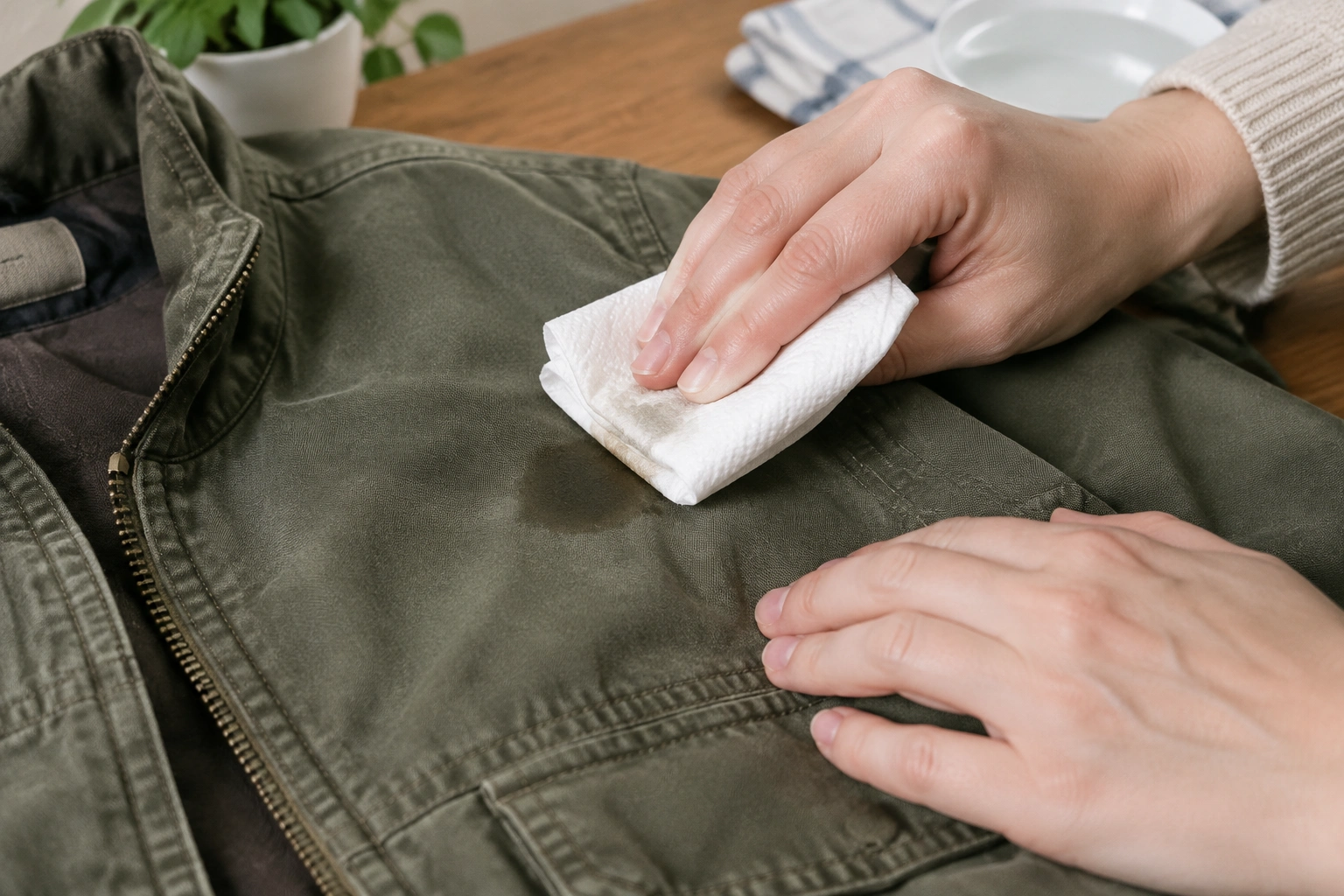
Use a paper towel or dry cloth to lift off as much surface oil as possible. Press lightly. Don’t scrub.
Blotting works better than rubbing because rubbing pushes oil farther into the fibers and can enlarge the stain. A commuter jacket with a small food spot may look worse after thirty seconds of rubbing than it did at first.
Use enough pressure to absorb, not enough to grind the stain in. Think of it as lifting the oil off the surface, not polishing the spot.
Step 2: Apply an Absorbent Powder for Fresh Stains
For a fresh stain, sprinkle baking soda, cornstarch, or talcum powder directly over the spot. These powders help pull oil out of the fabric before washing.
Use this simple timing rule:
– Fresh stain: 15 to 30 minutes
– Older or heavier stain: a few hours, or longer if the fabric can handle it
Brush off the powder gently after it sits. If the stain is still shiny, repeat the powder step once before moving on.
This step is especially useful on jackets that can’t be washed immediately, like a travel layer you need to wear again soon.
Step 3: Pre-Treat the Stain with Dish Soap or Liquid Laundry Detergent
For washable jackets, pre-treat the stain with a small amount of dish soap or liquid laundry detergent.
Dish soap vs. laundry detergent
- Dish soap: often the better first choice for greasy spots because it’s designed to break down cooking oils and food grease.
- Liquid laundry detergent: a solid option for washable fabrics when you want something already meant for clothing and easier to rinse through the wash.
Apply a small amount directly to the stain and work it in gently with a fingertip or soft brush. Let it sit briefly, then rinse if the care label allows before washing. Keep the amount modest so you do not leave residue behind, especially on insulated or water-resistant jackets.
Step 4: Wash the Jacket Safely for Its Fabric Type
If the care label allows washing, use the warmest water that the label permits. That’s the safer version of “hot enough to help, not hot enough to damage.”
General wash rules by jacket type
- Nylon and polyester: usually tolerate gentle machine washing well
- Cotton jackets: often washable, but still check for lining or trim
- Down jackets: wash gently; too much agitation can clump the fill
- Waterproof or coated jackets: use the mildest safe approach; harsh scrubbing can affect the finish
- Leather or suede: do not machine-wash; stop and use specialty cleaning instead
For machine-washable synthetics, use a gentle cycle and avoid overloading the washer. For waterproof, insulated, or coated jackets, use minimal detergent and stop if the finish starts to look dull, patchy, or sticky. If the label suggests spot-cleaning only, stick to spot treatment rather than a full wash.
If you’re unsure, compare the stain risk against the fabric risk. A slightly stronger wash may help remove oil, but not if it compromises a coated shell or a down chamber.
For related fabric-specific stain care, see how to remove oil stains from shirts and how to remove oil stains from jeans.
Step 5: Air-Dry First and Check That the Stain Is Gone
Do not put the jacket in the dryer until you know the stain is gone. Heat can make leftover oil much harder to remove.
Air-dry the jacket first, then inspect the stain in bright light. If the mark is still visible, repeat the treatment instead of using heat to “finish the job.”
This matters most on commuter jackets and travel outerwear, where people are tempted to toss the item in the dryer and move on.
If the Stain Is Still There: Repeat Treatment for Set-In Oil
Set-in stains usually need a second round. That doesn’t mean the jacket is ruined.
Here’s the safer repeat plan:
1. Let the jacket cool and stay dry.
2. Reapply powder to absorb any remaining oil.
3. Pre-treat again with dish soap or detergent.
4. Wash again using the correct water temperature.
5. Air-dry and inspect before using heat.
For older stains, a longer soak or a stronger pre-treatment may help, but only if the care label allows it. The basic approach is the same: absorb, break down, wash, inspect, repeat if needed.
Fabric-Specific Advice for Common Jacket Materials
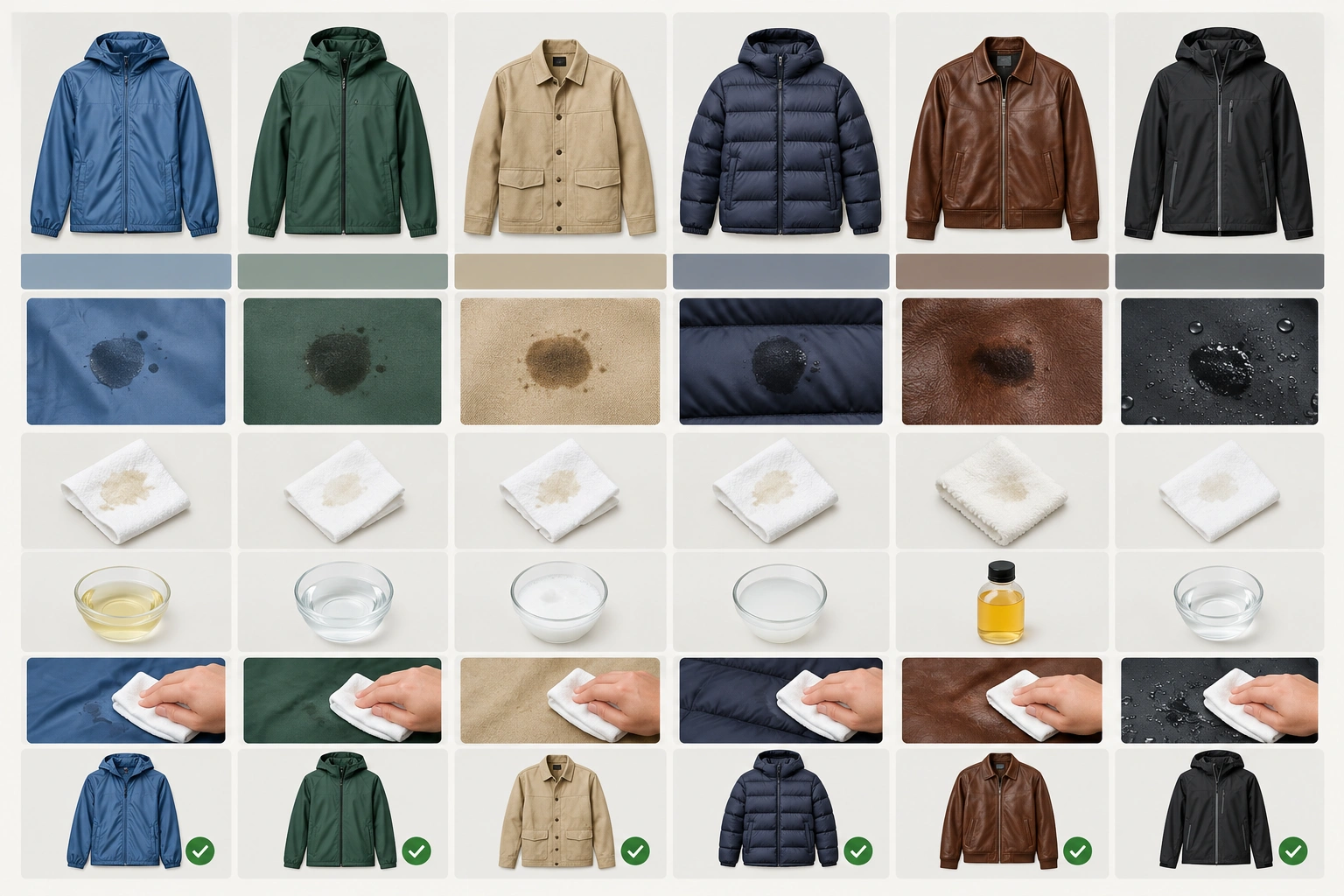
Nylon and polyester
These are usually the most forgiving. They’re common in commuter jackets, rain shells, and lightweight travel layers. Use powder first, then dish soap or detergent, then a gentle wash.
Cotton
Cotton can handle more direct treatment than delicate fabrics, but it also absorbs oil readily. Pre-treatment matters here. If the jacket has a cotton shell with a delicate lining, treat the lining as the limiting factor.
Down
Down jackets need gentle handling. Oil on the outer shell is one problem; oil that reaches the fill is another. Use minimal moisture during spot treatment, and wash only when the label allows it. Dry thoroughly, and if the fill clumps badly, a professional cleaner may do a better job restoring loft.
Waterproof or water-resistant jackets
These need caution. Use minimal detergent, avoid aggressive scrubbing, and follow the label closely. Heavy residue can reduce water repellency. If the jacket has a technical membrane or expensive shell, spot-cleaning may be safer than a full wash.
Leather and suede
Treat these as non-washable unless the manufacturer says otherwise. Basic dish soap or laundry detergent can discolor or dry out leather, and suede is especially easy to damage. For these materials, home treatment is limited and professional cleaning is usually the better call.
Common Mistakes That Make Oil Stains Worse
A few mistakes show up again and again:
- Rubbing hard: spreads oil and can rough up the fabric
- Using hot water too soon: can set the stain before it’s broken down
- Putting the jacket in the dryer early: heat can make the stain permanent
- Using too much cleaner: leaves residue that attracts dirt
- Treating every jacket the same: leather, down, and coated shells need different handling
- Using petroleum-based spot hacks: products like WD-40 can add oily residue, odor, and flammability concerns, so they’re not a routine clothing fix
The safest habit is simple: match the cleaner to the fabric, and let the care label have the final say.
When Home Treatment Is Not Enough
Take the jacket to a dry cleaner or specialty cleaner when:
– The label says dry clean only
– The jacket is leather, suede, wool, or heavily coated
– The stain is on a high-value technical shell
– The fill is clumped or the lining looks damaged
– The stain remains after two careful home attempts
Stop home treatment sooner if the stain was already heat-set in a dryer or if a delicate fabric shows discoloration, texture change, or damage after one attempt. At that point, more cleaning can make the problem worse.
For travelers and parents, this is usually the decision point between “worth another try” and “risking the jacket.” If the material is expensive or the finish is sensitive, professional cleaning is often cheaper than replacing the garment.
If you’re unsure how a jacket should be handled in general, brands like REI and Samsonite often publish care guidance for outerwear and travel gear, and TSA is useful when you’re packing cleaning supplies or travel-size products.
Troubleshooting: What If the Stain, Finish, or Fill Looks Off?
The stain is lighter but still visible
That’s progress. Repeat the absorb, pre-treat, wash, air-dry cycle once more before reaching for heat.
The jacket feels greasy after washing
There may be soap residue or leftover oil. Rinse again if the label allows, using a small amount of detergent rather than more soap.
The down looks clumped
Dry the jacket fully and gently break up clumps by hand. If the loft doesn’t return, the stain or wash process may have affected the fill enough that professional cleaning is worth it.
The water-repellent finish looks patchy
Stop scrubbing. Repeated cleaning can wear on the finish, and the jacket may need a technical wash treatment or reproofing later.
The color changed at the stain site
That suggests the fabric reacted to the cleaner or the stain was deeper than it first looked. Don’t keep testing random products on the same area.
Practical Examples: Real-World Jacket Stain Scenarios
Salad dressing on a polyester commuter jacket
Blot it, cover it with powder, then use a small amount of dish soap before washing on the warmest safe cycle. This is one of the easiest jacket stains to fix if you act quickly.
Sunscreen on a nylon shell
Treat it dry first. Sunscreen behaves like oil, so powder plus gentle pre-treatment usually works better than water alone.
Grease on a puffer jacket
Use as little liquid as possible during spot treatment. If the stain is small and on the shell, you may be able to clean it without affecting the fill. If the down is clumping, stop and consider professional cleaning.
Oil on a leather jacket
Don’t treat it like laundry. Basic powder may help absorb a fresh spot, but washing and aggressive scrubbing can do more harm than good. This is a dry-clean or leather-specialist situation.
FAQ: Oil-Stain Removal Questions Jacket Wearers Ask Most
Can baking soda really help remove oil from a jacket?
Yes. Baking soda is commonly used as an absorbent powder because it helps pull oil out of fabric before washing.
Is dish soap better than laundry detergent for grease?
Dish soap is often stronger on greasy spots, while liquid laundry detergent is a good clothing-safe option for washable jackets. For many stains, either can work if used correctly.
Should I use warm or cold water?
Use the warmest water allowed by the care label. That helps loosen oil without risking fabric damage.
How long should I leave the powder on?
For fresh stains, 15 to 30 minutes is a good default. For older or heavier stains, leave it on longer if the fabric allows it.
Will the dryer make the stain permanent?
It can. That’s why air-drying first is the safer move.
What if the jacket is down-filled?
Treat it gently, use minimal product, and avoid over-wetting. If the stain is large or the fill is affected, a professional cleaner is the safer choice.
Can I use the same method on waterproof jackets?
Only with caution. Waterproof coatings and technical finishes can react badly to harsh scrubbing or too much detergent, so keep the treatment mild and follow the label closely.
When should I stop trying at home?
If the jacket is dry-clean-only, leather, suede, heavily coated, heat-set, or still stained after two careful attempts, it’s time to see a professional.