
How to Remove Stains from a Puffer Jacket Without Ruining the Fill

A puffer jacket looks simple from the outside, but stain removal is really a balance problem: get the mark out without soaking the insulation, damaging the shell, or flattening the loft. The safest method is usually the least aggressive one that still matches the stain.
If you treat the wrong stain the wrong way, you can make the spot bigger, set it deeper, or leave the jacket damp inside long enough to clump the fill. That’s why I always think in this order: identify the stain, check the care label, test a cleaner in a hidden spot, then choose between spot cleaning and a full wash.
Quick decision path: If the stain is fresh and small, start with spot cleaning. If it is oily, set in, or spread across a larger area, pre-treat it and then hand wash or machine wash if the care label allows it. If the label says dry clean only, the shell is delicate, or the stain keeps spreading during testing, stop and take it to a professional cleaner.
What You’ll Need Before You Start
Gather everything first so you can work quickly and gently.
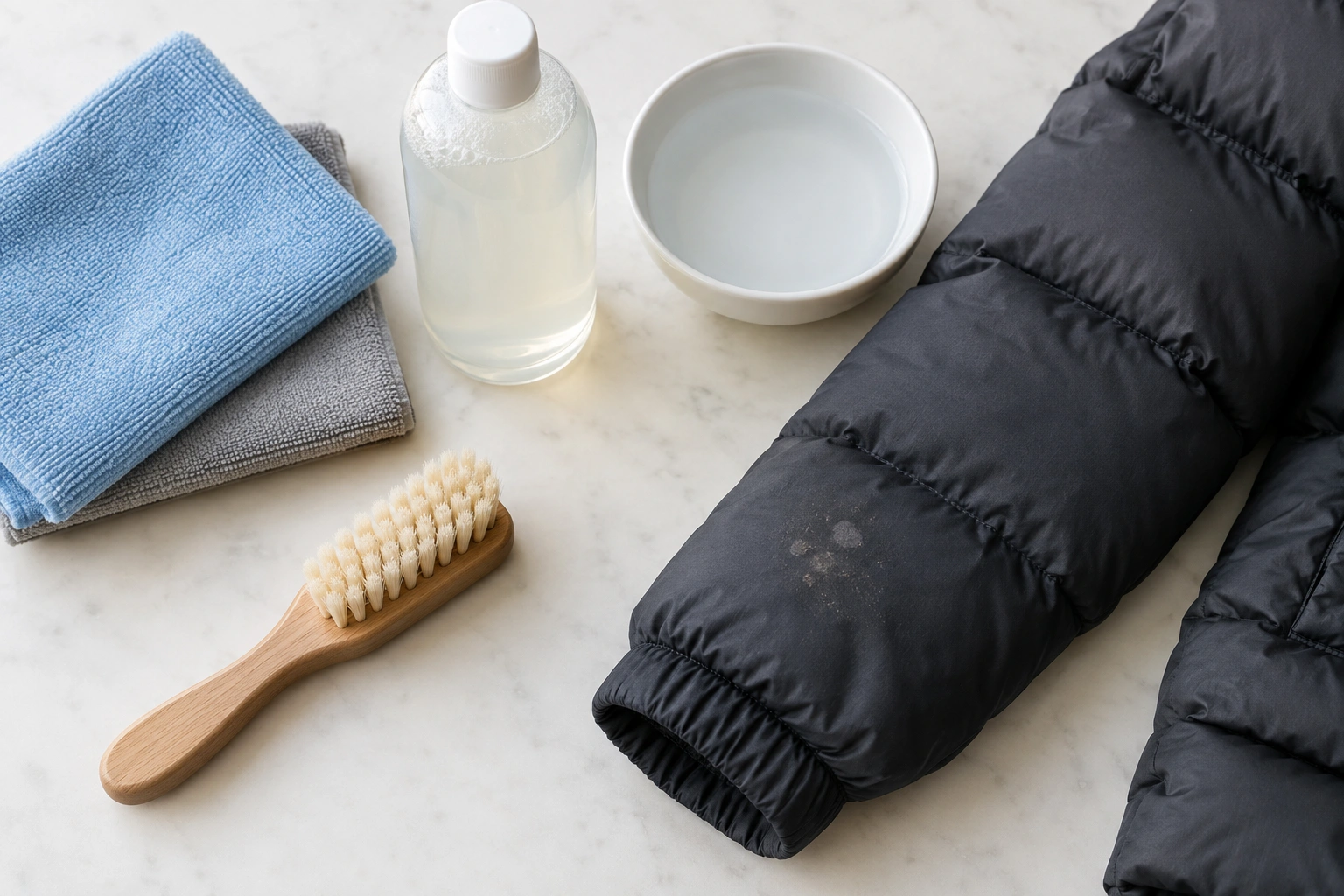
- Clean microfiber cloths or soft white towels
- A soft brush, like a clean toothbrush or garment brush
- Mild liquid detergent
- A small bowl of cool or lukewarm water
- A stain remover that the care label allows
- Optional: a little dish soap for greasy spots
- Optional: dryer balls for drying later, if the label allows tumble drying
Keep bleach, fabric softener, and strong solvents out of the picture unless the manufacturer specifically says otherwise. Those are the products most likely to interfere with the shell fabric, the water-repellent finish, or the insulation.
Check the Care Label and Identify the Stain Type
The care label decides the ceiling for what you can safely do. If it says dry clean only, or if the shell is especially delicate, don’t assume a home method is harmless just because the stain is small.
Also identify the stain before you touch it. A coffee splash and a grease mark need different treatment. So do mud, makeup, collar grime, and blood.
Here’s a quick decision table.
| Stain type | Best first move | Cleaner to try | Spot clean or wash? | Notes |
|---|---|---|---|---|
| Fresh mud | Let it dry, then brush off | Mild detergent solution | Spot clean first | Wet mud spreads if you attack it too soon |
| Coffee, juice, soda | Blot with plain water first | Mild detergent or baby stain remover | Spot clean first | Water-based stains usually respond well to gentle dilution |
| Grease, oil, food residue | Blot, then use a tiny amount of dish soap | Dish soap or mild detergent | Spot clean first; wash if residue remains | Grease often needs a degreasing cleaner |
| Makeup | Blot carefully | Mild detergent or makeup-safe stain remover | Spot clean first | Test on a hidden seam first, especially on light shells |
| Collar grime | Pre-treat gently | Mild detergent or stain remover allowed by label | Often needs a full wash | Body oils tend to build up and resist one-pass spot cleaning |
A useful rule: if the stain is fresh, local, and not oily, spot cleaning is usually the safest first move. If it’s spread across a large area, has set in, or comes from body oils or grease, a full wash may be more effective. Oily stains often benefit from pre-treatment before any wash so the residue does not spread or survive the cycle.
Test the Cleaner on a Hidden Area First
Patch testing saves jackets. Choose an inside hem, seam allowance, or hidden cuff area. Apply a tiny amount of your cleaner, wait a few minutes, then blot it away and check for color change, texture change, or any dulling of the finish.
This matters more on bright colors, dark dyes, and coated shells. A cleaner can lift the stain and still leave a lighter patch where it touched the fabric. If that happens in a hidden area, stop and choose a gentler product.
How to Spot-Clean a Puffer Jacket
For a small stain, keep the jacket as dry as possible. The goal is to clean the shell, not soak the fill.
- Lay the jacket flat on a clean towel.
- Brush off loose dirt or dried mud first.
- Dampen a microfiber cloth with plain water and blot the stain. This helps dilute the mark before you add cleaner.
- Put a small amount of mild detergent or an approved stain remover on the cloth, not directly on the jacket unless the product directions say to do that.
- Dab the stain from the outside edge toward the center.
- Let the cleaner sit only as long as the product label allows.
- Blot with a clean damp cloth to lift residue.
- Repeat once if needed, but don’t keep scrubbing the same spot.
- Press a dry towel over the area to pull out extra moisture.
Use only a small amount of cleaner: enough to lightly dampen the cloth, not enough to saturate the shell. If the stain is larger than a few inches, or if the cloth keeps picking up color without the mark lifting, stop spot-cleaning and move to a wash or professional care.
That “dab, don’t scrub” rule is worth following. Too much rubbing can push the stain deeper into the fabric.
How to Treat Common Stains on a Puffer Jacket
Grease or oil
Grease is the stain most likely to outlast a quick spot clean. Use a tiny amount of dish soap on a damp cloth and work it into the mark gently. Dish soap is useful here because it’s designed to break up oil.
Use dish soap only on greasy stains, and use it sparingly. It is not a good all-purpose cleaner for puffers, and too much can leave residue on the shell or dull a DWR finish if it is not rinsed out well.
If the stain is from food, like burger grease or salad dressing, treat it the same way. Don’t flood the area. Too much water can move the oil deeper into the shell or leave a halo.
Food and drink
For coffee, juice, sauce, or similar spills, plain water first is often the right move. Blot the stain, then use mild detergent if the mark remains. Water-based stains usually respond better to gentle dilution than to heavy products.
If the stain is on a light-colored jacket, check the spot after it dries. Some marks look gone when wet but reappear as the moisture evaporates.
Mud and dirt
Let mud dry completely before you do anything else. Wet mud smears into the weave and makes the job harder. Once dry, brush off as much as possible with a soft brush, then spot clean what remains with mild detergent.
This is one of the few times where patience saves effort. Dry mud is easier to remove than mud that’s been rubbed into the fibers.
Makeup
Makeup can be stubborn because it often contains oils, waxes, and pigments. Start with a hidden-area test, especially on pale shells. Then blot gently with mild detergent or a stain remover that the label permits.
If the stain is lipstick or foundation-heavy, repeat the blotting step rather than increasing pressure. The more you grind it in, the more likely it is to leave a shadow.
Collar grime
Collar grime is usually a mix of sweat, skin oils, and product residue. It often needs more than one spot-cleaning pass. If the stain covers a ring around the neck or cuffs, a full wash may be more efficient than chasing it around the edge.
When Spot Cleaning Isn’t Enough: Hand Wash or Machine Wash?
This is the trade-off point. Spot cleaning is lower risk and faster, but it can leave old or oily stains behind. A full wash gives you more reach, but it also increases the chance of clumping, extra wear, or finish loss if the jacket isn’t designed for it.
Choose a full wash when:
- the care label allows it
- the stain is spread out or set in
- the jacket smells oily or dirty beyond the visible spot
- spot cleaning leaves a shadow after drying
Choose hand washing when:
- the care label allows soaking or gentle washing
- the jacket feels delicate
- you want the most control over agitation
Choose machine washing when:
- the label says it’s safe
- the jacket fits loosely in a front-load washer
- you can use a gentle cycle and mild detergent
Front-load washers are usually a safer bet than top-load agitators because they’re gentler on the shell and fill.
How to Wash the Jacket Safely If Needed
If the label allows washing, keep the cycle gentle and the detergent mild.
Hand washing
- Fill a clean tub or basin with cool or lukewarm water.
- Add a small amount of mild detergent.
- Submerge the jacket and press it gently through the water.
- Focus on the stained area with light finger pressure, not twisting or wringing.
- Drain, refill with clean water, and rinse until the water runs clear.
- Press out water carefully with a towel.
Machine washing
- Zip the jacket and close any Velcro.
- Turn it inside out if the care label suggests it.
- Use a front-load washer if possible.
- Select a gentle cycle with mild detergent.
- Avoid fabric softener and bleach.
- Remove the jacket promptly when the cycle ends.
If the shell feels slick, sticky, or looks dull after washing, run an extra rinse cycle or wipe the shell with a clean damp cloth to remove detergent residue. Residue can make the fabric feel heavy and can interfere with the finish.
If you’re comparing options, hand washing gives you more control, while machine washing is easier if the jacket is built for it. The wrong choice is the one that ignores the label.
How to Dry the Jacket Without Clumping the Insulation
Drying matters as much as cleaning. A jacket that’s technically clean but still damp inside can develop clumped fill, odor, or a flat look that takes days to recover.

If the care label allows tumble drying, use low heat or air only. Add dryer balls if approved by the manufacturer. They help break up clumps and restore loft as the jacket dries. For down jackets, expect that one cycle may not be enough. Run additional low-heat cycles as needed, and pause to shake, fluff, and separate any packed areas between cycles.
If you air dry, lay the jacket flat on a towel in a well-ventilated area and turn it occasionally. Gently redistribute the fill with your hands as it dries. That’s slower than machine drying, but it reduces heat risk.
To confirm the insulation is fully dry, feel for cool, heavy, or dense spots inside the baffles, especially around seams, cuffs, and the collar. The outside can feel dry before the fill inside is dry. If any section still feels cool, clumpy, or weighted down, keep drying it and fluff again later.
Synthetic puffers usually dry faster than down, but they still need a full check before storage. Down often needs the most patience, and repeated low-heat drying or repeated fluffing may be necessary before it regains full loft.
Never put a puffer away while the fill is still damp. Even if the shell feels dry, moisture can hide in the insulation.
How to Restore Loft and Finish After Cleaning
Once the jacket is dry, shake it out and feel for any cold or heavy spots. Those usually mean the fill still has moisture. Give those areas more drying time before you wear or store the jacket.
If the jacket has a DWR finish, cleaning should be gentle enough to preserve it, but dirt and detergent residue can still make the shell look dull. A final rinse or a second gentle dry cycle can help remove leftover detergent that weighs the fabric down.
This is also the moment to inspect the stain under daylight. If a faint mark remains, do not keep scrubbing. A second gentle treatment later is safer than forcing it now.
Common Mistakes to Avoid
The biggest mistakes are usually the fastest ones.
- Scrubbing hard: this can push the stain deeper into the weave.
- Using bleach: bleach can damage color, shell fabric, and sometimes the finish.
- Using fabric softener: it can leave residue on technical outer fabrics.
- Soaking the jacket unnecessarily: extra water increases drying time and clumping risk.
- Using high heat: heat can harm the shell, the insulation, or the jacket’s shape.
- Skipping the hidden-area test: a cleaner that lifts the stain can still leave a visible patch.
- Using vinegar or baking soda without checking the label: vinegar can affect some shell finishes or coatings, and baking soda can leave powdery residue that is hard to rinse out of insulated construction.
A small stain becomes a bigger repair job when the cleaning method is too aggressive.
When to See a Professional Cleaner or Dry Clean the Jacket
If the jacket has a delicate shell, a large oil stain, or a mark that keeps spreading every time you try to clean it, professional care is the safer move. The same goes for jackets with special coatings or expensive insulation that you don’t want to risk at home.
Take it in if:
- the care label says dry clean only
- the stain is old and deeply set
- the shell shows discoloration during testing
- the jacket has already been damaged by a previous cleaning attempt
That’s especially true when the jacket is a travel staple and you can’t afford to flatten the fill or ruin the finish. A careful professional clean can be the better choice than risking further damage at home.
FAQ
Can I use vinegar on a puffer jacket stain?
Sometimes people reach for vinegar on laundry stains, but I’d treat it as a product that needs caution. It may be fine for some fabrics in some situations, but it’s not the first choice for a puffer jacket shell or finish. Follow the care label and test first.
Is baking soda safe for puffers?
Baking soda is not my first recommendation for spot-cleaning a puffer. It can leave residue and is harder to rinse out of insulated construction. Mild detergent is usually the safer starting point.
What’s better for a down puffer: spot cleaning or washing?
If the stain is small and fresh, spot cleaning is usually the lower-risk first step. If the stain is oily, broad, or set in, a full wash allowed by the label may work better. Down jackets also need more careful drying afterward.
Do synthetic puffers clean differently from down puffers?
Yes, mainly in drying behavior. Synthetic fill often dries faster and is a little more forgiving, while down needs more attention to restore loft. The shell fabric and care label still matter more than the fill type alone.
What if the stain is still there after cleaning?
Let the jacket dry fully, then inspect it in good light. If the stain is still visible, repeat a gentle treatment once. If it keeps returning or spreads, stop and use a professional cleaner rather than escalating with harsher products.
Can I use a stain remover on a waterproof puffer?
Only if the label or manufacturer guidance allows it. Waterproof or DWR-coated shells can be sensitive to strong chemicals and heavy scrubbing, so a patch test is especially important.
How do I know if I should wash the whole jacket?
If the stain is part of a larger grime pattern, if the collar or cuffs are dirty, or if spot cleaning leaves a shadow, a full wash may be more effective. If it’s just one fresh mark, spot cleaning is usually the better first move.
Should I dry clean a puffer jacket?
Only if the label says to. Some puffers are dry-clean only, but many down and synthetic jackets are meant to be washed gently at home. The label should make that clear.