
How to Remove Blood Stains from Jeans Without Setting the Stain

A blood stain on jeans looks worse than it usually is, but the clock matters. The safest rule is simple: use cold water, treat the spot as soon as you can, and keep heat away until the stain is gone. Blood is a protein-based stain, so hot water can make it cling to denim fibers instead of lifting out.
If the stain is fresh, your goal is to flush out as much as possible before it dries. If it is already dried, your job is to rehydrate it first, then work it loose with a stain remover or detergent. That difference matters because fresh blood is easier to remove than dried blood, and denim can hold onto older stains stubbornly.
For a quick home fix, think in this order: cold rinse, gentle blotting, pretreat, wash, inspect, repeat if needed, and air-dry only after the stain is gone. That sequence gives you the best chance of saving the jeans without fading the color or shrinking the fit.
Quick decision tree
- Fresh stain: Rinse immediately with cold water, then pretreat for a few minutes and wash cold.
- Dried stain: Soak in cold water first, then pretreat for at least 30 minutes before washing.
- Heat-set stain: Do not use more heat. Rehydrate with a cold soak, pretreat, and repeat a cold wash cycle.
- Light denim: You can usually try detergent, enzyme cleaner, and careful spot treatment first.
- Dark or colored denim: Start gently and test any stronger product, especially hydrogen peroxide, on a hidden area first.
- When to stop and get help: If the stain survives a couple of careful cold-treatment cycles, or the jeans are expensive, delicate, or color-sensitive, a professional cleaner is the safer next step.
Quick comparison: fresh stain vs. dried stain
| Situation | Best first move | What to avoid | Typical next step |
|---|---|---|---|
| Fresh blood | Cold running water and blotting | Hot water, scrubbing hard | Pretreat with detergent or stain remover |
| Dried blood | Cold soak to rehydrate the stain | Dry brushing and heat | Pretreat, then wash and recheck |
| White jeans | Cold treatment, then careful peroxide test if needed | Bleach unless label allows it | Rewash if any shadow remains |
| Dark or colored jeans | Cold water and color-safe detergent | Strong peroxide without a test | Spot-treat gently and air-dry |
What You Need Before You Start
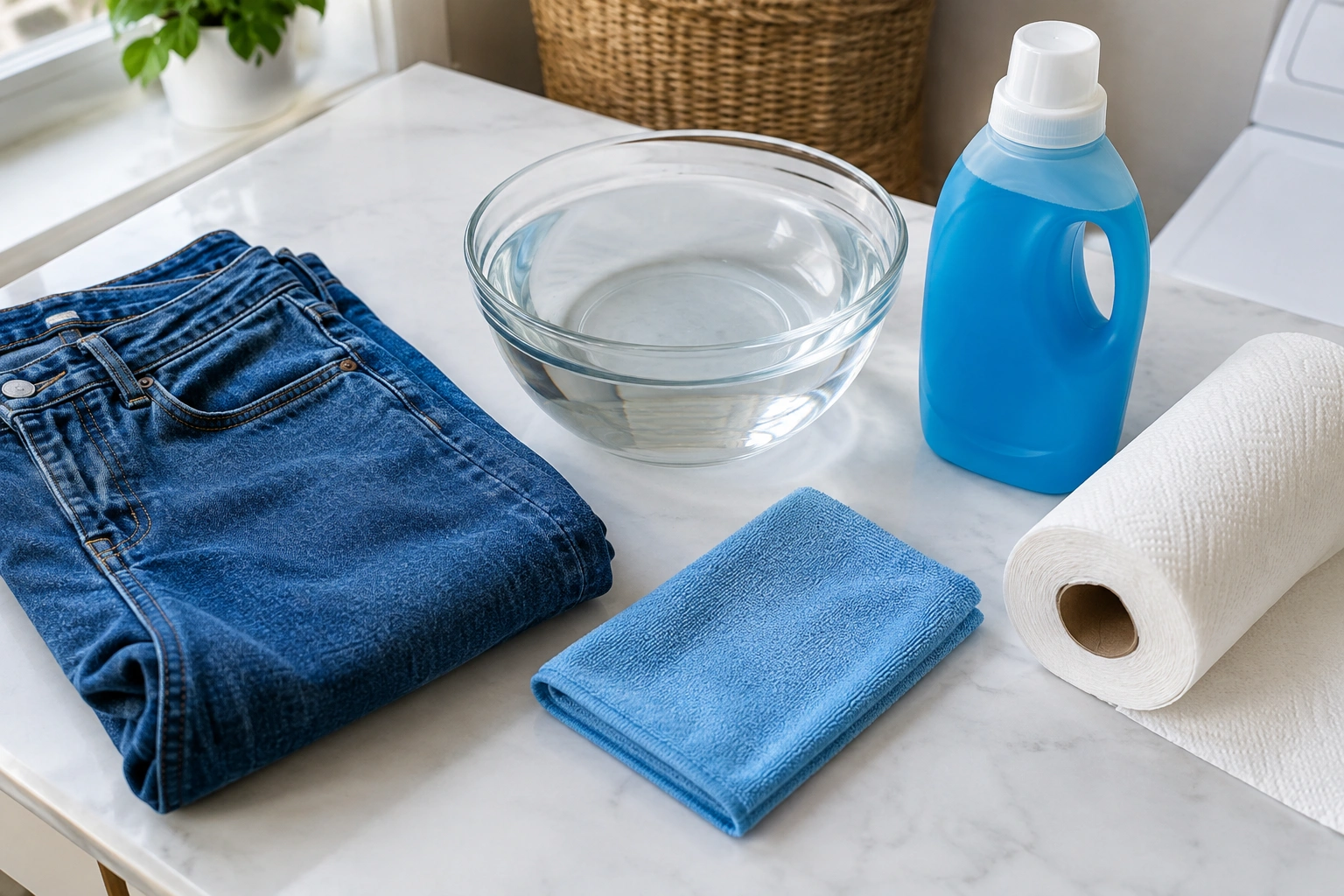
Gather the basics before you wet the jeans. That saves time and keeps you from reaching for something harsh in a rush.
You’ll want:
- Cold water
- Liquid laundry detergent
- Liquid dish soap
- An enzyme stain remover, if you have one
- Clean white cloths or paper towels
- A small bowl or sink for soaking
- Gloves, if you prefer not to handle detergent directly
- Hydrogen peroxide for white jeans only, or for testing on a hidden area first
If you’re dealing with jeans while traveling or commuting, even a sink and a little cold water can buy you time until you get home.
Before You Treat the Stain: Check the Jeans and Test for Colorfastness
Before any spot treatment, look at the jeans closely. Light-wash denim usually gives you more room to work. Dark-wash jeans and colored jeans need more caution because some cleaners can lift dye along with the stain. Stretch jeans deserve a gentle touch because aggressive rubbing can distort the fabric and affect the fit.
That’s why a colorfastness test matters. Dab a small amount of your chosen cleaner on an inside seam, hem, or other hidden area. Wait a few minutes, then blot with a white cloth. If dye transfers or the fabric looks lighter, stop and switch to a milder method.
This matters most with hydrogen peroxide. It can be useful on stubborn stains, but it may lighten blue or colored denim. On white jeans, it’s usually less risky, though a quick test is still smart.
If the care label says the jeans need special handling, follow that first.
How to Remove Fresh Blood Stains from Jeans
Fresh blood is the easiest version of this problem, so move quickly but gently.
1. Rinse from the back of the stain
Hold the stained area under cold running water. If you can, rinse from the back side of the denim so the blood is pushed out of the fibers instead of deeper into them. Keep going until the water runs much clearer.
2. Blot, don’t rub
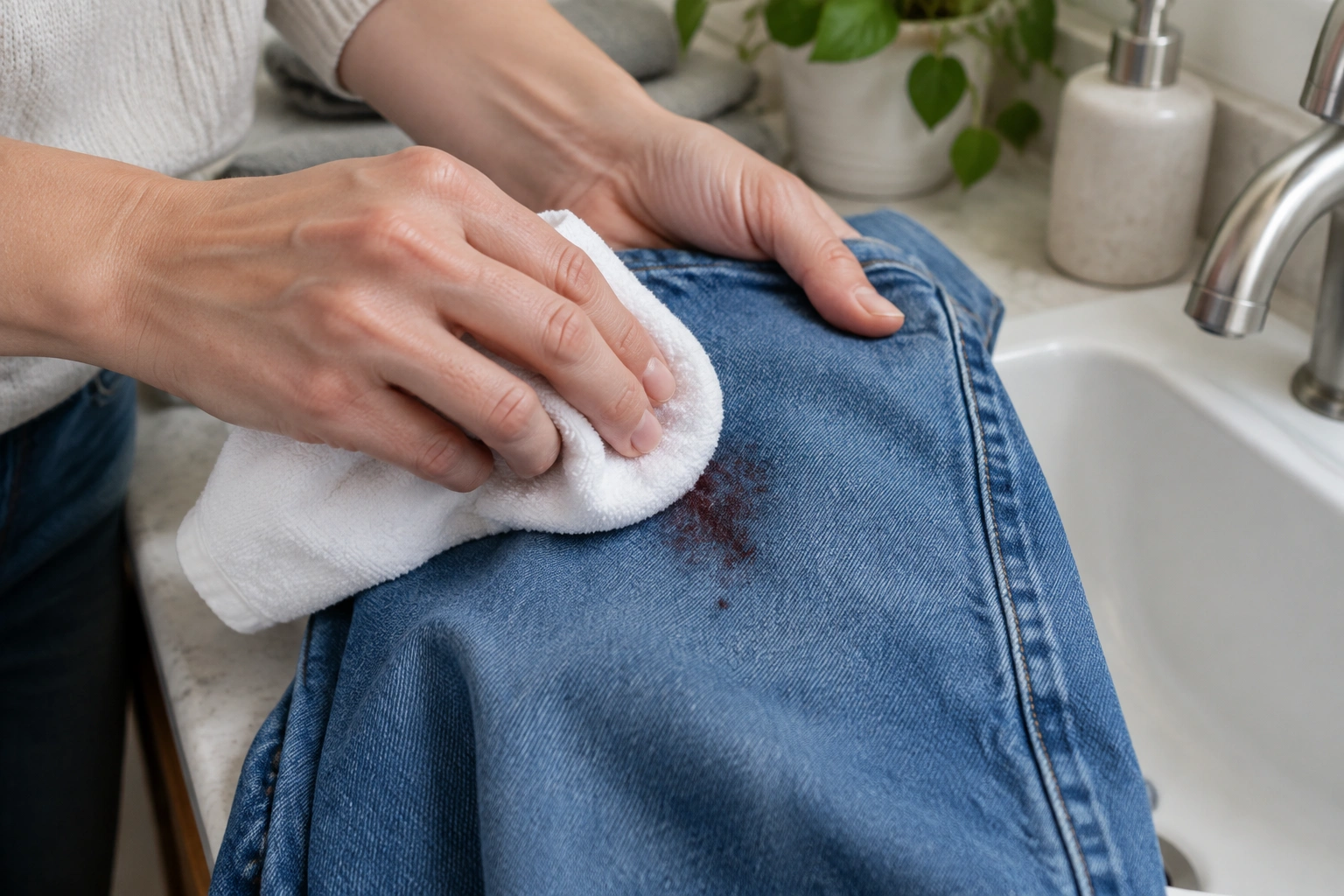
Use a clean cloth or paper towel to blot the area. Press and lift. Don’t scrub in circles. Rubbing can spread the stain and rough up the denim surface.
3. Turn the jeans inside out
Apply your cleaner from the back of the stain when possible. That helps the product reach the blood more directly instead of sitting on the outer surface of the denim. This is especially useful on thicker jeans where the stain has already started to sink in.
4. Pretreat with detergent or dish soap
Work a small amount of liquid laundry detergent or liquid dish soap into the spot with your fingers or a soft cloth. Let it sit for a few minutes. For a fresh stain, a short pretreat of about 5 to 10 minutes is usually enough before washing, unless the product label says otherwise.
5. Wash in cold water
Run the jeans through a normal wash cycle using cold water. If the stain was small and recent, that may be enough.
6. Check before drying
Look at the stain in good light while the jeans are still damp. If any red or brown shadow remains, repeat the pretreating step. Do not put the jeans in the dryer yet.
A good real-world example: if you nicked your ankle during a commute and got a small spot on blue jeans, a cold rinse at the sink followed by detergent pretreatment is often enough. The key is speed. The longer the stain sits, the more it binds to the fibers.
How to Remove Dried Blood Stains from Jeans
Dried blood takes more patience because the stain has already settled into the fabric. The first goal is not removal; it’s rehydration.
1. Soak the stain in cold water
Fill a basin or sink with cold water and submerge the stained section. For dried blood, start with at least 30 minutes of soaking. If the stain is older or larger, you can soak longer as needed, but follow the product label if you add a stain remover to the water.
2. Add an enzyme detergent if available
Enzyme detergents are designed to help break down protein stains. That makes them a practical choice for blood on denim. If you’re using one, give it a real dwell time rather than a quick wipe-on, wash-off approach. A common range is 30 minutes to a few hours, depending on the label directions and how set-in the stain is.
3. Work the stain gently
After soaking, blot the area with a cloth. If needed, massage a small amount of detergent into the spot. Keep the pressure light. Denim is tough, but aggressive scrubbing can still wear the surface and make the patch look faded.
4. Wash cold and inspect
Wash the jeans in cold water. Then check the stain before drying. If it is still visible, repeat the soak-and-pretreat cycle.
For a stubborn dried stain on dark jeans, I’d usually start with a cold soak plus enzyme detergent before considering peroxide. It gives you more control and lowers the risk of lightening the denim.
Which Stain Remover Works Best: Soap, Detergent, Enzyme Cleaner, or Hydrogen Peroxide
There isn’t one universal winner, so it helps to choose based on the jeans and the stain.
Liquid dish soap
Good for: fresh stains and quick spot treatment.
Trade-off: gentler, but sometimes slower on older stains.
Dish soap can help lift blood from the surface fibers. It’s a practical first choice if you’re traveling or don’t have laundry products nearby.
Liquid laundry detergent
Good for: most fresh and moderately dried stains.
Trade-off: may need a soak or repeat cycle for older stains.
Detergent is a strong all-around option because it’s made for fabric cleaning and can be worked directly into the stain.
Enzyme stain remover
Good for: dried or stubborn blood stains.
Trade-off: usually needs dwell time, so it is not the fastest option.
This is often the best middle ground for jeans because it targets protein stains without immediately reaching for harsher chemicals. For fresh stains, a short pretreat is often enough; for dried stains, give it at least 30 minutes unless the label says otherwise.
Hydrogen peroxide
Good for: white jeans and very stubborn stains, with testing first on colored denim.
Trade-off: can lighten or alter dark or colored denim.
Hydrogen peroxide can be effective, but treat it like a precision tool. Test it on a hidden area first, and use it sparingly. On dark or colored jeans, avoid it if you can or limit it to a tiny spot test. On white jeans, it’s usually less risky, but a quick test is still smart.
How Long to Soak, Scrub, and Rewash Without Damaging Denim
A useful rule: give the cleaner enough time to work, but don’t keep attacking the fabric.
- Fresh stains: blot and pretreat for about 5 to 10 minutes before washing.
- Dried stains: soak for at least 30 minutes before washing, and longer if needed.
- Enzyme products: follow the label, but many work best with a longer dwell time rather than a quick rinse.
- Scrubbing: keep it light and brief; use pressure, not friction.
When you do agitate the stain, use light pressure. Think of it as loosening residue, not grinding it out. Denim can handle wear, but repeated hard rubbing can leave a lighter patch even if the blood disappears.
If the stain is still visible after washing, repeat the soak or pretreat step before trying the dryer. A second treatment cycle is usually reasonable. If it still hasn’t budged after two careful cold-treatment cycles, it’s time to stop and consider professional help rather than risking more wear or a heat-set stain.
What to Do If the Blood Stain Is Still Visible After Washing
A stain that survives one wash does not mean the jeans are ruined.
Here’s the decision path I use:
- If the stain is still damp, do not dry it.
- Reapply detergent or enzyme cleaner to the exact spot.
- Soak again in cold water.
- Wash cold once more.
- Check in bright light before drying.
If the stain is faint but still there, repeat the cycle once more before reaching for peroxide on colored denim. If the jeans are white and the stain remains stubborn, a careful peroxide test may be worth considering.
If the jeans already went through the dryer with the stain visible, treat it as a heat-set stain. Rehydrate it with a cold soak, pretreat it again, and wash cold. Do not switch to warm or hot water in an attempt to “force” the stain out; that usually makes the problem worse.
Common Mistakes That Make Blood Stains Harder to Remove
A few avoidable errors cause most of the trouble.
Using hot water
Hot water can set blood into the fibers. Cold is the safer default.
Putting the jeans in the dryer too soon
This is the fastest way to turn a removable stain into a permanent one.
Rubbing too hard
Aggressive scrubbing can damage the denim weave and leave a faded spot even if the stain lifts.
Using bleach without checking the fabric
Bleach can damage denim, especially colored or dark jeans, and may leave a worse-looking mark than the blood itself.
Skipping a hidden-area test
This matters most with peroxide and stronger stain removers. A quick test can save a favorite pair.
When to Use a Professional Cleaner for Blood-Stained Jeans
If the jeans have already been heat-set, heavily stained, or treated with something that may have altered the dye, a professional cleaner may be the safer choice. That’s especially true for expensive denim, delicate stretch blends, or jeans with special finishes.
Home treatment makes sense when the stain is fresh, small, or only lightly dried. Professional cleaning becomes more reasonable when:
- The stain is large or deeply set
- The jeans are high-value
- The fabric is sensitive or colorfastness is uncertain
- You already tried cold treatment twice and the stain still lingers
- The jeans went through the dryer with the stain visible
A tailor can also help if the stain removal process has affected a hem, seam, or fit detail and the jeans need repair after cleaning. For a pair you wear constantly, professional help may be worth it if home treatment risks fading the color or changing the fit.
Practical Examples for Light-Wash, Dark-Wash, and Stretch Jeans
Light-wash jeans
A small fresh stain on light denim is usually a straightforward cold-rinse-and-detergent job. If a shadow remains, a second wash is often worth trying before anything stronger.
Dark-wash jeans
Treat these more cautiously. Start with cold water, detergent, and an enzyme cleaner before considering peroxide. Use peroxide only after a hidden-area test, and keep it minimal.
Stretch jeans
Use the same cold-water approach, but keep the rubbing light. Stretch denim can lose shape if you twist or scrub it hard while wet. Pretreat, soak gently, and let the wash cycle do most of the work.
A useful example: if a student gets dried blood on black stretch jeans after a minor cut, I’d choose a cold soak with enzyme detergent, then a careful wash, then air-dry only after inspection. That gives the stain time to loosen without risking the fit.
Final Check Before You Put the Jeans Away
Once the stain is gone, let the jeans air-dry or finish drying only after you’ve confirmed there’s no trace left. If you can still see a faint mark when the fabric is damp, treat it again before using heat.
The best results usually come from simple steps done in the right order: cold water first, gentle pretreatment next, then wash and inspect. That approach protects the denim and gives you the best shot at getting the jeans wearable again.