
How to Remove Oil Stains From 100% Polyester Without Setting Them In

Oil on polyester is annoying, but it is usually fixable if you move before the stain dries or gets heated. The safest home method is simple: blot the excess oil, treat the spot with dish soap or a laundry stain remover, wash the item according to its care label, and do not use the dryer until the stain is gone. Heat can lock oil into polyester fibers and make the stain much harder to remove.
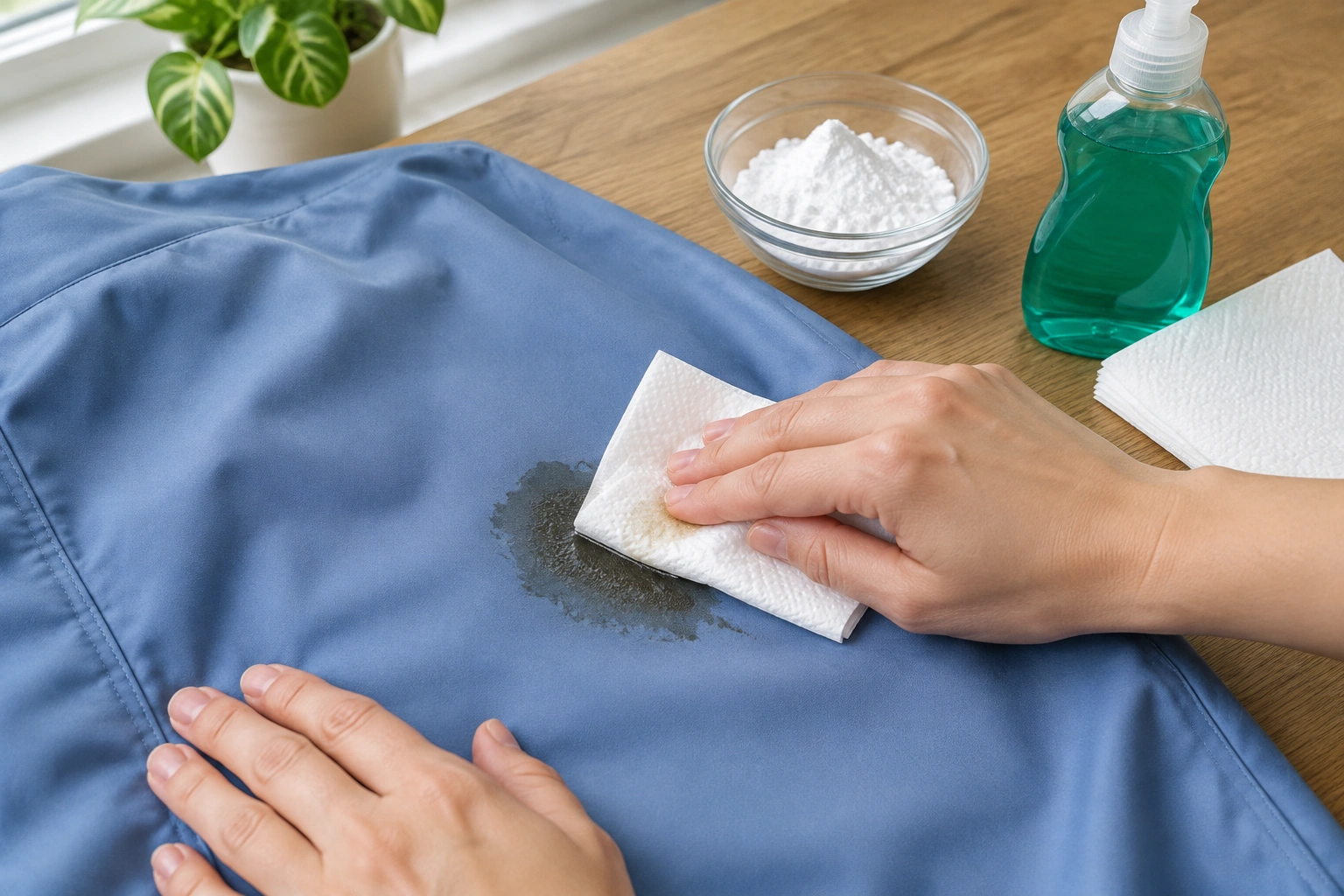
If the spill is fresh, an absorbent powder such as baking soda or cornstarch can help pull up surface oil before washing. For older stains, expect to repeat the treatment more than once.
Quick Answer: The Safest Way to Remove Oil From 100% Polyester
Here’s the shortest reliable version:
- Blot the stain with a paper towel or tissue. Press gently on both sides.
- If the stain is fresh, sprinkle baking soda or cornstarch on the oil and let it sit for 15 to 30 minutes. Skip this step for older stains.
- Apply a small amount of dish soap or liquid laundry detergent directly to the stain.
- Gently rub the fabric together or work the soap in with your fingers.
- Rinse out the soap or stain remover if the product directions call for it, then wash according to the care label.
- Use cold or lukewarm water unless the care label specifically allows warmer water.
- Check the stain before drying. If any shadow remains, do not machine dry it.
- Air-dry only after the stain is fully gone.
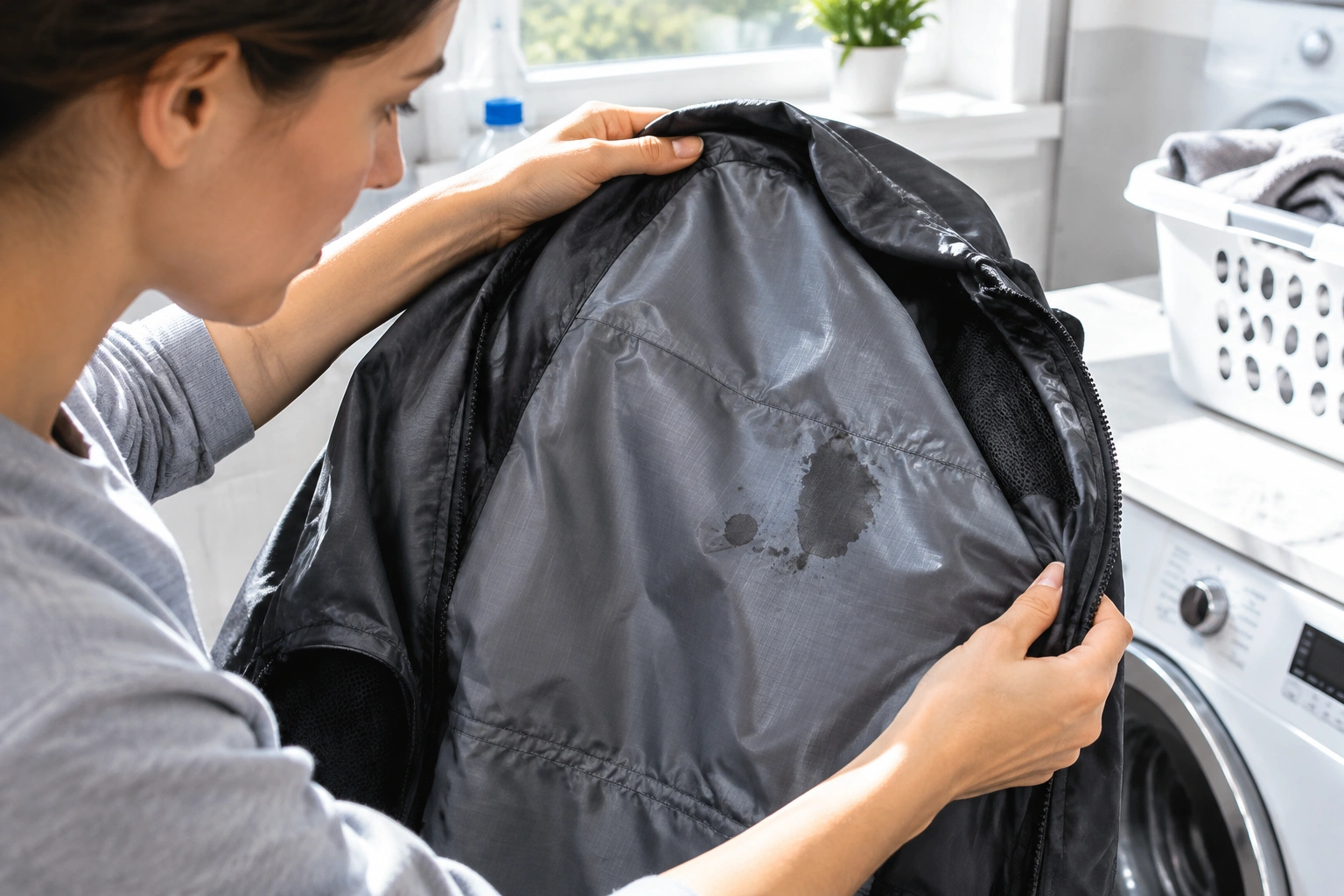
That last step matters more than people think. A polyester item that goes into a hot dryer with even a faint oil mark can come out with the stain far more fixed than before.
What You’ll Need
Gather these before you start:
- Paper towels or clean tissues
- Baking soda or cornstarch
- Mild dish soap
- Liquid laundry detergent or a color-safe laundry stain remover
- Soft toothbrush or your fingers
- Clean cloth
- Sink or basin
- Access to your washer
- A dry, well-lit area for checking the stain
If you are treating a backpack liner, jacket, or luggage lining, also keep a second clean towel nearby so you can work from the inside without soaking the whole item.
Before You Start: Check the Stain and the Care Label
The first decision is whether you are dealing with a fresh spill or a set-in stain.
A fresh oil stain will usually still look shiny or greasy. A set-in stain often looks duller, darker, or slightly yellowed, and it may already have survived one wash. Fresh stains respond well to blotting and powder. Set-in stains usually need a stronger pre-treatment and at least one repeat cycle.
Next, check the care label. Polyester itself is generally durable, but the item may have coatings, prints, waterproof finishes, foam backing, glue, or mixed materials that change what is safe. A polyester jacket with a water-resistant coating is not the same as a plain T-shirt. The same goes for backpack straps, luggage liners, and padded panels.
If the item is colored, printed, or coated, test your cleaner on a hidden seam first. That small step can save you from fading or surface damage later.
Fresh Stain or Set-In Stain?
Use the stain’s age to decide your first move:
- Fresh stain: blot first, then use baking soda or cornstarch before soap.
- Set-in stain: skip the powder step and go straight to pre-treatment with dish soap or stain remover.
- Already heat-dried stain: treat it like a set-in stain, and expect more resistance.
For fresh spills, acting quickly matters more than using a stronger product. For older stains, the goal is to loosen the residue without damaging the polyester.
Step 1: Blot Away Excess Oil Without Spreading It
Use a paper towel or tissue and press gently on both sides of the stain. Do not rub. Rubbing pushes the oil deeper and enlarges the mark.
If the stain is on a backpack strap, jacket cuff, or luggage liner, place a clean towel underneath the fabric so the oil does not transfer to the layer below. Press, lift, and move to a clean section of towel as needed.
Think of this step as removing the surplus before you clean the residue. The less free oil sitting on the surface, the better the pre-treatment can do its job.
Step 2: Use an Absorbent Powder for Fresh Stains
For a fresh spill, sprinkle baking soda or cornstarch over the stain and cover the greasy area completely. Let it sit for 15 to 30 minutes, then brush or shake it off.
This works best on recent oil because the powder can absorb some of the surface grease before it spreads further. It is not a complete solution on its own, but it often makes the next step more effective.
If the stain is larger, reapply a second layer after removing the first. On a backpack strap or luggage liner, this can be especially useful because those surfaces often catch oil in a narrow spot that is easy to miss during washing.
Step 3: Apply a Degreasing Pre-Treatment
This is the core step.
Use a small amount of mild dish soap or liquid laundry detergent directly on the stain. Dish soap is often the easiest choice for greasy spots because it is designed to cut grease. Laundry stain removers can be stronger or more targeted, but they are not always necessary if the stain is small and fresh.
Work the product in gently with your fingers or a soft toothbrush. You want light friction, not aggressive scrubbing. A little lather is enough. Let it sit for a few minutes so the soap can loosen the oil.
That pause matters. Washing alone often moves the stain around without fully breaking it up. Pre-treatment gives the cleaner time to detach the grease from the polyester fibers before the wash cycle begins.
Step 4: Rinse Out the Cleaner If Needed
Before washing, rinse away extra dish soap or stain remover if the product directions call for it.
This is especially helpful on polyester because residue can cling to the fibers and interfere with the wash. A quick rinse is usually enough for small spots. For padded, lined, or coated items, use only as much water as the care label and construction of the item allow.
If you want a broader polyester stain-removal reference, Sympli’s polyester care guidance recommends dish soap or liquid laundry detergent for oil-based stains and advises acting quickly.
Dish Soap vs. Laundry Stain Remover
| Option | Best for | Trade-off |
|---|---|---|
| Dish soap | Fresh oil, small spots, quick home treatment | Usually easy to find, but may need more than one round on old stains |
| Laundry stain remover | Set-in stains, larger marks, or stubborn residue | Often stronger, but you need to follow the product directions carefully |
If you only have one product on hand, use it well rather than waiting for the “perfect” cleaner.
Step 5: Wash the Polyester Safely
Wash the item after pre-treatment, following the care label as your first rule.
For polyester, cold or lukewarm water is the safest default. Use warmer water only if the care label specifically allows it and the item is not coated, laminated, foam-backed, or otherwise sensitive to soaking or heat.
If the item is a backpack liner or a jacket with structure, wash it gently and avoid overloading the machine. Extra friction is not helpful if it twists the fabric or damages seams.
Cold Water vs. Warm Water
| Water temperature | Best for | Trade-off |
|---|---|---|
| Cold or lukewarm water | Safer first wash for polyester and most stubborn stains | May be a little less aggressive on heavy grease |
| Warm water | Only when the care label allows it and the item can handle it | Greater risk if the item’s care label limits heat |
A practical rule: start with cold or lukewarm unless the care label says otherwise. You can always repeat the treatment, but you cannot un-set a stain that has already been baked in.
Step 6: Check the Stain Before Drying
This is the point where many people accidentally lose the battle.
Take the item out of the wash and inspect the stain in bright light before any dryer heat is used. If the spot is still visible, even faintly, do not machine dry it yet. Air-dry instead and repeat the treatment.
A stain can look gone while the fabric is still damp, then reappear once dry. That is why I like to check both damp and dry if the mark was stubborn to begin with. If you can still see a shadow after air-drying, treat it again.
For travel bags and luggage liners, this step is especially important because heat can also affect adhesives, backing, or internal structure. If you are cleaning gear that needs to stay functional, drying too soon can create a bigger problem than the stain itself.
Step 7: Repeat the Treatment for Stubborn or Set-In Oil Stains
If the stain is lighter but still visible, repeat the same cycle:
- blot if needed
- apply dish soap or stain remover again
- let it sit a few minutes
- rinse if needed
- wash again
- air-dry and inspect
A second round is normal for set-in oil. Sometimes a third is needed if the stain has already been through the dryer once. After 2 to 3 home attempts without meaningful improvement, stop and consider professional help or leaving the mark as a cosmetic reduction rather than chasing it harder.
If the stain is on a white polyester shirt, the residue may show more clearly. If it is on a dark jacket, you may need to tilt the fabric in bright light to see whether the greasy patch is truly gone or just harder to notice.
Fresh Stain Treatment vs. Set-In Stain Treatment
| Stain type | Best approach | Expectation |
|---|---|---|
| Fresh stain | Blot, powder, dish soap, wash | Often improves quickly |
| Set-in stain | Pre-treat, rinse if needed, wash, inspect, repeat | May take multiple rounds |
How to Remove Oil Stains From Polyester Jackets, Backpacks, and Liners
Polyester clothing is the easiest case. Gear items need a little more caution.
Polyester jackets
Focus on the stained panel only. If the jacket has insulation, waterproofing, a laminated shell, or a coated finish, avoid soaking the whole garment unless the care label specifically allows it. Spot-treat first, then wash gently only if the label and construction make that safe.
Backpack straps and panels
Use a small amount of cleaner and a damp cloth rather than saturating the material. Straps often have foam, stitching, and reinforcement layers that hold moisture longer than plain fabric. If the item is foam-backed or heavily structured, spot-clean only.
Luggage liners
Turn the liner inside out if possible and place a towel behind the stain. This helps keep the oil from spreading into the rest of the interior fabric. If the liner is laminated or part of a waterproof compartment, avoid soaking and clean only the stained area.
For travel gear, a careful spot treatment is usually better than a full aggressive wash. If you are dealing with a bag that has mixed materials, think “targeted and gentle” rather than “strong and fast.”
Common Mistakes That Can Make the Stain Worse
These are the ones I see most often:
- Rubbing hard: spreads the oil and can rough up polyester fibers
- Using hot water too early: can set the stain before it has been broken down
- Putting it in the dryer too soon: the biggest mistake, because heat can lock in the residue
- Skipping pre-treatment: a normal wash alone often is not enough for grease
- Using too much product: excess soap can be hard to rinse out, especially in padded or lined items
- Treating coated fabric like plain fabric: some finishes need a gentler touch
If you remember only one thing, remember this: clean first, dry later.
Troubleshooting: What to Do If the Oil Stain Is Still Visible
If the stain survived one wash, do not panic.
First, let the item air-dry completely. Then decide whether the mark is still oily or just discolored. If it still feels greasy, repeat the dish soap treatment. If it feels dry but looks faintly yellow or dark, another round of pre-treatment and washing can still help.
If you already used a laundry stain remover, you can try dish soap next, or vice versa. The trade-off is simple: dish soap is easy and good for grease, while a stain remover may have a stronger formula for stubborn residue. Neither is magic on its own.
If the stain is improving but not disappearing, one or two more home treatments is reasonable. If there is no clear improvement after 2 to 3 attempts, stop repeating the process and consider professional cleaning or accepting partial reduction.
When to See a Luggage Repair Specialist
If the polyester item is part of a structured bag, has a waterproof coating, or includes glued layers, a luggage repair specialist or professional cleaner may be the safer next step. That is especially true when:
- the stain is large or very old
- the item has already been heat-dried with the stain in place
- the polyester is coated, laminated, or padded
- the stain sits near seams, zippers, or reinforced panels
- repeated home treatment has not changed it
For a backpack or suitcase, a repair specialist can also tell you whether the stain is only cosmetic or whether it has affected the material’s function. That matters more than people realize on gear that gets used every day.
Practical Examples
A commuter gets salad dressing on a polyester jacket during lunch. The fix is to blot immediately, use a little dish soap, wash according to the label, and air-dry until the stain is fully gone.
A student notices an oil spot on a polyester backpack strap after a snack spill. The best move is a small amount of dish soap on a damp cloth, gentle rubbing with the fingers, then a careful spot rinse and air-dry.
A traveler finds a grease mark inside a polyester luggage liner after unpacking. In that case, a towel behind the fabric, a little baking soda if the stain is fresh, and a targeted pre-treatment are usually the safest approach.
A parent finds an old oil stain on a child’s polyester sports layer. That one may need repeated treatment, but it is still worth trying before giving up. The main rule stays the same: no dryer until the stain is truly gone.
FAQs
Can baking soda remove oil stains from 100% polyester?
It can help absorb fresh surface oil, but it usually works best as a first step before soap and washing.
Is dish soap safe for polyester?
Yes, a small amount is commonly used for oily stains on polyester. Test first on colored, printed, or coated items.
Should I use hot water?
Only if the care label allows it and you are confident the stain has already been broken down. Cold or lukewarm water is safer when you are still treating the stain.
Can I air-dry instead of machine drying?
Yes, and you should air-dry until you know the stain is gone. Dryer heat can make remaining oil much harder to remove.
How many times can I repeat the treatment?
Usually 2 to 3 home attempts is a reasonable limit. If the stain is not improving after that, professional help may be the better option.
Will the stain always come out completely?
Not always. Fresh stains often respond well, but old stains, heat-set stains, and coated items can be more stubborn. The goal is to remove or significantly reduce the mark without damaging the polyester.
If you want to compare this with other fabric types, our guides on oil stains from jeans and stains from satin show why the same cleaner can behave very differently on different materials.