
How to Remove Oil Stains from 100% Cotton Without Setting Them In

Oil on cotton is frustrating because plain water usually just moves it around. Whether the stain came from cooking oil, sunscreen, lotion, or a greasy sandwich, the goal is the same: lift the oil out before heat locks it deeper into the fibers.
The good news is that 100% cotton is usually one of the more forgiving fabrics to treat, as long as you avoid the two mistakes that cause the most trouble: rubbing too hard and drying too early. If you are cleaning a cotton T-shirt, tote, napkin, or travel shirt, the method below gives you the safest path from fresh spill to finished wash.
Fastest safe method:
1. Blot up excess oil with a paper towel.
2. If the stain is fresh, cover it with baking soda or cornstarch for a short time, then brush it off.
3. Apply dish soap or liquid laundry detergent directly to the spot and let it sit.
4. Rinse with cold water first if you are unsure about colorfastness, or warm water if the care label allows it.
5. Wash the item, then air dry and check the stain before using any dryer.
6. If the stain is still visible, repeat the pretreat-and-wash once or twice before getting professional help.
If you are also dealing with other cotton clothing stains, you may find these related guides useful: how to remove oil stains from shirts and how to remove oil stains from jeans.
What You Need Before You Start
Keep the setup simple. You do not need a specialty degreaser for most cotton oil stains.
Gather:
– Paper towels or a clean white cloth
– Dish soap or liquid laundry detergent
– Baking soda or cornstarch for fresh stains
– A soft toothbrush or soft-bristle brush
– Cold water for the initial rinse if you are unsure about colorfastness
– Warm water, if the care label allows it, for rinsing or washing after pretreatment
– A sink or basin
– A washing machine, if the item is washable
Before you treat anything, check the care label. Cotton can usually handle more than delicate fabrics, but the label still matters for water temperature and drying. It is also smart to test any treatment on a hidden area first, especially if the cotton is colored or printed, so you do not end up with a faded patch while trying to remove the stain. Their oil-stain guidance is here: Tide’s stain removal advice.
First rule: do not add heat yet
Do not put the item in a hot dryer or use hot water right away. Heat can set oil stains before you know whether the pretreatment worked. If you only remember one thing from this article, remember that.
Fresh Oil Stain or Set-In Stain?
The fastest method depends on how long the oil has been there.
Fresh stain
A fresh stain still looks wet, glossy, or darkened. It has not had much time to bond with the cotton fibers. These stains respond well to absorbent powders and a quick pretreatment.
Set-in stain
A set-in stain has already dried, been washed once, or sat long enough to sink into the fabric. It often looks like a faint shadow, a yellowish spot, or a greasy mark that returns after washing. These usually need more than one round of treatment.
A practical rule: if the stain is still wet, treat it like a fresh spill. If it has already gone through a wash or sat overnight, assume it is set-in and plan for repeat treatment.
Fastest Safe Method for a Fresh Oil Stain
This is the method I would use on a cotton shirt that just picked up salad dressing, cooking oil, or sunscreen.
1) Blot the excess oil
Use a paper towel or clean cloth to press the stain gently. Do not scrub. Scrubbing pushes oil outward and can drive it deeper into the weave.
Blot from the outside toward the center if the spill is still spreading.
2) Cover the stain with an absorbent powder
Sprinkle baking soda or cornstarch over the spot and let it sit long enough to absorb surface oil. This step is optional for a very small stain if you are ready to go straight to soap, but it can help pull up loose oil before washing. The point is simple: the powder pulls some of the oil out before you wash.
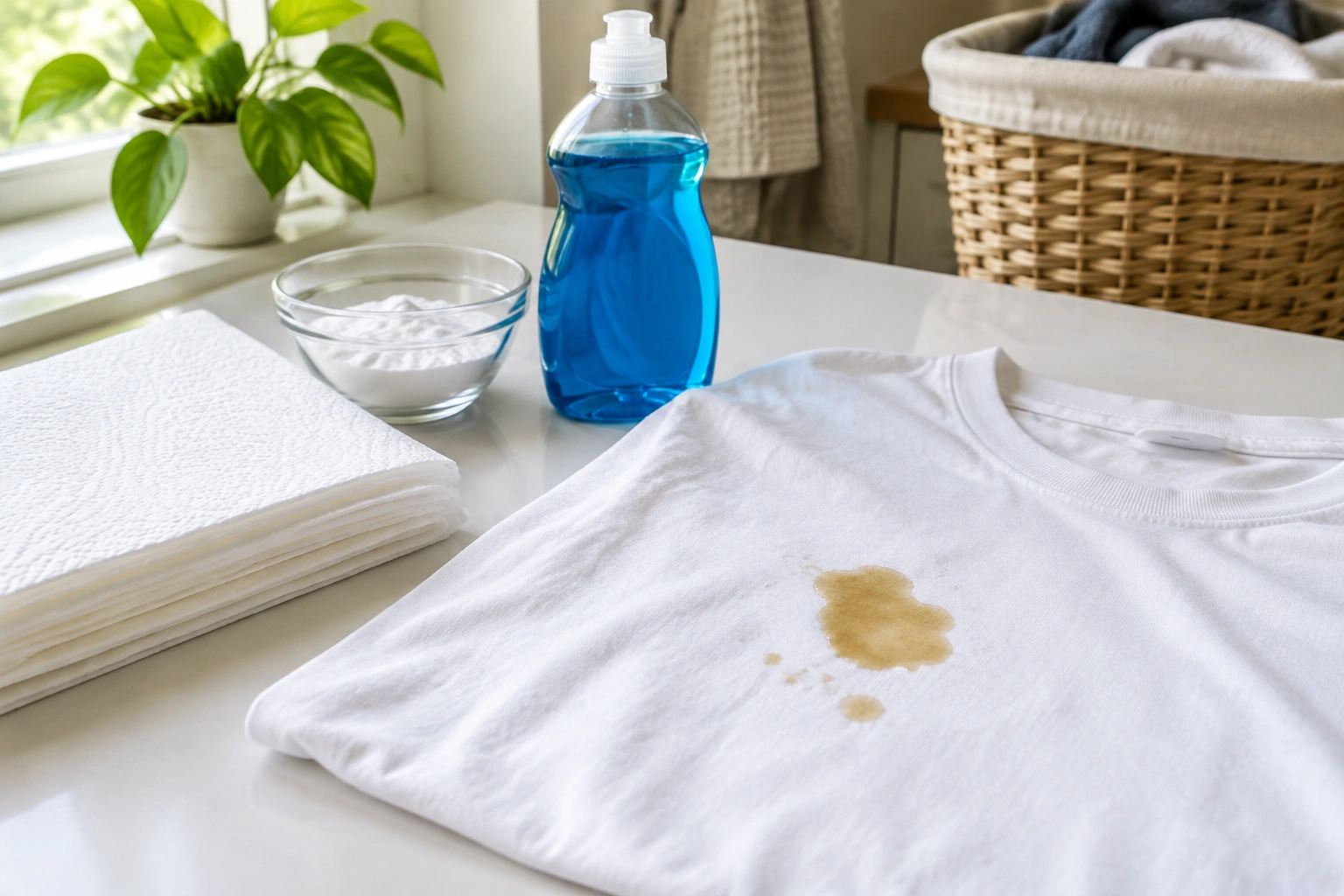
If the stain is small, a thin layer is enough. If it is larger, cover the whole greasy area.
3) Brush off the powder
After it has had time to work, tap or brush off the powder gently. A soft toothbrush is fine. Keep the pressure light; cotton can handle gentle brushing, but aggressive scrubbing can rough up the fibers.
4) Apply dish soap or liquid laundry detergent directly to the spot
For fresh oil, dish soap is often the quickest first cleaner because it is designed to cut grease. Liquid laundry detergent also works and may be easier if you are already near the laundry room. If you are using a stain remover spray or stick, apply it here instead of the soap, or use it as a pretreatment before washing if the product directions say it is safe for cotton.
The Fabric of Our Lives recommends applying pretreatment or liquid dishwashing detergent directly to the dry stain, rubbing gently with a soft brush, and letting it sit for 5 minutes before rinsing with warm water. That is a solid cotton-safe starting point: cotton oil-stain care tips.
5) Let it sit, then rinse
Let the soap sit for a few minutes so it can break up the oil. Then rinse with cold water first if you are unsure about colorfastness. If the care label allows it and the fabric is color-safe, warm water is fine for the rinse.
6) Wash the item
Wash the cotton item as usual, using warm water only if the care label permits it. Cold water is the safer choice when you are unsure about colorfastness; warm water can help once the stain has been pretreating and the label allows it. Avoid hot water until you have confirmed the stain is gone.
7) Air dry first
Air dry or line dry until you are sure the stain is gone. Do not use the dryer yet.
How to Treat a Set-In Oil Stain on 100% Cotton
Older stains need more patience because the oil has had time to anchor itself in the fabric.
1) Pretreat the stain again
Apply dish soap or liquid laundry detergent directly to the dry stain. If the stain has already been washed once and still shows, this is still the right place to begin. For a stubborn set-in spot, you can use a stain remover spray or stick before washing, but it should support the main pretreatment, not replace dish soap or detergent.
2) Work it in gently
Use a soft toothbrush or your fingers to work the cleaner into the fibers. You want coverage, not force. Cotton responds better to repeated gentle treatment than one hard scrub.
3) Let it sit longer
Let the pretreatment sit for at least 10 minutes, then soak the garment in warm water if the care label allows it. If the label calls for cold water, stick with cold. Rinse the soap out completely before washing.
4) Wash in the warmest safe water
Use the warmest water the care tag allows. If the label says cold only, follow the label. Warm water can help lift grease, but the fabric instructions still come first. Do not use hot water until the stain is actually gone.
5) Check before drying
If the stain is still visible, do not dry it. Repeat the pretreatment and wash again.
A second round is normal for older stains. If the stain is still there after one cycle, repeat the pretreat-and-wash process once or twice more, depending on how old the stain is and what the care label allows. If it is still not improving after that, it is reasonable to stop and consider professional help.
Dish Soap vs. Laundry Detergent vs. Absorbent Powders
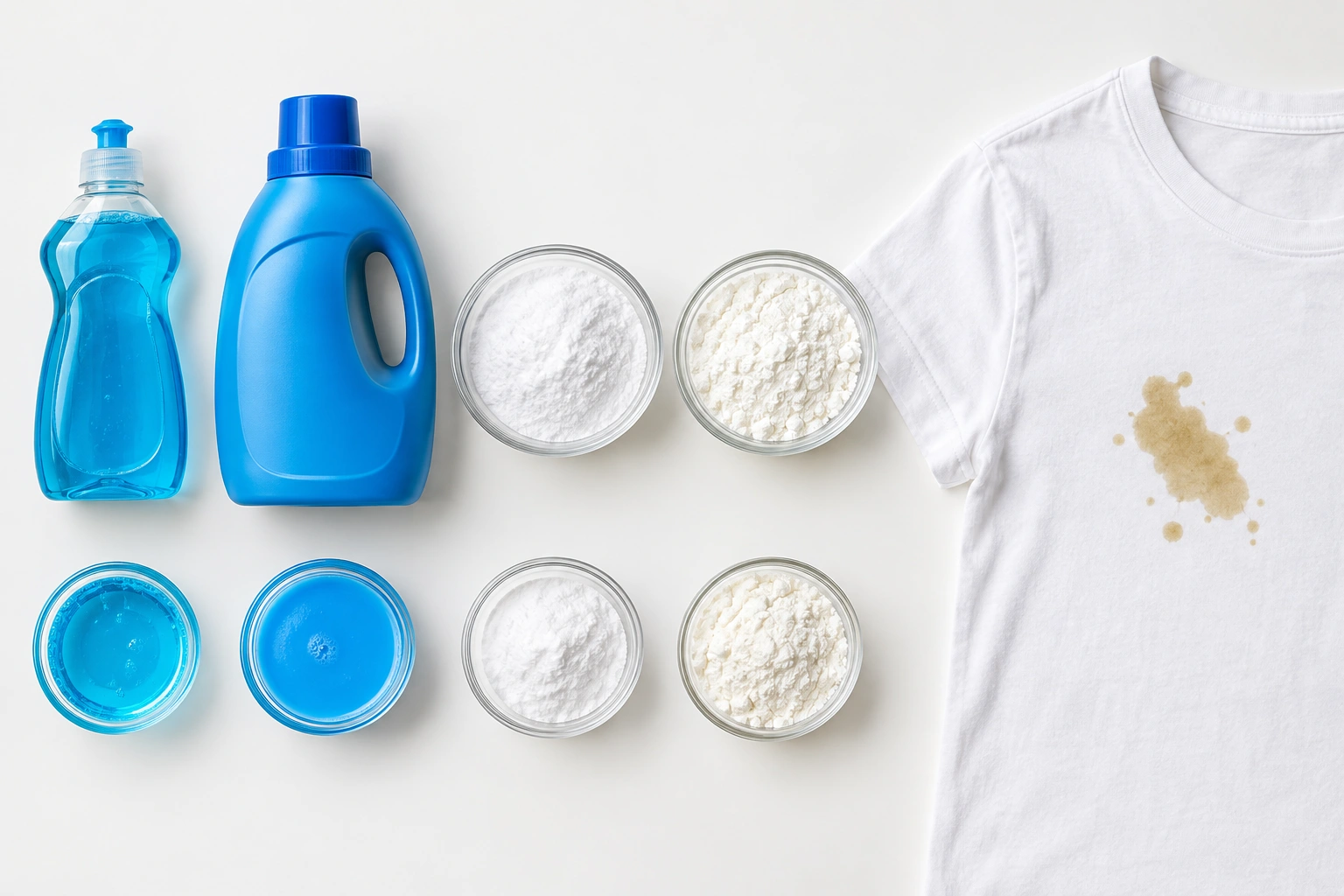
Here is the practical comparison.
| Option | Best for | Strength | Trade-off |
|---|---|---|---|
| Dish soap | Fresh grease, cooking oil, sunscreen | Cuts oil quickly | Can be harder to rinse out if overused |
| Liquid laundry detergent | Fresh or set-in stains, wash-cycle pretreatment | Convenient and easy to use in the laundry process | May need longer contact time for heavy grease |
| Baking soda | Fresh stains, especially after blotting | Helps absorb and lift surface oil | Less effective once oil has deeply set |
| Cornstarch | Fresh oil spots, quick absorption | Gentle and easy to find | Usually a first-pass helper, not a full solution for old stains |
If the stain is fresh, an absorbent powder plus dish soap is a strong combination. If the stain is older, dish soap or liquid laundry detergent matters more than powder alone.
A useful way to think about it:
– Powder helps remove loose surface oil.
– Soap or detergent breaks up what remains.
– Washing flushes it out.
Washing the Cotton Item Safely
Cotton is sturdy, but the wash still needs a little strategy.
Check the care label first
This matters most for colored cotton, printed cotton, and anything with trim or decoration. The label tells you whether warm water is acceptable and whether the item can be machine washed.
Use the right water temperature
Cold water is the safer choice for the first rinse if you are unsure about colorfastness. Warm water can help during the wash if the label allows it. Hot water is not the default choice for oil stains; avoid it until the stain is fully gone and the care label specifically allows that level of heat.
Choose a normal wash cycle
You usually do not need anything extreme. A normal cycle with enough detergent is enough for most cotton items once they have been pretreated.
Rinse thoroughly
If you used dish soap, make sure it is rinsed out before the machine wash. Leftover soap can leave its own residue.
How to Tell If the Stain Is Gone Before Drying
This step prevents the most common failure.
Check while the fabric is damp
Grease can look lighter when wet and more obvious after drying. So inspect the spot under good light before the item goes anywhere near a dryer.
Feel for residue
Run a clean finger over the area. If it still feels slick or waxy, the stain is not finished.
Let it air dry if you are unsure
Air drying is the safer choice because it gives you a second look before heat can lock in the stain. Line drying is fine too.
If the stain is still there, repeat
Do not count a faint shadow as “good enough” if the item will go into a dryer. Repeat treatment first.
Common Mistakes That Make Oil Stains Worse
These are the moves that usually turn a manageable stain into a stubborn one.
Rubbing hard
This spreads the oil and can grind it deeper into cotton.
Using the dryer too soon
Heat can set the stain. Once that happens, removal becomes much harder.
Skipping pretreatment
A normal wash alone often is not enough for oil.
Using the wrong water temperature
Hot water can work against you if the stain is still there. Stick with cold for the initial rinse when needed, warm only when the care label allows it, and avoid hot water until the stain is gone.
Treating a set-in stain like a fresh one
Old stains usually need repeat treatment or a longer soak.
Troubleshooting Stubborn or Reappearing Stains
Sometimes the stain looks gone, then shows up again after drying. That usually means oil was still in the fibers.
If it reappears after washing
Treat it again before drying. A second round is normal for older stains.
If the stain is still visible after one cycle
Repeat the soap treatment, let it sit longer, and wash again in the warmest safe water.
If the stain is large or heavy
Use a longer soak and a more thorough pretreat. Heavy cooking oil or grease from food often needs more than one pass.
When to stop and reassess
If repeated home treatment is not changing the stain at all, or if the cotton item is a favorite piece you do not want to risk, it may be worth a professional cleaner’s help. For valuable cotton items, especially those that are delicate, heavily dyed, or hard to wash at home, professional cleaning or dry cleaning can be the safer last resort.
Special Notes for Colored or Delicate Cotton
Colored cotton needs the same oil-removal logic, but gentler handling.
Test first
Try the soap or stain remover on a hidden seam or inside hem before treating the visible stain.
Avoid harsh scrubbing
Color can fade faster where the fabric is rubbed repeatedly.
Keep the soak reasonable
A long soak may help a stubborn stain, but do not overdo it on dyed cotton unless the care label says it is safe.
Watch for transfer
If the garment has dark dye, use a white cloth for blotting so you can see whether color is coming off.
If the cotton item is especially valuable or has decorative details, compare the risk of another home wash against the cost of professional cleaning. That trade-off is often worth thinking through before you escalate the treatment.
Practical Examples
Cooking oil on a white cotton T-shirt
Blot immediately, apply baking soda, brush it off, then use dish soap before washing. Check the shirt before it goes in the dryer.
Sunscreen on a cotton travel shirt
Pretreat with liquid laundry detergent or dish soap, let it sit, then wash in the warmest water the label allows. Sunscreen often behaves like oil because it is oil-heavy.
Grease from a sandwich on a colored cotton commuter shirt
Use a hidden-area test first, then a gentle dish soap pretreat. Air dry after washing so you can inspect the stain in daylight.
An oil spot on a cotton tote
If the tote is washable, treat the spot directly, soak if needed, and let it line dry. Tote fabric often hides oil until it has already set, so check carefully before drying.
When to Consider Professional Cleaning
If the cotton item is valuable, delicate, heavily dyed, or has details you do not want to risk, a professional cleaner can be the safer call. That is especially true when the stain sits near seams, labels, or attached components where aggressive washing could create more problems than it solves.
For most plain 100% cotton items, though, the path is straightforward: blot, pretreat, wash, inspect, and never dry until the stain is truly gone.