
How to Remove Stains from Polyester Shirts Without Damaging the Fabric

Polyester shirts are common for a reason: they wear well, dry quickly, and handle busy days better than many delicate fabrics. But when a stain lands on polyester, the cleanup can be frustratingly different from what works on cotton. The key is to match the cleaner to the stain and keep heat out of the process until the end.
The big thing to understand is that polyester behaves differently from natural fibers. A stain may sit on the surface longer, but oily residue can cling stubbornly, especially on shirts with finishes or weaves that hold grease. That’s why a coffee splash, salad dressing drip, or makeup smudge often needs a different approach than sweat, blood, or ink. If you want a related deep dive on oily marks, see how to remove oil stains from shirts.
What Makes Polyester Stains Different
Polyester is less absorbent than fabrics like cotton, so water-based spills may not sink in as fast. That sounds like good news, and sometimes it is. But polyester can be very willing to hold onto oil-based stains, which is why a shirt can look “cleaner” after a rinse and still keep a shadow of grease or makeup.
Heat is the other thing to respect. Once a stain has been exposed to hot water or a dryer, it can become harder to remove. That doesn’t mean the shirt is ruined, but it does mean you should treat the stain before any drying cycle. The practical rule is simple: remove as much of the stain as you can first, wash the shirt, and only use heat after you’ve checked that the mark is gone.
What You’ll Need Before You Start
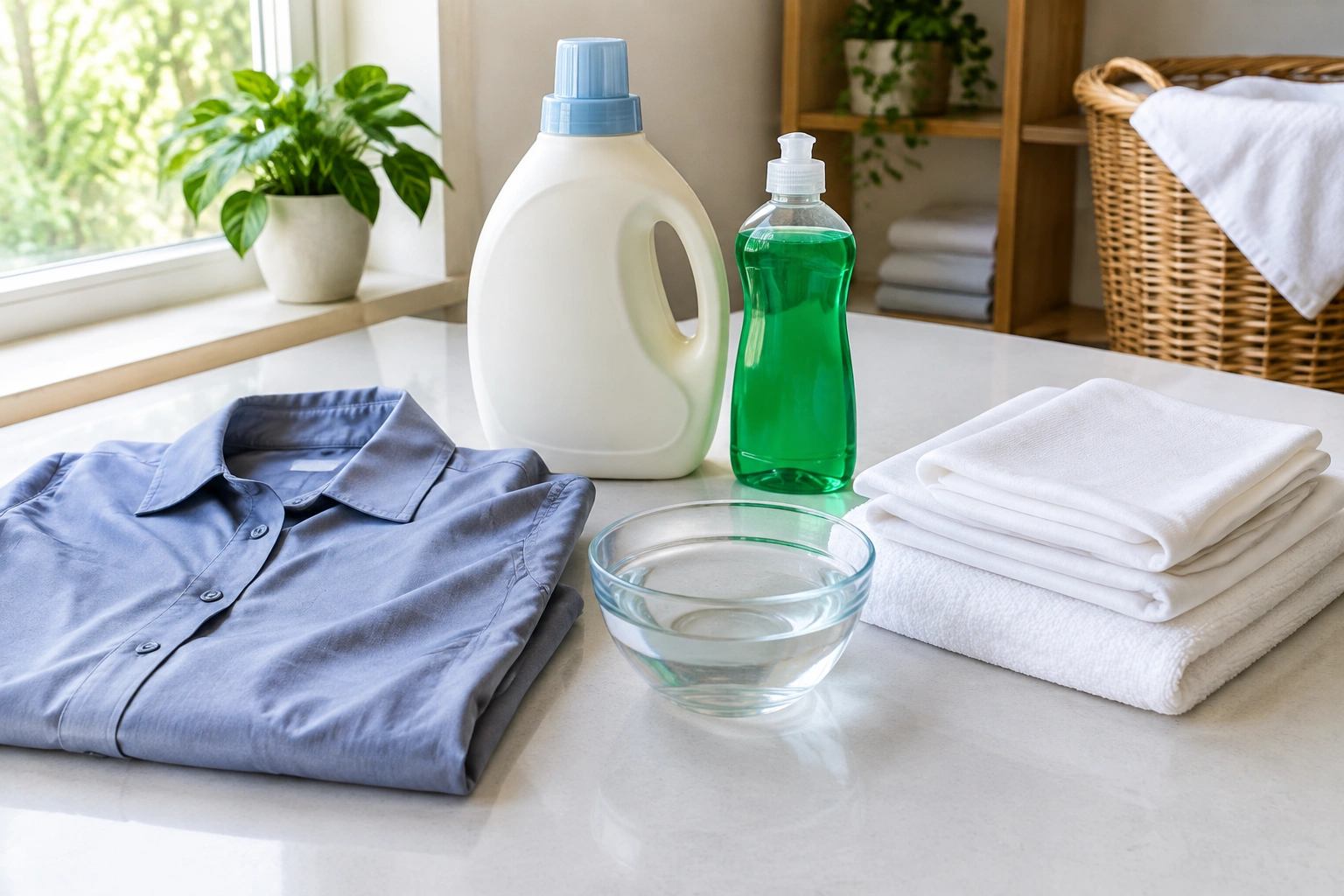
Gathering the right supplies saves time and keeps you from overworking the fabric. You usually only need a few basics:
- Mild laundry detergent for general stains
- Dish soap for greasy stains and makeup
- Enzyme stain remover for food, sweat, or other protein-based stains
- White vinegar for some food stains, if the care label allows it
- Rubbing alcohol for ink, used carefully on colorfast fabric
- Oxygen bleach for white or colorfast polyester, if the care label allows it
- Clean white cloths or paper towels
- A soft toothbrush or soft-bristled brush
- A bowl or sink for soaking
- Cold water
If you’re treating a shirt you wear often on the road or to work, keep a small stain kit handy. A little dish soap and a few cloths are often enough to stop a fresh stain from becoming a long-term problem.
Check the Care Label and Test for Colorfastness
Before you put any cleaner on the shirt, read the care label. That label tells you whether the shirt can be machine-washed, what water temperature is allowed, and whether dry cleaning is required. If the tag says “dry clean only,” some spot treatment may still be possible, but it is safer to be cautious and use professional care when the stain is valuable, large, or uncertain.
Next, test for colorfastness on a hidden area, such as an inside seam or hem. Dab a little of the cleaner there, wait a few minutes, then blot with a white cloth. If dye transfers or the fabric looks lighter, stop and use a gentler method or take the shirt to a professional.
This step matters more with darker shirts, printed shirts, and blends, because the stain remover can do as much damage as the original stain if the dye is unstable.
Choose the Right Treatment for the Stain Type
Different stains need different tools. That’s the decision that saves the most time.
| Stain type | Safer first choice | Water temperature to start | Home or pro? |
|---|---|---|---|
| Oil/grease | Dish soap | Cold | Home first |
| Food | Mild detergent or diluted vinegar solution, depending on the food and label | Cold | Home first |
| Sweat/deodorant | Enzyme stain remover | Cold to lukewarm, if label allows | Home first |
| Ink | Rubbing alcohol or ink remover | Cold | Home first, test carefully |
| Makeup | Dish soap | Cold | Home first |
| Blood | Cold water and enzyme-based remover | Cold | Home first unless fabric is delicate |
That table is a starting point, not a promise. Mixed stains often need more than one step. For example, a coffee stain with cream may need detergent for the liquid plus dish soap for the oily residue. Set-in stains may need a soak or a second treatment, especially if the shirt is white and the stain has had time to bond with the fabric.
If you’re unsure, start with the gentlest targeted cleaner that matches the stain. For example, a greasy salad dressing spot usually responds better to dish soap than to a general laundry soak. A tomato sauce stain, on the other hand, often benefits from a detergent or enzyme treatment.
Enzyme stain remover vs. dish soap
Use enzyme stain remover when the stain is food-based, sweat-based, or protein-based. It helps break down the residue instead of just moving it around. Dish soap is often the better first move for oil, grease, and makeup because it helps lift oily residue from the fibers.
If you’re unsure, start with the gentler, more targeted option. For example, a greasy salad dressing spot usually responds better to dish soap than to a general laundry soak. A tomato sauce stain, on the other hand, often benefits from a detergent or enzyme treatment.
Oxygen bleach vs. chlorine bleach
Oxygen bleach is generally the safer bleach option for polyester, especially on colored shirts, when used according to the label. Chlorine bleach can discolor or weaken fabric and should only be used if the care label clearly allows it and the shirt is appropriate for it.
For white polyester, oxygen bleach may be useful if the label permits it. For colored polyester, chlorine bleach is usually the riskier choice.
How to Remove Fresh Stains from Polyester Shirts
Fresh stains are the easiest to beat because the residue hasn’t had much time to bond with the fabric. The order matters.
-
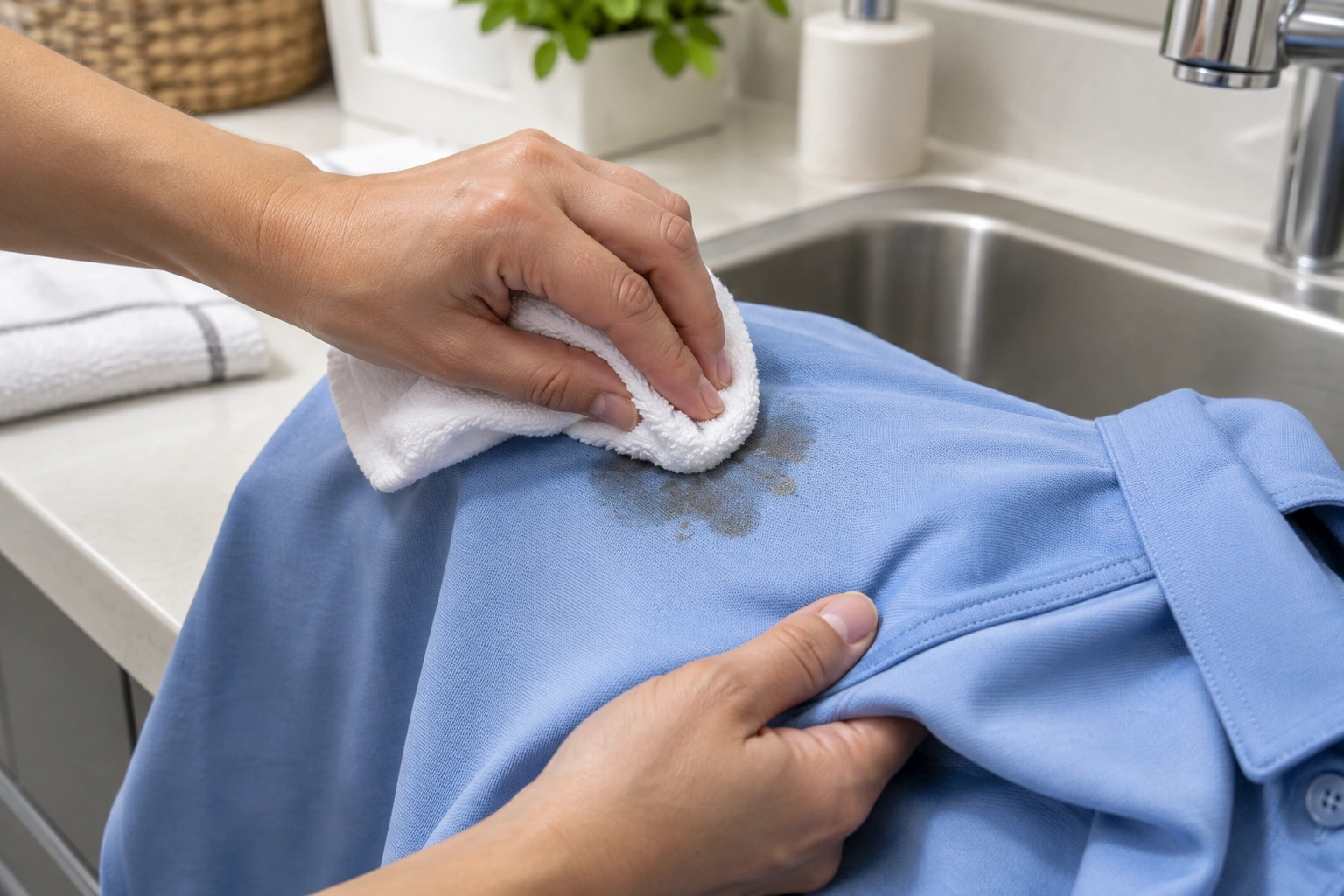
Blot or lift the excess first.
If the stain is solid or thick, gently scrape away what you can with a spoon or dull edge. If it’s liquid, blot with a clean cloth. Don’t rub hard; that pushes the stain outward and can work it deeper into the weave. -
Flush the back of the stain with cold water.
Rinse from the reverse side if you can. Cold water is the safest starting point for pretreatment because it helps move residue out without setting many stains. Use warmer water only if the care label allows it and the stain type makes it appropriate. -
Apply the right pre-treatment.
Use dish soap for oil, enzyme remover for food or sweat, diluted vinegar for some food stains, or rubbing alcohol for ink. Apply a small amount and let it sit for a few minutes unless the product label says otherwise. -
Gently work it in.
Use your fingers or a soft brush. The goal is to loosen the stain, not scrub the shirt raw. -
Rinse again.
Check whether the stain is fading. If it’s still visible, repeat the pre-treatment once before washing. -
Wash according to the care label.
Start with cold or cool water unless the care label and stain type justify warmer water. The label sets the limit; the stain type tells you how aggressive you can be. -
Inspect before drying.
If any mark remains, do not put the shirt in the dryer. Heat can lock the stain in place.
A practical example: if a commuter spills coffee on a polyester dress shirt before a meeting, cold water and a mild detergent are usually the safest first move. If the coffee has cream in it, treat it more like a mixed stain and pay attention to any oily residue left behind.
How to Treat Set-In or Dried Stains
Dried stains need more patience, but the process is still straightforward.
First, loosen anything crusted on the surface. Then pre-treat the stain and let the cleaner sit a bit longer than you would for a fresh mark, as long as the product instructions allow it. For stubborn spots, a soak can help, especially with enzyme-based products or oxygen bleach where the care label permits it.
Here’s the decision rule: if the stain is fresh and the shirt is machine-washable, try home treatment first. If the stain is old, already heat-set, or still visible after one careful round of home treatment, it may be time to stop and consider professional cleaning. That is especially true for dry-clean-only shirts, delicate finishes, or stains you do not fully recognize.
A dried stain that survives one wash is not automatically permanent. It often just means the first treatment didn’t match the stain well enough. But if the stain keeps resisting after a careful second attempt, repeated home treatment is usually not worth the risk of fading or fabric damage.
How to Wash and Dry the Shirt Without Setting the Stain
Wash the shirt only after pretreatment. If the care label allows machine washing, use the recommended cycle and start with cold or cool water unless the stain type and label clearly justify warmer water. If the shirt is delicate or the stain is still fragile, a gentle cycle is usually safer than a heavy one.
Air drying is the safest next step until you know the stain is gone. Hang the shirt or lay it flat and inspect it in good light. Sunlight can help you spot faint residue, but don’t rely on it to finish the job.
If the mark is still visible after washing, re-treat the stain before any dryer cycle and wash it again if needed. Once heat is applied, some stains become much harder to remove later.
What Not to Use on Polyester
A few shortcuts do more harm than good:
- Chlorine bleach on colored polyester unless the label clearly allows it
- Hot water too early on stains that may set with heat
- Aggressive scrubbing that can roughen the fabric or spread the stain
- Dryer heat before the stain is gone
- Random chemical mixing such as vinegar with bleach, which is unsafe
The most common mistake is trying to “power through” a stain with stronger heat or harsher cleaner than the shirt can tolerate. That usually turns a removable stain into a permanent one.
Troubleshooting Stubborn Stains
If the stain is still there after one full treatment, pause and identify what you’re seeing.
- If the stain lightened but didn’t disappear: repeat the same targeted method once.
- If the stain changed shape or spread: use less product and more blotting next time.
- If the stain is oily and still visible: switch to dish soap or a grease-focused treatment.
- If the stain is protein-based and still visible: use an enzyme stain remover and give it more time.
- If the color of the shirt changed: stop and avoid stronger chemicals.
This is where patience beats force. Careful repeats are usually better than one harsh round.
When to Use a Dry Cleaner
For some polyester shirts, a dry cleaner is the safer choice from the start. Use professional cleaning when the shirt is labeled dry clean only, the stain is old and heat-set, the fabric is delicate or color-sensitive, or you’re not sure what caused the stain.
It’s also smart to stop home treatment and escalate if:
– the stain survives a careful first round and a second targeted attempt,
– the shirt begins to fade or distort,
– the stain covers a large area,
– or the mark may involve something hazardous or unusual.
For machine-washable shirts, Wirecutter’s stain-removal guide is a useful reminder that hand-wash and dry-clean-only garments need a different approach.
Practical Examples by Stain Type
Coffee on a commuter shirt
Blot first, rinse with cold water, then use mild detergent or a little dish soap if there’s cream or milk in it. Wash before drying. If the stain is still visible after one careful wash, re-treat before using any dryer heat.
Oil from lunch or makeup
Use dish soap directly on the spot, work it in gently, then rinse and wash. Oil is where polyester can be annoying, because the fiber may let the stain cling even after the shirt looks clean. If a second careful treatment does not help, consider professional cleaning.
Ink from a pen in a backpack
Place a white cloth under the stain and dab with rubbing alcohol. Keep moving to clean sections of the cloth so you don’t redeposit the ink. Rinse thoroughly afterward. Ink can spread fast, so don’t scrub. If the shirt is not colorfast, stop and get professional help.
Sweat or deodorant marks
Use an enzyme stain remover and give it time to work before washing. These stains often build up slowly, so they may need a second round if the shirt has been worn repeatedly. If the mark is old and hardened, a dry cleaner may be the better option.
Makeup on a white polyester blouse
Treat it like an oil-based stain first. Dish soap is often the better starting point than a general detergent alone. If the shirt is white and the label allows it, oxygen bleach can be a useful follow-up, but only after a colorfastness test. If residue remains after two careful treatments, stop before the stain gets heat-set.
Common Mistakes to Avoid
The biggest errors are usually simple:
- waiting too long to treat the stain
- using the wrong cleaner for the stain type
- scrubbing instead of blotting
- washing in heat too early
- drying the shirt before checking the stain
- skipping the colorfastness test
If you avoid those mistakes, you’ll solve far more stains than you miss.
FAQs
Can I use hot water on polyester stains?
Only if the care label allows it and the stain type makes sense for it. Cold water is safer for the first rinse because heat can set some stains. If you’re dealing with blood or starchy residue, cold water is especially useful at the start.
Is bleach safe for polyester shirts?
Oxygen bleach is usually the safer choice, especially on colored polyester, if the care label allows it. Chlorine bleach is riskier and can discolor or damage the fabric.
Will scrubbing remove the stain faster?
Usually not. Hard scrubbing can spread the stain and roughen the fabric. Blotting and gentle working-in are safer.
What if the stain is still there after washing?
Treat it again before using any dryer heat. If the stain survived one wash, it often means the cleaner didn’t match the stain type well enough.
How do I know if the shirt is colorfast?
Test a hidden seam or inside hem with your chosen cleaner. If the dye transfers to a white cloth or the area lightens, stop and use a gentler method.
When should I give up and go to a dry cleaner?
If the shirt is dry clean only, the stain is old or unknown, or the fabric is delicate and color-sensitive, a professional cleaner is the safer choice.
Final Takeaway
For polyester shirts, the winning formula is usually simple: identify the stain, choose the matching cleaner, keep the water cool at first, and never dry the shirt until the stain is gone. That sequence protects the fabric and gives you the best chance of removing the mark without creating a bigger problem.
If you want to compare stain care across other shirt fabrics, these guides may help too: how to remove stains from silk shirts and how to remove stains from linen shirts.