
How to Remove Period Stains from Jeans Without Setting the Stain

Period blood on jeans is annoying, but it is usually fixable if you move with the right sequence: cold water first, gentle cleaning next, heat last only after the stain is gone. The biggest mistake is rushing to hot water or the dryer, which can lock the stain into denim and make it much harder to remove.
If you are away from home, the same rule still applies. Rinse with cold water as soon as you can, blot instead of rubbing, and use a mild cleaner before the jeans ever see heat.
Quick Answer: What to Do First
For a fresh stain, rinse the back of the fabric with cold water right away. If you can, keep the stained area under a cold tap and let the water push the blood out of the denim fibers instead of forcing it deeper in. Then apply a small amount of liquid laundry detergent or mild dish soap, work it in gently, and rinse again.
For a dried stain, skip the panic and go straight to soaking. Cold water is still the safest first step, and then you can move to a detergent soak, enzyme cleaner, or a baking soda paste if the stain is stubborn.
A useful rule: do not use hot water, and do not put the jeans in the dryer until the stain is completely gone. Heat can set what remains.
What You’ll Need
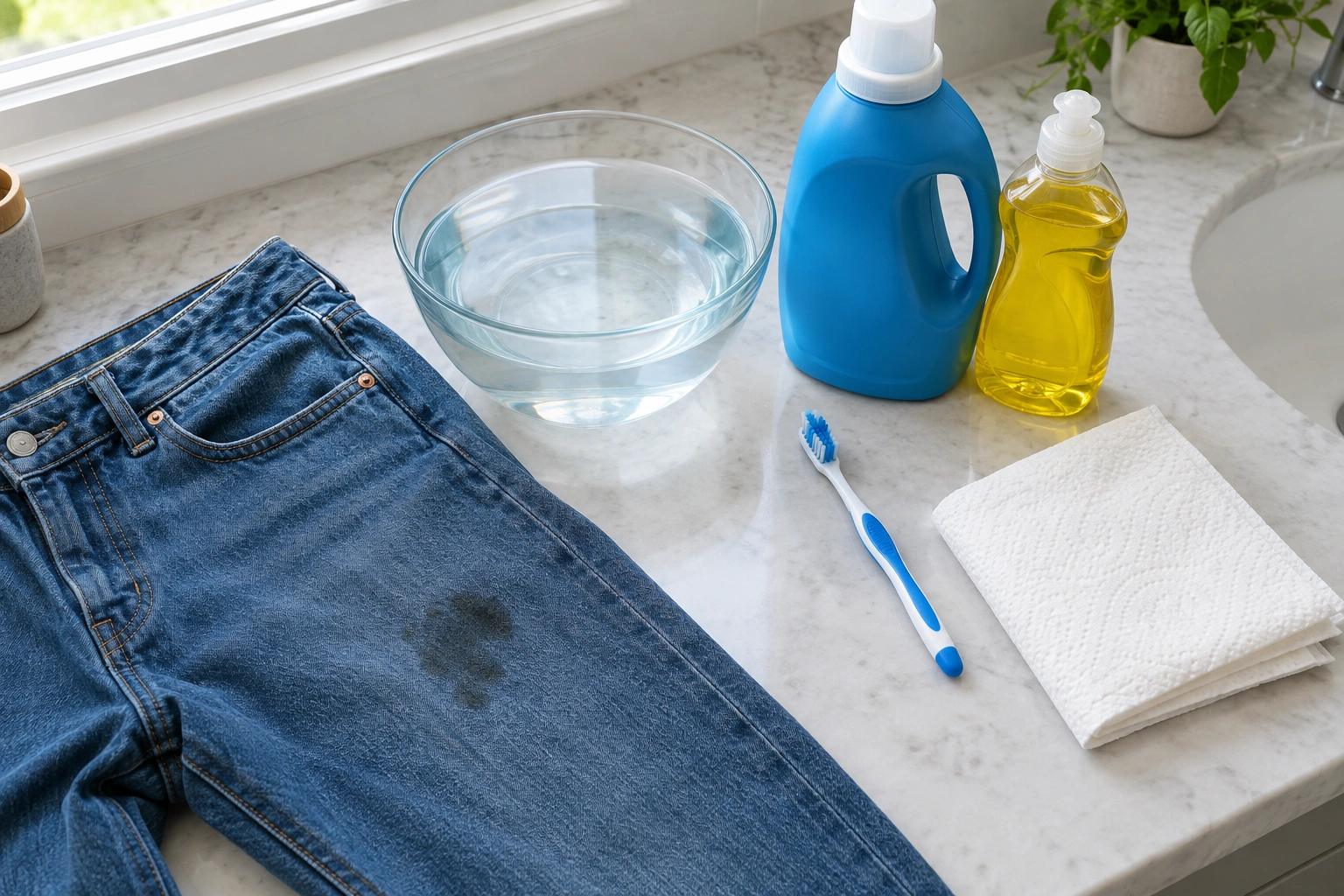
You do not need a special stain kit to handle most denim stains. Gather what you have on hand:
- Cold water
- Liquid laundry detergent
- Mild liquid dish soap
- Clean cloths or paper towels
- A soft toothbrush or small scrub brush
- Baking soda
- Hydrogen peroxide for light denim or very stubborn stains
- Enzyme-based stain remover
- A sink, basin, or bucket
If you are treating jeans in a bathroom or hotel room, even a sink and a little soap can be enough for the first pass. If you are packing for travel, a small stain pen or travel detergent can help you act before the stain dries.
[IMAGE 1: Period stain treatment setup with jeans, cold water, soap]
Before You Start: Check the Stain and the Jeans
The safest method depends on two things: how old the stain is and what kind of jeans you are cleaning.
Fresh stain vs. dried stain
Fresh stains are easier because the blood has not had time to bond tightly with the fibers. Dried or set-in stains need more patience and usually one extra step, like soaking or a pre-treatment paste.
Dark wash, light wash, or stretch denim
Light-wash jeans are more forgiving visually when you test peroxide or a stronger stain remover, but they can still fade if you overdo it. Dark wash jeans hide residue better, yet they also show color loss more clearly if a cleaner is too aggressive. Stretch jeans need gentler handling because hard scrubbing can rough up the fibers and affect the fit.
One practical decision rule: if the jeans are dark or stretchy, begin with the mildest cleaner that has a chance of working. Save hydrogen peroxide for lighter denim or for stains that refuse to budge after a gentler treatment.
How to Remove a Fresh Period Stain from Jeans
Fresh stains are the easiest to beat if you move quickly and stay gentle.
-
Blot first.
Use a clean cloth or paper towel to lift away any excess blood. Press, then lift. Do not rub across the stain, because that spreads the blood and pushes it farther into the denim. -
Rinse from the back with cold water.
Turn the jeans inside out and run cold water through the back of the stain. This helps push the blood out of the fibers instead of deeper into them. -
Apply a mild cleaner.
Put a small amount of liquid laundry detergent or liquid dish soap directly on the stain. Work it in with your fingers or a soft toothbrush using short, gentle strokes. -
Let it sit briefly.
Give the cleaner a few minutes to loosen the stain. You do not need a long wait for a fresh mark. -
Rinse again with cold water.
Check whether the stain is fading. If it is still visible, repeat the soap step once more before washing. -
Wash in cold water.
Use the regular laundry cycle your jeans can handle, but keep the water cold. -
Air-dry and inspect.
Do not use the dryer yet. Let the jeans air-dry, then check the stain in good light. If any trace remains, treat it again before heat enters the picture.
This method is usually enough for a fresh stain on everyday denim, especially if you caught it early.
How to Remove a Dried or Set-In Period Stain from Jeans
Old stains need more time and a little more patience. If the jeans were washed already or the stain has dried hard, treat them as a soak-and-repeat job.
-
Rinse the stain with cold water.
Even dried blood benefits from a cold rinse before anything else. It softens the surface layer and gives your cleaner a better shot. -
Soak the jeans in cold water.
Start with at least 30 minutes. If the stain is older or heavy, soak for 1 to 2 hours, or longer if needed, as long as the water stays cold. -
Add a pretreatment.
For stubborn stains, use one of these: - liquid laundry detergent
- an enzyme-based stain remover
-
a baking soda paste
-
Work the cleaner in gently.
Use a toothbrush or your fingertips to nudge the cleaner into the stain edge, not to grind it into the fabric. -
Let it sit, then rinse.
For a baking soda paste, 20 to 30 minutes is a reasonable window. For detergent or enzyme cleaner, follow the product label, then rinse with cold water. -
Wash cold.
After pretreating, run the jeans through a cold-water wash. -
Air-dry and inspect before deciding what’s next.
Do not use the dryer yet. If the stain is still visible after drying, repeat the soak and pretreat cycle once or twice more.
If the stain is still there after repeated attempts, stop home treatment and consider professional cleaning. Heat will only make the remaining stain harder to remove.
Which Stain Remover Should You Use?
Here is the practical trade-off: the stronger the cleaner, the more care you need with denim color.
| Cleaner | Best for | Pros | Cautions |
|---|---|---|---|
| Mild liquid detergent | Fresh stains, most jeans | Safe first move, easy to find, low risk | May need repeat treatment on dried stains |
| Liquid dish soap | Fresh stains, travel cleanup | Works in a pinch, gentle on fabric | Not always enough for older stains |
| Baking soda paste | Set-in stains, thicker denim | Good for soaking and spot treatment | Can need a second round |
| Enzyme stain remover | Dried blood, stubborn stains | Designed to break down protein stains | Always follow label directions |
| Hydrogen peroxide | Light denim, stubborn residue | Can help with older stains | Can lighten or alter color; test first |
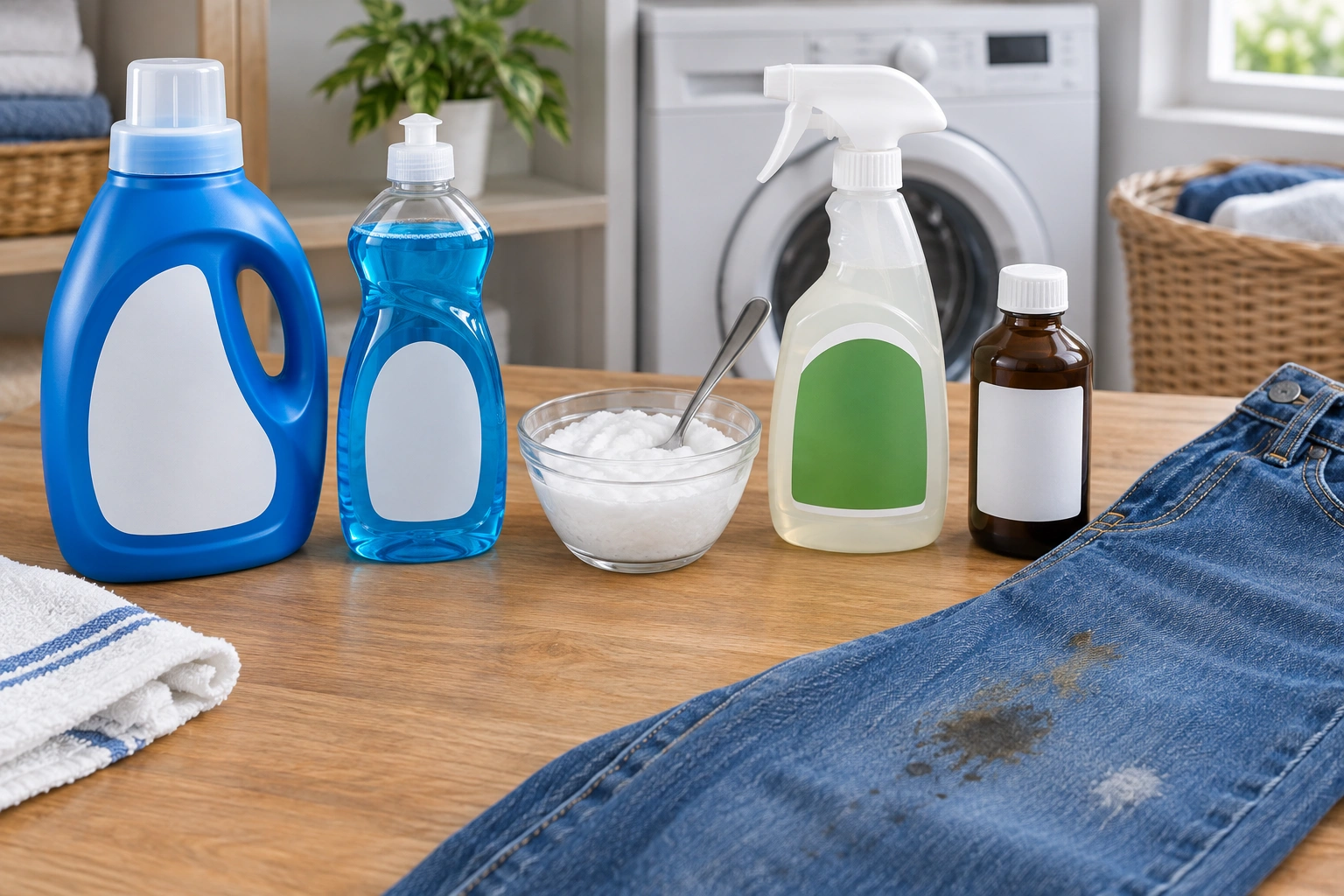
Detergent plus a soft brush is often the safest first choice. If you need a stronger step, move up gradually rather than jumping straight to the harshest option.
Hydrogen peroxide deserves extra caution. Spot-test it on an inside seam first, apply only a small amount to the stain, and rinse it out promptly. Be especially careful on dark wash or stretch denim, where color change is more likely.
How to Wash and Dry the Jeans Safely
Once the stain has been treated, wash the jeans in cold water if the care label allows it. If the stain is still visible before washing, treat it again rather than hoping the washer will finish the job.
Inspect the jeans before drying. Air-dry them only until you are sure the stain is gone. If any trace remains, repeat treatment first. Do not use the dryer between treatment rounds.
Think of the dryer as the final approval step, not part of stain removal.
Common Mistakes That Make Period Stains Worse
A few habits cause most of the damage:
- Using hot water too early. Heat can set blood stains.
- Rubbing hard. This spreads the stain and can wear denim fibers.
- Skipping the rinse. Cleaner works better when blood is flushed out first.
- Putting the jeans in the dryer too soon. This is the fastest way to make the stain stubborn.
- Using peroxide on dark jeans without testing. Color damage is a real risk.
- Treating only the visible top layer. Blood often sits deeper in the weave, especially on thicker denim.
If you remember only one thing, remember this: cold water and patience protect the jeans better than force.
Troubleshooting: If the Stain Is Still There
If the stain fades but does not vanish, do not switch to hotter water. Repeat the same method once before trying something stronger.
A good escalation path looks like this:
- Cold rinse
- Soak in cold water
- Pretreat with detergent, enzyme cleaner, or baking soda paste
- Wash cold
- Air-dry and inspect
- Repeat once or twice if needed
If the stain is still visible after two full cycles, the jeans may need professional cleaning. For dark wash jeans, pause before using anything that could strip dye. For stretch denim, avoid aggressive brushing that could affect the fabric’s recovery.
Quick Cleanup Tips for School, Work, Travel, or Commuting
When you are away from home, aim for discreet damage control:
- Rinse the stain in a restroom sink with cold water as soon as possible.
- Blot with paper towels instead of scrubbing.
- Put a drop of hand soap or liquid detergent on the stain if that is all you have.
- If there is no sink, wet a paper towel or napkin with cold water and use that to blot the stain until you can get to one.
- Keep the jeans damp until you can treat them properly at home.
- If you are traveling, stash the jeans in a separate bag so the stain does not transfer.
For commuters and students, speed matters more than perfection in the moment. Even a basic cold-water rinse can save you from a much harder cleanup later.
If you also pack gear for trips, a small stain-removal kit is worth the space. It does not need to be fancy; a travel detergent packet and a stain pen can buy you time until you get back to a sink.
When to Use a Professional Cleaner
If the jeans are delicate, expensive, dark-dyed, or made with stretch fabric, professional cleaning may be the safest next step once home treatment stops making progress.
That is especially true if:
– the stain has already been washed and dried
– you have repeated the soak-and-pretreat cycle once or twice
– peroxide or scrubbing has already risked color loss
– the stain is still visible after air-drying and inspection
At that point, continuing at home can do more harm than good. A cleaner may have stronger stain-removal methods that are less risky for the fabric.
For more stain-specific cleaning guides, you may also find these helpful: how to remove soy sauce stains from clothes, how to remove chocolate stains from clothes, and how to remove oil stains from shirts.
FAQ: Period Stains on Jeans
Can dried period stains still come out of jeans?
Yes, often they can. Dried stains usually need soaking, pretreatment, washing cold, and then air-drying to inspect the result. If the stain is still there after one or two full attempts, it may be time to stop and use a professional cleaner.
What if the jeans already went through the dryer?
You can still try to remove the stain, but it may be harder. Go back to cold-water soaking, detergent, enzyme cleaner, or a baking soda paste. Just know that heat may have made the stain more stubborn.
How long should I soak the jeans?
Start with at least 30 minutes. For older or heavier stains, soak longer and then pretreat before washing cold.
Can I use hydrogen peroxide on all jeans?
No. Spot-test it on an inside seam first, use only a small amount, and rinse it out promptly. Be especially careful on dark wash or stretch denim.
Should I wash the jeans before the stain is gone?
You can wash after pretreating, but do not treat washing as the final step. Check the stain before drying. If it is still visible, repeat treatment first.
Is dish soap okay on denim?
Yes, in many cases. A small amount of liquid dish soap can help on fresh stains or as a travel fix. For older stains, detergent or an enzyme cleaner usually has a better chance.
What if the stain is still faintly visible after washing?
Treat it again before any heat drying. A faint stain can become permanent in the dryer, so give it one more cleaning cycle first.
When should I stop trying at home?
Stop after one or two full soak, pretreat, wash-cold, air-dry cycles if the stain is still visible or the fabric is starting to look stressed. That is the point to consider professional cleaning rather than risking the jeans.