
How to Clean a Suitcase Without Damaging the Shell, Lining, or Hardware

A suitcase takes a beating in ways most people don’t notice until they unpack at home: airport dust in the seams, sticky spills in the lining, grime on the wheels, fingerprints on the shell, and the occasional musty smell after storage. The good news is that most luggage can be cleaned safely with a simple, methodical approach.
The key is to match the method to the material. Hard-shell cases usually tolerate a damp cloth and mild soap. Soft-sided luggage needs more care because fabric holds onto dirt and moisture. And no matter the type, the safest process is the same: remove loose debris first, clean gently, dry completely, then store it open until every bit of moisture is gone.
How to Clean a Suitcase: What You Need to Know First
Before you pull out cleaners, decide what kind of clean you actually need.
A quick clean is enough when the suitcase has light dust, fingerprints, or a few scuffs after a normal trip. A deep clean makes more sense after a spill, wet-weather travel, or a long period in storage. That decision matters because the more liquid you use, the more careful you need to be about drying.
A simple decision tree helps:
- Quick clean: light dust, fingerprints, minor scuffs, or a short trip with no spills.
- Usually clean the exterior only
- Add wheels and handles if they picked up grime
-
Skip the interior unless it smells stale or has visible dirt
-
Deep clean: spills, musty storage smell, muddy travel, wet-weather trips, or visible grime inside.
- Clean both exterior and interior
- Include wheels, zippers, handles, seams, pockets, and removable liners or pouches
- Let everything dry fully before storage
If you only used the suitcase for a clean trip and it never touched wet floors, the exterior and hardware may be all you need. If it came home with food spills, damp clothing, or airport grime, clean the inside too.
Material matters just as much. A polycarbonate or ABS hard shell can usually be wiped down more freely than fabric luggage. Nylon and polyester can handle spot cleaning, but they also absorb moisture more easily. Leather trim, glossy finishes, and coated fabrics are where people get into trouble by scrubbing too hard or using the wrong product.
If you want a broad rule that holds up across most luggage, use the least aggressive cleaner that will do the job, and test it in a hidden spot first.
Check the Suitcase Material and Care Label
Look for the care label, then identify the outer material as closely as you can.
Hard-shell luggage
This usually means polycarbonate or ABS. These shells are easier to wipe clean, but they can show scratches, scuffs, and dulling if you use abrasive pads or harsh cleaners.
Soft-shell luggage
This includes nylon, polyester, and similar fabrics. These cases trap dust and stains in the weave, so vacuuming and spot cleaning matter more than heavy wiping.
Leather trim or mixed materials
If your suitcase has leather handles, trim, or accents, treat those areas separately. A cleaner that is fine on nylon may dry out or discolor leather.
If the brand’s care instructions conflict with general advice, follow the brand. That’s the safest call because coatings, dyes, and finishes vary more than people expect.
Gather Safe Cleaning Supplies and Tools
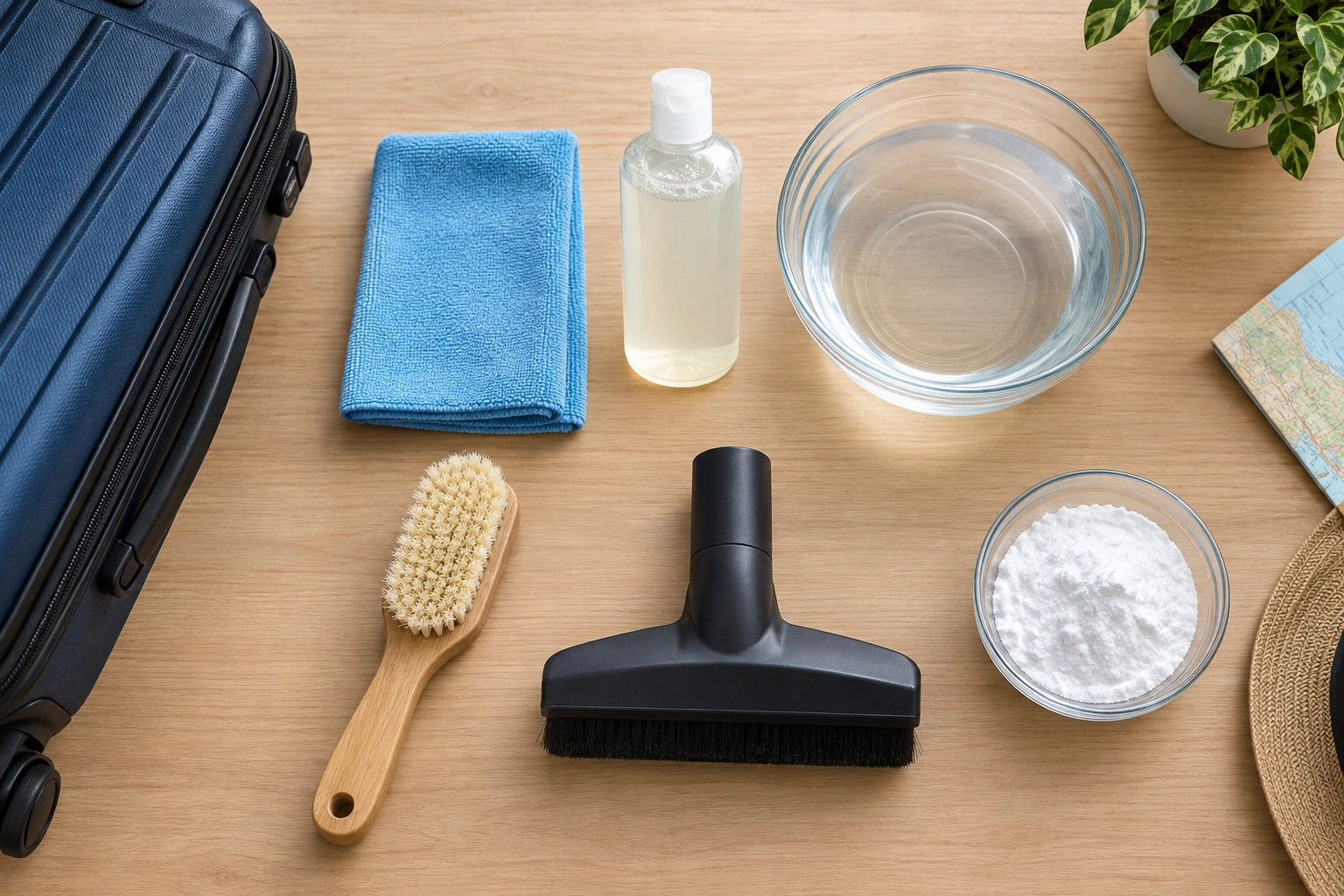
You do not need a long product list. In most cases, a few basic tools are enough:
- Microfiber cloths
- Mild soap or a small amount of dish soap
- Warm water
- Vacuum cleaner with a crevice tool
- Soft brush, such as a clean toothbrush or small nylon brush
- Baking soda for odor control
- Optional: white vinegar diluted with water
- Optional: disinfecting wipes for high-touch hardware, if the material allows it
A microfiber cloth is useful because it lifts dirt without adding much abrasion. A soft brush can help with seams and textured fabric, depending on the material and finish. And a vacuum matters more than people think; if you skip it, you usually end up turning crumbs and grit into muddy streaks.
For a practical comparison: mild soap is the safest all-around cleaner, vinegar can help with odor or stubborn residue when used cautiously, and disinfectant wipes are best reserved for handles, wheel housings, and other high-touch parts rather than soaking the main fabric or shell.
Empty the Suitcase and Remove Loose Dirt
Empty every pocket, compartment, packing cube, and removable pouch before you clean. That includes side sleeves and hidden zipper pockets. A missed tissue or snack wrapper can hold moisture and create odor later.
Then shake the case gently over a trash bin or outside. After that, vacuum the interior, seams, and corners with a crevice tool. This order matters because loose grit scratches surfaces when you start wiping.
Use a soft brush on corners, seams, and zipper tracks if dirt is packed in. If you’re cleaning after a messy trip, this is the point where you’ll usually find the real problem: sand in the bottom seam, crumbs under a divider, or dust trapped around the zipper tape.
If you want a deeper look at one of the most overlooked parts, see how to clean suitcase wheels and how to clean suitcase handles.
How to Clean the Inside of a Suitcase
The interior is where spills, odors, and mildew usually start, so be patient here.
1. Spot test first
Choose a hidden area inside a pocket or along a seam. Dab on a little of your cleaning solution and wait for discoloration or texture change. This is especially important for bright linings and coated fabrics.
2. Wipe with a lightly damp cloth
Mix warm water with a small amount of mild soap. You want the cloth damp, not dripping. Wipe the lining in sections rather than flooding the whole interior. If the cloth leaves water behind, wring it out more.
3. Treat the interior pockets and removable pieces separately
Open every pocket and wipe the inside edges, since crumbs and spills often collect there. If the suitcase has a removable liner, pouch, or packing insert, clean that piece on its own instead of treating it like the main lining. Small removable parts usually dry faster and are easier to inspect for residue.
4. Work on stains gently
For a food stain, toiletry leak, or dirt mark, press the damp cloth on the spot first to loosen the residue. If needed, use a soft brush with a little soapy water and work in small circles. The goal is to lift the stain, not grind it deeper into the fabric.
5. Deodorize in the safest order
If the suitcase smells stale but isn’t visibly dirty, start by airing it out. Leave it open in a dry, ventilated space first. If the odor lingers, use baking soda next: place a small open container inside overnight, or sprinkle a light layer inside and vacuum it out later if the lining can handle that.
Only consider diluted white vinegar if the smell or residue remains and the material has been spot-tested first. Use it sparingly on a cloth, not as a soak or spray that leaves the lining wet. Moisture is the main risk here; too much liquid can create a bigger odor problem later.
6. Wipe dry and air out
Use a clean towel or dry microfiber cloth to remove surface moisture. Then leave the suitcase open in a warm, dry, well-ventilated space until it is fully dry.
Do not zip it shut while the lining still feels cool or damp. That is how mildew starts.
How to Clean the Outside of a Hard-Shell Suitcase
Hard-shell luggage is usually easier to restore because the dirt sits on top of the surface instead of soaking in.
For general dirt and fingerprints
Wipe the shell with a microfiber cloth dampened with warm water and a little mild soap. Work in broad strokes, then follow with a clean damp cloth to remove residue.
For scuffs and sticky marks
Use the gentlest option first. A damp cloth often removes fresh marks. For more stubborn spots, some manufacturers say a sponge or eraser can be used carefully on hard-shell luggage. That can work, but keep the pressure light. Aggressive scrubbing can leave shiny patches or dull the finish.
Avoid abrasive cleaners unless the manufacturer specifically allows them. Polycarbonate can scratch or lose its gloss if you use abrasive pads, powder cleaners, or rough scrubbing. ABS can also dull or show wear if you use harsh solvents, strong bleach, or aggressive rubbing. If the shell has a glossy finish or a coated surface, treat it especially gently because those finishes tend to show damage fast.
For black transfer marks or scuffs
If you’re dealing with marks from conveyor belts or curbs, check how to remove scuffs from a suitcase for a more focused approach. The safest general rule is still the same: test first, clean lightly, and stop before the finish changes.
How to Clean Fabric, Nylon, or Polyester Luggage
Soft-sided luggage needs more restraint because the outer fabric and lining can hold onto moisture.
1. Vacuum first
Use the vacuum on the exterior seams, pockets, and textured areas. This removes loose dust so you don’t create muddy streaks when you add water.
2. Separate surface dirt from embedded stains
If the problem is just dust or light grime, a damp microfiber cloth may be enough. If the stain is embedded in the weave, use a small amount of mild soap and work slowly in one area at a time. If the fabric has a coating, waterproof finish, or laminated backing, do not treat it like plain cloth.
3. Spot clean rather than soak
Mix mild soap with warm water and apply it with a microfiber cloth or soft brush. Work on one stain at a time. If the spot is large, clean a slightly wider area so you don’t leave a water ring.
Not every fabric cleaner is appropriate here. If a product is meant for upholstery, carpets, or deep extraction, it may be too wet or too strong for luggage. Avoid anything that leaves heavy residue, saturates the fabric, or is not meant for coated nylon or polyester.
4. Blot, don’t scrub hard
A soft brush is useful, but hard scrubbing can rough up the weave or push dirt deeper into the fibers. If a stain is stubborn, repeat the gentle pass rather than increasing pressure.
5. Keep moisture low
Fabric luggage dries more slowly than hard-shell luggage. Too much water can leave a lingering smell or create mildew in the padding. If the case feels damp after wiping, stop and let it air out before adding more cleaner.
This is where soft-sided luggage really differs from hard-shell luggage: the cleaning itself is slower, but the real risk is what happens after cleaning if moisture gets trapped.
How to Clean Wheels, Zippers, Handles, and Seams
These are the parts that get touched most and cleaned least.
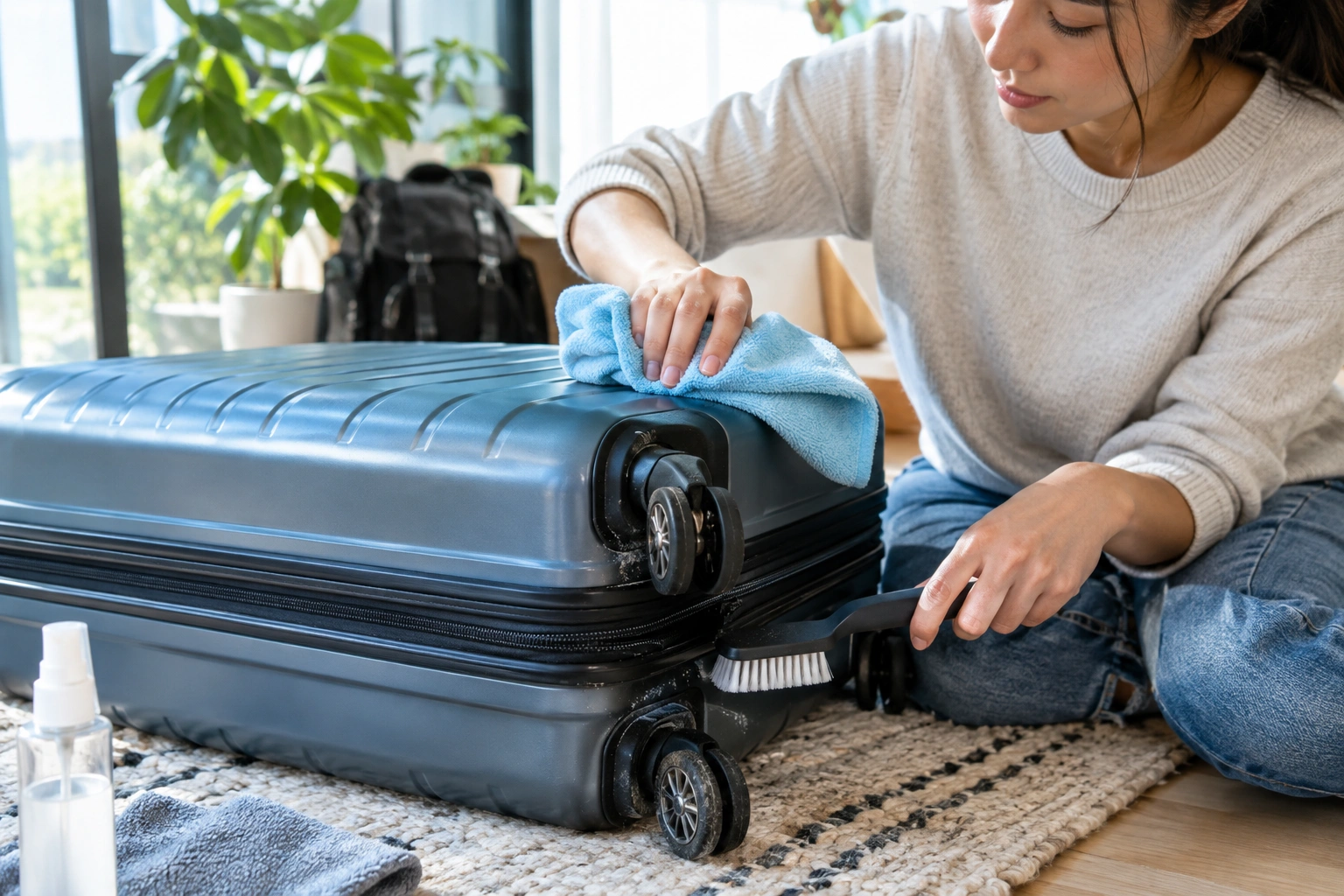
Wheels collect dirt from sidewalks, airport floors, and train platforms. Zippers catch dust and grit that can make them feel sticky. Handles pick up sweat, oils, and grime from repeated use. Seams trap everything else.
For wheels, wipe the outer surfaces with a damp cloth and mild soap, then turn the suitcase over and look closely inside the wheel housing. Use a soft brush or cotton swab to loosen packed dirt around the axle, inside the housing edges, and where the wheel meets the shell. If grit is stuck, work it out in small passes instead of forcing the wheel. Wipe away any loosened residue so it does not harden again.
For zippers, brush along the teeth first to remove dust and sand. Then wipe the zipper tape carefully with a barely damp cloth. If dirt is packed between the teeth, use a dry or lightly damp toothbrush to clean along the track without bending the zipper or forcing it open. Avoid leaving soap or cleaner in the teeth, because residue can make the zipper feel sticky later. If the zipper is metal and looks dry or stiff, use only a material-safe zipper product if the manufacturer allows it; otherwise keep the cleaning to dirt removal and drying.
For handles, wipe all contact surfaces, including the underside and the spots where your hand naturally rests. A disinfecting wipe can be reasonable if the material allows it, especially after public transport or airport travel, but do a spot test first.
For seams, fold or open the fabric slightly so you can reach the crease where dirt collects. Brush gently along the stitching, then wipe with a cloth wrapped around your finger or a cotton swab for narrow gaps. Do not soak seams, because that is where moisture lingers the longest.
If the handle or wheel area is especially dirty, separate that job from the main body of the suitcase. That keeps grime from spreading back onto the clean shell or lining.
A practical rule: clean hardware after every trip if the suitcase rolled through wet streets, crowded transit, or visibly dirty floors. That simple habit keeps buildup from becoming a mechanical problem later.
How to Remove Odors, Mildew, and Stubborn Stains
Not every smell means mildew, and not every stain needs a stronger chemical.
Odors
If the suitcase smells stale but looks clean, air it out first. Leave it open in a dry room for a few hours. If the smell lingers, use baking soda overnight. This is low-risk and often enough for ordinary travel odors.
Mildew
If you smell a damp, earthy odor or see spotting, the case likely held moisture too long. Clean the area, then dry it aggressively with airflow. If the mildew is widespread or the lining is heavily affected, that’s a sign to stop trying to mask it with fragrance. Remove the moisture source first.
Stubborn stains
For a set-in mark, a diluted vinegar-and-water solution can help on some materials, but it is not universal. Use it only after a spot test, and keep the cloth just damp enough to work. Do not spray or soak the area. Extra moisture can spread the stain or create a new odor problem.
Be careful with disinfectant claims. Wiping handles or wheels can reduce surface grime, but luggage cleaning is not the same as medical-grade sanitation. If you need pest-related guidance after exposure to bed bugs or insects, follow official public health or pest-control advice rather than improvising with household cleaners.
Common Mistakes to Avoid When Cleaning a Suitcase
A few shortcuts cause most of the damage:
- Using bleach on luggage materials that were never meant for it
- Soaking seams, padding, or fabric until they stay wet for hours
- Scrubbing hard-shell finishes with abrasive pads
- Skipping the spot test
- Cleaning hardware and shell with the same dirty cloth
- Zipping the suitcase shut before it is fully dry
- Using vinegar or wipes on finishes that discolor easily
The pattern behind all of these is the same: too much force, too much moisture, or too much confidence in a product that was never meant for that surface.
How Long a Suitcase Needs to Dry and How to Prevent Mold
Drying time depends on the material, how much liquid you used, and the room conditions. A hard-shell suitcase wiped with a barely damp cloth may dry fairly quickly. A fabric suitcase that was spot cleaned can take much longer, especially around seams, pockets, and padding.
As a rough rule of thumb, hard-shell luggage usually dries fastest, soft-shell luggage takes longer, and anything with pockets, liners, or foam padding takes the longest because moisture settles into those layers. If you cleaned the wheel housings, zipper tape, or interior seams, give those areas extra time.
The practical standard is simple: the suitcase should feel fully dry inside and out before storage. If there is any coolness, dampness, or odor left, give it more time.
Airflow matters more than heat. A warm, dry room with good ventilation is ideal. Sunlight can help some cases dry faster, but don’t leave sensitive materials in harsh heat for long periods if the manufacturer warns against it.
Before putting the suitcase away, leave it open. If you store it zipped while damp, you trap moisture and create the exact conditions mildew likes.
Practical Examples: Cleaning a Suitcase After Real-World Travel Messes
A hard-shell case with airport grime usually needs only a wipe-down, a little soap, and attention to scuffs around the corners and wheels.
A suitcase with a spilled snack inside needs a full interior vacuum first, then a careful spot clean of the lining, then a long dry-out period before it goes back in the closet.
Mud on fabric luggage is best handled after the mud dries. Brush off the loose dirt first, then spot clean the remaining stain. Trying to wipe wet mud usually spreads it.
A musty suitcase from storage needs air first, cleaning second, and odor treatment last. If you reach for baking soda or vinegar before the case is dry, you’re treating the symptom, not the cause.
How to Keep Your Suitcase Cleaner Between Trips
A little maintenance saves a lot of work later.
Wipe the exterior after trips, especially if the suitcase went through rain, dust, or transit grime. Vacuum the interior every couple of uses if you travel often. Clean wheels and handles before dirt hardens. And if the suitcase is going into storage, make sure it is clean and dry first.
If you only use your luggage a few times a year, a deeper clean every few months is reasonable. That’s a practical rhythm for regular touch-ups and occasional deep cleaning.
A simple luggage cover can also help keep dust off during storage, but it should never be used to hide a damp case.
When to See a Luggage Repair Specialist
If the suitcase has persistent mildew, deep stains that keep returning, a damaged lining, broken zipper teeth, or wheel areas that stay gritty no matter how you clean them, a repair specialist can tell you whether the problem is cosmetic or structural. That matters because cleaning can only do so much once a material, seam, or coating has been compromised.
For most travelers, though, a careful clean is enough to bring a suitcase back to a fresh, usable state.
FAQ
Can I use bleach on a suitcase?
Usually no. Bleach is too harsh for most luggage materials and can damage color, coatings, and trim.
Are disinfecting wipes safe for luggage?
They can be useful on handles and some hard surfaces, but test first. Avoid assuming they are safe for every fabric or finish.
How do I get the inside of a suitcase to stop smelling musty?
Air it out fully, clean any visible dirt, then use baking soda if needed. If the smell returns, moisture is probably still trapped somewhere.
Can I use vinegar on my suitcase?
Sometimes, but cautiously. Dilute it, spot test it, and avoid using it on materials that may discolor or weaken.
How long should I let a suitcase dry?
Until it is completely dry to the touch and no longer smells damp. That may be a few hours for a lightly wiped hard shell or much longer for fabric luggage.
What’s the safest way to clean suitcase wheels?
Wipe them with a damp cloth, use a soft brush for packed dirt, and avoid soaking the wheel housing.