
How to Remove Stains from a Down Jacket Without Ruining the Fill

A down jacket can survive years of travel, commute wear, and weekend use, but stains are a different problem. The shell fabric and the water-repellent finish can both be affected by the wrong cleaner, so the safest approach is usually the least aggressive one that still matches the stain.
If you treat the stain the same way you would treat jeans or a hoodie, you can end up with clumped down, a bigger water ring, or residue that attracts more dirt later. The goal here is simple: remove the mark, keep the loft, and avoid damaging the jacket’s shell or DWR finish.
What You’ll Need Before You Start
Gather everything first so you are not hunting for supplies while the stain sits longer than it should.
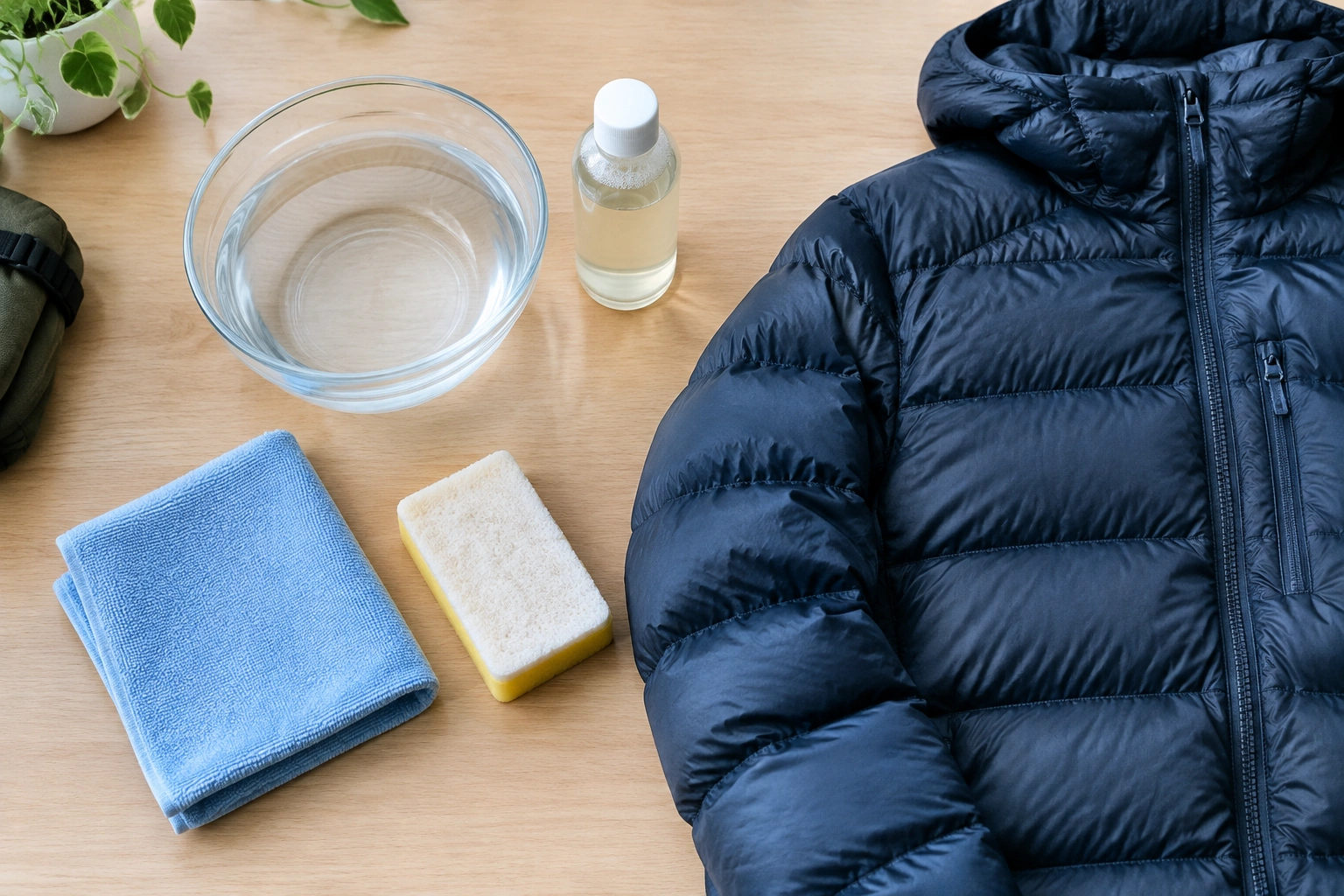
Use:
– A clean microfiber cloth
– A soft sponge or soft-bristled toothbrush
– Cool or lukewarm water
– Mild dish soap or a down-specific wash
– A clean towel
– Optional, if the care label allows and the fabric is colorfast: a fabric-tested biobased stain remover
– Optional for drying: clean tennis balls or dryer balls
Skip:
– Bleach
– Fabric softener
– Rough scrub brushes
– Hot water
– Harsh solvent cleaners unless the care label specifically allows them
– Hydrogen peroxide unless the care label allows it and you have tested it on a hidden area first
If you want a second opinion on general outerwear care, REI’s care guidance for outdoor gear is a useful reference point. For a down-jacket-specific example, Helly Hansen’s care guide recommends zipping the jacket, turning it inside out, using a specialized down detergent, and washing on a gentle cycle: Helly Hansen down-jacket care steps.
Check the Care Label and Identify the Stain
Before you touch the stain, read the care label. That label decides whether you are spot cleaning, hand washing, or machine washing. Some jackets can handle a gentle wash. Others need a very cautious spot treatment only.
Next, identify the stain type:
– Oil or grease: dark, translucent, or slick-looking
– Food: colored and often mixed with sugar or sauce
– Mud or dirt: dry crust, dust, or a brown edge
– Salt or water marks: white residue or a pale ring
– Unknown stain: anything you can’t confidently name
The stain type matters because the cleaner needs to match the residue:
– Oil or grease: start with mild dish soap on a damp cloth
– Food or grime: start with spot cleaning using mild soap or a down-safe cleaner
– Mud or dirt: let it dry first, then brush off loose debris before spot cleaning
– Salt or water marks: start with a lightly damp cloth and minimal moisture
– Unknown stain: start with water and a hidden-area test before using any cleaner
A quick decision rule:
– If the stain is small, fresh, and local, spot cleaning is usually the least risky first move.
– If the stain is spread out, old, or in several places, a full wash may be more effective.
– If the mark does not change after one careful spot-cleaning pass, stop escalating blindly. It may be dye transfer, coating wear, or fabric damage rather than dirt.
Choose the Safest Cleaning Method
Think in terms of escalation.
1. Spot cleaning
Use this for a small coffee splash on the sleeve, a tiny food drip on the front, or a salt mark on a cuff. It uses less water, disturbs the down less, and is often enough for isolated stains.
2. Full wash
Use this when the jacket is generally dirty, smells stale, has multiple stains, or has body oils around the collar and cuffs. A full wash is also the better choice when spot cleaning leaves a ring behind or when the care label explicitly allows machine washing.
3. Professional cleaning
Use this when the shell is delicate, the jacket is expensive, the stain is old and set in, or the care label is unclear.
For stain treatment, Seventh Generation recommends treating visible stains before washing and notes that a biobased stain remover or a mix of 1 part dish soap to 2 parts hydrogen peroxide can be used in some cases before washing, but only if the fabric is compatible and the product directions are followed. Hydrogen peroxide can affect some fabrics or colors, so test it on a hidden area first if you use it at all: Seventh Generation’s down-jacket stain advice.
Cleaner comparison
| Situation | Best first choice | Why it works | Trade-off |
|---|---|---|---|
| Fresh food spot | Mild dish soap on a damp cloth | Breaks down residue without soaking the jacket | May need a second pass |
| Grease stain | Dish soap or down wash | Better at lifting oily residue | Too much product can leave residue |
| General grime | Down-specific wash | Designed for down and technical shells | Usually requires full wash |
| White salt marks | Damp cloth, then light rinse | Removes surface residue before it spreads | Over-wetting can create a ring |
| Large or set-in stain | Full wash or pro cleaning | More thorough than spot cleaning | More drying time and more handling |
How to Remove Stains from a Down Jacket: Step-by-Step
Step 1: Brush off dry debris
If the stain is mud or dried dirt, let it dry fully first. Then gently lift off loose debris with your fingers or a soft brush. Don’t scrub wet mud into the shell; that usually makes the stain larger.
Step 2: Blot the area
Dampen a microfiber cloth with cool or lukewarm water. Press it onto the stain and lift straight up. Repeat until the surface residue loosens.
The key is blotting, not rubbing. Rubbing pushes stain deeper into the weave and can rough up the shell fabric.
Step 3: Apply a small amount of cleaner
For food, grime, or light grease, put a small amount of mild dish soap or down wash on the damp cloth or sponge. Work it into the stain with gentle tapping or very light circular motion. Keep the cleaner local. The more you spread it, the more rinsing you’ll need later.
Step 4: Let it sit briefly
For stubborn spots, let the cleaner sit for a short period rather than scrubbing harder. If you are using a fabric-tested stain remover or a dish soap and hydrogen peroxide mix, follow the product directions and keep the contact time controlled. Use hydrogen peroxide only if the care label allows it and the jacket has passed a hidden-area colorfastness test.
Step 5: Lift the stain residue
Use a clean damp cloth to blot the treated area again. This removes loosened dirt and soap. If you skip this step, the residue can dry into a pale ring or attract more grime later.
Step 6: Rinse the spot lightly
With a second cloth dampened with plain water, blot the area once more to remove remaining cleaner. Don’t soak the jacket. You want the shell damp, not saturated.
Step 7: Decide whether to stop or escalate
If the stain is gone or only a faint shadow remains after one careful spot-cleaning pass, stop here and dry the area fully. If the mark is still obvious, spread out, or returning as a ring, move to a full wash if the care label allows it. If the label does not allow washing, or the stain looks like damage rather than dirt, use a professional garment cleaner or dry cleaner experienced with technical outerwear.
Step 8: Press out excess moisture
Lay a dry towel over the spot and press gently. This pulls moisture out without compressing the down too hard.
Step 9: Dry the jacket fully
Drying is part of stain removal, not an afterthought. A jacket that looks clean but stays damp inside can clump, smell musty, or lose loft.
How to Treat Common Stain Types
Oil and grease
Oil needs a cleaner that can cut through residue. Mild dish soap is often the first home option because it is designed to break down grease. Apply a small amount to a damp cloth, work lightly, and then blot away the residue. If the stain is large, old, or spread across several areas, a full wash with a down-specific detergent may work better than repeated spot treatments.
Food stains
For sauces, coffee, or snack spills, blot first, then use mild soap or a down-safe cleaner. If the stain has color, don’t scrub aggressively; that usually spreads the pigment into the fabric weave. Fresh food stains come out far more easily than dried ones.
Mud and dirt
Let mud dry completely before trying to remove it. Once dry, brush off the crust, then spot clean the remaining mark with a damp cloth and a little soap. If you attack wet mud, you usually end up with a wider brown smear.
Salt and water marks
Salt often shows up on cuffs, hems, and collars after winter wear or travel. Start with a damp cloth to dissolve the salt crystals, then blot with plain water to prevent a visible ring. Use the smallest amount of moisture that gets the job done.
Unknown stains
If you can’t identify the stain, keep the first pass gentle. Blot with water, then try a mild cleaner on a hidden spot first. If the mark does not change, stop escalating blindly. A stain that won’t move might be dye transfer, coating wear, or fabric damage rather than dirt.
How to Dry the Jacket Without Clumping the Down
Drying is where many good cleaning attempts go wrong.
Air drying
Air drying is gentler on heat-sensitive shells, but it is slower and more likely to leave the down flat if you stop too early. If you air dry, lay the jacket flat on a clean towel in a ventilated room and turn it occasionally. This can work for a tiny spot-cleaned area, but it is not the best way to restore full loft after a deeper cleaning.
Tumble drying
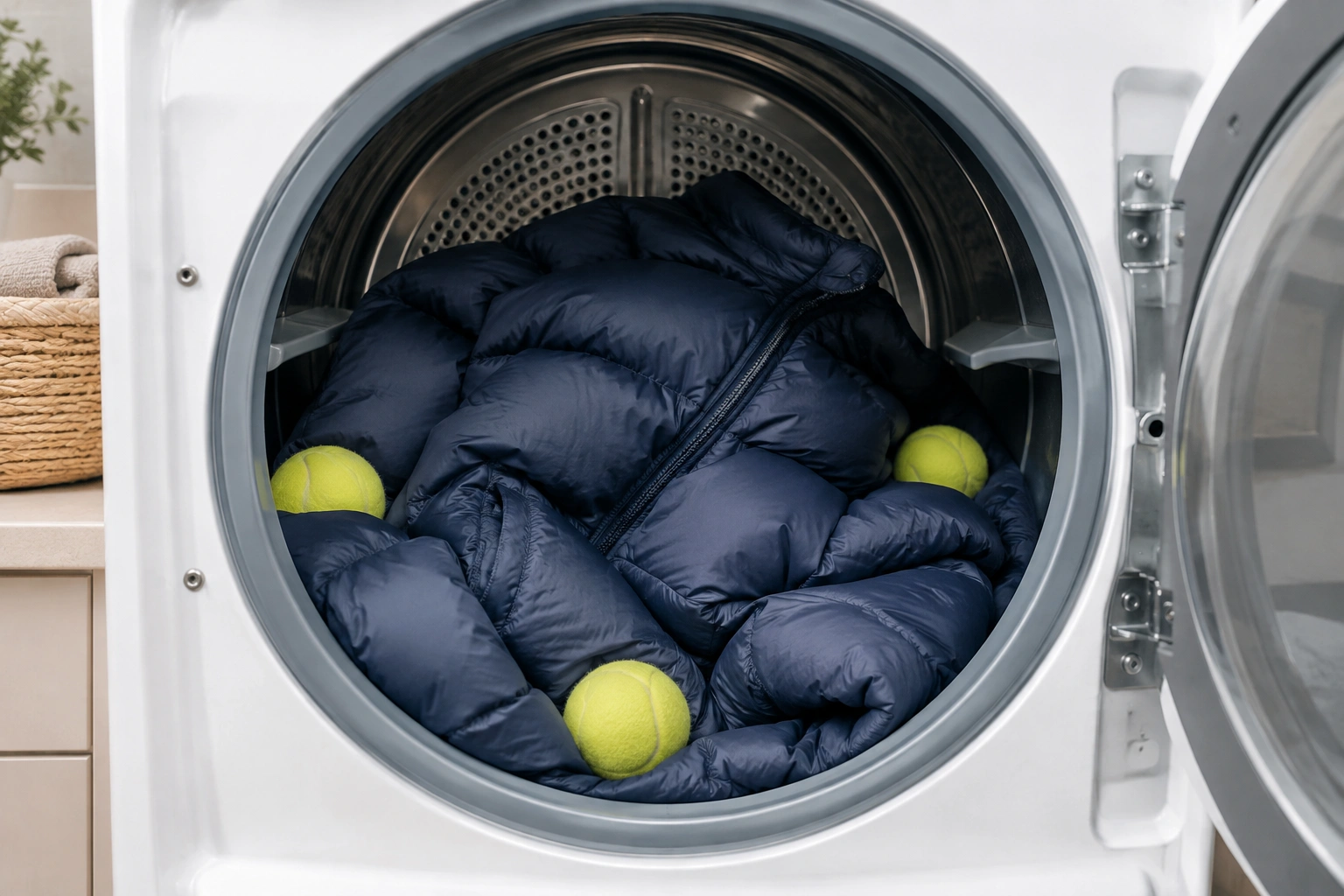
Low-heat tumble drying is usually the better choice for a fully cleaned down jacket, but only if the care label allows it. Put the jacket in the dryer with a couple of clean tennis balls or dryer balls. They help break up clumps and redistribute the fill.
A practical rule: keep drying until the jacket is completely dry inside and out, not just dry on the surface. Down can feel dry at the shell while still holding moisture in the baffles. For thicker jackets, that may take multiple dryer cycles, with intermittent fluffing or checking between cycles.
Helly Hansen’s care guide also emphasizes careful drying after washing, which is consistent with common technical outerwear care advice: gentle wash, then thorough drying to restore loft.
Common Mistakes to Avoid
The biggest mistakes are usually simple ones.
- Rubbing hard: pushes the stain deeper and can scuff the shell
- Soaking the jacket: makes the down harder to dry and more likely to clump
- Using bleach or strong solvents: can damage fabric, color, and finish
- Leaving soap behind: residue can create new marks and attract dirt
- Using high heat: can stress the shell and overheat the insulation
- Stopping drying too early: leaves hidden moisture that leads to odor or flat spots
- Ignoring the care label: what works on one down jacket may ruin another
Shackleton’s down-jacket care guide specifically notes that stains should be treated with a quick spot wash and that pockets and Velcro should be secured first: Shackleton down-jacket care guide. That small bit of prep helps prevent snagging and keeps the jacket from catching lint or debris during cleaning.
Troubleshooting: If the Stain, Spot, or Clumping Won’t Go Away
If a ring appears after spot cleaning
That usually means the wet edge dried more slowly than the center. Re-dampen the area lightly and blend outward with a clean cloth so the transition is less visible. Then dry it evenly.
If grease is still visible
Repeat once with a small amount of dish soap or switch to a full wash with a down-specific detergent if the care label allows it. If the stain is old, repeated gentle spot cleaning may not be enough.
If the down feels flat
Massage the baffles gently once the jacket is dry enough to handle. Then return it to the dryer on low heat, if allowed, with dryer balls or tennis balls. Clumps often loosen only after the jacket is fully dry and warmed through.
If the mark does not change at all
That is a clue. The “stain” may be coating wear, dye transfer, or abrasion in the shell fabric. Cleaning won’t fix damaged fibers or a worn DWR finish.
When to See a Professional Garment Cleaner
A professional garment cleaner or dry cleaner experienced with technical outerwear is not the same as a general cleaner, but the same rule applies: if the item is expensive, delicate, or not behaving normally, bring it to someone who works on technical gear regularly.
For a down jacket, consider professional cleaning when:
– The care label is unclear or restrictive
– The shell is very delicate or glossy
– The stain is large, old, or oily
– The jacket has already been washed once and still looks marked
– You’re dealing with a premium parka you don’t want to risk at home
Professional cleaning is also the safer route if you are unsure whether the stain is dirt or actual fabric damage. A cleaner can tell you whether the mark is removable or permanent before you make it worse.
Quick FAQ
Can I use vinegar on a down jacket?
Only with caution. Vinegar can help with some residue, but it is not a universal stain remover and may not be suitable for every shell fabric or finish. Test first, or skip it in favor of a gentler cleaner.
Is baking soda safe?
Baking soda is sometimes suggested for odor or light residue, but it can leave powdery traces if not fully removed. For a down jacket, a damp cloth and mild cleaner are usually safer.
Should I use laundry detergent or down wash?
For a full wash, a down-specific wash is usually the safer choice because it is made to clean insulation without leaving as much residue. Regular detergent can work in some cases, but it is more likely to leave buildup.
Can I machine wash a down jacket?
If the care label allows it, yes, on a gentle cycle with the jacket zipped and turned inside out. Helly Hansen specifically recommends that prep step. Use low stress, extra care, and thorough drying afterward.
When is spot cleaning enough?
Spot cleaning is usually enough when the stain is small, fresh, and local, and when it disappears after one careful pass without leaving a ring. If the jacket is generally dirty or the stain remains obvious, move to a full wash if the care label allows it.
Final check before you wear it again
Run your hand over the cleaned area and check for any damp spots, soap residue, or remaining clumps. If the jacket feels light, evenly lofted, and odor-free, you’re done. If it still feels dense in one section, give it more drying time. If the stain is still visible after drying, the next step is a full wash or professional garment cleaning, depending on the care label. With down, patience usually protects the jacket better than force.