
How to Remove Stains from 100% Polyester Without Damaging the Fabric

If you’re trying to remove a stain from 100% polyester, the safest approach is usually simple: identify the stain, use the gentlest cleaner that matches it, and keep heat out of the process until the stain is gone. Polyester is durable, but it can still hold onto oil, dye, makeup, and sweat if you treat it the wrong way. The biggest mistake I see on backpacks, travel clothes, and luggage linings is rushing to the dryer before the stain is fully out.
For a quick reference, this comparison table can help you choose the right first move.
| Stain type | Best first treatment | Water temperature | Notes |
|---|---|---|---|
| Fresh food or drink | Blot, then pre-treat with laundry detergent or enzyme cleaner | Cold water first | Don’t rub; rinse before washing |
| Oil or grease | Dish soap or detergent directly on the spot | Cold or cool | Let it sit a bit before washing |
| Ink | Rubbing alcohol on a hidden area first | Cold water rinse after | Spot test carefully; work from the outside in |
| Makeup | Detergent or dish soap, then wash | Cold water first | Lift residue before wetting heavily |
| Sweat | Detergent, enzyme cleaner, or oxygen bleach if label allows | Warm water only if care label permits | Old sweat stains may need repeat treatment |
What to Know Before You Start
Before you touch the stain, check the care label. That label decides whether the item can be machine washed, hand washed, or only spot cleaned. A polyester jacket, backpack panel, or luggage lining may all be 100% polyester, but the construction around it can change the safest method.
Use this simple decision path:
-
Identify the stain type.
Oil, food, ink, makeup, and sweat each need a different first cleaner. -
Check how old it is.
Fresh stains usually need blotting and spot treatment. Old stains may need soaking or repeat treatment. -
Read the care label.
If the label allows machine washing, hand washing, soaking, or only spot cleaning, follow that first. -
Choose the least aggressive method that fits the stain and item.
Start with spot treatment for small or localized stains, soaking for set-in stains when the label allows it, and machine washing for washable items that are broadly dirty or already pre-treated.
The second decision is the stain itself. Oil-based stains behave differently from protein stains like sweat or food, and ink behaves differently again. If you use the wrong cleaner, you can spread the stain or make it harder to remove later.
One more rule matters more than people think: avoid heat until the stain is gone. Cold water is the safest default for the first rinse and for most spot treatments. Use warm water only if the care label allows it, and skip hot water unless the label specifically permits it. That’s why I treat the stain before I wash it, and I always inspect the item after washing before it ever sees a dryer.
For general fabric-care guidance, the American Cleaning Institute’s stain removal guide is a useful reference point, and REI’s care guidance for outdoor gear is worth checking when the polyester item is a backpack or travel accessory.
Tools and Materials You’ll Need
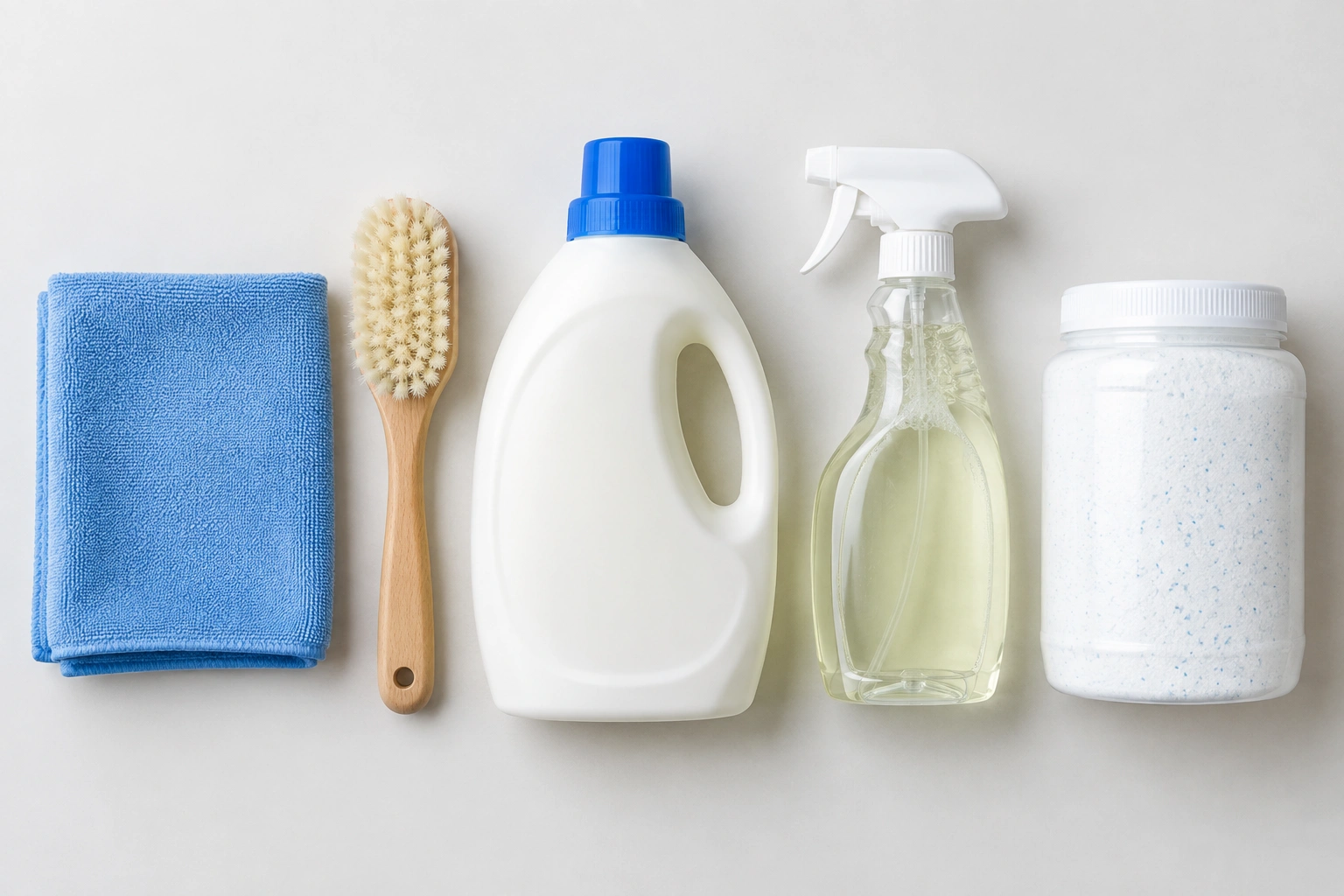
Keep the setup basic:
- Laundry detergent
- Liquid dish soap
- Enzyme-based stain remover
- Oxygen bleach, if the care label allows it
- Clean microfiber cloths or paper towels
- A soft brush, like a soft toothbrush
- A clean bowl or sink for soaking
- Cool or cold water
- Optional: rubbing alcohol for ink stains
That’s enough for most polyester stains. You do not need aggressive scrubbing tools. A soft brush and a microfiber cloth give you control without roughing up the fabric surface.
If you’re treating a travel item with zippers, straps, or coated sections, use the same supplies but less liquid. Too much product can collect in seams and take longer to rinse out.
Do not use on polyester before stain removal unless the care label specifically allows it:
- High heat
- Chlorine bleach
- Harsh scrubbing
- Strong solvents
If a stain truly calls for a solvent or more aggressive method, test a hidden area first and stop if the fabric reacts badly.
Check the Stain and Test the Fabric First
Before applying anything, look at the stain under good light. Fresh coffee, sauce, or makeup usually sits on the surface at first. Oil often leaves a darker patch. Sweat can show as yellowing or a salty ring. Ink usually looks obvious, but it can spread if you add too much liquid too fast.
Then test your cleaner on a hidden area: inside hem, under a flap, or near a seam. Apply a tiny amount, wait a few minutes, then blot with a clean cloth. If the fabric loses color, turns dull, feels sticky, or the color transfers to the cloth, stop and choose a milder method.
This test matters most on printed polyester, dark polyester, and luggage linings where color transfer is easy to miss.
How to Remove Fresh Stains from 100% Polyester
When the stain is fresh, act in this order:
-
Lift off solids first.
Scrape away food or residue with a spoon or the edge of a card. Don’t grind it into the fibers. -
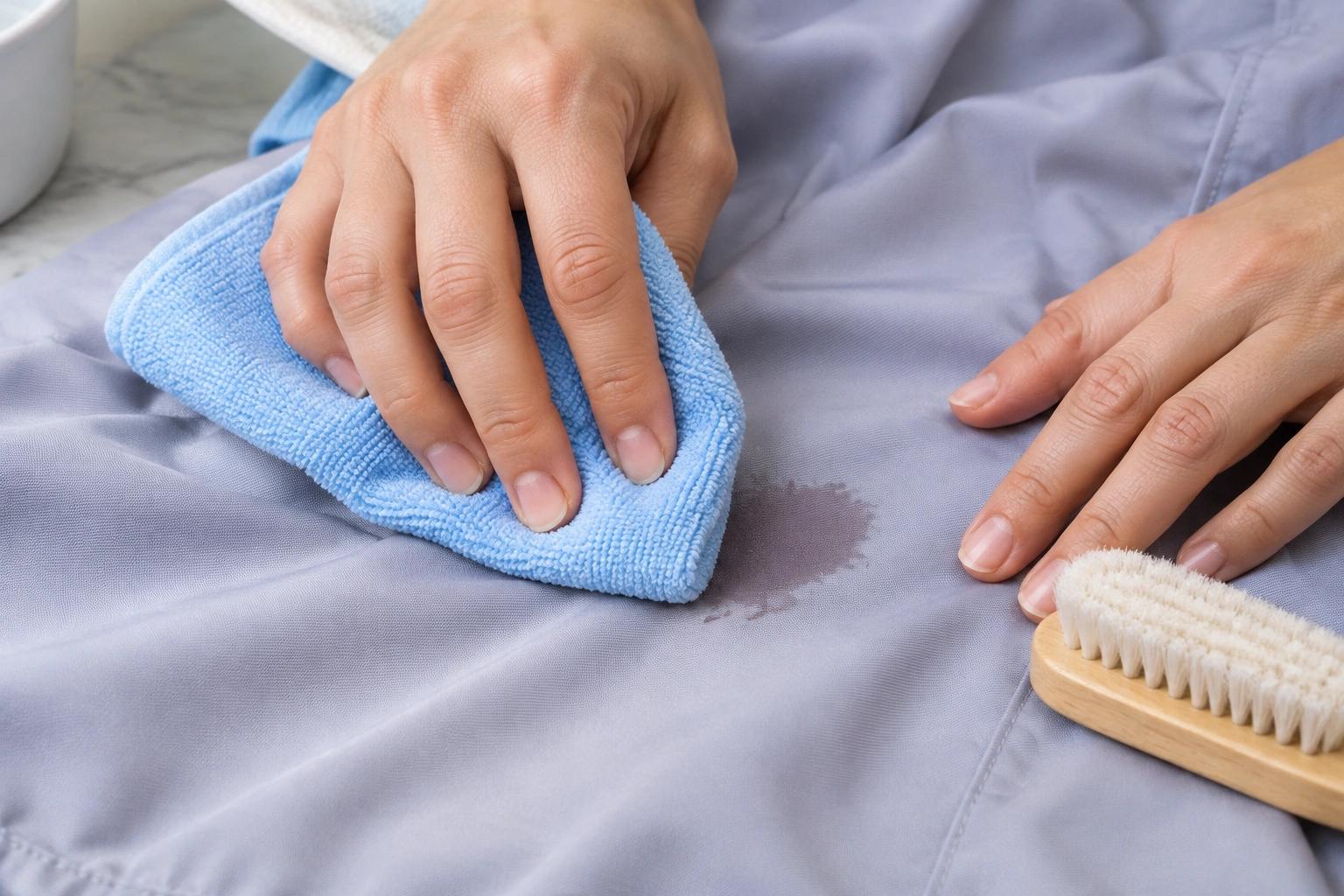
Blot liquids gently.
Use a clean cloth or paper towel and press from the outside of the stain toward the center. That keeps the stain from spreading. -
Rinse with cold water.
Flush the back of the stain if possible. Cold water is the safer default on polyester because hot water can set some stains. -
Choose the right next step.
- Spot treat small, localized stains with detergent, dish soap, or a stain remover matched to the stain type.
- Soak only if the care label allows it and the stain is set in or spread through a larger area.
-
Machine wash if the item is washable and the stain has already been pre-treated, or if the whole item is dirty.
-
Let the cleaner sit briefly.
Give the product time to work before rinsing or washing. If the label gives a dwell time, follow that. -
Wash according to the care label.
Use the warmest water the label allows, but do not move to warm or hot water unless the care label permits it. -
Check the stain before drying.
If any trace remains, repeat the treatment once more before using the dryer.
That sequence follows the same logic used in polyester care guides: remove excess, pre-treat, wash, then inspect. It’s simple, but it prevents the most common mistake, which is locking the stain in with heat.
How to Treat Oil, Food, Ink, Makeup, and Sweat Stains
Different stains need different first moves. Here’s the practical version.
Oil and Grease
Oil clings to polyester fibers, so plain water usually won’t move it. Put a small amount of liquid dish soap or laundry detergent directly on the stain, gently work it in, and let it sit for 5 to 10 minutes before washing. Dish soap helps because it’s made to break up greasy residue.
If the stain is on a backpack strap or luggage handle cover, blot the excess first so you don’t push oil deeper into padding or stitching. If the stain is still visible after washing, repeat the pre-treatment once before drying.
Food and Sauce
For food stains, remove solids first, then use detergent or an enzyme cleaner. Let it dwell for about 5 to 15 minutes, depending on the product label. Enzyme cleaners are especially useful when the stain contains protein or starch. If the stain is colorful, like tomato sauce or curry, don’t assume it’s gone just because the texture disappeared. The color can remain after the residue is lifted.
If a fresh food stain is still visible after the first wash, repeat the pre-treatment and wash again before moving to stronger methods.
Ink
Ink needs caution. Dab, don’t scrub. Put a clean towel under the stain, then apply a small amount of rubbing alcohol to a cotton pad or cloth and blot the mark for a few seconds at a time. Stop and switch directions as the ink transfers to the cloth. Test first because alcohol can affect dyes and printed surfaces.
Work from the outside of the stain inward so you don’t create a halo. If the stain lightens but doesn’t disappear, repeat the blotting once or twice, then rinse with cold water and wash if the care label allows it. If the fabric starts to dull or bleed color, stop home treatment.
Makeup
Foundation, lipstick, and mascara often contain oils and pigments. Start with a dry blot to remove what you can, then use dish soap or detergent. Let it sit for 5 to 10 minutes, then blot again with cold water before washing. If the stain is oily, a second round may be needed before washing.
Don’t scrub makeup stains aggressively. That usually spreads the pigment instead of lifting it. If the stain remains after one wash, repeat the spot treatment once more and check again before drying.
Sweat
Sweat stains are often a mix of body oils and salt. A detergent wash may handle fresh marks, but older sweat stains can need an enzyme cleaner or oxygen bleach if the care label allows it. Apply the cleaner, let it sit for 10 to 15 minutes, then wash according to the label. If the stain is still visible, repeat the treatment once or twice before deciding it needs professional help.
Hand Washing vs. Machine Washing Polyester
Use hand washing when the item is small, delicate, or only lightly stained. It gives you more control over the stain area and reduces wear on seams, trims, and coatings. That makes sense for a polyester cosmetic pouch, a lightly soiled lining, or a commuter bag panel.
Use machine washing when the whole item is dirty or the stain is part of broader soiling. A full wash is usually more efficient for polyester clothing or washable gear, as long as the care label allows it.
Here’s the trade-off:
- Hand washing is slower but safer for small, targeted stain work.
- Machine washing is faster and better for overall cleaning, but it can miss a spot if you didn’t pre-treat first.
For a set-in stain, I often do both: spot treat first, then wash. That gives the cleaner a head start.
What Water Temperature and Stain Removers Are Safe for Polyester
Cold water is the safest default for the first rinse and for many spot treatments. It helps prevent heat from setting the stain before you’ve had a chance to remove it.
Use this simple rule set:
- Cold water for the first rinse and most spot treatments
- Warm water only when the care label allows it
- No hot water unless the care label specifically permits it
When it comes to cleaners:
- Laundry detergent is the baseline choice for most stains.
- Enzyme cleaners are strong for food, sweat, and other organic stains.
- Oxygen bleach can help with stubborn discoloration if the label allows it and the item is colorfast.
- Chlorine bleach is the risky one. Avoid it unless the care label explicitly says it’s safe.
For colored polyester, use oxygen bleach carefully and only if the item is colorfast and the label allows it. Test a hidden area first, and stop if the color fades or the fabric looks dull.
If you’re deciding between enzyme cleaner and oxygen bleach, think of it this way: enzyme products are usually better for stain breakdown, while oxygen bleach is more useful for broader brightening and stubborn residue. Neither is a universal fix.
Common Mistakes That Make Polyester Stains Worse
A few habits cause most polyester stain failures:
- Using hot water too early. This can set some stains.
- Rubbing hard. That can push the stain deeper and fuzz the surface.
- Drying before checking. Dryer heat can lock in what’s left.
- Using chlorine bleach casually. It can damage color or fabric finish.
- Overloading with product. Too much cleaner leaves residue that attracts dirt later.
- Giving up after one wash. Some stains need repeated treatment.
If you’ve ever had a coffee mark disappear halfway in the wash and then reappear after drying, that’s usually a sign the stain wasn’t fully removed before heat was applied.
How to Handle Old or Set-In Stains
Old stains are harder, but they’re not automatically permanent. The approach changes a little.
Soak the item in warm water and detergent if the care label allows it. That can loosen the stain before you pre-treat. Then apply the cleaner again and wash. If the stain is still visible, repeat the cycle rather than escalating to harsher chemicals right away.
A good rule is to try two to three careful home-treatment cycles. If the stain is still clearly there after that, stop home treatment and consider professional cleaning. That’s especially true if the item is delicate, coated, structured, or valuable.
If the stain is on a favorite travel shirt or a bag panel you use every day, I’d rather see two careful treatments than one aggressive attempt that damages the fabric.
Cleaning Polyester Backpacks, Luggage Linings, and Gear
Polyester clothing and polyester gear are not treated exactly the same. Backpacks, tote bags, and luggage linings usually need spot cleaning instead of full immersion.
For gear:
- Empty the item completely.
- Vacuum crumbs or loose debris first.
- Blot the stain with a damp microfiber cloth.
- Use a small amount of detergent or stain remover.
- Avoid soaking foam, cardboard-backed panels, or glued sections.
- Let it air dry fully with pockets open.
A polyester backpack strap stained with coffee, for example, can usually be handled like clothing. But a suitcase lining with a cardboard support panel should not be soaked the same way. If the item has coatings, padding, or bonded layers, use less liquid and more blotting.
For travel gear care, manufacturer guidance matters. Brands like Samsonite and TUMI often provide product-specific care notes because not every shell, lining, or trim behaves the same way.
When to See a Luggage Repair Specialist
Bring it to a professional if:
- The stain is on a delicate, structured, or coated item
- The polyester is bonded to foam, leather, or a printed finish
- The stain keeps returning after two to three careful home attempts
- The item has water damage, odor, or hidden residue inside seams
- The bag or suitcase is valuable enough that a mistake would be costly
That’s especially true for luggage linings, premium backpacks, and travel gear with special construction. A repair specialist can often tell whether the issue is a stain, dye transfer, adhesive bleed, or material damage. Those look similar at first glance, but they don’t respond to the same treatment.
FAQ
Can I use hot water on 100% polyester?
Not as a first move. Cold water is safer for rinsing and pre-treatment. Warm water can help in some cases, but hot water can set certain stains unless the care label specifically allows it.
What stain remover is safe for polyester?
A mild laundry detergent, an enzyme-based stain remover, or oxygen bleach if the care label allows it are common safe choices. Always test on a hidden area first.
Will bleach damage polyester?
Chlorine bleach can damage color or fabric finish, so avoid it unless the care label specifically says it’s safe. Oxygen bleach is generally the safer option when permitted by the label.
Can I put polyester in the dryer after stain treatment?
Only after the stain is fully gone. Dryer heat can make remaining stain residue much harder to remove.
Is hand washing better than machine washing?
Hand washing gives you more control for small stains or delicate items. Machine washing is better for larger, washable items that need a full clean. For many stains, a spot treatment before either method is the best path.
How long should stain remover sit on polyester?
Follow the product label. If there isn’t a specific time, a short soak or wait is usually better than scrubbing aggressively. Repeating a gentle treatment is often safer than overdoing it once.
Can old stains still come out?
Sometimes, yes. Old stains may need soaking, repeat pre-treatment, and more than one wash. Some stains, especially if heat-set, may not fully disappear.
Do polyester blends need different care?
Yes, sometimes. A blend may include fibers that react differently from 100% polyester, so the care label should guide you before you choose water temperature or cleaner.
Should I use the same method on a backpack lining?
Use the same stain logic, but less liquid. Spot clean first, avoid soaking glued or padded sections, and let the item dry completely before using it again.
When should I stop trying at home?
If the stain is still there after two to three careful attempts, the item is delicate, or the construction is specialized, it’s time to get help rather than keep escalating.