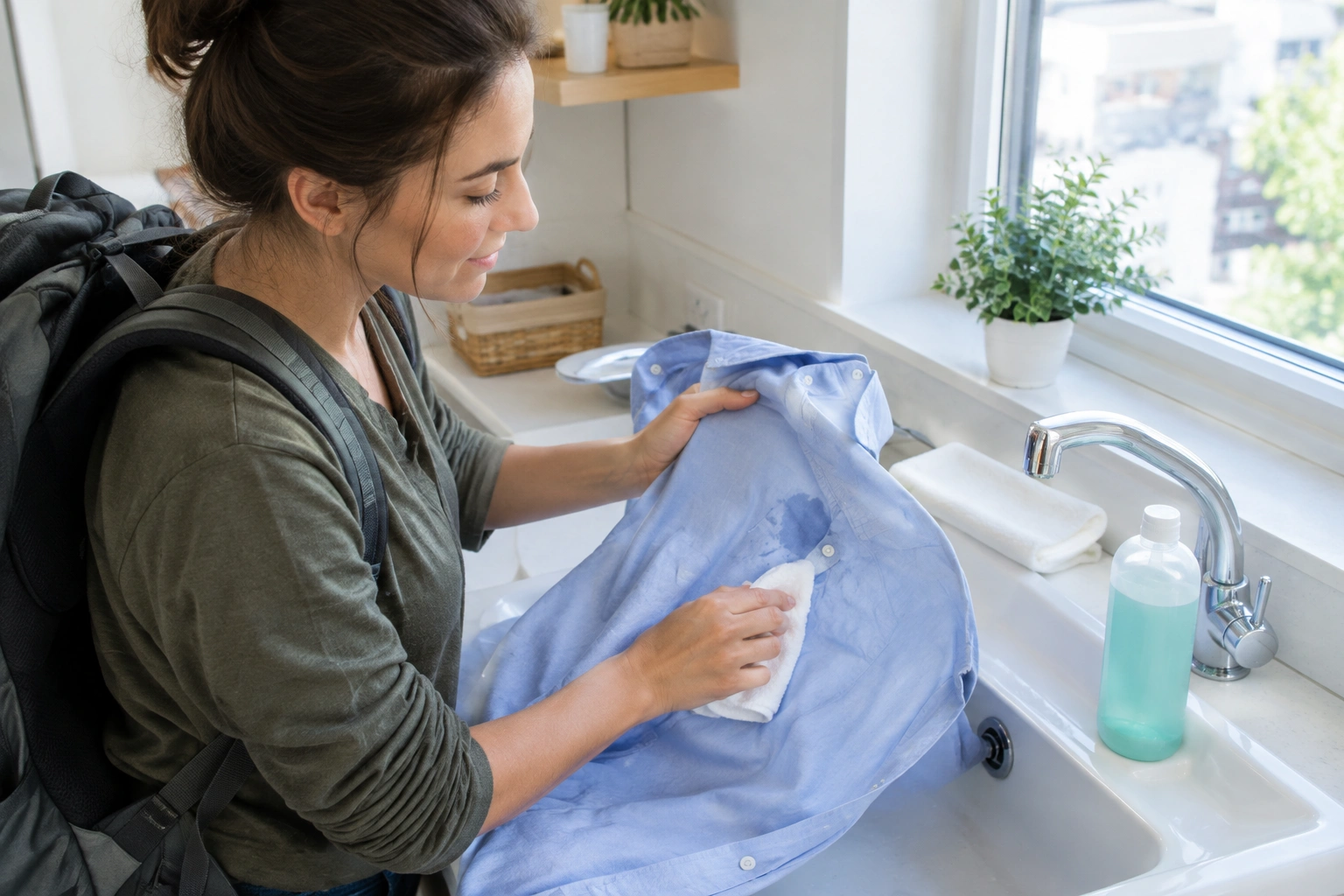
How to Remove Stains from Polyester Without Damaging the Fabric

Polyester is forgiving in some ways and annoying in others. It usually shrugs off liquids better than cotton, but once a stain grabs hold—especially oil, dye, ink, or body oils—it can cling to the fibers and survive a normal wash. The safest approach is simple: identify the stain, blot instead of rubbing, pre-treat with the right cleaner, wash according to the care label, and keep heat out of the picture until the stain is gone.
If you remember only one rule, make it this: do not dry polyester with the stain still visible. Dryer heat can set many stains and make them much harder to remove later, including low-heat tumble drying. That matters whether you are dealing with a work shirt, a school uniform, a travel pouch, or a backpack panel.
Quick Answer: Safest Way to Remove Stains from Polyester
For most fresh stains on polyester:
- Blot up as much as possible with a clean cloth or paper towel.
- Match the cleaner and water temperature to the stain type.
- Pre-treat before washing.
- Wash according to the care label.
- Air-dry first and check the stain before using any dryer.
A simple decision guide:
- Oil or grease: Use dish soap or a grease-fighting stain remover. Start with cool water; use lukewarm water only if the care label allows it and the stain is still oily after pre-treatment.
- Ink or dye transfer: Use a stain-specific spot treatment such as rubbing alcohol for ink or a color-safe laundry stain remover for dye transfer. Use cool water unless the product label says otherwise.
- Protein stains like blood, sweat, or body soil: Start with cold water. If the care label allows, you can move to cool or lukewarm water after the first rinse and pre-treatment.
- Food and drink stains: Start with cool water. If the stain is oily, treat it like grease first.
That sequence is usually safer than guessing because polyester blends, finishes, and coatings can behave differently from one item to the next. A stain-specific approach is often more reliable than a single all-purpose spray.
What You Need Before You Start
Gather these before treating the stain:
- Clean white cloths or paper towels
- Mild laundry detergent
- Dish soap for grease or oil
- A polyester-safe stain remover
- Cold water
- A soft toothbrush or cloth for gentle agitation
- A hidden spot for testing the cleaner
- A sink or basin if the item is hand-washable
If the item is a backpack, rain jacket, or coated gear, keep the setup gentle. Zippers, seam tape, water-resistant coatings, and printed logos can react differently than plain fabric.
Check the Care Label and Identify the Stain Type
The care label decides the guardrails. If it says hand wash only, stick to hand cleaning. If it allows machine washing, you can usually pre-treat and then launder normally.
Then identify the stain using a simple rule:
- If it feels greasy or came from food, sunscreen, makeup, or oil, treat it as an oil-based stain.
- If it came from blood, sweat, or body soil, treat it as a protein-based stain.
- If it came from ink, marker, dye transfer, or a colored spill that left a ring, treat it as a dye-based stain.
This matters because different stain types respond to different cleaners and water temperatures. Water-based and oily stains do not behave the same way on every polyester item, especially when the fabric has a finish or coating.
Test the Cleaner on a Hidden Area First
Before using any cleaner, test it on a hidden seam, inside hem, or underside of a strap. Wait for it to dry, then check for discoloration, dulling, or texture change.
This step is especially important for:
- Bright colors
- Polyester blends
- Coated or water-resistant items
- Printed graphics
- Structured luggage panels
A cleaner that is fine on a plain shirt can still soften a coating or fade a trim panel. If the test spot changes, stop and choose a gentler method.
Step-by-Step: How to Remove Fresh Stains from Polyester
1) Blot first, don’t rub
Press a clean cloth or paper towel onto the stain to lift as much as possible. Rubbing spreads the stain and can push residue deeper into the weave.
For solids like sauce or mud, lift off the excess with the edge of a spoon or dull knife before blotting.
2) Rinse with cool water from the back
If the stain is water-based and the care label allows it, run cold water through the back of the fabric. This helps push residue out instead of driving it in.
Cold water is usually the safest first choice. Warm or lukewarm water can help with some oily or greasy stains after pre-treatment, but too much heat too early can make certain stains harder to remove.
3) Apply a small amount of detergent or stain remover
Use a little mild liquid detergent directly on the stain, or a stain remover made for laundry fabrics. For grease, dish soap is often the better first move.
Work it in lightly with your fingers or a soft cloth. The goal is coverage, not force.
4) Let it sit
Give the cleaner time to work. Follow the product label rather than guessing. Short dwell time is fine for fresh stains; stubborn stains may need a second treatment later.
5) Rinse and inspect
Rinse the treated area thoroughly. Check whether the stain has faded, changed color, or disappeared. If you still see a mark, repeat the pre-treatment before washing.
6) Wash according to the care label
If the item is machine-washable, wash it using the temperature the label allows. If the stain is still oily, a normal wash may not be enough, but it should follow pre-treatment.
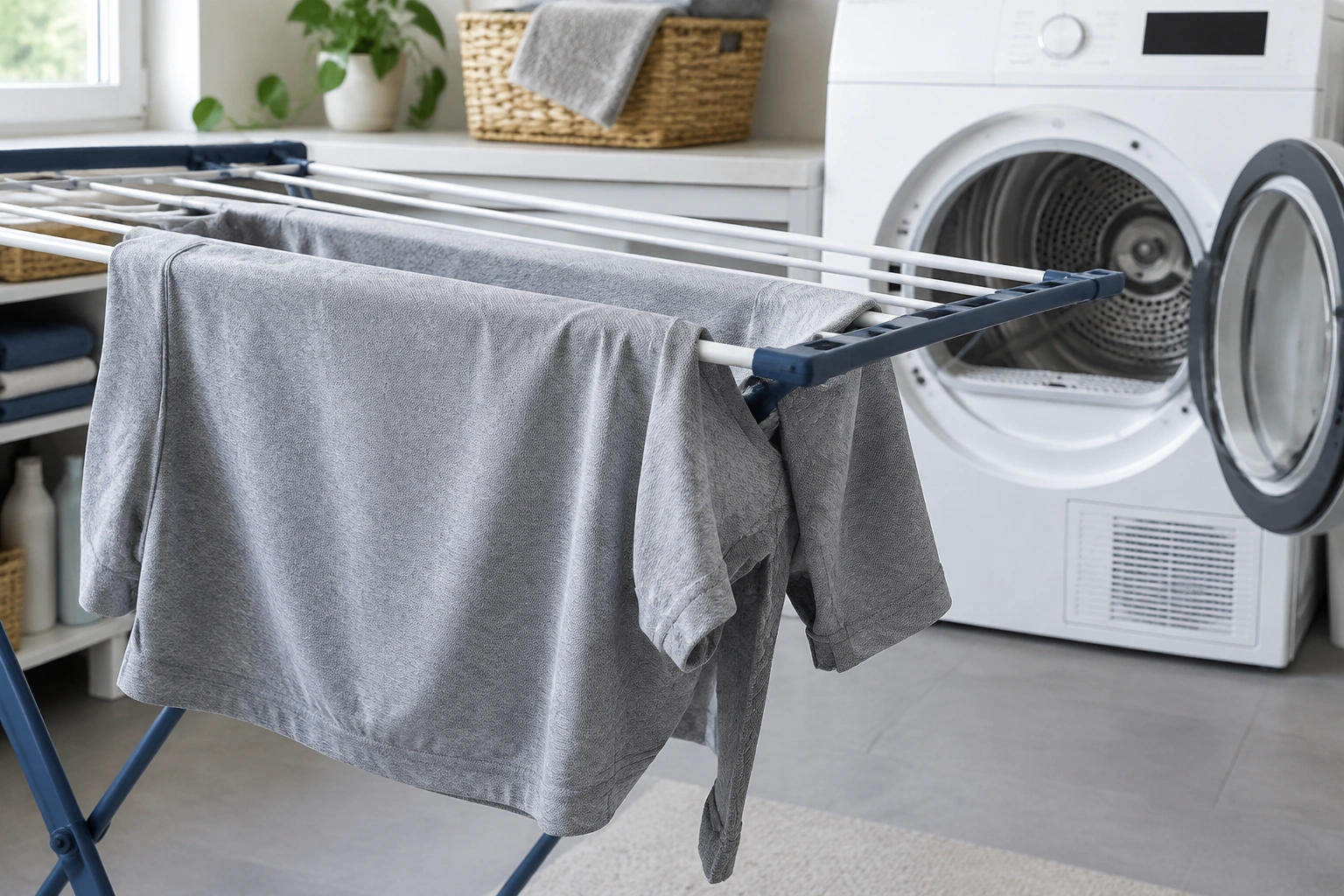
7) Air-dry until you know the stain is gone
Check the fabric before using the dryer. If any trace remains, treat it again. Once heat hits a stain, you may be stuck with it.
How to Treat Common Polyester Stains
Here is the practical match-up I use when deciding what to try first.
| Stain type | Best first cleaner | Water temperature | Notes |
|---|---|---|---|
| Grease or oil | Dish soap or grease-fighting stain remover | Cool to lukewarm | Blot first; rinse after pre-treatment and repeat if needed |
| Coffee or tea | Mild detergent or stain remover | Cool | Rinse from the back if possible |
| Sweat or body soil | Enzyme-based detergent or stain remover | Cold first, then cool to lukewarm if label allows | Pre-treat before washing; repeat for collar or underarm buildup |
| Ink | Rubbing alcohol or ink remover | Cool | Dab carefully; do not soak the whole item |
| Makeup | Dish soap or mild detergent | Cool | Good for oily foundation and sunscreen |
| Blood | Cold water plus enzyme cleaner or detergent | Cold only at first | Rinse first, then pre-treat; heat can set protein stains |
| Dye transfer | Stain remover, then rewash | Cool | If safe for the fabric, color-safe oxygen bleach may help |
Grease and oil
For a backpack strap, lunch spill, or sunscreen mark, dish soap is often the quickest first choice. Apply it directly to the stain, let it sit, then rinse and wash. If the stain is still visible, repeat the treatment before drying.
Coffee and food stains
Use mild detergent or a stain remover, then rinse and launder. For sauces or mixed food stains, lift solids first. If the stain has both color and oil, treat it like a combination stain: detergent first, then a second wash if needed.
Sweat and body soil
These stains often show up on collars, cuffs, and underarm zones. Rinse first with cold water if the care label allows it, then pre-treat with an enzyme-based detergent or stain remover. If the item is machine-washable, wash it after pre-treatment and repeat if the stain remains.
Ink
Ink needs a different approach. Dab with rubbing alcohol on a cloth, working from the outside inward so the stain does not spread. This is one of the few cases where a spot treatment with alcohol can be useful on polyester, but always test first. Do not soak the whole item unless the product directions say it is safe.
Makeup
Makeup is usually oily, so dish soap often does the heavy lifting. If the stain is foundation or sunscreen, treat it like grease, not like a water stain. Rinse after pre-treatment and repeat if a shadow remains.
Blood
Use cold water first. Rinse as soon as possible, then follow with an enzyme cleaner or detergent. Avoid hot water at the start; protein stains can set quickly. If the stain is old, repeat the cold-water rinse and pre-treatment before washing.
Fresh Stains vs. Set-In Stains
Fresh stains usually respond to one round of blotting, pre-treatment, and washing. Set-in stains need more patience.
Fresh stains
- Treat immediately
- Use the gentlest cleaner that fits the stain
- Wash once before escalating
Set-in stains
- Repeat pre-treatment
- Let the cleaner sit a little longer, within the product directions
- Use a stain-specific product instead of general detergent alone
- Wash again before drying
If a stain has already been through the dryer, expect slower results. You may need two or three rounds of treatment. That is normal for old grease, dye transfer, or body soil on polyester.
Drying Rules: When You Can Use the Dryer and When to Air-Dry
Air-dry first unless you are sure the stain is gone. That is the safest rule.
Why it matters: dryer heat can set a stain into the fibers. This is especially frustrating with oily stains, which may look faint while wet and then show up again after drying.
Use the dryer only when:
– The stain is fully gone
– The care label allows tumble drying
– The item is not coated, laminated, or heat-sensitive
Air-dry when:
– You still see any shadow or ring
– You are treating a delicate polyester blend
– The item has waterproofing, print, or structure you do not want to stress
Common Mistakes That Can Ruin Polyester
These are the errors that cause the most trouble:
- Using hot water too early on blood, sweat, or dye transfer
- Rubbing hard, which spreads the stain and can fuzz the surface
- Putting the item in the dryer before the stain is gone
- Skipping the hidden-area test
- Using chlorine bleach without checking the label
- Overusing cleaner, which can leave residue and attract more dirt
- Treating every stain the same way, even when the stain type is obvious
Chlorine bleach is the one I would be most cautious about. Polyester can be sensitive to harsh chemicals, and bleach can discolor fabric or damage finishes. Oxygen bleach is often the safer option for colorfast items, but the care label still wins.
Troubleshooting Stubborn or Old Stains
If the stain remains after one wash, do this next:
- Reapply the most appropriate cleaner.
- Let it sit for the full recommended time.
- Wash again before drying.
- Switch cleaners if the stain type suggests a better match.
Examples:
– Grease still visible? Try dish soap again before a second wash.
– Ink still faint? Repeat the alcohol dab on the exact spot.
– Dye transfer still present? Use a color-safe oxygen bleach soak if the fabric allows it.
If the stain is old and large, or if the fabric finish is delicate, stop escalating once the cleaner starts affecting the fabric more than the stain. At that point, repeated home treatment can do more harm than good, especially on coated, printed, or structured items.
Special Cases: Polyester Blends, Coated Fabric, and Delicate Gear
Not all polyester items are plain washable fabric.
Polyester blends
Blends can behave differently from 100% polyester. A cotton-poly shirt may absorb water more readily than a slick performance fabric, so test first and keep the first treatment gentle.
Coated or water-resistant polyester
Backpacks, rain jackets, and luggage panels may have coatings or laminations. Use minimal liquid, avoid soaking, and skip aggressive scrubbing. A hidden-area test matters even more here.
Structured gear
If you are cleaning a bag panel, shoulder strap, or molded section, use a damp cloth rather than soaking the whole piece. Too much moisture can affect foam, adhesives, or seam tape.
Vinegar and Baking Soda on Polyester: Safe or Useful?
Vinegar is generally safe on many polyester items when diluted, but it is not always necessary. It may help with odor or light residue, yet it is usually not the best first choice for grease, ink, or dye transfer.
Baking soda is also commonly used, but it is often unnecessary for routine polyester stain removal. It can help as a mild deodorizing paste in some cases, but it is not a substitute for a stain-specific cleaner.
Avoid vinegar or baking soda if:
– The care label forbids spot treatments or soaking
– The item is coated, laminated, or water-resistant
– You are dealing with a stain that needs a targeted cleaner, such as ink or grease
– You have already tested a better option, like dish soap, detergent, or an enzyme cleaner
If you use either one, test first and rinse well. For most stains, a stain-specific product is more effective and less fussy.
When to See a Luggage Repair Specialist
See a professional cleaner or luggage repair specialist when:
- The item is expensive or hard to replace
- The stain covers a large area
- The fabric has a coating, print, or bonded layers
- The stain remains after two or three careful attempts
- The item also has seam damage, peeling coating, or odor trapped in padding
- You are unsure whether the cleaner is affecting the fabric finish
That is especially true for travel bags and commuter gear. A stain on a panel is one problem; a stain plus damaged coating can become a bigger repair issue.
Final Takeaway
The safest way to remove stains from polyester is to match the cleaner to the stain, use the lightest effective method first, and keep heat out until the stain is fully gone. Blot, test, pre-treat, rinse, wash, and air-dry before you commit to the dryer. If you treat polyester with that sequence, you protect both the fabric and the item’s finish.