
How to Remove Stains from Silk Shirts Without Damaging the Fabric

Silk is beautiful, but it behaves differently from most shirt fabrics. Treat it like a delicate travel garment, not a work shirt you can scrub hard and hope for the best. The safest approach is to act quickly, use the least aggressive cleaner that fits the stain, and stop before the fabric starts to change.
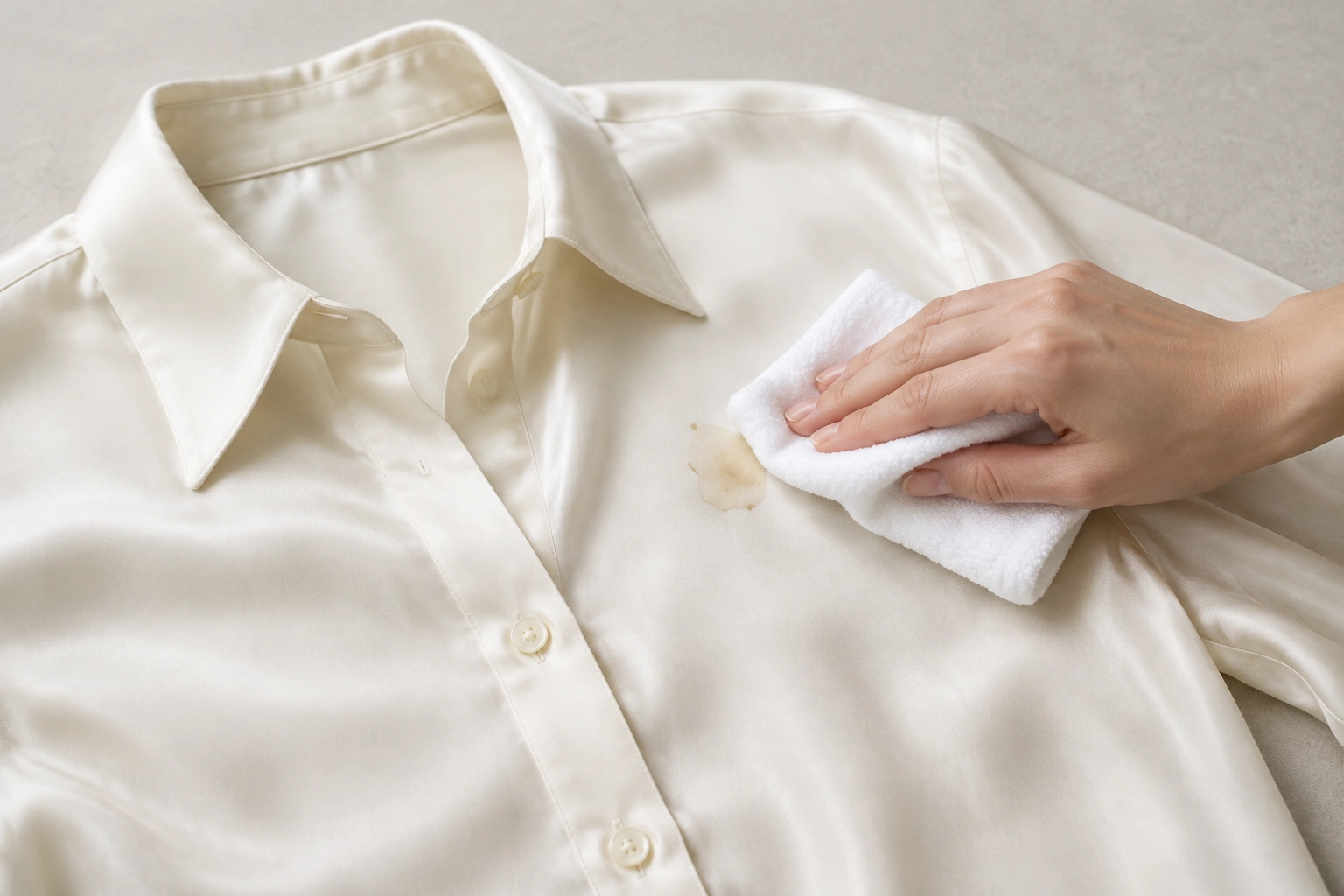
If the shirt is labeled dry clean only, heavily dyed, vintage, embellished, or already fragile, your first move should be caution, not force. For washable silk, many fresh stains can be managed at home if you blot carefully and keep heat away. Persil notes that a dried stain becomes much harder to remove, and Tide Cleaners recommends dabbing rather than rubbing because rubbing can spread the stain and damage the fabric. That’s the basic rule set for silk: gentle, local, and patient. For broader garment-care guidance, TSA’s packing rules also remind travelers how easily liquids and spills happen in transit, which is why fast first aid matters.
Can You Remove a Stain from a Silk Shirt at Home?
Yes, sometimes. But not every stain should be handled the same way.
A fresh coffee splash on washable silk is a very different problem from an old wine stain on a dry-clean-only blouse. Home treatment is usually most reasonable when:
- the stain is fresh
- the area is small
- the shirt is washable silk
- the fabric is not heavily embellished or vintage
- the color has not already started lifting
Dry cleaning is the safer route when:
- the label says dry clean only
- the stain is large or deeply absorbed
- the silk is dark, bright, or prone to color bleed
- you’re dealing with a delicate finish, embroidery, beading, or a structured garment
- your first attempt caused water spots, texture changes, or color loss
A good decision rule: if you can’t identify the stain, or if the shirt looks expensive enough that a mistake would bother you, stop early and let a professional handle it. That trade-off matters on silk. A cautious home attempt can save the shirt, but an aggressive one can leave a permanent mark.
Quick decision table
| Stain type | Safe first move | Use water? | Best next step | Stop DIY if… |
|---|---|---|---|---|
| Fresh coffee, tea, juice | Blot immediately | Yes, lightly | Gentle silk-safe cleaner or diluted mild detergent | Color lifts or stain spreads |
| Oil, salad dressing, makeup | Absorb with powder first | Usually no at first | Cornstarch, talc, or baking soda before spot cleaning | Stain sets into the weave |
| Sweat | Gentle spot cleaning | Often yes | Mild detergent, then careful rinse | Fabric turns dull or uneven |
| Wine or dye-like spills | Blot, then test carefully | Sometimes | Professional cleaning is often smarter | Stain is large or already dry |
| Unknown stain | Blot only | Not yet | Spot test a cleaner in hidden area | You can’t confirm fabric safety |
What You’ll Need Before You Start
Keep the setup simple. Silk responds better to restraint than to a crowded cleaning kit.
Gather:
- clean white cloths or paper towels
- a small bowl of cold water
- mild detergent made for delicate fabrics, or a very small amount of gentle liquid detergent
- a small amount of white vinegar or lemon juice only if the care label and stain type make that reasonable, and only after spot-testing
- cornstarch, talc, or baking soda for oil-based stains
- cotton swabs for precise application
- a dry towel for pressing out moisture
- a hanger or flat drying surface
If you’re traveling, this can be as basic as a napkin, bottled water, and a clean handkerchief in your bag. That’s often enough to stop a spill from becoming a set stain before you get back to the hotel.
What to Do Immediately After the Spill
The first minute matters more than the first product.
- Lift off excess material first. If there’s food, sauce, or makeup sitting on the surface, gently remove what you can without pressing it deeper.
- Blot, don’t rub. Tide Cleaners specifically advises dabbing silk rather than rubbing. Rubbing can push the stain outward and rough up the fibers.
- Work from the outside in. This helps keep the stain from spreading into a larger halo.
- Keep heat away. No hair dryer, no radiator, no hot water. Heat can set stains and make silk more difficult to restore.
- Use the least amount of moisture possible. Silk does not like being soaked on the spot.
If you’re on a train, in a car, or at a gate, even a dry paper towel pressed lightly against the spill is better than waiting until later. Treat it as soon as possible because a fresh stain is much easier to manage than one that has dried.
How to Check the Stain Type and Fabric Label
Before you clean, identify two things: the stain and the shirt.
Read the care label first
If the label says dry clean only, treat that as a warning, not a suggestion. You may still blot a fresh spill, but full cleaning at home is a bigger risk.
Match the stain to the likely type
- Oil-based: salad dressing, makeup, skin oils, sunscreen
- Protein-based: sweat, some food residues, blood
- Dye-based: wine, coffee, tea, colored drinks, some sauces
That matters because oil usually needs absorption first, while dye-like stains often need careful lifting rather than scrubbing. Protein stains can be tricky on silk because aggressive treatment can affect the fabric before the stain is fully gone.
A practical rule
If the stain feels greasy, reach for powder first.
If it looks like liquid color, blot first and test a very gentle cleaner.
If it’s mixed, such as makeup plus oil, handle the oily part first and move slowly.
How to Spot-Test a Cleaner on Silk
Never apply a cleaner to the visible stain without testing it somewhere hidden.
Choose an inconspicuous spot:
– inside hem
– inside seam
– back of collar facing the body
Apply a tiny amount of your chosen cleaner with a cotton swab or corner of cloth. Wait until the spot is fully dry, or at least 10 to 15 minutes if it dries quickly, before judging the result. If the test spot shows any color change, dye transfer, dulling, roughness, or a water ring, stop. If it stays visually unchanged and the texture feels normal, the cleaner is more likely to be safe for that silk shirt.
This step saves shirts. On silk, a cleaner that seems mild can still leave a watermark, especially on dark or brightly dyed pieces. That’s why “safe for delicate fabrics” is not the same as “safe for every silk shirt.”
Step-by-Step: How to Remove Fresh Stains from Silk Shirts
This is the safest general method for a fresh, small stain on washable silk.
- Blot the spill immediately. Use a clean white cloth or paper towel and press lightly.
- If the stain is oily, apply absorbent powder first. Let cornstarch, talc, or baking soda sit on the area long enough to absorb surface oil, then gently brush it away.
- Spot-test your cleaner. Use a hidden seam before touching the visible stain.
- Apply a small amount of cleaner to the cloth, not directly to the shirt. That gives you more control.
- Dab the stain gently. Work from the outside edge inward.
- Lift residue with a clean damp cloth. Use cold water unless the care label says otherwise.
- Repeat only if the fabric stays stable. If the stain is fading and the silk still looks normal, a second pass may help.
- Press out moisture with a dry towel. Do not wring or twist the shirt.
- Dry away from heat and sunlight. Hang or lay flat depending on the garment shape.
A cautious amount of white vinegar or lemon juice may sometimes be used on certain stains, but only after spot-testing and only if the care label does not rule it out. They are not universal silk-safe cleaners.
How to Treat Common Silk Shirt Stains by Type
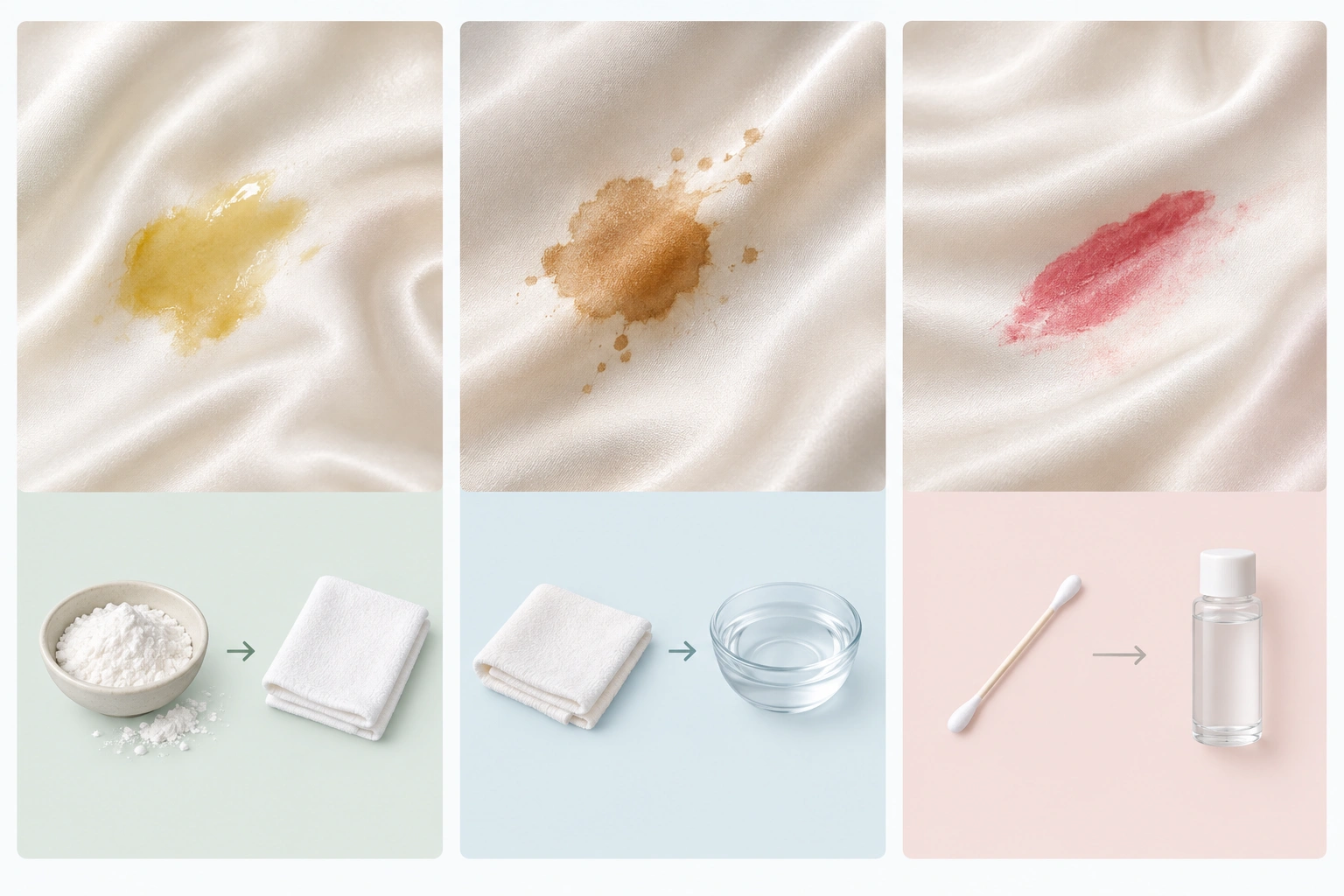
Oil stains
Think salad dressing, butter, foundation, or body oil.
For fresh oil, powder is your friend. Apply cornstarch, talc, or baking soda to the spot and let it sit so it can absorb surface oil. Brush it off gently, then only use a tiny amount of mild detergent on a damp cloth if residue remains. Start with no water, then use a little cold water only for the follow-up blotting stage.
Protein stains
Think sweat, blood, egg, or milk.
Use cold water, not hot. Blot first, then dab with a very mild detergent solution if needed. Do not scrub, because protein stains can drive deeper when handled roughly. If the stain is fresh, a small amount of cold water alone may help before any cleaner is added. If it is old or set, stop sooner and consider dry cleaning.
Dye stains
Think wine, coffee, tea, fruit juice, or colored sauces.
Blot immediately with no rubbing. Use cold water sparingly after the first blot if the stain is fresh, then test a gentle cleaner. Do not soak the silk, because excess water can spread the dye and leave a ring. If the stain is strong, dark, or already drying, a professional cleaner is often the better choice.
Makeup stains
Foundation and lipstick often combine pigment and oil.
Treat them like a mixed stain. First absorb any oily residue with powder, then spot clean the remaining color carefully with a mild detergent solution and a barely damp cloth. Use no water at first for the powder stage, then only a small amount of cold water for the cleanup stage. If the makeup stain is on a collar edge, work from the inside seam when possible so you don’t enlarge the visible spot.
Sweat stains
Sweat can leave yellowing or gray marks, especially around collars and underarms.
Use a mild detergent solution and dab lightly. Cold water is the safest choice for rinsing. Do not soak the whole shirt unless the care label and fabric condition make that appropriate. Sweat stains on silk are a good example of why patience matters: too much rubbing can damage the sheen before the stain fully lifts.
Food stains
Sauces, soup, and greasy food often behave like mixed stains.
First remove any solid residue. If the food is oily, start with powder. If it is colorful, blot with cold water and then use a gentle detergent solution only as needed. Avoid hot water, which can set certain food proteins and make the stain harder to remove.
Wine stains
Wine can behave like a dye stain, which is why silk and wine are not a friendly combination.
Blot immediately and avoid heat. Use cold water sparingly after blotting if the spill is still fresh, but do not keep re-wetting the spot. If the stain is strong or the shirt is dry clean only, a professional cleaner is often the safer choice. On silk, the risk of spreading the stain while trying to save it at home is real.
How to Rinse and Dry Silk Without Water Marks
Rinsing matters because leftover cleaner can leave a ring or dull patch.
Use the smallest effective amount of cold water to lift residue. If you’ve spot-cleaned a small area, avoid soaking only the center of the stain while leaving the edges dry; that’s how water marks happen. Feather the damp area outward with a clean cloth so the transition is gradual, or lightly dampen a slightly larger surrounding area if needed so the fabric dries evenly.
To dry:
– press moisture out with a dry towel from both sides of the fabric if possible
– reshape the shirt gently while it is still damp
– smooth the collar, cuffs, and seams back into place
– hang it only if the shirt is lightweight and won’t stretch; otherwise lay it flat on a dry towel
– keep it away from sunlight, heat, and the dryer
Do not leave a wet spot sitting in one place. If you lay the shirt flat, change the towel underneath if it becomes damp so moisture does not wick back into the silk and form a ring. If you hang it, support the weight evenly and avoid letting a heavy, wet section pull the fabric out of shape.
If the shirt dries with a faint ring, don’t panic and don’t re-wet it aggressively. At that point, a professional cleaner may be the better call.
Common Mistakes That Can Ruin Silk
Silk usually gets damaged by overconfidence, not by the stain itself.
Avoid these mistakes:
– rubbing the stain
– using hot water
– applying bleach
– using harsh stain removers meant for denim or workwear
– soaking the fabric too long
– twisting or wringing the shirt
– drying in direct sun or high heat
– putting it in the dryer before confirming the stain is gone
Bleach is too harsh for delicate silk. That’s a simple line worth remembering. If a product promises heavy-duty stain removal, it may be solving the wrong problem for this fabric.
Troubleshooting: When the Stain Won’t Come Out
If the stain is still there after a careful first attempt, do not escalate quickly.
If the stain spreads
You likely used too much liquid or rubbed too hard. Stop, let the shirt dry, and reassess before doing anything else.
If the color lifts
That’s a sign the fabric dye is reacting. Stop immediately. More cleaning can make the damage larger.
If the fabric feels rough or looks dull
The silk may have been overworked. Further rubbing usually makes the sheen worse.
If the stain is older and set
A dried stain is much harder to remove. At this point, home treatment becomes a gamble. A professional cleaner may still improve it, but the odds are lower than with a fresh spill.
When to Take a Silk Shirt to a Professional Cleaner
Take the shirt out of DIY mode if any of these are true:
- the label says dry clean only
- the stain is old or deeply set
- the shirt is vintage, expensive, or sentimental
- the fabric is embellished or delicate
- the stain is large
- your spot test caused color change
- the shirt already has water spots or sheen loss
- your first DIY attempt failed to improve the stain
- you see any color bleed while blotting or rinsing
That’s the point where safer beats cheaper. A professional cleaner can choose a treatment based on the actual dye, weave, and finish instead of a generic home method.
Practical Examples of Silk Stain Removal
Coffee on a commute
A commuter spills coffee on a silk blouse on the train. The best move is blotting with whatever clean absorbent material is available, then treating the spot as soon as possible once home. Waiting until the end of the day lets the stain settle.
Salad dressing while traveling
A traveler gets oil on a silk shirt at lunch. Powder first. Cornstarch or talc can help pull the oil out before any moisture is added. That is usually safer than immediately wetting the spot.
Makeup on a collar
A parent notices foundation transfer at the collar after changing clothes in a hurry. Test a cleaner on the inside seam, then dab the stain from the back side if possible. That keeps the visible edge cleaner.
Wine at dinner
A dinner guest gets red wine on silk. Blot at once, avoid heat, and don’t keep re-wetting the spot. If the stain is strong or the shirt is dry clean only, hand it off to a cleaner rather than chasing it with stronger products.
Silk rewards calm handling. If you treat the spill like a small problem instead of a laundry emergency, you give the fabric its best chance to recover.