
How to Remove Deodorant Stains from Clothes Without Damaging the Fabric

Deodorant stains are usually a mix of product residue, sweat, body oils, and sometimes antiperspirant salts. That matters because the fix depends on what you are actually seeing. A fresh white mark on a dark shirt is usually surface residue. A yellow underarm stain is more likely a deeper buildup that has bonded with sweat and oils over time.
That distinction is the difference between a quick wipe and a full pre-treatment. Treating both the same way often wastes time, and in some cases makes the stain harder to remove. Heat is the other big risk: once a stained shirt goes through the dryer, the residue can set in more firmly.
If you travel often or pack light, this comes up fast. A white streak on a black polo before a meeting, a yellow patch on a work shirt after repeated wear, or a deodorant mark on a hotel sink wash can all be handled at home if you choose the right method early.
Quick fix for fresh deodorant marks before you leave home
If you catch a fresh white mark right before heading out, use this fast workflow:
- Brush off loose residue with your hand, a soft cloth, or the edge of a card.
- Blot the spot with a little water on a tissue, napkin, or damp cloth.
- Wipe gently once more if residue is still visible.
- Let the area dry before putting the garment back on so you do not transfer more product to the fabric.
If you do not have laundry supplies, this is still worth doing. Even a quick blot can reduce the contrast enough to make the mark less noticeable until you can wash the item properly.
How to tell what kind of deodorant stain you have
The first decision is whether you are dealing with white residue or yellow discoloration.
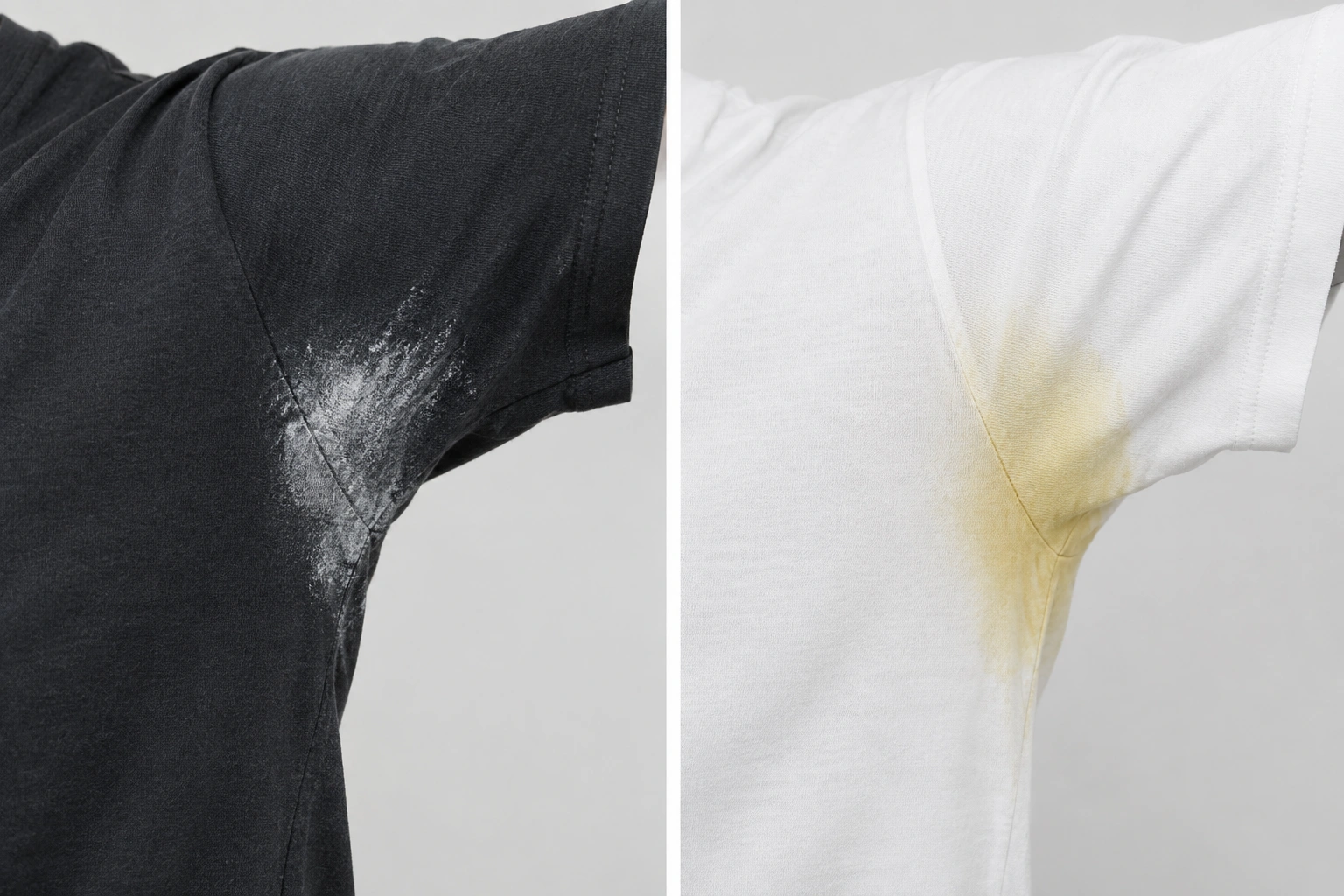
White marks
These are usually visible chalky streaks or smudges, especially on dark clothing. They often sit on the surface of the fabric and may come off with light friction, a damp cloth, or a mild pre-treatment.
Yellow underarm stains
These are older and usually more stubborn. They often show up on white or light shirts in the underarm area. The color is usually not just deodorant alone; it is typically a buildup of antiperspirant residue, sweat, and body oils that has had time to oxidize and bind to the fibers.
A useful rule: if the mark looks dusty or powdery, treat it as residue. If it looks embedded, discolored, or spread through the underarm area, treat it as a set-in stain.
What to do right away for fresh deodorant marks
For a fresh white mark, the goal is removal without pushing the residue deeper into the fabric.
Gently brush or scrape off any loose buildup first. Use a soft cloth, the edge of a credit card, or your fingertips if the fabric is sturdy. Avoid anything sharp, which can snag fibers.
If you are already out the door, a slightly damp cloth can often reduce the visibility of the mark enough to get through the day. Blot rather than scrub. Rubbing hard can spread the residue across a wider area, especially on knits and performance fabrics.
For dark shirts, this quick step often makes the biggest difference because the white contrast is what stands out. For light shirts, the mark may be less visible, but the buildup can still attract more dirt later if left untreated.
Best first-step stain removers to try at home
The safest first choice is usually the mildest one that can still lift the residue.
If you see fresh white residue on dark clothes
Start with gentle brushing or a damp cloth. If that does not remove enough, move to a mild liquid detergent pre-treatment. This is usually the least risky way to reduce the visible contrast without overworking the fabric.
If you have yellow underarm stains
Start with liquid detergent or a baking soda paste on washable cotton or blends. These are better starting points for deeper discoloration than a simple wipe. If the stain seems older or more stubborn, an enzyme-based stain remover may be a better next step on durable fabrics.
If the garment is delicate
Start with the mildest option only: a small amount of diluted detergent, applied gently, or professional cleaning if the care label is restrictive. Avoid strong scrubbing, strong chemicals, and long soaks unless the label allows them.
If the stain is greasy or oily
Use dish soap first. It is helpful when the mark includes body oils or a slick deodorant film. That makes it a practical first step for many cotton shirts and some synthetics.
If you want a simple home option for washable clothes
Baking soda paste is a common choice for localized deodorant buildup. It can be useful when you want to target the underarm area before washing, especially on light or white garments.
If you are considering a commercial stain remover
You can try a commercial remover after a mild home method if the stain does not improve, or first if the label specifically says it is safe for the fabric. The key is not the brand name but whether the product is compatible with the garment.
A practical decision rule:
- Fresh white residue on dark clothes: try gentle brushing or a mild detergent pre-treatment first.
- Yellow underarm stains on washable cotton: detergent or baking soda paste is usually a stronger starting point.
- Delicates or expensive garments: use the mildest option and test a hidden area first.
Comparison table: which method fits which stain?
| Stain type | Best first try | Works best on | Main caution |
|---|---|---|---|
| Fresh white residue | Gentle brushing, damp cloth, mild detergent | Dark shirts, cotton, synthetics | Do not rub hard |
| Yellow underarm stain | Detergent, baking soda paste, enzyme detergent | White or light washable clothes | May need repeat treatment |
| Greasy buildup | Dish soap or detergent | Cotton, blends, some synthetics | Rinse fully before washing |
| Delicate fabric stain | Spot test, mild detergent, professional cleaning if needed | Silk, wool, antique garments | Avoid scrubbing and strong chemicals |
| Stubborn set-in stain | Repeat pretreatment, enzyme detergent, possibly oxygen-based cleaner if label allows | Durable washable fabrics | Do not dry until fully gone |
Step-by-step: remove deodorant stains from washable clothes
This process is designed for shirts, tees, polos, and similar washable garments.
1. Check the care label
Before using any stain remover, confirm that the fabric can handle it.
2. Remove loose residue
If there is visible buildup, gently scrape or brush it away. Do not press residue deeper into the fibers.
3. Pre-treat the stained area
Choose one method:
- Liquid detergent: rub a small amount into the stain.
- Baking soda paste: make a thick paste with water and apply it to the mark.
- White vinegar: apply to the area if the fabric is compatible.
- Enzyme stain remover: useful for sweat-and-deodorant buildup on durable garments.
Keep the application localized. Soaking the whole shirt is not always necessary unless the stain is widespread.
4. Rinse or blot after pretreatment
After the pretreatment sits, rinse the area with cool or lukewarm water if the fabric can handle it. For delicate or color-sensitive items, blot with a damp cloth instead of rinsing aggressively. This helps remove loosened residue before the wash.
5. Wash the garment
Wash according to the care label:
- Cold or cool water is the safest default when you are unsure.
- Warm water can help some detergents work better on durable fabrics if the label allows it.
- Use a normal cycle for sturdy cottons and everyday washable clothes.
- Use a gentle cycle for delicates, knits, and anything that needs extra care.
6. Inspect before drying
This is the critical step. Do not put the item in the dryer until the stain is gone. Heat can set deodorant and antiperspirant residue, making it much harder to remove later.
7. Repeat if needed
If you still see a shadow of the stain, repeat the pretreatment before washing again. For stubborn marks, it is usually better to re-treat and rewash than to dry the item and lock the stain in.
How to treat yellow underarm stains and set-in buildup
Yellow underarm stains need a different mindset than fresh white marks. You are usually dealing with a deeper layer of residue, sweat, and body oils that has had time to bond with the fabric.
For these stains, a simple wipe is rarely enough. A stronger pre-treatment is usually better:
- Laundry detergent for general stain lifting
- Enzyme detergent for protein- and body-oil-related buildup
- Baking soda paste for localized underarm discoloration
- White vinegar as a soak aid on compatible washable fabrics
If the stain is old, expect to repeat the process. That is normal. The trade-off is time versus fabric wear: multiple gentle treatments are safer than one harsh scrubbing session.
For yellowing that seems set into the underarm area, a spot treatment may not be enough on its own. A short soak or repeated pretreatment can help loosen the buildup before washing. If the first wash only lightens the stain, treat it again before drying.
For white shirts, you may also need to treat both the visible stain and the surrounding underarm area, because the discoloration often spreads beyond the center of the mark.
How to clean deodorant stains on black, dark, and light clothes
Dark clothes make white residue obvious. Light clothes make yellowing more noticeable.
Dark clothes
Use the least aggressive method that removes the visible residue. Strong scrubbing can leave a faded patch or roughen the fabric surface. A damp cloth, mild detergent, or a gentle enzyme-based pre-treatment is usually better than a heavy-handed paste.
Light clothes
White and light-colored shirts can usually tolerate a broader range of stain removers, but yellow underarm stains often need a more targeted approach. Baking soda paste, detergent, or an enzyme cleaner may be more effective than a quick rinse.
Colored clothes
Test first. Some cleaners, especially hydrogen peroxide or stronger stain removers, may lighten or alter the color. A hidden seam or inside hem is the safest test area.
If you are traveling and only have a sink, treat dark shirts very carefully. A visible cleaner ring can be worse than the original deodorant mark.
Fabric-specific safety: cotton, synthetics, wool, and silk
Not all fabrics respond the same way.
Cotton
Cotton is usually the most forgiving. It can often handle detergent pre-treatment, baking soda paste, and repeat washing. It is a good candidate for more thorough stain removal.
Synthetics
Polyester and similar blends often hold deodorant residue on the surface, which can make white marks visible. They usually respond well to detergent and enzyme-based cleaners, but avoid overly hot water unless the care label allows it.
Wool
Wool needs caution. Aggressive rubbing, soaking, or strong cleaners can distort the fibers. Use the mildest method possible and consider professional cleaning if the piece is valuable.
Silk
Silk is even more delicate. Skip scrubbing and avoid harsh DIY mixtures unless the care instructions specifically allow them. A professional cleaner is often the safer choice for silk blouses or dresses.
If the item is delicate, antique, or especially valuable, professional dry cleaning may be the better option. That is especially true when the label is restrictive or the stain is already set in.
What to do if the stain is still visible after washing
If the stain remains after one wash, do not dry it.
Air-dry the garment and inspect it in good light. Dryer heat can lock the stain in further, which narrows your options later.
Then choose one of three paths:
- Repeat the same treatment if the stain is fading but still visible.
- Switch to a stronger compatible cleaner if the first method barely changed it.
- Stop and consult a professional if the fabric is delicate or the stain is on a valuable item.
A useful rule: if the stain improved but did not disappear, you are usually still in the safe zone for another gentle round. If the fabric itself looks stressed, faded, or rough, stop escalating.
How to prevent deodorant stains from coming back
Prevention is mostly about reducing buildup before it has a chance to bond with fabric.
Apply less product
Heavy deodorant application increases residue transfer. A thinner, even layer is less likely to leave visible marks.
Let it dry before dressing
If you put on a shirt while deodorant is still wet, more of it transfers to the fabric.
Wash shirts sooner
The longer deodorant and sweat sit in the underarm area, the more likely they are to discolor fibers over time.
Avoid fabric softener on problem garments
Fabric softener can leave a coating that makes buildup harder to remove later.
Rotate shirts
If you wear the same few shirts repeatedly, underarm buildup accumulates faster. Rotating them gives you a better chance to wash before stains become set in.
Choose the right deodorant for your wardrobe
Some formulas leave more visible residue than others. If white marks keep showing up on dark clothing, the issue may be the product application as much as the laundry routine.
When to Replace or Consult a Professional
Professional cleaning is worth considering when:
- the garment is silk, wool, antique, or otherwise delicate
- the care label limits water or stain treatment
- the stain has already been through a dryer and remains visible
- the item is expensive enough that a mistake would matter more than the cost of cleaning
For everyday cotton shirts, home treatment is usually the first move. For formalwear and delicate pieces, caution is the smarter choice.
Frequently Asked Questions
Can I use bleach on deodorant stains?
Only if the care label and fabric type allow it. Bleach can discolor, weaken, or damage some materials, so it is not a universal fix.
Is cold or warm water better?
Cold water is the safer default for the first attempt, especially if you are unsure about the fabric. Warm water may help some durable fabrics and detergents, but only use it when the care label permits it.
What if the stain is on a black shirt?
Treat it as visible residue first. Brush off loose buildup, then use a mild detergent or other gentle pre-treatment. Avoid harsh scrubbing that can leave a faded patch.
Can I mix vinegar, baking soda, and hydrogen peroxide?
Do not mix cleaning agents unless the product label explicitly says it is safe. Combining chemicals can reduce effectiveness or create avoidable risks.
Should I dry the shirt after the first wash if the stain is lighter?
No. Wait until the stain is gone. If there is still any visible trace, air-dry and treat it again.
Do commercial stain removers work better than home remedies?
Sometimes, especially on older buildup. But the fabric type matters more than the brand. A stronger cleaner is only useful if it is safe for the garment.
Deodorant stains are frustrating because they sit right where clothing gets the most friction, sweat, and repeated wear. The good news is that most of them are manageable if you identify the stain correctly, choose a fabric-safe cleaner, and keep the garment out of the dryer until the mark is gone.