
How to Clean Backpack Lining Without Damaging the Inside

If the inside of your backpack has crumbs, coffee drips, snack residue, or that stale “used too long” smell, the fix is usually simpler than people expect. The key is to clean the lining lightly and deliberately, not aggressively. Most damage happens when someone soaks the bag, scrubs too hard, or uses the wrong cleaner on a coated interior.
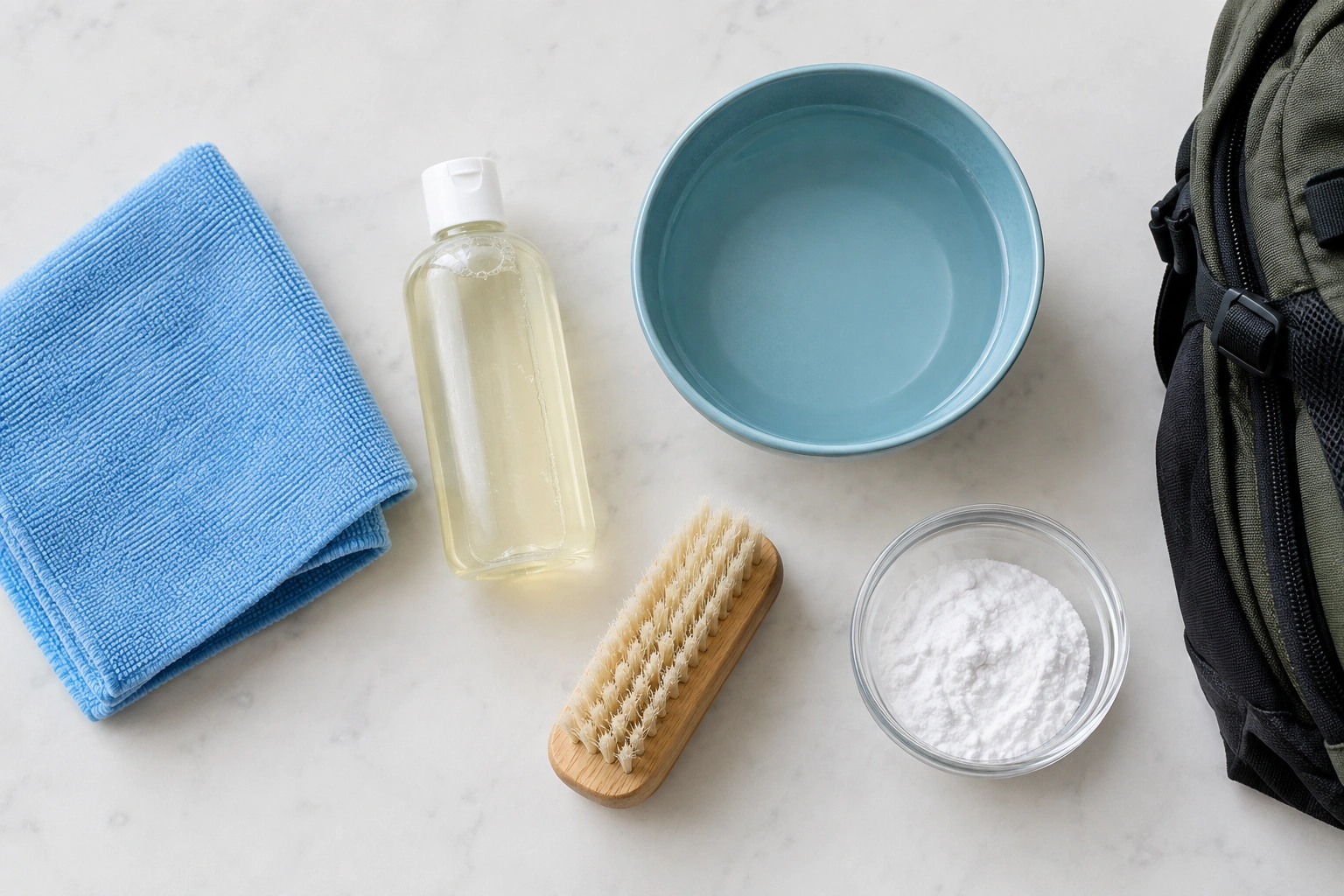
I’m Ethan Carter, and after years around repaired packs and travel gear, I’ve learned the same lesson over and over: the lining usually needs less water than you think, and more patience than you want to give it. Clean just enough to remove the mess, then dry it fully. That is what keeps the bag usable for the long haul.
For a broader care routine, you can also pair this guide with how to clean a backpack and how to wash a backpack when the exterior needs attention too.
What You’ll Need Before You Clean the Lining
Gather the mildest tools first. That keeps you from reaching for harsh products mid-clean and making the problem worse.
Use:
- Microfiber cloths or soft cotton cloths
- A soft sponge
- A soft-bristled brush for seams or stubborn spots
- Mild dish soap or a gentle, additive-free cleaner
- Warm or lukewarm water
- Baking soda for odor control
- White vinegar, diluted, for some odor jobs
- A clean towel for blotting
- A bowl or sink for mixing solution
Skip bleach, fabric softener, and heavy-duty laundry detergent unless the manufacturer specifically says otherwise. Topo Designs warns that strong formulas can leave residue behind, and residue is exactly what attracts dirt again. Topo Designs’ backpack washing guide makes that point clearly.
If the bag has a care label, check it before anything else.
Check the Care Label and Lining Material First
Backpack linings are not all built the same. A plain polyester lining can usually handle more than a felt laptop sleeve or a coated waterproof interior.
Here’s the quick material check:
Fabric linings: nylon, polyester, or canvas
These are the most forgiving. They usually tolerate gentle hand cleaning with mild soap and water. If grime is spread across the whole lining, a light hand wash may be reasonable.
Felt or textile laptop-sleeve linings
These need a lighter touch. In a verified gear-care example, felt-lined textile backpacks “do not do well” in the washing machine or when submerged, so spot cleaning is the safer move.
Coated, waterproof, or PU-backed linings
Treat these like a surface, not a sponge. Clean them in place with a damp cloth and minimal liquid. Scrubbing or soaking can break down the coating or make peeling worse.
Insulated or padded interiors
These trap moisture. They can smell clean on the surface while the padding stays damp inside, which is how mildew starts. Use the least amount of water possible and give them extra drying time.
If the lining is peeling, sticky, or visibly delaminating, keep the cleaning even lighter. At that point, the goal is preservation, not deep restoration.
If your backpack has removable inserts, foam panels, or mixed-material pockets, take those out or clean them separately when possible so each material gets the right treatment.
Spot Clean or Wash the Whole Interior?
This decision matters because the safest method is usually the smallest one that solves the problem.
| Situation | Best approach | Why |
|---|---|---|
| A few crumbs, dust, or small marks | Spot clean | Fast, low-risk, minimal moisture |
| One coffee spill or food stain | Local hand cleaning | Targets the mess without soaking the whole bag |
| Widespread dirt or odors | Deeper hand wash | Better coverage when the entire lining is affected |
| Felt sleeve, coated lining, or delicate interior | Spot clean only | Reduces risk of warping, peeling, or saturation |
| Unknown material or no care label | Start with spot cleaning | Safest first step until you know more |
REI recommends a lukewarm-water bath and gentle swishing for many packs, with sponging inside as needed. That works for some construction styles, but I would not treat it as universal. REI’s backpack cleaning guide is a good reference for standard synthetic packs, while delicate interiors need a lighter touch.
A simple rule: if the mess is localized, clean locally. If the smell or grime is everywhere, step up to a full hand wash only if the lining can handle it.
How to Clean Backpack Lining Step by Step
1) Empty the bag completely
Take out everything, including pens, receipts, crumbs in corners, and small debris in hidden pockets. Turn the bag upside down and shake it well. If there’s grit in seams, tap the sides gently to loosen it.
This matters because dry debris turns into muddy streaks once you add water.
2) Vacuum or brush out loose dirt
If you have a handheld vacuum, use it on low suction. If not, a soft brush works. Pay attention to corners, zipper tracks, and the bottom panel where crumbs collect.
3) Mix a mild cleaning solution
For most fabric linings, use a small bowl of warm or lukewarm water with a few drops of mild dish soap or gentle detergent. You want just enough slip to lift dirt, not a heavy foam bath.
Deuter’s care guidance for backpacks uses lukewarm water and pH-neutral soap or shower gel for gentle cleaning, which is a good benchmark for many synthetic interiors. Deuter’s backpack cleaning advice also notes that stubborn dirt can be handled with a brush.
4) Dampen, don’t soak
Dip a microfiber cloth or sponge into the solution, then wring it out well. The cloth should be damp, not dripping. Wipe the lining in sections.
If you’re cleaning a seam or pocket edge, use the corner of the cloth or a soft brush with very light pressure.
5) Blot stains instead of rubbing them
Rubbing spreads the stain and pushes it deeper into the fibers. Press and lift. Repeat with a clean part of the cloth until the spot fades.
6) Clean pockets, corners, and seams last
These areas hold the most grime, but they also trap the most water. Use the smallest amount of cleaner here. A soft brush can help loosen dried residue, but keep the strokes short and gentle.
7) Rinse away residue
Wipe the cleaned area again with a cloth dampened in plain water. This step matters more than people think. Topo Designs specifically warns that lingering soap residue attracts dirt, which can make the lining look dirty again sooner.
8) Blot dry immediately
Use a dry towel to press out as much moisture as possible. If the lining feels damp to the touch, keep blotting before you move on to drying.
If the bag construction is stiff or padded, clean it in place rather than forcing it inside out. Turning a structured pack inside out can stress seams or distort padding. For flexible everyday packs, it can improve access, but only if the care label and construction allow it.
How to Treat Common Interior Problems
Food spills and sticky residue
Sticky spots usually need repeated gentle wiping, not brute force. Warm water plus a tiny amount of mild soap is usually enough. If residue remains, let the damp cloth sit on the spot for a minute before wiping again.
For dried snack residue in a pocket seam, use a soft brush to lift the edge first, then wipe. Do not scrape with a fingernail or knife. That often damages the lining before the residue comes off.
Coffee or juice stains
Blot the spill as soon as possible. If the stain has set, use a damp cloth with mild soap and press from the outside of the stain toward the center. That helps keep the stain from spreading.
If the lining is fabric and the stain is still visible after one pass, repeat gently rather than switching to a stronger chemical.
Ink stains
Ink is usually best handled with caution rather than force. Blot any fresh ink with a clean, dry cloth first, then test a small hidden area before trying a barely damp cloth with mild soap. Avoid aggressive scrubbing, which can spread the mark or push it deeper into the lining. If the material is delicate, coated, or unknown, spot test first and keep the treatment minimal.
Odors from sweat, food, or damp storage
Odor is usually a ventilation problem as much as a cleaning problem.
For light odor, sprinkle a thin layer of baking soda into the dry lining and leave it for several hours, then shake it out thoroughly. For stronger smells, a diluted white vinegar wipe can help, but test first on a hidden area if the lining is coated or delicate.
Soap and water remove the source of many odors better than fragrance sprays do. Vinegar can help with smell, but it is not a universal fix for every material. If the lining is peeling or has a sensitive finish, keep vinegar use minimal or skip it.
Salt deposits or sweat marks
These show up more on back panels and padded interior sections. Deuter notes that salt deposits can be removed by repeatedly squeezing soap and lots of water through the padding by hand. That advice is useful when the material is built to handle it, but it also shows why drying matters afterward.
Soap and Water vs. Vinegar for Odors
| Method | Best for | Trade-off |
|---|---|---|
| Mild soap and water | General dirt, food residue, everyday odors | Safest all-around option, but may need multiple passes |
| Diluted white vinegar | Sour smells, light odor after cleaning | Can help with smell, but may not suit coated or delicate linings |
| Baking soda | Dry odor absorption | Good for finished, dry interiors, but not for wet stains |
If you only remember one thing here, make it this: clean the cause of the odor first, then use odor treatments second.
How to Dry the Backpack Safely
Drying is not the boring last step. It is the step that decides whether the bag smells fresh or goes musty again.
Air-dry only
Use a well-ventilated room, a shaded outdoor area, or a spot with moving air. Leave pockets open and zippers partly open so air can circulate. If the bag has a removable rain cover or insert, take it out.
Avoid heat
Do not use a dryer, radiator, hair dryer on high heat, or direct hot sun for extended periods. Heat can warp foam, weaken glue, and damage waterproof coatings. Air drying takes longer, but it protects the structure.
Give padded areas extra time
The lining may feel dry while the seams or padding still hold moisture. That hidden dampness is what causes mildew. If the backpack has thick shoulder straps, a padded back panel, or an insulated sleeve, let it sit longer than a thin daypack would need.

As a practical benchmark, many lightly cleaned interiors may dry in several hours, while padded or coated sections can take longer. If corners, seams, or foam still feel cool or slightly damp, leave the bag open and drying longer before packing it away.
Common Mistakes to Avoid
- Soaking the entire bag when only the lining is dirty
- Scrubbing hard enough to fuzz the fabric or spread the stain
- Using bleach, fabric softener, or strong detergent on coated interiors
- Cleaning a felt or delicate sleeve like a standard nylon pocket
- Leaving soap residue behind
- Putting the backpack back into use while it is still damp
- Ignoring peeling or delaminating areas and treating them like normal fabric
The biggest mistake is usually impatience. The second-biggest is using a stronger cleaner because the first gentle pass didn’t remove everything.
Troubleshooting Delicate, Peeling, or Stubborn Linings
If the lining is peeling, cracked, or sticky, reduce moisture and pressure. Use a barely damp cloth, blot instead of wiping hard, and stop if the surface starts shedding or lifting.
If a stain remains after one careful cleaning, repeat the same mild method once more before escalating. Jumping to harsher chemicals often creates a larger problem than the stain itself.
If odor keeps coming back, the issue may be trapped moisture in padding or seams. Dry the bag longer, open every pocket, and place it in moving air.
For delicate laptop sleeves or textile interiors, spot cleaning is usually the safest long-term choice. That protects shape and finish better than repeated soaking.
When to Avoid Machine Washing or Seek Professional Help
Machine washing is risky when the bag has:
- A waterproof or PU-coated lining
- Glued seams
- Thick padding or insulation
- A felt laptop sleeve
- Delicate, peeling, or delaminating interior material
- A care label that says not to wash
If the interior damage is structural rather than cosmetic — for example, the lining is separating, the padding is collapsing, or the coating is flaking badly — a careful hand clean may not be enough. That is the point where a luggage repair specialist can tell you whether the bag is still worth saving or whether the issue is beyond cleaning.
If you want to keep learning the full care routine, the backpack care category is a useful place to compare cleaning methods before you choose one.
Quick FAQ
Can I machine wash the lining of a backpack?
Sometimes, but not by default. Standard synthetic linings may tolerate more than felt, coated, or padded interiors. If the care label does not clearly allow it, hand cleaning is safer.
What is the safest cleaner for backpack lining?
Mild dish soap or a gentle, pH-neutral cleaner mixed with lukewarm water is the safest starting point for most fabric linings.
How long should a backpack lining dry?
Long enough that every part feels fully dry, including seams and corners. That can take several hours or longer depending on padding and airflow.
Will vinegar damage waterproof coating?
It may, depending on the coating and construction. Test first on a hidden spot, and use it sparingly or skip it for delicate interiors.
Can I clean the lining without soaking the whole backpack?
Yes. That is usually the best approach. Use a damp cloth, spot clean the problem area, and dry it well.
What if the lining still smells after cleaning?
Dry it longer, open all pockets, and use ventilation before trying odor treatment again. Persistent smell often means trapped moisture, not just surface dirt.
Should I use a brush or cloth?
Use a cloth for most cleaning and a soft-bristled brush only for stubborn dirt in seams or textured fabric. Hard brushing can damage delicate linings.
How do I know if machine washing is too risky?
If the bag has coatings, insulation, glued construction, or a delicate sleeve, skip the machine. When in doubt, hand clean in place.