
How to Clean a Faux Leather Backpack Without Damaging the Finish

A faux leather backpack can look sharp for years, but only if you clean it the right way. The material is less forgiving than it looks: too much water, the wrong solvent, or aggressive scrubbing can leave it dull, sticky, cracked, or peeling. I’ve seen plenty of bags that were ruined by someone trying to “deep clean” them like a canvas pack.
The safest approach is simple: remove loose dirt first, use the least aggressive cleaner that solves the problem, and keep moisture under control. That usually means a microfiber cloth, a little mild soap, and patience.
What Faux Leather Is and Why It Needs Gentle Cleaning
Faux leather is a synthetic material made to resemble real leather. You’ll also see it called PU leather, vegan leather, or imitation leather. Unlike genuine leather, it doesn’t need oil-based conditioning, and it usually has a surface coating that can be damaged by harsh cleaners or heavy rubbing.
That coating is the reason faux leather is easy to wipe clean, but also why it can fail faster if treated roughly. Once the top layer wears down, you may see cracking, flaking, or a tacky feel. Cleaning won’t fix that damage, so the goal is to preserve the surface you still have.
If you want a useful comparison: genuine leather often tolerates specialized conditioning and careful moisturizing, while faux leather usually does better with gentle cleaning and dry storage. For general backpack care guidance, REI’s pack cleaning advice is a helpful reference point, even though faux leather itself needs a lighter touch than many outdoor fabrics.
What You’ll Need Before You Start
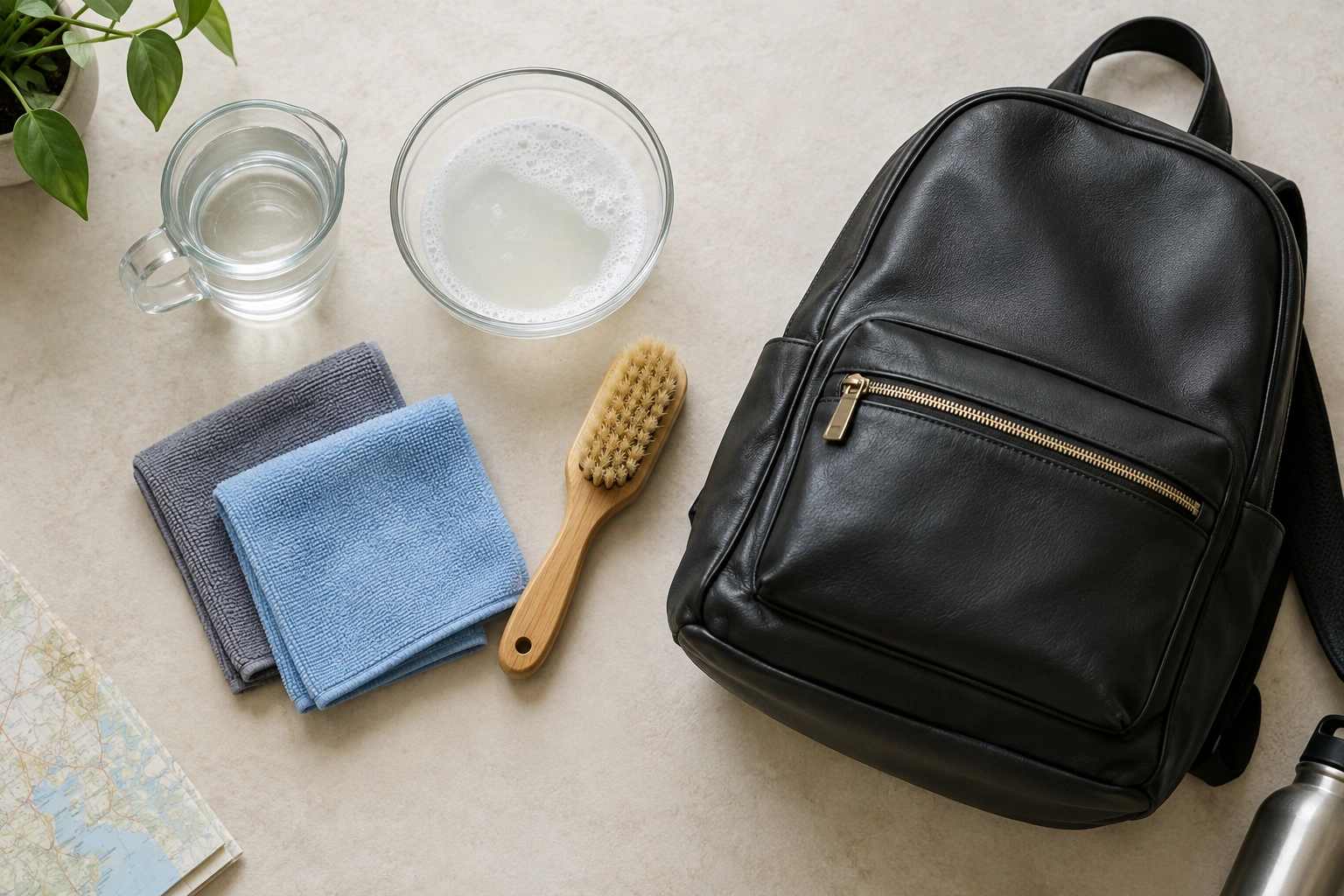
Gather the basics before you wet anything:
- Microfiber cloths
- A soft-bristled brush or clean toothbrush for seams and texture
- Mild soap, such as a gentle dish soap
- Warm water
- A dry towel or second clean cloth
- A small bowl for mixing
Optional, for stubborn spots only after a spot test:
- White vinegar diluted with water
- Isopropyl alcohol for very small, targeted marks
A microfiber cloth is the best first tool because it lifts dust without dragging grit across the finish. A soft brush helps on pebbled or textured faux leather, where dirt settles into grooves. That point matches care guidance from Sans Beast’s vegan leather cleaning instructions, which recommends a gentle brush for textured surfaces.
Prep the Backpack: Empty It, Check the Label, and Spot-Test First
Before cleaning, empty the backpack completely. Check every pocket, including hidden compartments and the lining, so you don’t trap moisture around receipts, crumbs, or electronics. If the lining is dirty too, it’s better to clean it separately rather than soaking the whole bag.
Next, look for a care label or manufacturer note. Some faux leather finishes tolerate mild soap well, while others are more sensitive to alcohol or vinegar. If the brand gives specific care instructions, follow those first.
Then do a spot test. Pick a hidden area, such as the bottom edge or inside flap, and apply a tiny amount of your cleaning solution. Wait for it to dry fully. If the area changes color, turns dull, feels sticky, or leaves residue, stop and choose a gentler method.
That one test can save a backpack. If a stain is already set, spreading, or the finish is peeling or sticky, stop home cleaning and avoid harsher treatment. At that point, more scrubbing is more likely to damage the coating than remove the mark.
How to Clean a Faux Leather Backpack Step by Step
For everyday dirt, fingerprints, and light grime, this is the safest cleaning sequence.
1. Remove loose dust first
Wipe the bag with a dry microfiber cloth or soft brush. This matters more than it sounds. If you skip this step, you can grind dirt into the surface while wiping, which creates fine scratches over time.
2. Mix a mild cleaning solution
Fill a bowl with warm water and add a small amount of mild soap. You want a lightly soapy solution, not suds that cling to the bag. A cloth should feel damp, not dripping.
3. Wring the cloth well
Dip the microfiber cloth into the solution, then wring it out thoroughly. Faux leather should never be soaked. A lightly damp cloth is enough for most surface cleaning, and it reduces the risk of water getting into seams or weakening the backing.
4. Wipe in gentle passes
Clean the surface with light pressure. Circular motions are commonly recommended for faux leather because they help blend the cleaning area and reduce visible streaking. Daniel Wellington’s vegan leather care guide suggests wiping with a soft microfiber cloth, warm water, and mild soap in circular motions, then drying with a clean cloth.
If the bag has a smooth finish, use broad, even circles. If it’s textured, keep the motion light and let the cloth reach into the grain instead of pressing hard.
5. Wipe again with clean water
Use a second cloth dampened only with clean water to remove soap residue. Residue can leave the surface looking cloudy or sticky, especially on darker faux leather.
6. Dry immediately with a clean towel
Blot the surface with a dry towel or dry microfiber cloth. Don’t leave water sitting on the bag. Even when faux leather survives a little moisture, standing water can leave marks around stitching and seams.
For a commuter backpack with fingerprints and dust, this whole process may be quick. For a student bag with more grime, you may need a second pass, but still keep the moisture light.
How to Remove Stains, Scuffs, Odors, and Build-Up
Different problems call for different levels of cleaning. Use the mildest option that works.
| Problem | Safest first move | Trade-off |
|---|---|---|
| Dust, fingerprints, light grime | Dry microfiber cloth, then mild soap solution | May need a second pass |
| Coffee or food smudges | Damp cloth with mild soap, spot clean only | Slower than stronger solvents |
| Scuff marks | Gentle wiping with a damp microfiber cloth | Some marks won’t fully lift |
| Textured dirt in grooves | Soft brush or damp toothbrush | Easy to overdo if you scrub |
| Storage odor | Clean surface, dry fully, air out | Odor may return if the inside is dirty |
| Sticky residue | Mild soap first, then tiny alcohol spot test if needed | Higher risk of dulling the finish |
For fresh stains
If something spills on the bag, blot it right away. Don’t rub. Rubbing spreads the stain and pushes it deeper into the surface texture.
For coffee, sauce, or food smudges, use the mild soap solution first. If the stain is still visible, repeat the process once before trying anything stronger.
For common backpack marks, an escalation path helps:
- Ink: Blot first if it is fresh. Then try a tiny spot test with isopropyl alcohol on a cotton swab, using the smallest amount possible. If the mark softens, stop and wipe the area with a clean damp cloth. If nothing changes, do not keep rubbing.
- Grease: Start with mild soap and a damp microfiber cloth. Grease usually responds better to repeated gentle cleaning than to solvents. If the mark remains after two light passes, stop rather than moving to harsher cleaners.
- Dye transfer: Use only a gentle soap-and-water wipe first. Dye transfer can be hard to remove from faux leather, and stronger scrubbing may spread the color or dull the finish. If it does not lift easily, leave it alone.
For scuff marks
Scuffs are often transfer marks from shoes, walls, or luggage handles. A damp microfiber cloth usually does more than a scrubbing pad ever will. Wipe gently, then inspect the finish in good light. If the mark lightens but doesn’t disappear, stop there. Overworking the spot can create a shiny patch that looks worse than the scuff.

For stubborn spots
White vinegar is sometimes used in diluted form for faux leather, and some care guides mention it as part of a cleaning mix. If you try it, keep it weak and use it only after a spot test. A cautious approach is a solution of mild soap and water first, with vinegar reserved for the smallest stubborn marks. The reason is simple: vinegar can help with residue, but too much can dull some finishes.
Alcohol is even riskier. A tiny amount on a cotton swab may help with a very specific sticky spot, but it can also dry out or discolor the surface. Use it only if the spot test is clean and the stain is truly localized.
For odors
Odor usually comes from the inside, not the faux leather shell itself. Clean the exterior, then air the backpack out fully with pockets open. If the lining smells musty, clean the lining separately rather than adding more moisture to the outer shell. If you need a step-by-step lining method, see how to clean backpack lining.
How to Clean Straps, Seams, Zippers, and Hardware Safely
These areas collect grime faster than the front panel because hands, sweat, and dust settle there.
Straps
Wipe straps with the same mild soap solution, but use less liquid than you would on the body of the bag. Straps often have stitching and edges that can trap moisture, so finish by blotting them dry. If the straps are lightly textured, a soft brush can help lift dirt without pressing too hard.
Seams and grooves
Use the corner of a microfiber cloth or a dampened soft toothbrush to clean along seams and embossed areas. That advice is echoed in Sans Beast’s guide for textured vegan leather, which recommends a dampened toothbrush for grooves. Keep the brush almost dry. You want to lift dirt from the creases, not flood them.
Zippers and hardware
For metal zippers, wipe the surrounding faux leather first, then clean the hardware separately with a barely damp cloth. Avoid letting soapy water sit around zipper tape or stitching. If you want a deeper zipper-specific routine, this zipper care guide covers the safest way to remove buildup without forcing debris into the teeth.
Interior spills
If liquid leaked inside, clean the lining separately and let it dry completely before closing the bag. Moisture trapped inside can create odor and transfer back to the faux leather exterior.
How to Dry Faux Leather Properly After Cleaning
Air-dry the backpack at room temperature with all pockets open. That is the safest method. Heat is the mistake that causes a lot of preventable damage: hair dryers, radiators, direct sun, and hot vents can warp the surface, dry out the finish, or speed up cracking.
Set the bag in a shaded, ventilated spot. If possible, stand it upright and stuff it lightly with clean paper or a dry towel to help it keep its shape. Don’t overpack it while drying, because that can leave pressure marks. Avoid clothespins, hanging pressure, or direct airflow aimed at one spot, since they can crease or distort the surface.
If you see a faint water line after drying, it usually means too much moisture was left behind. In that case, a light wipe with a barely damp cloth followed by immediate blotting often helps more than trying to “fix” it with heat.
What Not to Use on Faux Leather
Avoid these unless the manufacturer specifically says otherwise:
- Bleach
- Acetone
- Abrasive pads or rough scrub sponges
- Strong all-purpose cleaners
- Heavy degreasers
- Excessive alcohol
- Very hot water
- Machine washing
- Dryers or direct heat
- Baby wipes
- Multi-surface wipes
The reason is not just surface appearance. Harsh chemicals can weaken the finish, strip color, and make the material feel tacky or brittle. Rough pads can leave permanent abrasion marks. And soaking can let moisture reach the backing or adhesive layers, which is where peeling often starts.
Baby wipes and multi-surface wipes are common questions, but they are not ideal for faux leather. Some contain alcohol, fragrance, or cleaning agents that can leave residue or dull the finish. If you need a quick wipe, a lightly damp microfiber cloth is the safer choice.
Also skip real-leather conditioner. Faux leather does not absorb conditioner the same way genuine leather does, so those products usually sit on the surface or leave it greasy. Leather conditioner is not recommended in the main cleaning steps either.
Common Mistakes to Avoid
The most common cleaning errors are easy to spot:
- Using too much water
- Scrubbing a stain instead of blotting it
- Cleaning without a spot test
- Leaving soap residue behind
- Trying to speed-dry with heat
- Treating peeling material as if it were still intact
- Cleaning the whole bag when only one area needs attention
If the backpack only has a small stain, spot cleaning is usually the better choice. Full-surface wetting increases the chance of streaking and uneven drying. That trade-off matters: a little more time on one spot is safer than a faster, wetter clean across the whole bag.
Troubleshooting: Peeling, Cracking, Sticky Spots, and Stubborn Stains
If the faux leather is already peeling or cracking, clean it very lightly or stop altogether. Once the surface layer fails, scrubbing usually makes the damage spread. A dry microfiber cloth to remove dust may be all that’s safe.
Sticky spots are often caused by residue from old cleaners, heat exposure, or breakdown of the coating. Try a gentle wipe with a barely damp cloth first. If that doesn’t help, a tiny spot test with diluted soap is the next step. If the stickiness remains, more cleaning may just spread it.
For stubborn stains that don’t lift after two gentle passes, don’t escalate immediately to harsher chemicals. At that point, you’re often dealing with a stain that has penetrated the finish or a mark that has altered the coating. More aggressive cleaning may leave a bigger cosmetic problem than the original stain.
If the bag is structurally failing, cleaning won’t reverse that. It may still be worth dusting and protecting what’s left, but that is a maintenance decision, not a restoration one.
How Often to Clean and How to Keep It Looking Good
A faux leather backpack usually does best with light maintenance rather than occasional deep cleaning. Wipe off dust and fingerprints every week or two if you use it daily. Give it a more complete clean when you notice buildup, after a spill, or before storing it for a while.
A few habits make a big difference:
- Keep the bag out of prolonged direct sun
- Wipe off rain or condensation promptly
- Store it in a cool, dry place
- Don’t leave heavy grime sitting on straps or seams
- Empty crumbs and debris before they settle into the lining
For readers who like a broader maintenance schedule, how often you should clean a backpack is a useful companion guide.
When to See a Luggage Repair Specialist
If the faux leather is peeling badly, cracking across large sections, or turning sticky even after gentle cleaning, it may be past the point where home care helps. A luggage repair specialist can tell you whether the bag is still worth preserving or whether the damage is mostly cosmetic.
That’s also the right call if the backpack has valuable hardware, specialty stitching, or a structure you don’t want to risk with more moisture. Cleaning is supposed to extend the life of the bag, not gamble with the parts that still work.