
Can You Put a Backpack in the Dryer? A Practical Guide to Drying It Safely

If you need the short answer: usually, no. Most backpacks should not go in the dryer unless the care label explicitly says they can. Dryer heat can damage plastic parts, warp synthetic fabric, weaken adhesives, and distort padding or zippers. The safer default is air drying, because backpacks are usually made from several materials that react to heat differently.
That rule matters because backpacks are rarely made from one simple material. A single bag may combine nylon or polyester shell fabric, foam shoulder straps, coated panels, rubberized trim, zipper tape, and glued seams. Heat can affect each of those differently. If you want the bag to keep its shape and last, the drying method should be chosen as carefully as the wash method.
If you’re cleaning a bag after a spill, rainstorm, or machine wash, this guide will help you decide what’s safe and what’s not. If you also need the washing side of the process, Queryoro’s backpack washing guide and backpack cleaning guide cover the prep work that comes before drying.
Quick Answer: Can You Put a Backpack in the Dryer?
For most backpacks, air dry instead of tumble drying. Whirlpool’s backpack care guidance says never put a backpack or bookbag in the dryer because heat can damage the fabric and accessories like zipper pulls. Maytag gives the same warning and adds that a backpack may take a day or longer to air dry, depending on the fabric and environment.
There are only two situations where dryer use might be considered:
- The care label explicitly allows tumble drying.
- The backpack is made of materials and construction that the manufacturer says are heat-safe.
Even then, “allowed” does not mean “best.” A low-heat or no-heat cycle may be acceptable only when the care label or manufacturer specifically permits it, and air drying is still the lower-risk choice for most bags.
What to Check Before Drying a Backpack
Before you decide on a dryer, check four things in this order.
1) The care label
The care label is the first authority. REI advises following the manufacturer’s cleaning recommendations first because some packs can be submerged while others should not be. The same logic applies to drying. If the label says do not tumble dry, treat that as the final answer.
If the label is missing, worn off, or impossible to read, assume the backpack is not dryer-safe.
2) The material mix
A backpack that is “mostly polyester” can still have foam, coatings, leather trim, or glued construction that does not tolerate heat well. Mixed-material bags deserve the most caution because one heat-sensitive component can be enough to ruin the whole bag.
3) Detachable parts and contents
Empty every pocket. Remove key clips, pens, power banks, charging cables, removable foam inserts, hydration bladders, internal frames, organizers, and anything electronic. If the backpack has a detachable liner, hip belt, or shoulder strap components, remove them too if the manufacturer designed them to come off.
4) Signs of heat sensitivity
If the bag has any of these features, lean away from the dryer:
– waterproof or water-resistant coating
– foam padding
– leather trim
– glued seams or bonded panels
– molded plastic parts
– printed graphics that can crack or fade
Before drying: quick checklist
- Empty all pockets
- Remove electronics and detachable inserts
- Remove hydration bladders or internal frames if they are designed to come out
- Blot excess water from the shell, straps, and padding
- Open all zippers and pockets
- Turn the bag inside out only if doing so does not stress seams, coatings, or structure
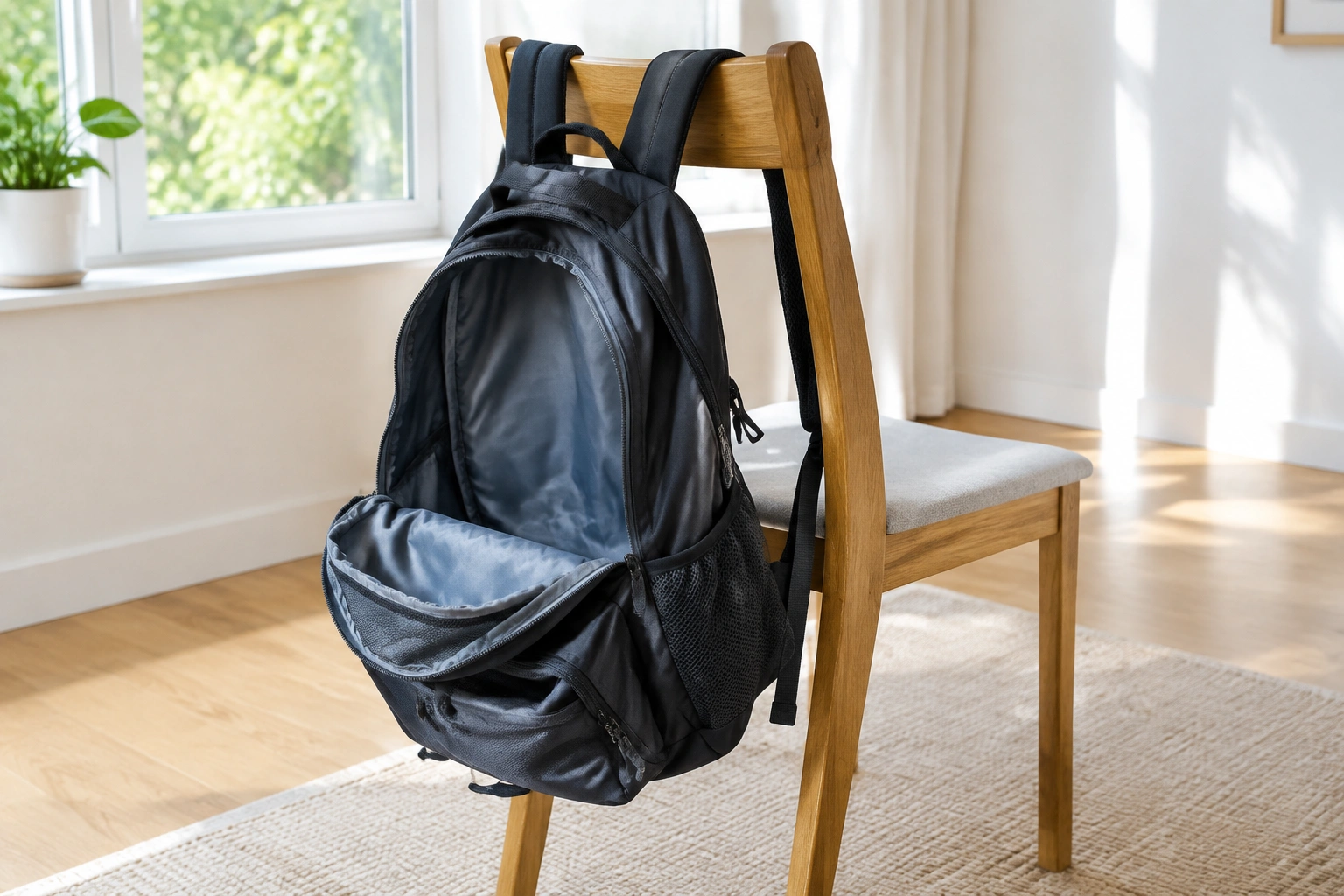
When in doubt, air dry. That choice preserves more of the bag’s shape and finish.
Materials and Parts That Change the Drying Method
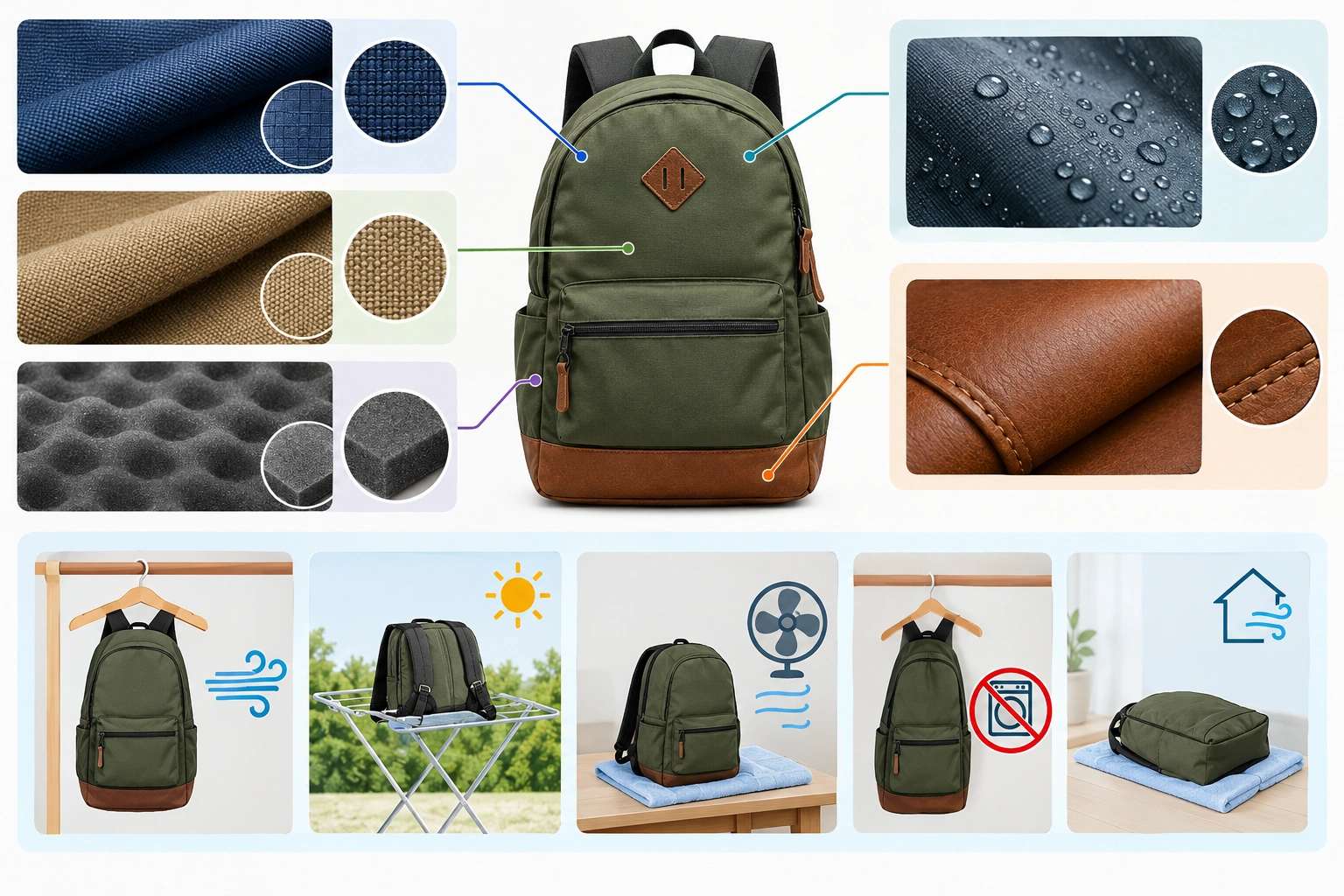
A backpack is not one material, so one drying rule does not fit every bag.
Nylon and polyester
These are common shell fabrics and are often more durable than natural fibers, but that does not make them automatically dryer-safe. Heat can still warp synthetic fabric or affect coatings and trim. If the care label allows tumble drying, use the gentlest setting possible and check frequently. If the label is silent, air dry.
Canvas
Canvas can handle moisture well, but canvas backpacks often include stitching, lining, coatings, or leather accents that change the equation. Canvas itself may seem sturdy, yet the rest of the bag may not be. A canvas backpack with no heat instructions should still be air dried.
Leather trim
Leather and high heat are a poor match. Leather trim can stiffen, dry out, or distort in the dryer. Even a small leather patch, handle wrap, or logo panel is enough to make air drying the safer path.
Foam padding
Foam shoulder straps and back panels trap water and can lose their shape if overheated. This matters because padding is what makes a pack comfortable. If it warps, you may not notice immediately, but the bag can sit unevenly on your back afterward.
Waterproof or water-resistant coatings
Coatings are one of the biggest reasons to avoid heat. Dryer heat can shorten the life of coatings or make them behave unpredictably. If your backpack is meant to repel rain, air drying protects that finish better than any heated cycle.
Zippers, seams, and adhesives
Whirlpool specifically notes that zipper pulls can be damaged in the dryer. Seams and adhesives are also vulnerable because heat and repeated tumbling stress the joins that hold the bag together. A backpack can look fine after a cycle and still develop problems later, such as warped zippers or padding that no longer sits right.
Safest Way to Dry a Backpack Step by Step
If your goal is to dry the bag without risking damage, this is the method I’d use in the shop or at home.
1) Empty and inspect the backpack
Remove everything from every pocket. Shake out crumbs, grit, and loose debris. Check for a wet notebook, damp charger, or anything that could stain the lining while the bag dries.
2) Wipe away standing moisture
Use an old towel or microfiber cloth to gently blot the shell, straps, and interior. Whirlpool recommends patting away excess moisture before hanging the bag to air dry. Don’t twist the fabric hard. You want to remove water, not reshape the bag.
3) Open every pocket and zipper
Leave pockets unzipped and flaps open so air can move through the bag. Moisture hides in corners, zipper garages, and pocket folds. If you close the bag up, those areas dry much more slowly.
4) Turn the bag upside down if it helps drainage
If the backpack has a lot of water inside, hanging it upside down can help gravity do some work. This is especially useful for pockets and lower seams where water pools.
5) Hang it in a ventilated space
A chair back, shower rod, clothesline, or sturdy hook all work if the bag can hang freely. Keep it in a room with good airflow. A fan pointed across the room, not directly into one spot, can speed drying by moving humid air away.
6) Use a fan or dehumidifier for faster air drying
If you need the bag ready sooner, airflow matters more than heat. A fan or dehumidified room is one of the best ways to speed drying without risking shrinkage or warping.
7) Flip and check hidden areas
After several hours, check the straps, bottom panel, zipper folds, and back padding. Those areas often stay damp after the outer shell feels dry. Rotate the bag if needed so trapped moisture has a chance to escape.
8) Wait until it is fully dry before storing it
A backpack that feels “mostly dry” can still hold moisture in the foam or seams. Store it too soon and you invite mildew and odor.
When Low Heat or No-Heat Tumble Drying May Be Acceptable
If the care label explicitly allows tumble drying, the safest dryer choice is no heat or the gentlest low heat setting the manufacturer permits. If the label does not allow dryer use, do not treat low heat as a workaround. Even then, this is a controlled exception, not a default.
Here’s the trade-off:
- No heat: lower risk of melting, warping, or shrinking; slower drying
- Low heat: faster than no heat, but more risk to coatings, foam, adhesives, and trim
- High heat: not recommended for backpacks
If you do use a dryer at all:
– remove all contents and detachable parts
– zip the bag closed only if the manufacturer recommends it; otherwise leave it open for airflow
– place it alone, without other laundry, as a precaution so straps and hardware are less likely to snag delicate items
– stop the cycle if the bag feels hot to the touch or starts to change shape
Maytag also notes that washing a backpack without other laundry can help prevent straps and zippers from damaging other items. That same logic applies when deciding whether the bag should ever see a dryer drum.
How to Dry Padded Straps, Back Panels, and Hidden Moisture Areas
The places that trap moisture are usually the places people forget to check.
Padded straps
Press a towel into the strap padding to pull out water. Then hang the bag so the straps can air out freely instead of lying flat against a surface. If the straps stay pressed against a wall or chair, the inner foam dries slower.
Back panels
Back panels often have foam, mesh, or channels that hold moisture. Open the bag wide and position it so air can move across the back panel. If the panel feels damp after the shell is dry, give it more time. Don’t assume the bag is ready just because the exterior feels normal.
Seams and corners
Seams dry slowly because they collect water in folds. Check the bottom corners, zipper ends, and stitched edges. A paper towel can help wick moisture from tight spots, but don’t force anything into delicate stitching.
Interior pockets and lining
Leave pockets open and turn the bag inside out only if the manufacturer’s construction allows it and it does not stress seams, coatings, or structure. Some packs dry better with the interior exposed; others hold their shape better when hung normally with everything open. The key is airflow, not forcing the bag into a position that stresses the seams.
Common Mistakes That Damage Backpacks in the Dryer
These are the mistakes that turn a simple drying job into a repair issue.
Using high heat because the bag “looks sturdy”
Sturdy fabric does not mean heat-safe construction. A tough shell can still hide foam, coatings, and adhesives that fail in the dryer.
Leaving electronics or removable gear inside
This is the easiest mistake to avoid. Batteries, chargers, tracking devices, and power banks should never go into a dryer with the bag.
Ignoring leather trim or coated panels
A backpack can be mostly synthetic and still fail because of one heat-sensitive detail.
Storing the bag too early
A bag that is damp deep inside can smell fine at first, then develop mildew later.
Assuming the dryer will “finish the job”
If the bag is still damp after a brief tumble cycle, the right move is usually air drying, not more heat.
Troubleshooting: If the Backpack Still Feels Damp, Warped, or Smells Musty
If the backpack still feels damp after a day, give it more airflow. Move it to a drier room, open every pocket again, and place a fan nearby. If the weather is humid, a dehumidifier helps more than heat.
If the bag smells musty, it may have been stored before it fully dried or dried in a room with poor airflow. Air it out longer. If the odor persists, the issue may be in the lining or padding, where moisture lingers.
If the backpack looks warped or the zippers feel off after dryer use, stop applying heat. Let it cool and dry completely, then check whether the shape returns. If the padding or zipper alignment stays wrong, the damage may be permanent.
How Long a Backpack Usually Takes to Dry
A backpack may take a day or longer to air dry, depending on the fabric and drying environment, according to Maytag. That range is realistic because drying time changes with:
– fabric thickness
– amount of padding
– humidity
– airflow
– how wet the bag was to begin with
A lightly damp school backpack in a breezy room may dry faster than a soaked commuter pack with thick foam straps. The safest rule is simple: don’t judge by the outside alone. Check the straps, seams, and interior pockets before you put it back into service.
Practical Examples: Which Backpacks Can and Cannot Go in the Dryer
Polyester school backpack
If the care label explicitly says tumble dry is allowed, a no-heat or very low-heat cycle may be acceptable. Without that permission, air dry it.
Nylon commuter backpack with foam padding
This is the kind of bag I would usually keep out of the dryer. Foam, coating, and hardware make air drying the better choice.
Canvas backpack with leather trim
Skip the dryer. The leather trim alone is enough reason to air dry.
Mixed-material travel backpack with an unclear label
Treat it as not dryer-safe. Open every pocket, blot excess water, and dry it in a ventilated room with a fan.
If you want more care basics after drying, the backpack care category on Queryoro groups related guides in one place.
When to See a Luggage Repair Specialist
If the bag has warped padding, a stuck zipper, separated seams, or a coated panel that looks damaged after heat exposure, a repair specialist can tell you whether the problem is cosmetic or structural. That matters most on expensive travel packs, school bags with sentimental value, or commuter backpacks with built-in organization you don’t want to lose.
Bottom Line
If you’re asking whether you can put a backpack in the dryer, the safest answer is usually no. Unless the care label clearly allows it, air drying protects the fabric, padding, zippers, coatings, and shape better than heat does. Open the pockets, blot excess water, use airflow, and give the bag enough time to dry all the way through.