
How to Clean a Backpack Without Damaging It

A clean backpack lasts longer, smells better, and is easier to live with. The safest approach is simple: check the care label first, then choose the least aggressive method that fits the material and the level of dirt.
Hand washing is the default for most backpacks. Only machine wash a backpack when the care label clearly says it is safe to do so and the construction is simple enough to handle the cycle.
For a quick reference, REI’s backpack care guide advises lukewarm water and gentle cleaning, and says never to wash a pack in a machine or dry it in a dryer. Some brands are more permissive, but the label always wins.
Quick Answer: The Safest Cleaning Method
Use this decision rule:
- Spot clean if the dirt is localized: one stain, dirty straps, crumbs, or a small odor problem.
- Hand wash if the bag is generally dirty, smells stale, or needs attention inside and out.
- Machine wash only if the care label explicitly allows it and the backpack has no leather trim, rigid frame, delicate coating, or fragile padding that could be damaged.
That order matters because backpacks are not built like clothing. Zippers, foam panels, water-repellent finishes, printed logos, and seam tape can all react differently to water and agitation. A method that works on plain nylon may ruin a coated hiking pack or a leather-trimmed commuter bag.
What You’ll Need Before You Start
Gather the basics before you get the bag wet:
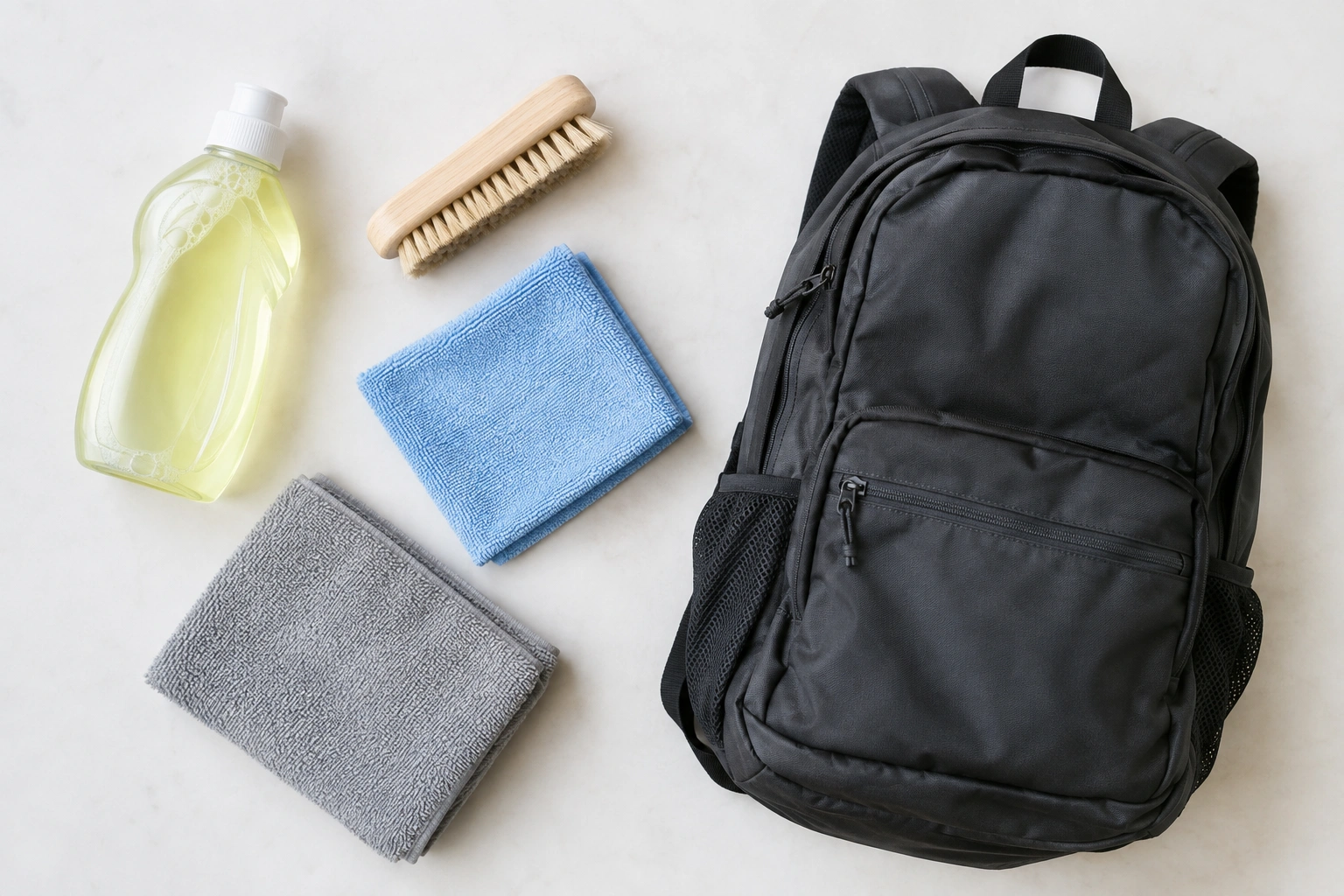
- Mild detergent or pH-neutral soap
- Lukewarm water
- Soft brush or old toothbrush
- Microfiber cloth or soft sponge
- Clean towel
- Small basin, sink, or bathtub
- Vacuum or handheld vacuum for crumbs and debris
- Optional: lint roller for surface dust and hair
- Optional: stain remover approved for the fabric
- Optional: clean dry cloth for leather trim
Use the gentlest cleaner that can do the job.
Check the Care Label and Empty Every Pocket
Before any wet cleaning begins, start with loose debris. Shake the backpack out over a trash can or outdoors, then use a vacuum or handheld vacuum to remove crumbs, sand, and grit from the main compartment, pockets, and corners. A lint roller can help with dust, hair, and fine debris on fabric surfaces.
Next, check the care label. If there is no label, test a hidden area first with a small amount of detergent so you can see whether the fabric fades or reacts badly.
Then empty everything. That means:
- Main compartment
- Laptop sleeve
- Front organizer pockets
- Side bottle pockets
- Hidden zip pockets
- Detachable pouches, inserts, or rain covers
Remove anything that should not get soaked, including electronics, batteries, and hard inserts. If the pack has a removable frame, foam insert, hip belt, sternum strap, or support sheet and the manufacturer says to take it out, do that before washing. A wet frame can trap moisture, and a rigid insert can warp the bag while it dries.
Identify the Material Before You Choose a Method
The material tells you how cautious to be.
| Backpack type | Safest cleaning approach | Why |
|---|---|---|
| Nylon or polyester | Hand wash or machine wash only if allowed | Usually durable, but coatings and structure still matter |
| Canvas | Gentle hand wash | Can hold dirt deeply and may shrink or fade if treated roughly |
| Leather trim or mixed materials | Spot clean or hand wash carefully | Leather and water do not mix well |
| Waterproof-coated or seam-taped fabric | Gentle exterior cleaning | Aggressive scrubbing can weaken the finish |
| Structured or framed pack | Hand wash with care | Shape and padding can be damaged in a machine |
Simple material guide
- Nylon/polyester: Usually the easiest to clean. Hand washing is safest, and machine washing is only for packs whose label clearly allows it.
- Canvas: Best cleaned gently by hand. It can absorb dirt and may fade or lose shape if washed too aggressively.
- Leather-trimmed backpacks: Keep leather as dry as possible and clean the non-leather parts separately.
- Waterproof-coated packs: Use mild soap and soft cloths only. Do not scrub hard enough to wear away the coating or seam tape.
- Structured backpacks: Avoid anything that can crush padding, bend frames, or distort the shape.
If you are unsure, treat the backpack like a mixed-material bag. That means hand cleaning, lukewarm water, and no heat.
How to Clean a Backpack by Hand
Hand washing is the most flexible method and the safest default for most backpacks.
1. Pre-treat visible stains
Mix a small amount of mild detergent with lukewarm water. Apply it with a soft brush or sponge, then work gently in small circles.
Do not scrub hard. The goal is to lift dirt, not rough up the fabric. A toothbrush-sized brush is useful for seams, zipper tape, and strap edges.
2. Clean the outside first
Wipe the exterior with a damp microfiber cloth to remove loose dirt. Then move to the dirtiest areas: bottom panel, shoulder straps, back panel, and grab handle. Those spots collect body oils and grime faster than the rest of the bag.
If the pack has mesh pockets or textured fabric, use the brush lightly so you do not snag the weave.
3. Wash the inside lining
The lining often holds the worst smells. Use a cloth dipped in lukewarm soapy water and wipe the interior from top to bottom. Pay attention to corners, pen slots, hidden pockets, and the bottom seam where crumbs collect. Open every pocket and run the cloth into pocket linings so residue does not stay trapped in folds.
For a laptop compartment, use only a lightly damp cloth unless the care label specifically allows more water. Padding takes longer to dry, and that is where mildew starts if moisture gets trapped.
4. Clean zippers, straps, and seams
Open every zipper and clean around the teeth with a damp brush or cloth. Dirt in the zipper track can make the pull stick or wear unevenly. Wipe the straps from top to bottom, especially where they rub against clothing and skin.
If the backpack has salt stains from sweat, clean the carrying system with soap and plenty of water, squeezing it several times by hand. That is a practical way to flush salt out of the foam and fabric instead of leaving crystals behind.
5. Rinse carefully
Use a clean cloth with plain lukewarm water and wipe away soap residue. Residue is one of the most common reasons a backpack feels sticky after cleaning. If the soap stays in the fabric, it can also attract dirt faster later.
6. Blot, don’t wring
Press a clean towel against the bag to remove moisture. Do not twist or wring the backpack. That can distort foam, bend frames, and stress stitching.
How to Machine Wash a Backpack Safely
Machine washing is faster, but it is the riskier choice. Many backpacks are not machine washable even if they seem durable, so only do this when the care label clearly allows it and the pack has a simple construction.
A safer machine-wash setup usually means:
- Empty bag completely
- Remove detachable parts
- Close zippers and buckles
- Place the bag in a mesh laundry bag or pillowcase if appropriate
- Use a gentle cycle
- Use lukewarm or cool water if the label allows
- Use a small amount of mild detergent
If the washer has a front load design, that is generally the better choice because there is no central agitator to strike or twist the pack. If you only have a top-load washer, avoid machines with a central agitator unless the care label specifically says the backpack can handle it.
Skip machine washing if the backpack has leather trim, waterproof coating, seam tape, rigid frame pieces, delicate coatings, glued seams, or heavy padding that might shift. Even durable-looking packs can be damaged by tumbling, so when in doubt, hand wash instead.
If you do machine wash, keep the load small and avoid washing it with items that have zippers, hooks, or abrasive hardware.
How to Clean Stains, Odors, and Mildew
A full wash is not always necessary. Targeted treatment often solves the problem faster.
Dirt and scuffs
Use a damp cloth first. For stubborn marks, work in a small amount of mild detergent with a soft brush. This is usually enough for school backpacks, commuter packs, and daypacks that mostly need surface refreshment.
Sweat and body odor
Focus on the straps, back panel, and any padded contact areas. These parts absorb sweat and skin oils. Clean them with soapy lukewarm water, then rinse well and dry completely. If odor remains after drying, the problem is often trapped moisture rather than leftover dirt.
Food stains and sticky residue
Lift as much as possible with a damp cloth before adding soap. Sticky spills can spread if you scrub too early. Once the residue loosens, work from the edges inward so the stain does not widen.
Mildew or musty smell
First, make sure the bag is actually dry. A damp pack can smell musty even when it looks clean. Air it in a ventilated space with all pockets open. If mildew is visible or the smell keeps returning, clean the affected areas again and dry the backpack completely before using it. Mildew often takes repeated cleaning and full drying to remove, and persistent mold or heavy visible growth can mean the bag should be discarded if the material is badly affected.
Special Care for Leather Trim, Waterproof Coatings, and Mixed Materials
Mixed-material backpacks are where people get into trouble.
Leather trim
Keep leather as dry as possible. Wipe it with a barely damp cloth rather than soaking it. If the bag has leather accents on the handle, corners, or zipper pulls, avoid submerging those areas. Water can stiffen or discolor leather trim.
Waterproof-coated or seam-taped fabric
Use gentle cleaning only. Strong scrubbing can wear away the surface finish, which may reduce water resistance. Clean with a soft cloth and mild soap, then rinse lightly. Avoid fabric softener, oxygen bleach, and disinfectants unless the care label specifically allows them, since those products can affect coatings and finishes.
Mixed-material packs
Treat the most delicate material as the limiting factor. If a backpack has nylon body panels, leather trim, and foam padding, do not clean it like a plain gym bag. Spot clean the leather, hand wash the shell, and keep the padding from staying saturated.
How to Dry a Backpack Without Damaging It
Drying is where many good cleanings go wrong.
Set the backpack in a well-ventilated area and open every zipper, flap, and pocket. Leave all compartments fully open so air can move through the lining and corners. If needed, stuff the bag loosely with clean towels or plain paper to help maintain its shape and absorb moisture. Dry it in moving air until all padding is dry, not just the outer fabric.
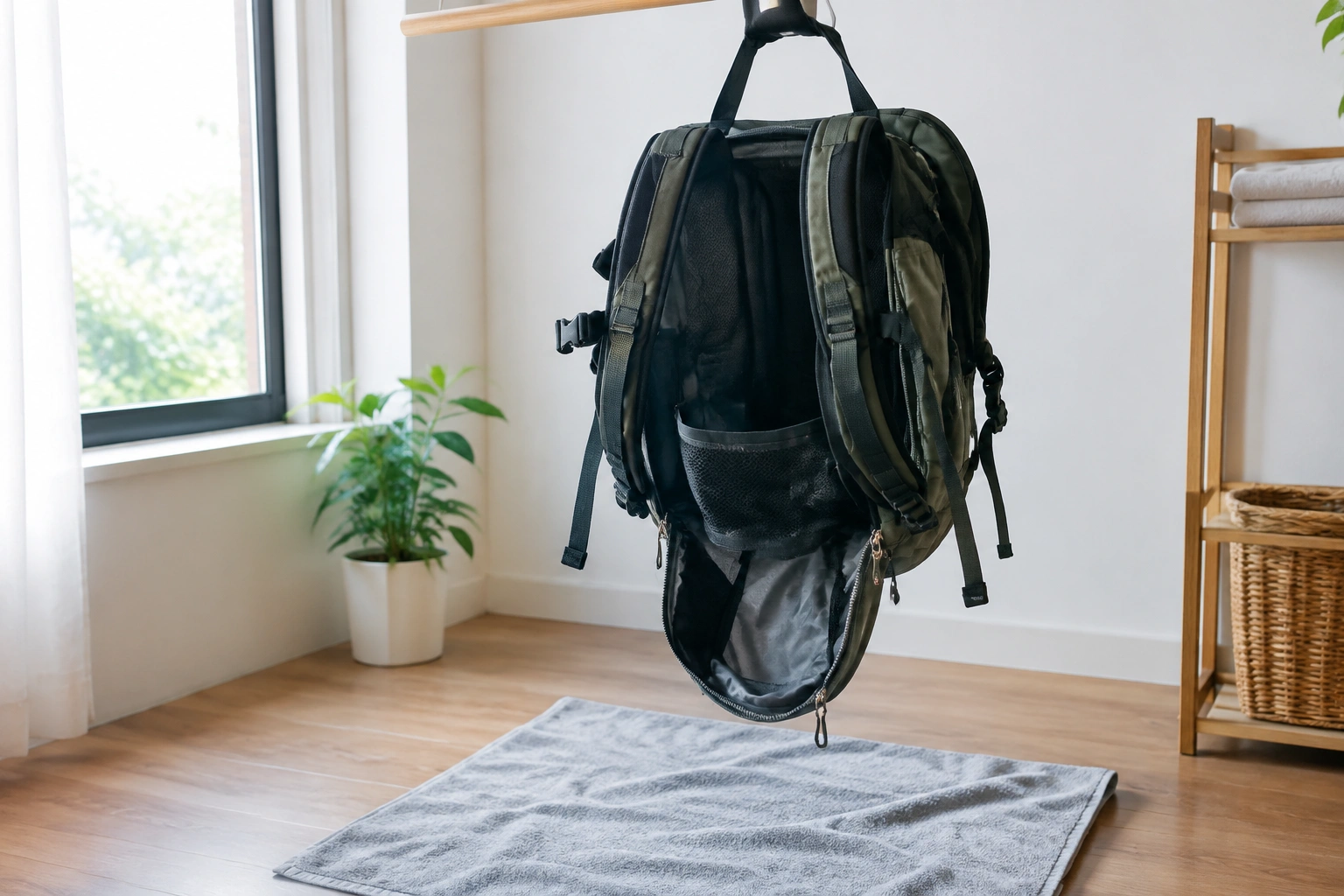
If possible, dry it upside down so water does not pool in the bottom seams. A towel underneath helps catch drips.
Do not use a dryer. Heat can shrink fabric, damage coatings, soften adhesives, and warp plastic parts. Avoid direct sunlight for long periods as well, especially with darker fabrics or leather trim, because it can fade or dry out materials unevenly.
A backpack should feel completely dry before storage or reuse. That can take a full day or longer depending on padding, humidity, and airflow. Thick shoulder straps and laptop sleeves usually take the longest.
Common Mistakes to Avoid
A few errors cause most backpack damage:
- Using bleach or strong solvents
- Washing in hot water
- Scrubbing too aggressively
- Leaving detergent residue behind
- Forgetting hidden pockets and seams
- Putting the bag in a dryer
- Storing it while still damp
- Cleaning leather trim the same way as nylon
- Using fabric softener, oxygen bleach, or disinfectants unless the care label allows them
The biggest practical mistake is overcleaning. If the bag only has a small stain, spot cleaning is usually better than soaking the whole pack.
Troubleshooting: If It Still Smells, Feels Sticky, or Looks Dirty
If the backpack still feels tacky after washing, residue is the likely cause. Wipe it again with plain water and a clean cloth, then dry it longer.
If it still smells after drying, check the padding and hidden pockets. Odor often stays in areas that dry slowly. Open every compartment and leave the bag in moving air for several hours.
If dirt remains in seams or zipper tracks, use a soft brush with a small amount of soapy water and work carefully along the edge. Do not chase one stain so hard that you fray the fabric around it.
If mildew shows up, stop using the bag until it is fully dry and the smell is gone. Persistent mildew can keep coming back if the internal padding stays damp, and visible mold growth can mean the backpack is no longer worth saving if the material is heavily affected.
How Often to Clean and Store Your Backpack
Use a simple maintenance schedule:
- Light cleaning: Spot clean as needed, and wipe straps, handles, and the lining when you notice dirt or odor.
- Deep cleaning: Wash every few months, or sooner after heavy use, travel, gym trips, or muddy weather.
- After rain or sweat exposure: Dry the backpack right away with all pockets open and the compartments unzipped.
Between washes:
- Empty crumbs and trash regularly
- Wipe straps and handles with a damp cloth
- Let the bag dry after rain or sweaty use
- Store it uncompressed in a dry place
For backpacks specifically, the best storage rule is simple: dry, open, and out of cramped damp spaces.
Practical Examples for Common Backpack Types
A student backpack with pencil marks and snack crumbs usually needs spot cleaning, a wipe-down of the lining, and a long air dry. No full soak is necessary unless the odor has spread.
A commuter backpack with sweaty straps and a laptop sleeve benefits from hand washing. Focus on the back panel, shoulder straps, and inside pockets where skin oils and dust build up.
A canvas backpack with leather trim should be treated like a mixed-material bag: clean the canvas gently, keep the leather mostly dry, and avoid any aggressive machine cycle.
A rainy hiking pack that sat damp overnight should be opened fully, cleaned gently if needed, and dried in moving air until every padded area is dry. If the pack has a rain cover, remove it first.
When to See a Luggage Repair Specialist
If the backpack has damaged seams, a broken zipper track, delaminating coating, or padding that stays damp and smells even after careful cleaning, a repair specialist can tell you whether the bag is still worth saving. That is especially useful for expensive travel packs, camera bags, and framed hiking backpacks where one bad cleaning attempt can do more harm than the original problem.
For more gear-care content and related travel maintenance topics, you can also browse Queryoro’s homepage and the site’s category archive.