
How to Clean Luggage Zippers Without Damaging the Teeth, Slider, or Fabric

A sticky zipper can turn a perfectly good suitcase or backpack into a nuisance fast. Usually, the problem is not dramatic damage. It is grit, lint, dried residue, or a little corrosion building up where the slider meets the teeth. The good news: most luggage zippers respond well to careful cleaning, as long as you match the method to the zipper type and avoid forcing anything.
Quick decision guide: if the zipper only has light dust or lint, dry brush it first; if it has grime or residue, do a damp clean; if it still feels rough after cleaning and drying, use a small amount of lubricant.
What Causes a Luggage Zipper to Stick
Before you clean anything, figure out what you are dealing with. That matters because a zipper that is dirty needs a different approach than one that is bent or missing teeth.
The most common causes are:
- Dust, lint, or crumbs packed into the teeth
- Sand or grit caught near the slider
- Dried mud, sticky residue, or product buildup
- Misalignment where one side of the zipper is not feeding evenly
- Actual damage such as a bent slider, broken teeth, or torn fabric near the track
If the zipper moves but feels rough, cleaning is usually the first move. If it stops at the same point every time and you can see a damaged tooth or twisted slider, cleaning may only help a little.
A practical rule: if the zipper is sticky but intact, clean it. If it is snagging on a visible defect, stop before you make it worse.
What You’ll Need to Clean a Zipper Safely
You do not need a drawer full of specialty products. For most luggage zippers, a small kit is enough.
Use:
- A soft brush or old soft toothbrush
- A microfiber cloth
- Warm water
- A few drops of mild dish soap
- Optional zipper lubricant made for luggage or outdoor gear
- Optional vacuum attachment for loose debris around the track
For most sticky zippers, the safest first step is dry brushing, because it removes loose debris without adding moisture. If that does not solve it, move to a light damp clean; save lubricant for after cleaning if the zipper still feels rough.
That list lines up with practical care advice from luggage makers like LEVEL8’s zipper and suitcase cleaning guidance and DELSEY’s luggage maintenance recommendations. If you are cleaning a fully waterproof zipper, Rugid Gear’s maintenance notes are especially useful because they emphasize wiping away dust and rinsing after exposure to dirt, saltwater, or chlorine.
Dry cleaning versus damp cleaning
For light dust and lint, dry brushing is often enough. Traveler’s Choice recommends brushing the zipper track with a dry soft toothbrush first, which is a sensible place to begin because you are removing loose debris without adding moisture. Their zipper care guide also warns against soaking zipper tracks, since moisture can contribute to corrosion and stiffness.
If the zipper feels sticky from grime or residue, a damp clean makes more sense. Use just enough moisture to loosen the buildup, not enough to soak the surrounding fabric.
What Not to Use on Luggage Zippers
This is where people accidentally create a bigger problem.
Avoid:
- Bleach
- Harsh solvents
- Abrasive scrub pads
- Metal tools or pins pushed into the teeth
- Excess water
- Heavy grease or oily household lubricants
Those products can damage coatings, stain fabric, or leave residue that attracts more dirt. They can also weaken waterproof treatments on some bags.
Boiling water is sometimes mentioned in zipper-cleaning advice online, including ZipperShipper’s cleaning method. I would not treat that as a universal luggage method. It can be too aggressive for many travel bags, especially ones with synthetic fabric, laminates, foam backing, or waterproof seams. If you use any liquid at all, keep it minimal and targeted.
Vinegar and alcohol are also risky on some zipper materials and finishes: vinegar can be overly harsh on certain metals or coatings, and alcohol may dry out or dull protective surfaces on coated fabric or waterproof zipper tape. Oily household products are a bad match for waterproof or coated zippers because they can leave residue on sealing surfaces and protective finishes.
How to Clean a Luggage Zipper Step by Step
This is the method I use most often on backpacks, carry-ons, and duffels when the zipper is dirty but not broken.
1) Empty the bag and open the zipper fully
Give yourself access to the whole track. If the zipper is stuck closed, open it only as far as it will move without force. Pulling harder can bend the slider or tear the surrounding fabric.
2) Brush away loose debris
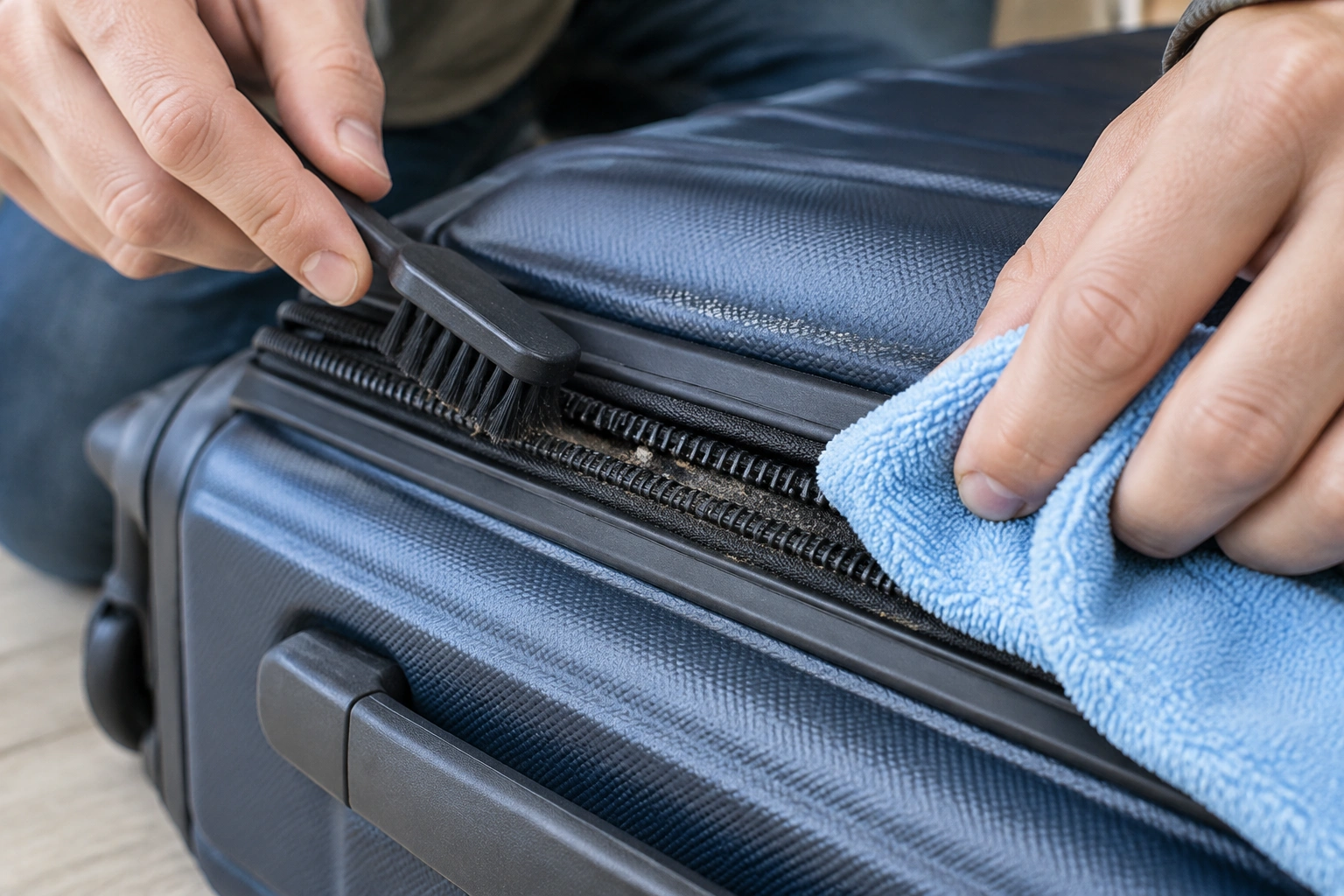
Use a dry soft toothbrush or soft brush to work along both sides of the zipper teeth. Brush from the ends toward the middle and around the slider area.
This matters because pushing dirt deeper into the track is the opposite of what you want. A few passes with a dry brush often remove lint, sand, and dust before any liquid is needed.
If you are dealing with sand or grit, hold the bag upside down or at an angle and tap or brush along the zipper path so debris falls away instead of getting pushed deeper into the teeth. A quick vacuum attachment can also help lift loose particles around the zipper path before brushing.
3) Wipe the zipper path with a barely damp cloth
If grime remains, dampen a microfiber cloth with warm water and a drop or two of mild dish soap. Wipe the teeth, slider, and surrounding fabric edge lightly.
Do not drench the area. The goal is to loosen residue, not soak the zipper tape or padding.
For a water-resistant bag, keep the cloth even less wet. On waterproof zippers, frequent wiping with a microfiber cloth is a better habit than heavy cleaning after every trip.
4) Clean the slider carefully
The slider is where buildup often hides. Wipe around its top and underside, then run the brush through the entry point where the teeth feed into the slider.
If sand is packed in there, work slowly. A stuck slider is often just a grit problem, but forcing it can deform the mechanism.
5) Dry the zipper completely
Use a dry microfiber cloth to remove visible moisture. Then let the bag air-dry before you store it or apply lubricant.
That drying step is not optional. A suitcase should not go straight into storage while damp, and moisture left around metal teeth can contribute to stiffness or corrosion.
How to Clean Different Zipper Types
Not every luggage zipper should be treated exactly the same.
| Zipper type | Best first step | Damp cleaning? | Lubrication? | Main caution |
|---|---|---|---|---|
| Metal zipper | Dry brush first | Yes, if dirty | Often helpful after drying | More prone to corrosion if left damp |
| Nylon coil zipper | Dry brush first | Yes | Sometimes helpful, use lightly | Avoid over-wetting the coil |
| Molded plastic zipper | Dry brush first | Yes | Only if needed | Don’t use abrasive tools on molded teeth |
| Waterproof zipper | Wipe and brush gently | Limited, targeted | Use only if manufacturer allows | Protect the sealing surfaces and coating |
Metal zippers are the most likely to show corrosion if moisture is left behind. In practice, that means a metal zipper often benefits from careful drying after cleaning and a light lubricant only if it still feels rough.
Nylon coil zippers usually tolerate gentle cleaning well, but they can hold grit in the coil grooves. A soft brush can work that debris out more effectively than a wet cloth alone. Molded plastic zippers are sturdy, yet hard scrubbing can still damage the surface. Waterproof zippers need the most restraint because you do not want to compromise the sealing system.
If you are unsure which type you have, treat it like the most delicate version: dry brush first, then use only a small amount of damp cleaning if needed.
When and How to Use Zipper Lubricant
Lubricant is for zippers that are clean but still move with resistance. It is not a substitute for cleaning.
Good options include:
- Graphite from a pencil, used lightly on dry teeth
- Silicone-based zipper lubricant
- A product specifically labeled for zippers or outdoor gear
Traveler’s Choice suggests running a standard pencil along both sides of the teeth after the track is clean and dry, using graphite as a dry lubricant. That is a sensible low-mess option for many luggage zippers. DELSEY also lists silicone-based lubricant among its recommended suitcase care products.
Graphite versus silicone lubricant
Graphite is dry and usually attracts less grime. It is useful when you want a simple, low-residue fix.
Silicone-based lubricant can give smoother movement, especially on stubborn zippers, but you need to apply it sparingly. Too much lubricant, whether graphite or silicone, can collect dust and create a new buildup problem.
My rule: use the smallest amount that improves movement. If the zipper already slides well after cleaning, skip lubrication entirely.
How to apply it
Apply a light line along the teeth, then run the slider back and forth a few times. Wipe away any excess from the fabric and tape. If the zipper is waterproof or sealed, check the care guidance for that bag before using any lubricant at all.
Common Mistakes to Avoid
Most zipper damage comes from impatience, not dirt.
Avoid these habits:
- Yanking a stuck zipper
- Cleaning only one side of the track
- Soaking the zipper and surrounding fabric
- Using too much lubricant
- Forcing the slider over grit
- Ignoring the first sign of misalignment
The biggest one is yanking. If the slider is jammed on sand or a folded bit of fabric, force can bend the slider opening. Once that happens, cleaning may not fully restore the zipper.
Also, clean both sides of the zipper track. Dirt on one side can still interfere with the slider’s alignment and movement.
Troubleshooting a Zipper That Still Sticks After Cleaning
If you have brushed, wiped, dried, and lubricated the zipper and it still hangs up, look for a mechanical issue.
Check for:
- A bent slider
- Missing or damaged teeth
- A section where the zipper tape is pulled out of alignment
- Fabric, lining, or thread caught in the slider
- A spot where the zipper works one direction but not the other
A zipper that sticks in the same exact place every time usually has a physical defect, not just dirt. A zipper that feels rough everywhere is more likely to need another cleaning pass or a different lubricant.
If the slider is the problem, cleaning alone may not solve it. At that point, a repair specialist can often tell quickly whether the zipper is salvageable without full replacement.
How to Keep Luggage Zippers Working Smoothly
A little maintenance goes a long way.
After trips that involve sand, dust, rain, or heavy use, brush the zipper path before storing the bag. That is especially helpful for beach travel, commuting through dirty weather, or student backpacks that collect crumbs and lint.
For waterproof or weather-resistant bags, wipe the zipper area regularly with a microfiber cloth so debris does not settle into the teeth. Rugid Gear’s advice for fully waterproof zippers is practical here: keep dust out, and rinse with fresh water after exposure to saltwater, chlorine, or heavy dirt.

Do not store luggage damp. Even if the zipper itself looks fine, trapped moisture can stiffen the track and create corrosion problems later.
If you want a broader care routine for the rest of the bag, our backpack cleaning guide covers safe fabric care without overdoing the water. For more gear-maintenance articles, the Backpack & Luggage Care category is a good place to browse.
When to See a Luggage Repair Specialist
Cleaning has limits. If the zipper still separates after closing, skips teeth, jams at one exact point, or has visible damage, it is time to stop experimenting.
A repair specialist is the right call when:
- Teeth are missing or broken
- The slider is visibly bent or loose
- The zipper separates behind the slider
- The zipper tape is torn or pulled away from the bag
- The problem returns immediately after cleaning
That is the difference between dirt and damage. Dirt can usually be removed. Mechanical wear usually needs repair.
FAQ
Can I use soap and water on a luggage zipper?
Yes, if you use a small amount of mild soap and keep the area only lightly damp. Wipe, do not soak. That is safer for most luggage than flooding the zipper with water.
Is vinegar safe for zipper cleaning?
I would avoid it unless a manufacturer specifically recommends it. Vinegar is acidic, and on some finishes or metals it may be more aggressive than necessary.
Can alcohol clean a sticky zipper?
Alcohol can remove some residue, but it can also affect coatings and fabric finishes. For luggage, mild soap and water or dry brushing is usually the safer first choice.
What if my zipper is stuck closed?
Brush the teeth and clean around the slider from both sides if you can access them. Then try to move it gently after drying. If it still will not budge, do not force it.
How often should luggage zippers be cleaned?
After dirty trips, beach use, or heavy commuting, clean them right away. For normal travel, a quick brush and wipe every so often is enough. There is no reason to deep-clean a zipper after every trip if it is already moving smoothly.
Should I lubricate every zipper after cleaning?
No. Lubricate only if the zipper still feels rough after cleaning and drying. Over-lubricating can attract more dirt than it solves.
What is the safest cleaner for waterproof zippers?
Usually the safest approach is the least aggressive one: wipe with a microfiber cloth, brush away debris, and follow the manufacturer’s care guidance before using any liquid or lubricant.
How do I know if the zipper is damaged instead of dirty?
If it keeps failing at the same spot, separates after closing, or has visible bent or missing parts, that points to damage rather than buildup.