
How to Clean Backpack Pockets Without Damaging the Fabric, Coating, or Zippers

Backpack pockets collect the mess no one notices until it starts smelling, sticking, or scratching around inside. Crumbs settle into corners. Pen caps leak. Snack wrappers leave residue. Commuter bags trap gym odor. The good news: most pocket messes can be handled with a few basic tools and a careful approach.
The key is to clean the pockets, not the whole bag, unless the bag’s care instructions say otherwise. That saves time and lowers the risk of damaging coatings, linings, or zipper tape. If you want a broader wash afterward, this guide pairs well with how to wash a backpack and the related backpack care guides.
What You’ll Need to Clean Backpack Pockets
Keep the setup simple:
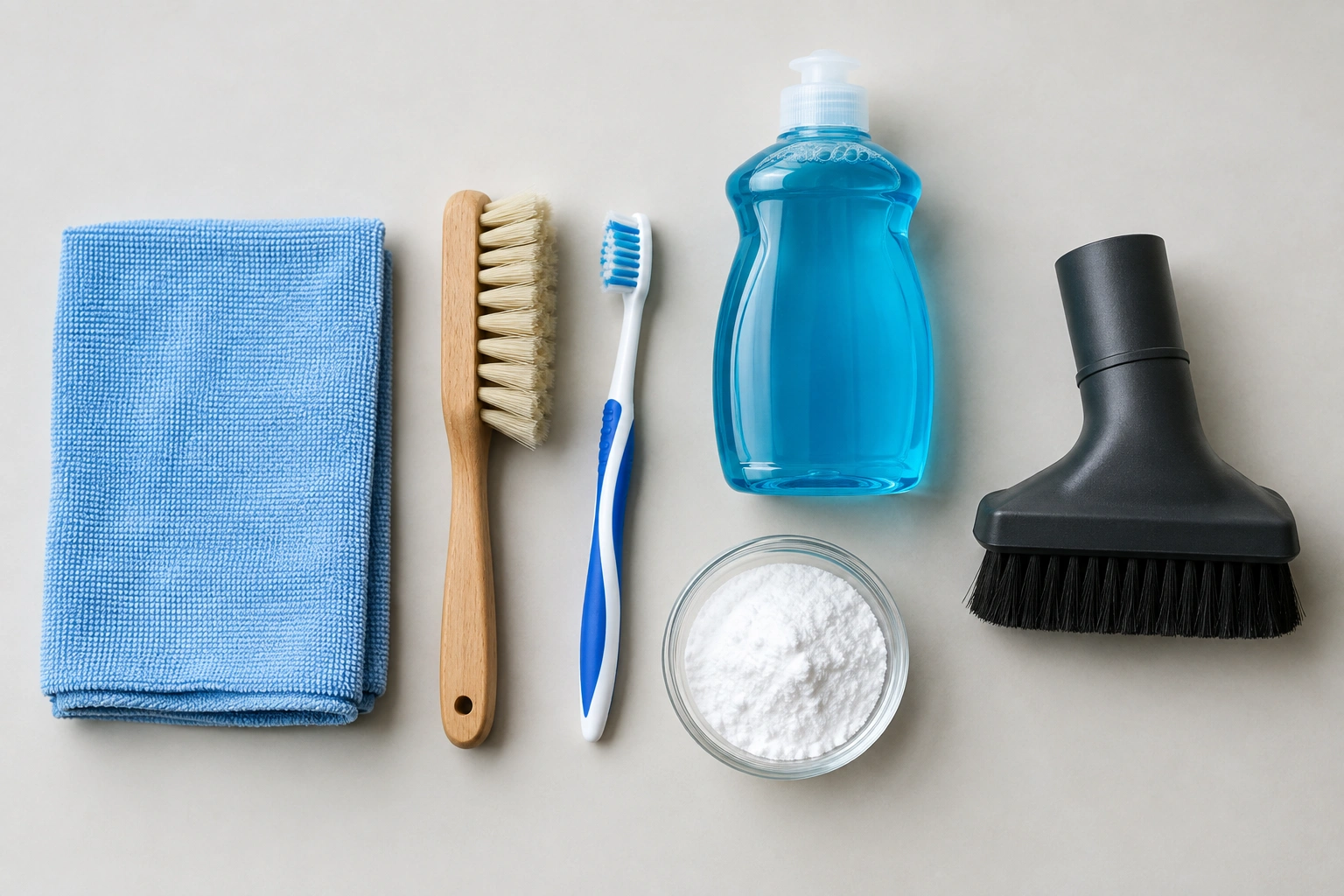
- Soft brush or clean toothbrush
- Microfiber cloth
- Mild dish soap
- Warm water
- Small bowl or cup
- Vacuum with brush attachment
- Baking soda
- White vinegar
- Dry towel or paper towels
Use the vacuum or brush first to remove crumbs and lint before any wet cleaning. Dish soap handles greasy residue and general grime. Baking soda and vinegar are best used later for odor control after the pocket has already been cleaned.
If your backpack has a removable frame, take it out before cleaning. That matches standard manufacturer guidance, including Mountain Warehouse’s backpack cleaning advice, which also notes that hot water can cause colors to run.
Check the Care Label and Pocket Material First
Before you wet anything, check the care label. Some packs can be submerged or hand-washed; others should not be. REI’s cleaning guidance is blunt on that point: follow the manufacturer’s recommendations, because one pack may tolerate a bathtub soak while another should not.
Then look at the pocket material.
What you’re looking for
- Mesh pockets: usually best cleaned gently, because aggressive scrubbing can distort the openings.
- Nylon and polyester pockets: often handle light damp cleaning well, but heavy soaking can push moisture into seams, backing, or padding.
- Fabric-lined pockets: often handle light damp cleaning well, but they can hold moisture longer.
- Coated or waterproof pockets: clean carefully and avoid soaking, since excess water can stress the coating, adhesive layers, or waterproof lining.
- Structured pockets with padding: use less water and more blotting.
If a pocket lining is removable or partially detachable, clean that piece separately if the care label allows it. If it is only loosely attached, avoid pulling it outward; work with minimal moisture so you do not soak the surrounding padding.
If the label is missing or unclear, treat the pocket as delicate. That means dry-clean first, then spot-clean only where needed.
Quick Decision Path
Use this order when you clean backpack pockets:
- Dry clean first if the pocket has crumbs, dust, lint, or loose grit.
- Spot clean next if there is sticky residue, a spill, or a visible stain.
- Deodorize after cleaning if the pocket still smells.
- Machine wash only if the care label allows it and the whole bag needs a deeper wash.
If the mess is only in one pocket, cleaning that pocket separately is usually safer than washing the entire backpack.
Empty, Shake Out, and Dry-Remove Loose Debris
This step matters more than people think. Pockets hide crumbs in the corners, along seams, and behind zipper folds. Empty every pocket, including hidden compartments and small slip pockets. Don’t forget the little front stash pocket where receipts and gum wrappers tend to disappear.
Take the backpack outside or over a trash can and shake it upside down. A vacuum with a brush attachment can help reach creases and corners, especially around pocket bottoms and zipper folds. That approach is also recommended in Seventh Generation’s backpack washing guide.
For packed-in lint or sand, use the brush attachment lightly. Don’t press hard; the goal is to lift debris, not grind it deeper into the fabric.
Quick decision rule
- Crumbs, dust, lint: dry methods first
- Sticky residue or stains: spot-clean after debris removal
- Odor only: deodorize after the pocket is already clean
How to Clean Backpack Pockets by Type
Mesh pockets
Mesh is useful but easy to damage with rough treatment.
- Empty and shake out the pocket.
- Use a vacuum brush or soft brush to remove grit from the openings.
- Dampen a microfiber cloth with warm water and a small amount of mild dish soap.
- Blot the mesh instead of scrubbing.
- Rinse the cloth, wipe away soap residue, and let the pocket air-dry fully.
If the mesh has caught sand or fine grit, a dry brush is safer than pushing it around with a wet cloth. Mesh can also snag, so avoid stiff-bristled brushes. Use only enough moisture to dampen the cloth; do not soak mesh pockets or the padding behind them.
Zippered pockets
Zippered pockets collect debris at the track and at the ends where fabric folds over.
- Open the pocket wide.
- Shake out loose debris.
- Use a toothbrush or soft brush along the zipper teeth.
- Wipe the pocket lining with a lightly damp microfiber cloth.
- Clean the zipper track separately if it feels sticky or gritty.
If the zipper itself has sticky residue, use a barely damp cloth with a small amount of soapy water on the zipper teeth and zipper pull. Wipe the pull, the slider, and the track, then dry them right away. Keep liquid away from foam padding or thick seam tape.
Fabric-lined pockets
These are common in commuter and school backpacks, and they usually need the gentlest balance of moisture and blotting.
- Vacuum or shake out crumbs first.
- Spot-test a hidden corner with diluted dish soap.
- Blot stains with a damp cloth rather than soaking the lining.
- Use a soft brush only on stubborn spots.
- Wipe away soap and dry with the pocket open.
Fabric linings can hold smell and moisture longer than smooth synthetics, so drying matters as much as cleaning.
Nylon and polyester pockets
Nylon and polyester are common, but they still need careful handling around seams, labels, and laminated backs.
- Remove loose debris first.
- Use a lightly damp cloth with mild soap for spot cleaning.
- Work in small sections rather than wetting the whole pocket.
- Blot seams and corners instead of scrubbing them.
- Dry the pocket open before using it again.
If the pocket has printed logos, bonded trim, or a coated backing, test first in an inconspicuous spot. Even durable synthetics can show wear if you use too much water or pressure.
Coated or water-resistant pocket interiors
Treat these carefully. Coated interiors can be cleaned, but they do not like heavy soaking or abrasive scrubbing.
- Use the least amount of water possible.
- Wipe with a damp cloth and mild soap.
- Avoid soaking the coating or rubbing hard at the edges.
- Dry immediately with a towel.
- Leave the pocket open until it feels fully dry.
If the pocket has a slick finish, test in a hidden area first. Some coatings can dull or peel if cleaned too aggressively.
How to Clean Corners, Seams, and Zipper Tracks
The dirt usually hides where the pocket folds and stitches meet. That’s why corners and seams deserve their own pass.
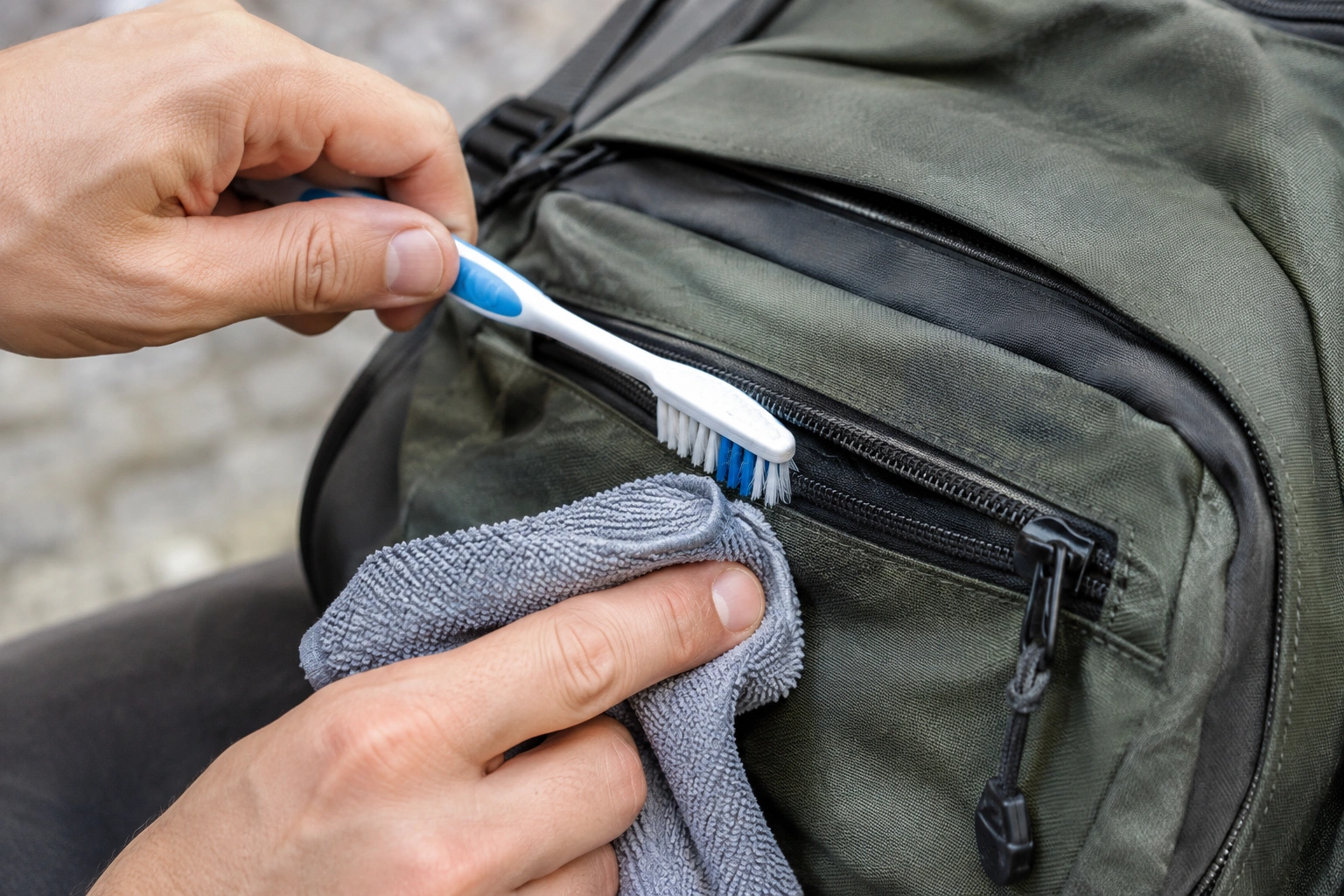
Use a toothbrush or soft brush to loosen debris along:
- pocket bottoms
- seam lines
- zipper teeth
- zipper ends
- folds behind flap pockets
For a sticky corner, wrap a microfiber cloth around the end of a finger or use the corner of the cloth itself. That gives you more control than a full wipe. If a crumb is wedged into a seam, lift it out first with the brush before touching it with water.
A useful rule: if you need to press hard to clean a seam, stop and switch to a drier method. Hard pressure can spread grime deeper into the stitching. Keep moisture minimal so you do not soak adjacent padding or the rest of the backpack.
How to Remove Sticky Residue, Spills, and Stains
For snack spills, soda drips, or sticky residue, mild dish soap and warm water are the safest starting point.
- Mix a small amount of dish soap with warm water.
- Dip a microfiber cloth into the solution and wring it out well.
- Blot the spill instead of rubbing it.
- Work from the outside of the stain inward to avoid spreading it.
- Wipe with a second cloth dampened with plain water.
- Pat dry.
For dried-on spills, soften the area first with a lightly damp cloth, then blot again with diluted soap. Do not scrape at the spot with a scrub pad, and do not soak the lining trying to speed things up.
For pen ink, results vary by ink and fabric, so don’t assume one pass will erase it. Blot first, then repeat gently if the fabric allows. If the mark is on a coated pocket, use less liquid and test before continuing. Some ink marks will not fully come out, especially on light or coated materials.
For greasy food stains, blot up any surface oil first, then use a tiny amount of dish soap on a damp cloth. Grease usually responds better to repeated gentle blotting than to heavy scrubbing.
What not to use
Avoid these on backpack pockets unless the manufacturer specifically says otherwise:
- Bleach
- Acetone
- Alcohol-heavy cleaners
- Abrasive scrub pads
- Other harsh spot removers
These can damage color, coating, adhesive layers, mesh, and delicate linings.
Dish soap vs. vinegar vs. baking soda
- Dish soap: best for grime, food residue, and sticky messes
- White vinegar: useful for odor after cleaning, but not my first choice for visible stains
- Baking soda: good for absorbing smells after cleaning, not for scrubbing
If you use vinegar, dilute it and test it first. Avoid pouring it directly into the pocket. For many backpacks, especially those with coatings or color-sensitive fabrics, less liquid is safer than more cleaning power.
How to Deodorize Backpack Pockets Without Damaging Them
Odor usually comes from trapped moisture, food residue, or old spills that were never fully cleaned. Clean the pocket first. Deodorizer works better on a clean surface.
Baking soda method
- Make sure the pocket is dry.
- Sprinkle a small amount of baking soda inside.
- Leave it for several hours or overnight.
- Vacuum or shake it out completely.
Vinegar method
For odor only, a lightly damp cloth with diluted white vinegar can help on some fabrics. Use it sparingly, then wipe again with plain water so the vinegar does not linger.
If the pocket lining is delicate or coated, skip vinegar and use baking soda after cleaning instead. That keeps extra moisture to a minimum.
How to Dry Backpack Pockets Properly
Drying is where a lot of pocket cleaning goes wrong. A pocket that feels “mostly dry” can still hold moisture in seams and corners, which is where mildew starts.
Open the pocket wide and let air move through it. Blot the inside with a dry towel first, especially in corners and along zipper tape. If the backpack has multiple pockets, leave them open so air can circulate.
Vera Bradley’s care guidance for quilted cotton backpacks recommends closing zippers before machine washing and then line drying or laying flat to dry. For pocket cleaning, the same drying logic still applies: protect shape, keep air moving, and avoid trapped moisture.
Drying do’s
- Air-dry only unless the manufacturer says otherwise
- Keep pockets open
- Dry upside down if water may have pooled inside
- Use a towel to remove surface moisture first
Drying don’ts
- Don’t use a dryer unless the care label explicitly allows it
- Don’t pack the bag away while the pockets are still cool or damp
- Don’t leave wet towels or paper towels stuffed inside the pocket
Heat can damage fabrics, coatings, and adhesives. If you want the safest route, air-drying wins.
Hand Cleaning vs. Machine Washing: Which Is Safer?
Hand cleaning is usually the safer choice for pockets because it gives you control. You can target the dirty area, use less water, and avoid stressing seams or coatings.
Machine washing is faster, but only use it if the care label allows it and the backpack construction is suitable. Some brands, like Vera Bradley for certain quilted cotton packs, give specific machine-wash instructions. Others do not. That’s why Eagle Creek’s washing guidance and REI’s advice both emphasize checking the label first.
Choose hand cleaning when:
- the pocket is coated
- the stain is isolated
- the fabric is delicate
- you only need to clean one pocket
Choose machine washing only when:
- the manufacturer says it is safe
- the backpack has no fragile structure that could be damaged
- you’re cleaning widespread grime and the whole bag needs it
If you’re unsure, hand clean the pockets and stop there. That solves most real-world messes without increasing risk.
Common Mistakes to Avoid
A few habits cause most pocket-cleaning problems:
- Leaving items inside: hidden pens, crumbs, and receipts can stain or leak during cleaning
- Using too much water: moisture gets trapped in seams and padding
- Scrubbing hard: mesh and lining wear faster when brushed aggressively
- Using bleach or harsh solvents: these can damage color, coating, and fabric
- Skipping the zipper track: dirt there can make the zipper feel rough later
- Putting the bag away damp: that’s how odor becomes mildew
If a pocket still smells after cleaning, the usual cause is moisture left behind in the seam, not a need for stronger cleaner.
Practical Examples: Real-World Pocket Cleaning Scenarios
Student backpack with crumbs and snack residue
Empty the pocket, shake it out, vacuum the corners, then spot-clean the sticky area with diluted dish soap. Finish with a dry cloth and leave the pocket open overnight.
Commuter bag with lunch odor
Remove everything, clean the lining with a lightly damp cloth, then let it dry fully before using baking soda to absorb remaining odor. If the pocket still smells after that, check for residue in the seam or zipper fold.
Travel backpack with sand in a mesh side pocket
Use a dry brush first, then a vacuum attachment. If needed, wipe the mesh lightly with soapy water and dry it open. Don’t soak the pocket; sand usually comes out better with dry removal than with more water.
Interior pocket with a pen leak
Blot immediately, then spot-test a small hidden area with mild soap and warm water. Work slowly. If the fabric is heavily dyed or coated, stop if the color starts to transfer.
When to See a Luggage Repair Specialist
If a pocket lining is peeling, the seam tape is separating, or the zipper track is damaged, cleaning alone will not solve the problem. That’s the point to bring the bag to a luggage repair specialist, especially if the backpack is expensive, structured, or still under warranty. Cleaning should stop when the material starts to show damage; pushing further can turn a small issue into a bigger one.
FAQ: Backpack Pocket Cleaning Questions
Can I clean backpack pockets without washing the whole bag?
Yes. Most pocket messes can be handled with dry removal, spot cleaning, and careful air-drying. Full washing is only necessary if the manufacturer says the backpack can be washed and the grime is widespread.
Is vinegar safe for backpack pockets?
Sometimes, but use it cautiously. Vinegar is better for odor than for stains, and it should be diluted and tested first. Avoid it on delicate coatings unless the care instructions allow it.
Does baking soda remove stains?
Not really. Baking soda is better for absorbing odor after the pocket has already been cleaned. It is not a substitute for blotting or washing away the spill.
Can I use a vacuum on pocket corners?
Yes, a vacuum with a brush attachment is a practical way to remove crumbs and dust from creases and corners. Use gentle suction and avoid pulling on mesh or loose stitching.
Should pockets be open or closed while drying?
Leave them open so air can circulate. That helps moisture escape from seams and zipper folds. If the bag has multiple pockets, open all of them.
Can I put a backpack pocket in the dryer?
Generally no, unless the care label explicitly allows it. Heat can damage fabric, coatings, and adhesives. Air-drying is the safer default.
How often should I clean backpack pockets?
There is no single rule that fits every bag. A better approach is to clean pockets when you notice crumbs, odor, residue, or visible dirt, and give them a quick shake-out regularly before buildup starts.
What if my backpack has a waterproof coating?
Use minimal water, avoid harsh scrubbing, and test any cleaner on a hidden spot first. Coated fabrics can be more sensitive to soaking and aggressive cleaning than plain nylon or polyester.
Is machine washing better than hand cleaning?
Not for pockets alone. Hand cleaning is usually safer because it targets the mess without stressing the entire bag. Machine washing only makes sense when the label says it is allowed and the whole backpack needs a deeper wash.
What’s the fastest safe way to clean dirty pockets?
Empty them, shake them out, vacuum the corners, then blot any sticky spots with diluted dish soap. Finish with open-air drying. That sequence handles most everyday pocket messes without overcomplicating the job.