
How to Clean a School Backpack Without Ruining the Fabric, Zippers, or Shape

A school backpack collects the usual daily mess: crumbs, pencil dust, mud at the bottom, sweaty straps, and the occasional lunch spill. The safest way to clean it is not to treat every pack the same. Check the care label first, then choose the lightest method that solves the problem. If the tag is missing or unclear, the safest default is a gentle hand wash with cold water and mild detergent, followed by air drying.
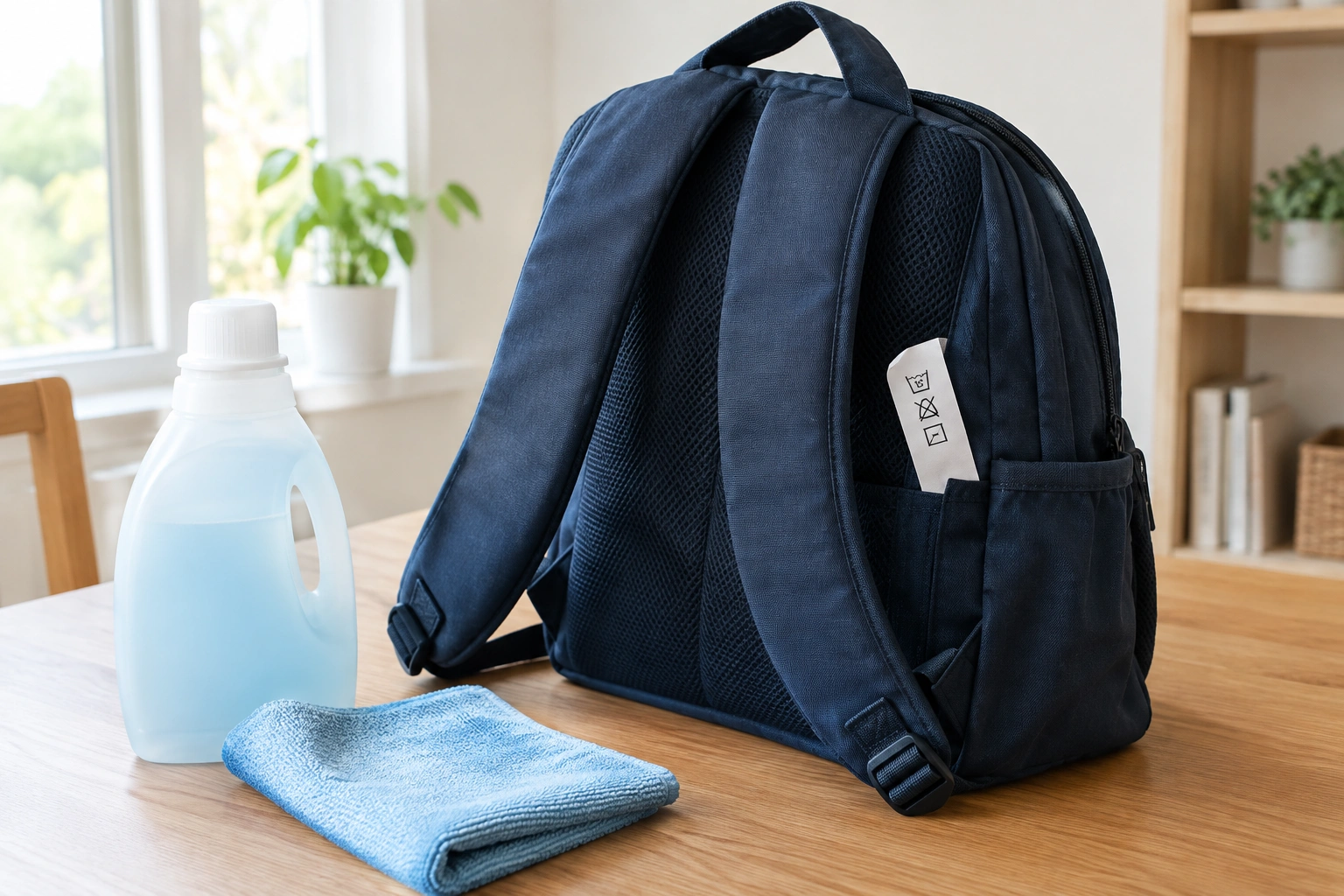
Quick decision tree: if the care label says spot clean only, clean only the dirty area. If it allows hand washing, use a gentle hand wash for the whole bag or for dirty sections that need more than spot cleaning. If it says machine washable, you can use the washer only if the backpack is simple, fabric-based, and free of rigid supports or delicate coatings. When in doubt, choose the gentlest option that still gets the job done.
That approach protects padding, coatings, and zippers better than aggressive scrubbing or heat. It also gives you more control over spots that actually need attention. For a quick reference on pack-care basics, REI’s backpack care guide reminds readers to follow the manufacturer’s instructions because some packs can be submerged while others should not be, and Whirlpool notes that basic nylon or canvas school backpacks are often machine washable if the label allows it. See REI’s backpack cleaning guidance and Whirlpool’s backpack washing guide.
What You’ll Need Before You Start
Gather the tools before you touch the backpack. You’ll move faster, and you’ll be less tempted to use harsh cleaners when the job gets messy.
- Mild detergent
- Cold water
- Soft brush or old toothbrush
- Microfiber cloth
- Vacuum with brush attachment, if you have one
- Clean towel
- Laundry bag or pillowcase for machine washing
- Small bowl for spot cleaning
- Optional: a second towel to help reshape the pack while it dries
Skip bleach unless the care label explicitly says it is safe. I’d also be cautious with vinegar on coated or specialty fabrics; it can be useful in some household cleaning jobs, but backpacks are not one-size-fits-all. When in doubt, mild detergent and water are the safer pair.
Check the Care Label and Backpack Material First
This step decides everything else. The care label tells you whether the pack is machine washable, hand wash only, or spot clean only. If you ignore it, you risk shrinking fabric, weakening glue, or ruining water-resistant finishes.
Material matters too:
- Nylon and polyester are usually the easiest to clean and often handle gentle hand washing well.
- Canvas can often handle gentle washing, but it may hold stains and take longer to dry.
- Leather trim, foam panels, cardboard supports, or glued seams need more caution.
- Water-resistant coatings can be damaged by harsh agitation or high heat.
- Electronics pockets and removable inserts should be checked separately before washing.
If the label says nothing useful, treat the backpack like a structured item: clean it gently, avoid soaking it for long periods, and never assume the dryer is safe.
Empty the Backpack and Remove Loose Dirt
Take everything out first. Check the main compartment, front pockets, side pockets, hidden sleeves, and the bottom corners where wrappers and crumbs like to hide. If there’s a removable pencil pouch, lunch insert, or tech sleeve, take it out now.
Turn the backpack upside down and shake it over a trash can. Then open every pocket and zipper so debris can fall out of seams and crevices. A general best practice is to flip the bag and tap out loose crumbs before washing, because snack debris usually settles into the stitching, not the open compartments.
If you have a vacuum with a brush attachment, use it on the interior, zipper tracks, and corners. A soft brush also works well for loosening dirt before you wipe or wash. This matters because rubbing grit into the fabric can create more wear than the original dirt.
Pre-Treat Stains, Spills, and Odors
Not every backpack needs a full wash. If the problem is a small stain, spot cleaning may be enough. That’s the better choice when the pack is otherwise clean and you only need to handle a pencil mark, a ketchup drip, or a muddy patch on the bottom.
Here’s the practical rule I use:
- Spot clean when the mess is isolated.
- Full wash when the backpack smells, feels greasy, or has dirt across several areas.
For common school messes:
- Mud on the bottom: Let it dry first, then brush off the crust before wiping.
- Lunch spills: Blot the area with a damp cloth and mild soap before the stain sets.
- Pencil or pen marks: Test a hidden area first; some inks spread if you rub them hard.
- Sweat odor on straps: Clean the straps directly, not just the outside panels.
If a stain is still visible after a gentle pre-treatment, that doesn’t mean you need harsher chemicals. It usually means you need more time, a second pass, or a deeper wash.
How to Wash a School Backpack by Hand
Hand washing is the gentlest full-cleaning method, and it’s the one I’d choose when the backpack has padding, structure, or a care label that doesn’t clearly approve machine washing.
1) Empty, shake, and vacuum first
Remove every item, shake out crumbs, and vacuum the inside, corners, and zipper tracks before any water touches the bag. This prevents grit from getting worked deeper into the lining.
2) Pre-treat visible stains
Use a small amount of mild detergent and a damp cloth or soft brush on the spots that need it. Work gently so you don’t spread the stain or rough up the fabric.
3) Wash the bag with cool or cold water
Use a sink, basin, or tub with enough water to clean the bag comfortably. For most backpacks, a brief soak or gentle swish is better than long soaking. If the pack has glued seams, stiff inserts, or a coating that shouldn’t be submerged, keep the water contact short and controlled.
4) Clean the outside, inside, straps, and back panel
Work one section at a time. Use light pressure around seams, logos, and printed areas. Clean the lining, pockets, and bottom panel as well, not just the exterior.
For padded straps and back panels, use a damp cloth or soft brush with very light pressure. Do not twist them, over-soak them, or scrub aggressively. That can flatten the padding, push water deep into the foam, and make the shape harder to recover.
5) Rinse thoroughly
Use clean water and a cloth, or drain the basin and refill it. Detergent left behind can attract dirt later and may leave the fabric feeling stiff.
6) Press out water gently
Do not twist the backpack like a towel. Press it between clean towels instead. Twisting can distort padding and stress stitching. If a section is especially wet, blot it again rather than wringing it out.
For packs with a lot of interior grime, this article on how to clean the inside of a backpack pairs well with a hand wash because it focuses on the lining, pockets, and crumbs that hide in the seams.
When and How to Machine Wash a Backpack Safely
Machine washing can be the fastest option, but only when the care label and construction make it reasonable. Whirlpool says many basic nylon or canvas school backpacks can usually go in the washing machine, but the care label still comes first.
Use the washer when:
- the label allows it,
- the pack is simple and fabric-based,
- there are no rigid supports or delicate coatings,
- and the backpack is heavily soiled enough that spot cleaning won’t be enough.
Do not machine wash backpacks with non-removable electronics, cardboard or stiff internal supports, heavily glued seams, or delicate leather sections. If the bag has a structured frame, molded back panel, or specialty finish, it is safer to hand wash or spot clean instead.
Use a laundry bag or pillowcase if you machine wash. That gives zippers and straps some protection from snagging. Choose cold water and a gentle cycle. A low-agitation wash is the safer trade-off: less scrubbing force, less risk to the pack’s structure.
Before the cycle starts:
- empty every pocket,
- zip all zippers,
- loosen straps if possible,
- and remove detachable pouches or inserts.
If the backpack has a separate lunch pocket or removable organizer, clean those pieces by hand unless the manufacturer says otherwise.
How to Clean Special Areas: Insulated Pockets, Water-Resistant Coatings, and Electronics Compartments
Special features need special caution because the wrong cleaning method can do more damage than dirt.
Insulated compartments
Food residue and odors can linger in insulated pockets. Wipe the pocket with a damp cloth and mild soap, then rinse with a clean cloth so no soap film remains. Avoid soaking insulated sections for long periods; trapped moisture can be slow to dry. If a spill got into the seams, open the pocket fully and let air move through it until it is completely dry.
Water-resistant coatings
If the pack has a coated shell, skip rough scrubbing and strong cleaners. Those finishes can wear down over time, especially if you use hot water or aggressive agitation. A soft cloth and gentle wiping are usually the safer choice. After cleaning, let the coating dry naturally; do not use heat to speed it up.
Electronics pockets and removable inserts
Never wash a pocket that still contains a battery pack, charger, tablet, or anything with electrical components. Remove the device, then check whether the sleeve itself is washable. If the insert is removable, clean it separately according to its own care instructions. If the sleeve is only lightly dirty, spot clean it with a barely damp cloth and dry it fully before reinstalling anything.
Dry the Backpack Without Damaging Its Shape
Drying matters as much as washing. A backpack that looks clean but stays damp in the padding can develop odors or mildew.
Air drying is the safest default for most backpacks. Open the pack wide, turn it upside down, and let air move through the pockets and lining. The goal is to dry the whole bag evenly, especially the seams, straps, and back panel.
Here’s the safest drying sequence:
- Open all pockets and zippers.
- Turn the backpack upside down.
- Hang it in a well-ventilated area, or set it on a drying rack.
- Blot the exterior with a towel if it’s still dripping.
- Reshape padded straps and back panels while they’re damp.
- Let it dry completely before storing or using it again.

Do not use a dryer unless the care label specifically allows it. Heat can damage fabric, coatings, padding, and adhesives, and it can also distort the backpack’s shape.
Drying time varies with fabric weight, padding, and humidity, so don’t rush it. If the inside still feels cool or damp, it needs more time.
Common Mistakes to Avoid
A few errors cause most backpack damage:
- Skipping the care label
- Using hot water
- Adding bleach without permission from the manufacturer
- Scrubbing too hard on padded areas
- Forgetting to clean straps and zipper tracks
- Putting the backpack in a dryer
- Storing it while still damp
The biggest one is heat. Heat can warp structure, weaken adhesives, and shrink certain fabrics. The second biggest is moisture trapped in pockets or padding. If the bag smells musty after washing, it usually wasn’t fully dried.
Troubleshooting: Stains, Smells, Mildew, and Lingering Dirt
If the backpack still looks dirty after washing, don’t jump straight to stronger chemicals.
- Set-in stains: Re-wet the area and spot treat again before another full wash.
- Lingering odor: Clean the source, not just the outside. Lunch pockets, straps, and the bottom panel are common culprits.
- Mildew smell: Treat this as a drying problem first. Reopen every pocket, air the bag out in a dry, ventilated place, and check seams, padding, and hidden corners for trapped moisture. If you see visible mold or mildew, clean the affected area with mild soap and water, then dry it completely before reuse. If the smell persists or the bag still feels damp, do not use it until it is fully dry.
- Dirty seams: Use a soft brush or toothbrush with a little soapy water, then wipe clean.
If the smell keeps returning, there may be residue trapped in the lining or insulation. That’s when a more detailed interior cleaning makes sense, especially for school bags that carry food every day.
How Often to Clean a School Backpack
The right schedule depends on use, not the calendar alone.
- Quick shake-out and spot clean: weekly or whenever crumbs and dirt build up
- Full wash: when the bag smells, has visible grime, or has had a spill
- Deep attention to straps and bottom panel: after muddy weather, lunch leaks, or a semester of heavy use
For students who carry snacks, sports gear, or art supplies, the backpack can get dirty faster than it looks. A short maintenance routine prevents the kind of buildup that turns one stain into a full wash later. If you want a broader maintenance cadence, see how often you should clean a backpack.
When Not to Wash the Backpack
Some backpacks should not be submerged or machine washed.
Be cautious if the backpack has:
- non-removable electronics,
- cardboard or stiff internal supports,
- unclear or missing care instructions,
- delicate leather sections,
- heavily glued seams,
- or a finish that the manufacturer says should only be wiped clean.
If the pack is expensive, structured, or has special materials you’re unsure about, a conservative cleaning approach is safer than a deep wash. A gentle wipe-down can buy you time until you confirm the right method.
Practical Examples: Cleaning Common School Backpack Messes
Muddy polyester backpack
A child drops the backpack in wet grass after school. The bottom is caked, but the rest is fine. The best move is to let the mud dry, brush off the crust, spot clean the bottom, and only wash the full pack if the dirt has spread into the lining or straps. If the fabric is polyester, this related guide on how to clean a polyester backpack can help you choose the safest wash approach.
Smelly nylon backpack
A commuter-style school pack smells like sweat and old lunch wrappers. This is a full-clean situation. Empty every pocket, vacuum the interior, pre-treat the straps and bottom panel, wash gently if the label allows it, and air dry it upside down with the pockets open. Nylon usually handles gentle cleaning well if the label allows it.
Juice-stained canvas bag
A juice box leaks into a canvas backpack. Blot first, pre-treat the stain, then hand wash gently if the label permits. Canvas can hold liquid and odor, so don’t leave the stain sitting while you decide what to do.
Backpack with a lunch pocket and electronics sleeve
Treat each zone separately. Clean the insulated pocket by hand, keep the electronics sleeve dry unless the manufacturer says it’s washable, and avoid soaking the whole pack if only one compartment is dirty. If the sleeve is removable, take it out and clean it on its own so moisture does not get trapped inside the main bag.
A school backpack lasts longer when you clean it like a structured piece of gear, not a generic laundry item. The care label decides the method, the material decides the risk, and the mess decides how much cleaning is actually needed.